Trypsin.
Trypsin supplementation for targeted health support. Breaks down proteins into smaller peptides for absorption.
Reviewed March 2026
- Category
- General
What Trypsin is, and what it does.
- Does it work
- For digestive support if needed. For systemic effects (evidence is mixed). Most healthy people produce enough trypsin.
- How much to take
- Digestive: 500-2000 USP units with protein-containing meals. Systemic: often combined with chymotrypsin and bromelain.
- Time to feel it
- The digestive job happens inside the meal you take it with. Routines aimed at recovery are dosed between meals and studied across one to three weeks.
- The first dose
- May notice easier protein digestion. Systemic effects take longer to develop.
- With regular use
- Continued digestive support. Possible inflammation reduction with systemic use.
- How well tolerated
- Well tolerated at normal doses. Increased bleeding risk at high doses. Avoid before surgery.
- How it feels
- Subtle. Less bloating after high-protein meals. Systemic effects (if real) are gradual.
- The overlooked benefit
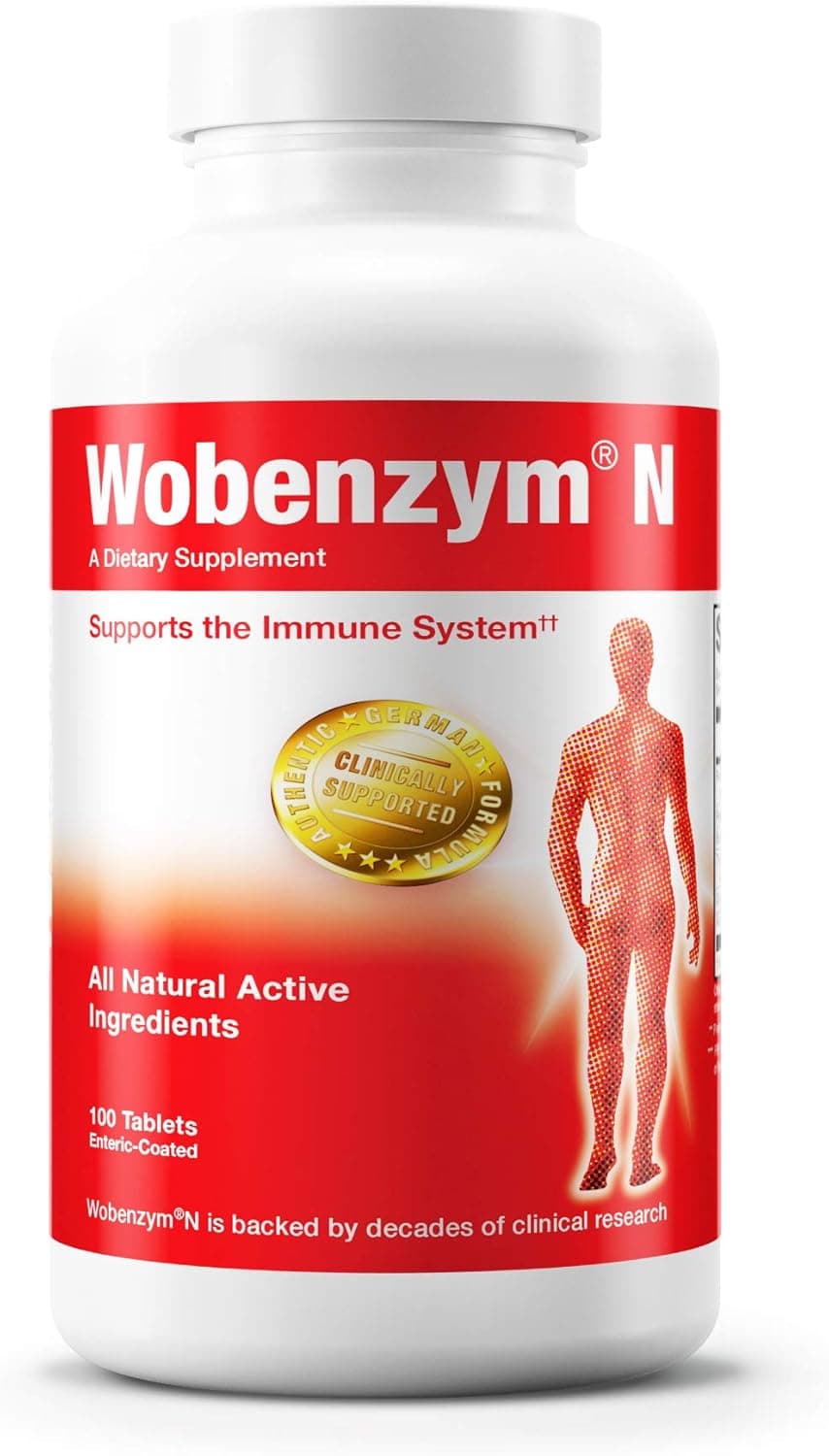
- Stomach acid destroys it, so the enteric coating is doing real work rather than dressing the capsule up. That coating is what gets the enzyme to the alkaline stretch where it functions.
1capsules a day is where Trypsin works.
Source: Ianiro G et al. Aliment Pharmacol Ther. 2016;44(7):663-673
The proof, claim by claim.
These words describe the research, not the molecule's worth. Research strength is how much work stands behind one claim, and it is never a product score.
- Aids protein digestionEstablished enzyme function
- Reduces inflammationSome positive trials, results inconsistent
- Speeds wound healingLimited evidence, some positive studies
- Reduces muscle sorenessSome sports recovery studies show benefit
Questions people ask about Trypsin.
- Doesn't my body make trypsin?
- Yes, your pancreas does. Supplementing helps if pancreatic function is impaired or for systemic enzyme therapy purposes.
- What's systemic enzyme therapy?
- Taking enzymes between meals so they're absorbed and work throughout the body, not just in digestion. Controversial but has some evidence.
- Does it survive stomach acid?
- Enteric-coated products protect trypsin from stomach acid. Non-coated forms are less effective for systemic use.
- Can it help with sports recovery?
- Some studies show proteolytic enzymes reduce muscle soreness and speed recovery. Evidence is mixed but promising.
- Is it the same as in laundry detergent?
- Similar enzymes are used industrially. Supplement-grade trypsin is purified for human consumption.
- Should I take it with or between meals?
- With meals for digestive support. Between meals for systemic effects.
Why these belong in the same formula. Each row says what the basis is, from settled biochemistry through to a trial that measured the pair.
Trypsin activates chymotrypsinogen to chymotrypsin, then the two cut peptide chains at different residues, trypsin after lysine and arginine and chymotrypsin after aromatic residues. Together they fragment protein far further than either alone.
Pancreatin is the combined pancreatic secretion containing trypsin along with amylase, lipase and chymotrypsin. Supplying it delivers the protease alongside the enzymes for starch and fat in one preparation.
Pepsin works at gastric acid pH and hands partly cleaved peptides to trypsin, which works in the alkaline duodenum. The two cover consecutive compartments rather than overlapping.
Trypsin, chymotrypsin and bromelain have been combined in oral enzyme preparations for decades because their cleavage specificities differ. Bromelain is a cysteine protease that stays active across a wider pH range than the pancreatic serine proteases.
The classic oral enzyme formula pairs trypsin and chymotrypsin with the flavonoid rutin. Rutin is the non-enzymatic component of that fixed combination rather than a protease itself.
This oral enzyme preparation is built around pancreatic trypsin and chymotrypsin plus plant proteases and rutin. It is the reference formulation for oral proteolytic enzyme use.
Papain is a cysteine protease with broad specificity that works at pH ranges where the serine proteases are weaker. Blends combine it with trypsin so protein is cut at more points along the chain.
Trypsin and lipase are secreted together by the pancreas and act on protein and fat in the same duodenal contents. Enzyme products supply both because a mixed meal needs both.
Trypsin has an alkaline pH optimum near 8 and is inactivated by gastric acid. Bicarbonate raises duodenal pH into the range where trypsin can work, which is also why these enzymes are usually enteric coated.
Secretin released from the duodenum drives pancreatic bicarbonate output that neutralises gastric acid. That is the step that creates the alkaline environment in which trypsin becomes active.
Serrapeptase is a bacterial metalloprotease with a different active site chemistry from pancreatic serine proteases. Oral enzyme blends combine the two to broaden the range of peptide bonds cleaved.
Trypsin has a calcium binding site that stabilises the folded protein and slows autolysis, which is why calcium is added to trypsin solutions in the laboratory. Without bound calcium the enzyme degrades itself faster in solution. The relationship is structural stabilisation rather than catalytic activation, so calcium is not consumed by the reaction.
Bile salts emulsify dietary fat and, by breaking up fat-coated food particles, expose more protein surface for protease action. Trypsin cleaves the protein while bile handles the lipid phase surrounding it. The two act on different substrates in the same compartment rather than on each other.
Amylase and trypsin are secreted together from pancreatic acinar cells and act on starch and protein respectively in the same alkaline duodenal environment. Breaking down the starch matrix in a mixed meal exposes embedded protein to protease access. Both share a requirement for the bicarbonate-raised pH the pancreas supplies alongside them.
Trypsin cleaves peptide bonds on the carboxyl side of lysine and arginine, and whey protein is well supplied with both. That makes whey a highly tryptic substrate, which is part of why it hydrolyses quickly. The pairing describes substrate availability, not an enhancement of the enzyme itself.
Betaine hydrochloride lowers gastric pH, which suits pepsin, while trypsin needs the alkaline duodenal pH that pancreatic bicarbonate provides and is inactivated by acid. Taken as one product, the acid supports the first digestive stage and the enzyme acts only after gastric contents are neutralised downstream. Enteric coating is what protects the enzyme through the acidic stage.
Trypsin is one component of a full protease, lipase and amylase set, and it does not cover starch or fat at all. In a blend it also performs the activation step that converts the other pancreatic zymogens into their active forms. Dosing trypsin alone leaves the other macronutrient classes unaddressed.
Proteolytic enzyme products are conventionally formulated with a bioflavonoid component, most often rutin and sometimes quercetin. The pairing is a long-standing formulation convention rather than a demonstrated pharmacological interaction. No combination measurement supports it beyond the practice itself.
Dietary Bacillus subtilis was associated with greater digestive enzyme activity, trypsin among the enzymes measured, in animal feeding work. The measurement is an intestinal enzyme activity marker in animals, not a digestive outcome in people. It grounds a mechanism worth naming and nothing stronger.
Dietary taurine was reported to raise intestinal digestive and absorptive measures and alter villus morphology in mice. Taurine also conjugates bile acids, which is a plausible route to better lipid handling alongside protease activity. This is animal data on markers and does not carry to a human effect.
A viscous fibre gel slows the diffusion of proteases toward their protein substrates and of released peptides back to the mucosa. Taken in the same serving as a protease supplement, that thickened matrix stretches out the digestion curve. Spacing the two keeps the enzyme working in a less viscous environment.
Colostrum is valued for intact immunoglobulin and lactoferrin content, and both are cleaved by trypsin like any other dietary protein. Adding a protease alongside colostrum works against keeping those proteins intact through the gut. Separating them, or using an enteric colostrum format, avoids the conflict.
Nothing specific on file for Trypsin. Match the label to the daily amount above, and tell your doctor what you take.
Not medical advice. Show the label to your pharmacist.What Trypsin actually does.
Trypsin is a protein-cutting digestive enzyme that uses a three-part chemical team of serine, histidine and aspartate to snip peptide bonds apart.
It only cuts next to two amino acids, lysine and arginine, because a negatively charged spot at the bottom of its pocket pulls in their positively charged side chains.
The pancreas ships it out in an off state. An enzyme on the gut lining flips it on in the small intestine, and once a little trypsin is active it switches on the rest by itself.
Active trypsin is the on-switch for the pancreas's other protein-digesting enzymes, converting them from their stored inactive forms into working ones.
Where Trypsin comes from.
It comes from pig or cattle pancreas collected at the abattoir. The tissue is kept cold and worked up in acid so the enzyme stays switched off while it is being cleaned, then it is deliberately switched on at alkaline pH with calcium added to stop it eating itself, and dried. What goes on the label is activity units, because grams of powder tell you nothing about how much of the enzyme still works.
Made from an animal material. Species and tissue are the things worth knowing, and both belong on a label.
Pig or cattle pancreas collected as an abattoir by-product, chilled or frozen promptly to limit autolysis before processing
The tissue is minced and extracted under mildly acidic conditions, which keeps the enzyme in its inactive trypsinogen form and slows self-digestion during handling
Ammonium sulfate precipitation removes bulk protein, then ion exchange or affinity chromatography separates trypsinogen from the other pancreatic proteins
Trypsinogen is activated at alkaline pH, with calcium present to stabilise the enzyme and suppress autolysis during the conversion
The activated enzyme is crystallised or freeze dried into a stable powder, often with calcium salt as a stabiliser
Each lot is assayed against a defined substrate and declared in protease activity units rather than by weight, since mass does not indicate surviving activity
Getting Trypsin from food.
The whole-food sources on file. A supplement closes the gap, it does not replace dinner.
A gram-for-gram figure (how much of each you would eat to match a dose) will appear here once it is sourced and reviewed. This page will not print a number it cannot cite.
The forms it comes in.
The essence, in one line each.
- Dietary Bacillus subtilis supplementation was associated with higher intestinal digestive enzyme activity, trypsin included, alongside growth and antioxidant measures.Animal study. Zhang et al., 2026 (Animals). PMID 42450647 ↗
- N-carbamylglutamate supplementation was reported to raise protein digestive enzyme function and muscle growth measures.Animal study. Zhao et al., 2026 (Animals). PMID 42193849 ↗
- Dietary taurine increased intestinal digestion and absorption measures and altered villus morphology.Animal study. Kong et al., 2026 (Animals). PMID 42193794 ↗
- A dietary flower additive was associated with changes in gut health and digestive enzyme measures, trypsin among those assayed.Animal study. Hyukhongkaeo et al., 2026 (Animals). PMID 42278134 ↗
- Dietary squalene supplementation was associated with changes in growth performance and intestinal digestive enzyme activity.Animal study. Liu et al., 2026 (Veterinary Sciences). PMID 42188918 ↗
- Pomegranate juice byproducts used as a dietary additive were associated with changes in antioxidant and digestive enzyme measures.Animal study. Kim et al., 2026 (Antioxidants). PMID 42072158 ↗
These are the studies our verdict leans on, chosen from the 6 we read for Trypsin. The full linked list is below.
The studies, linked.
6 sources behind our Trypsin verdict: peer-reviewed studies and registered clinical trials. Every one links straight to PubMed, the journal, or ClinicalTrials.gov. Read them yourself.
- Clinical trialA Prospective, Multi-Centre, Double-Blind, Randomized, Placebo-Controlled, Trial of Ulinastatin Treatment in Adult Patients With Sepsis and Septic Shock in ChinaClinicalTrials.gov ↗Phase 4, 347 participants, Completed
- Clinical trialThe Effect of Premedication With Trypsin, Bromelain and Rutoside Combination on the Success of IAN Block and Post Endodontic Pain in Patients With Symptomatic Irreversible Pulpitis: A Randomized Clinical TrialClinicalTrials.gov ↗124 participants, Completed
- Clinical trialTo Investigate How Secreted-embryo-derived Trypsin Initiates, Maintains and Terminates Ca2+ (Intracellular Calcium) Signals in Uterine Epithelial CellsClinicalTrials.gov ↗81 participants, Completed
- Clinical trialPost-market Safety Reassessment of Ulinastatin for InjectionClinicalTrials.gov ↗10,000 participants, Unknown
- Clinical trialComparing the Effect of Acetaminophen, NSAIDs, Trypsin-chymotrypsin + Acetaminophen on Post-endodontic Pain Using Visual Analog Scale (VAS) After Single Visit Endodontic Treatment: A Randomized Controlled TrialClinicalTrials.gov ↗Early phase 1, 90 participants, Recruiting
- Clinical trialSingle Dose Administration of Alpha-1 Anti-Trypsin for the Amelioration of Organ Injury and Post Operative Bleeding in Patients Undergoing Cardiac Surgery With Cardiopulmonary Bypass: Double-blind, Placebo-controlled Pilot StudyClinicalTrials.gov ↗Phase 1, 20 participants, Unknown
Evidence surfaced via Semantic Scholar (Allen Institute for AI) and ClinicalTrials.gov. Ranked by study type and citation weight, not cherry-picked.
Problems people have reported.
Read this carefully. These are 413 voluntary, unverified reactions reported to the FDA (openFDA). The number mostly reflects how popular Trypsin is, not how risky it is. A report is not proof Trypsin caused anything. It is a signal of what to watch for, nothing more.
Source: openFDA adverse-event reports. Voluntary reporting, not an incidence rate.
FDA Disclaimer: These statements have not been evaluated by the Food and Drug Administration. This information is for educational purposes only and is not intended to diagnose, treat, cure, or prevent any disease. Consult your healthcare provider before starting any supplement regimen.