Catechins.
The flavan-3-ols that give green tea its character. They work mostly through metabolites and support antioxidant defence plus lipids already in the normal range.
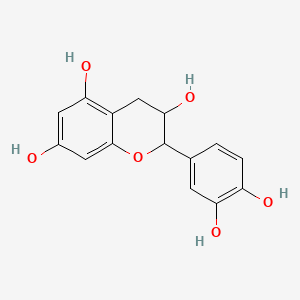 Compound
- Category
- Compound
What Catechins is, and what it does.
- Does it work
- Suits people who want tea chemistry in a capsule, and anyone supporting normal lipids and body composition alongside their diet and training.
- How much to take
- No dose figure is on record here. Extracts declare their catechin or EGCG content, so read that figure, start at the label's lower amount and take it with food.
- Time to feel it
- Nothing acute. Lipid and body composition changes in trials emerge over eight to twelve weeks and show on a panel or a scale rather than as a feeling.
- The first dose
- Day one is quiet unless the product carries caffeine, in which case you feel the caffeine. The catechin work happens at the metabolite level.
- With regular use
- Weeks of daily intake move measured markers modestly. Meta-analyses show small but real shifts in lipids and body composition.
- How well tolerated
- Tea-level intake is well tolerated. Concentrated extracts taken fasted have been linked in case reports to raised liver enzymes, so take them with a meal.
- How it feels
- Slightly astringent going down, and that is about the extent of the sensation. The effect lives on a blood panel rather than in your afternoon.
- The overlooked benefit
- Catechins compete with catecholamines at COMT, the enzyme that clears them. That is settled pharmacology and worth knowing if you take anything else acting there.
The proof, claim by claim.
What these words mean
These words describe the research, not the molecule's worth. Research strength is how much work stands behind one claim, and it is never a product score.
- Cholesterol already in the normal rangeMeta-analysis
- Body weight and body compositionMeta-analysis
4 more claims
- Blood pressure already in the normal rangeMeta-analysis
- Radical scavenging chemistry in laboratory assaysIn vitro study
- Glucose metabolism already in the normal rangeMeta-analysis
- Microbial conversion to phenolic acids and valerolactonesRandomised trial
Why these belong in the same formula, 10 pairings
Why these belong in the same formula. Each row says what the basis is, from settled biochemistry through to a trial that measured the pair.
Catechins, and EGCG in particular, degrade quickly at the near-neutral pH of the small intestine. Ascorbate slows that autoxidation, and in vitro and animal absorption work has repeatedly shown higher recovery of intact catechin when ascorbate is present. Whether this changes any human outcome has not been established. The mechanism is a stability effect, not a transporter effect.
Catechins are rapidly methylated by COMT and pumped back into the lumen by MRP2 and P-glycoprotein, which is a large part of why plasma levels stay low. Quercetin acts on both of those routes in vitro and has raised catechin exposure in animal work. Human confirmation is thin. Both compounds also co-occur naturally in tea and fruit, so the pairing is not exotic.
Green tea delivers catechins and theanine in the same cup, and much of the human data on tea is data on that combination rather than on catechins alone. Theanine acts on glutamatergic and GABAergic signalling. Catechins act largely on redox and enzyme systems. They do not share a mechanism, and attributing a tea effect to either one alone overstates what the studies show.
Catechins inhibit COMT, which degrades noradrenaline, while caffeine antagonises adenosine receptors. The two converge on sympathetic tone from different directions, which is the standard explanation for why green tea extract trials use caffeinated preparations. Effect sizes on energy expenditure in humans are small and inconsistent between trials. The combination also stacks stimulant load, which matters for anyone sensitive to caffeine.
Ornithine feeds the urea cycle, which is the main route for ammonia disposal, while tea catechins have been proposed to affect exercise metabolism through separate routes. A 2025 trial in the European Journal of Applied Physiology examined acute and chronic co-supplementation against exercise-induced ammonia accumulation. This is a single small line of work and should be read as preliminary. The endpoint is a blood marker, not a performance outcome.
Long-chain polyunsaturated fats oxidise readily, and phenolic antioxidants slow that process in the oil phase and in the gut. This is mainly a formulation and stability argument rather than a demonstrated clinical pairing. It sits alongside, not instead of, the tocopherol normally added to fish oil products.
Once vitamin E quenches a lipid radical it becomes a tocopheroxyl radical and must be recycled to keep working. Water-soluble phenols positioned at the membrane interface can perform that reduction, which is the same role ascorbate plays. The chemistry is well described in model membrane systems. Extrapolating a measurable human antioxidant benefit from it is a longer step than the data supports.
Adding milk to tea measurably reduces the free, extractable catechin fraction because the proteins complex the polyphenol. Whether that changes net absorption in people is genuinely contested, with studies pointing both ways. Formulators should know the binding happens. Consumers should not assume it abolishes the catechin dose. The complex also blunts astringency, which is why the combination exists in food.
The same catechol chemistry that binds iron will bind other divalent metals to a lesser degree. Evidence for a meaningful effect on human zinc status from catechin intake is weak compared with the iron case. Separating high-dose catechin supplements from mineral supplements by a couple of hours is a low-cost precaution. Do not read it as a reason to avoid either.
Catechin preparations are usually standardised to EGCG content, so the two labels often describe the same material at different levels of specificity. Stacking a general catechin extract with a concentrated EGCG product raises the total EGCG dose without the label making that obvious. High cumulative EGCG intake from concentrated extracts taken fasted has been linked to liver enzyme changes in case reports, so total intake is worth tracking.
Nothing specific on file for Catechins. Match the label to the daily amount above, and tell your doctor what you take.
Not medical advice. Show the label to your pharmacist.What Catechins actually does.
Catechins are a class of plant compounds. The main dietary ones differ in how many hydroxyl groups they carry and whether a gallate group is attached.
3 more mechanisms
Certain hydroxyl groups on these molecules donate hydrogen to free radicals, which is the basis for the antioxidant activity measured in test-tube assays, but those lab numbers don't translate directly into antioxidant activity in the body.
Catechins are poorly absorbed when taken by mouth. One type in particular reaches blood levels well below what most lab cell experiments use.
Once absorbed, catechins get heavily modified by the gut and liver, so what actually circulates in blood is mostly a modified form, not the original compound listed on the label.
Getting Catechins from food.
The whole-food sources on file. A supplement closes the gap, it does not replace dinner.
A gram-for-gram figure (how much of each you would eat to match a dose) will appear here once it is sourced and reviewed. This page will not print a number it cannot cite.
The forms it comes in.
4 more forms
The essence, in one line each.
- Matcha is described as a concentrated source of catechins alongside theanine and caffeine, with the review cataloguing proposed bioactivities rather than testing them.Narrative review. Slawinska P et al., 2026 (Nutrients). PMID 42197072 ↗
4 more findings
- In a systematic review and meta-analysis of studies in people with a diagnosed gum condition, natural products including catechins, when used with standard dental cleaning, significantly improved measures of gum health, but the results varied widely between studies.Systematic review, in people with periodontitis. de Molon RS et al., 2026 (International Journal of Molecular Sciences). PMID 41828611 ↗
- Polyphenols including catechins are discussed for redox and inflammatory signalling effects, with the evidence base described as preclinical.Narrative review. Carollo C et al., 2026 (Nutrients). PMID 41901130 ↗
- An umbrella review of nutrients and skin outcomes that includes catechins among the compounds with proposed protective roles.Systematic review. Granvillano G et al., 2026 (Preventive Nutrition and Food Science). PMID 41815197 ↗
- Reviews cellular and molecular mechanisms attributed to dietary polyphenols including catechins, framed as mechanistic rather than clinical.Narrative review. Lin S et al., 2026 (Frontiers in Oncology). PMID 42500289 ↗
Chosen from the 6 we read for Catechins.
The studies, linked.
2 sources behind our Catechins verdict, every one linked to PubMed, the journal or ClinicalTrials.gov.
- Clinical trialCatechins and Omega-3 Fatty Acids Impact on Fatty Acid Synthase Activity in the Prostate: A Randomized Controlled TrialClinicalTrials.gov ↗89 participants, Completed
1 more linked trial
- Clinical trialEfficacy of Oral or Topical Catechins vs. Placebo as an Adjuvant for the Prevention and Management of Radiation Dermatitis in Oncology Patients: a Randomized TrialClinicalTrials.gov ↗Phase 3, 162 participants, Enrolling by invitation
From clinical trials and PubMed, ranked by study type and citation weight, not cherry-picked.
FDA Disclaimer: These statements have not been evaluated by the Food and Drug Administration. This information is for educational purposes only and is not intended to diagnose, treat, cure, or prevent any disease. Consult your healthcare provider before starting any supplement regimen.