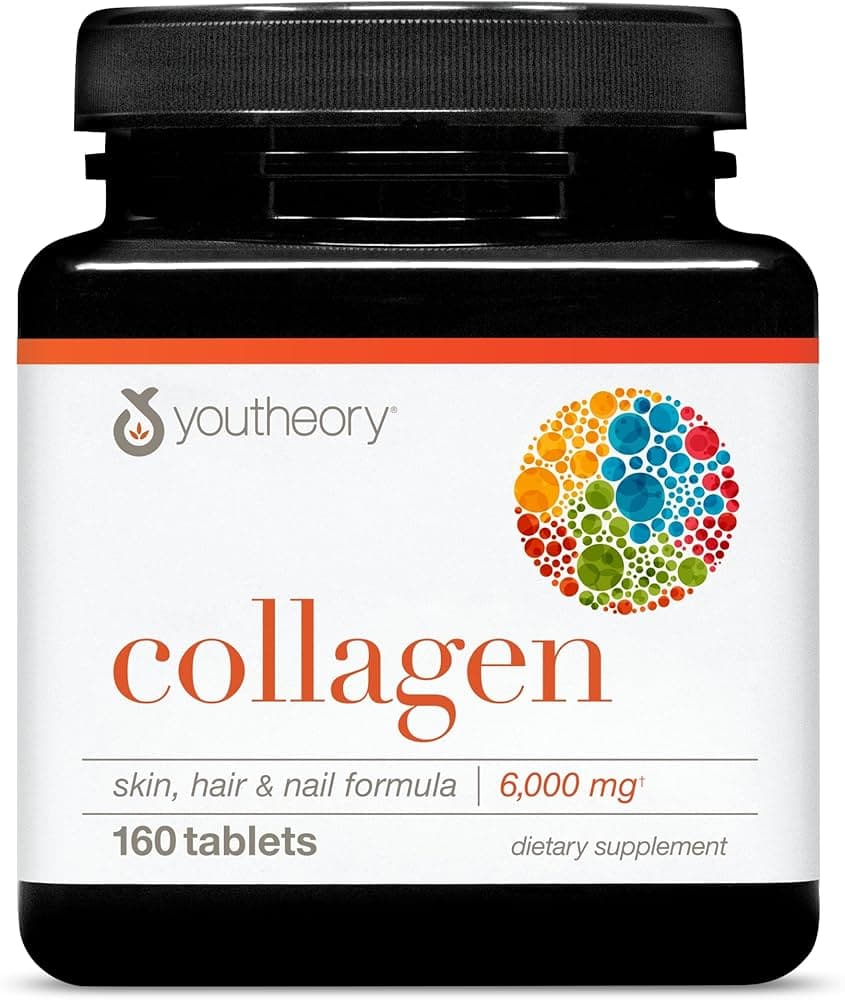
Collagen (Gut-Specific).
Collagen for gut barrier rather than skin. Amino acids for gut lining. Glycine, proline, glutamine support. Theory over proof.
Reviewed March 2026
- Category
- Compound
- Also filed under
- Gut liningGlycine provisionBarrier support
What Collagen (Gut-Specific) is, and what it does.
- Does it work
- Limited specific research. General collagen research plus gut health logic. Not proven.
- How much to take
- Start with 5 to 10g a day of hydrolysed peptides stirred into anything hot or cold. That band is the daily maintenance amount, and 20g belongs to study protocols.
- Time to feel it
- Nobody has measured a clean onset for the gut side. Reports of steadier digestion drift in across two to four weeks, and there is no marker to check them against.
- The first dose
- Day one is a protein serving. Glycine-rich peptides join the amino acid pool within hours, and many people find it sits lighter than whey. The gut side is not a day one story.
- With regular use
- Weeks to months if it works at all.
- How well tolerated
- Well tolerated. Its protein. No real concerns.
- How it feels
- Maybe better digestion. Maybe nothing. Individual response varies a lot.
- The overlooked benefit
- Collagen is about a third glycine, and glycine is the amino acid your body makes least of relative to what it spends. A scoop is one of the densest dietary glycine sources going.
2,500 to 10,000mg a day is where Collagen (Gut-Specific) works.
Source: Choi 2019 meta-analysis + Zague 2011 skin studies
The proof, claim by claim.
These words describe the research, not the molecule's worth. Research strength is how much work stands behind one claim, and it is never a product score.
- Dietary supply of glycine, proline and hydroxyprolineNarrative review
- Absorption of collagen dipeptides through the PEPT1 transporterNarrative review
- Gut barrier integrityIn vitro study
- Digestive comfort and bloatingRandomised trial
Questions people ask about Collagen (Gut-Specific).
- When should I take it?
- Timing matters less than consistency. Pick a time that works for you and take it daily.
- When is the best time to take it?
- Within 2 hours of training is ideal, but total daily protein matters more than timing. The "anabolic window" is wider than gym bros think.
- How much do I actually need?
- For muscle building: 1.6-2.2g protein per kg bodyweight daily. One scoop (20-25g) per day is a good supplement amount if your diet is already decent.
- Can I take it with other supplements?
- Usually fine. The main thing to watch is not doubling up on the same ingredient from different products. If you're on prescription meds, check with your pharmacist first.
- Who benefits most from this?
- People with a specific, evidence-backed need. Collagen Gut has strong research. If your situation matches the studied use case, it's one of the more reliable supplements you can take.
Why these belong in the same formula. Each row says what the basis is, from settled biochemistry through to a trial that measured the pair.
Glutamine is the main respiratory fuel of enterocytes and supports tight junction protein expression, while collagen peptides supply glycine and proline for the underlying matrix. One feeds the cell layer and the other supplies the scaffold beneath it.
Collagen is roughly one third glycine, so free glycine loads the same amino acid pool directly. Glycine also serves conjugation and bile acid pathways in the gut.
Proline and hydroxyproline make up much of the collagen triple helix and are enriched in gut connective tissue. Free proline supplements the same pool.
Prolyl and lysyl hydroxylase need ascorbate to hydroxylate the residues that stabilise the collagen helix. Supplying peptides without vitamin C leaves that step short of its cofactor.
Lysyl oxidase is copper-dependent and forms the covalent crosslinks that give collagen its mechanical strength. Substrate without the cofactor gives weaker crosslinking.
Butyrate is the primary energy source of colonocytes and supports tight junction and mucin gene expression. It feeds the epithelium sitting on the matrix collagen peptides supply.
Zinc carnosine adheres to the mucosal surface and supports epithelial migration and repair processes, which is distinct from supplying structural amino acids.
N-acetylglucosamine feeds the amino sugar pool used to glycosylate mucins and glycosaminoglycans in the gut lining. Collagen supplies the protein side, NAG the sugar side.
Slippery elm mucilage forms a physical hydrated layer at the mucosal surface, a mechanical effect rather than a substrate one. The pairing rests on formulation practice.
Marshmallow polysaccharides hydrate into a viscous coating at the mucosal surface. The effect is physical and sits alongside amino acid supply.
Collagen carries almost no tryptophan and little of several other essential amino acids, so it does not count as a complete protein on its own. Pairing it with a complete protein covers the residues collagen lacks.
Collagen hydrolysate delivers a large load of small peptides and free amino acids into the upper small intestine. Peptides and amino acids from digested protein can keep non-heme iron in a soluble, chelated state at duodenal pH, which is the same general route by which meat protein digests influence iron uptake. This is a mechanistic expectation from digestion chemistry rather than a measured effect of collagen peptides on iron status.
Zinc is a structural and catalytic cofactor for the matrix metalloproteinases and for collagenase-type enzymes that remodel collagen in mucosal tissue, and it is also required for normal protein synthesis. Supplying collagen-derived amino acids without adequate zinc leaves the remodelling machinery under-supported. The relationship is cofactor availability, not a tested combination outcome.
Manganese activates glycosyltransferases that build the glycosaminoglycan chains sitting alongside collagen in connective and mucosal tissue. Collagen peptides contribute the amino acid substrate. Manganese-dependent enzymes handle the sugar side of the same matrix. Pairing addresses two different inputs to one structure.
Hyaluronic acid and collagen are the two dominant structural components of the lamina propria matrix that sits beneath the gut epithelium. Oral hyaluronic acid is largely broken to smaller fragments and oligosaccharides by gut bacteria before absorption, so the pairing is a matrix-substrate pairing rather than an absorption interaction. No combination trial in gut endpoints supports this pairing.
Glucosamine feeds the hexosamine biosynthetic pathway that supplies UDP-N-acetylglucosamine, the sugar donor for mucin glycosylation and for matrix glycosaminoglycans. Collagen peptides supply the peptide backbone side of the same tissue. The two act on different halves of one structural system, and the argument is biochemical rather than clinical.
Lysine residues in a nascent collagen chain are hydroxylated by lysyl hydroxylase and then oxidised by lysyl oxidase to form the aldehyde that generates mature covalent crosslinks. Collagen itself is comparatively low in lysine relative to glycine and proline, so lysine availability is a separate input to crosslink formation. This is settled biochemistry of collagen assembly.
Pyridoxal 5-phosphate is the cofactor for the transaminases and for the serine hydroxymethyltransferase step that interconverts serine and glycine. A large glycine load from collagen peptides is handled through B6-dependent chemistry before it enters other pathways. The link is cofactor dependence of amino acid handling, not a demonstrated combination effect.
The glycine cleavage system uses a flavin-dependent dihydrolipoamide dehydrogenase to dispose of surplus glycine and feed one-carbon units into folate metabolism. Collagen peptides are roughly one third glycine by residue, so they load that system directly. Riboflavin status is therefore an input to how a glycine-rich protein is metabolised.
Glycine cleavage transfers a one-carbon unit onto tetrahydrofolate, tying a glycine-rich protein load to folate-dependent one-carbon metabolism. Adequate folate keeps that acceptor pool available. This is metabolic accounting from established pathways, not an outcome measured in a trial.
A share of ingested collagen peptide escapes small intestinal absorption and reaches the colon, where resident bacteria ferment peptide nitrogen. The composition of that community influences whether the products lean toward short chain fatty acids or toward putrefactive metabolites. Adding defined live cultures changes that fermentation context, which is a plausible modulating pairing rather than a tested one.
Colonic bacteria shift away from protein fermentation when a fermentable carbohydrate source is present, because carbohydrate is the preferred energy substrate. Pairing a fermentable fibre with a peptide load moves the balance of colonic fermentation products. The mechanism is well described in gut microbial ecology. The specific pairing with collagen peptides has not been trialled.
Lactoferrin is an iron-binding glycoprotein that acts at the mucosal surface, while collagen peptides act as an absorbed amino acid and dipeptide source. The pairing is a formulation combination of two proteins with different sites of action. Evidence for a combined effect is not established.
Bovine colostrum contributes immunoglobulins and growth factors that survive partial digestion, and collagen hydrolysate contributes glycine, proline and hydroxyproline-containing dipeptides. They are commonly formulated together for gut-directed products. The pairing rests on formulation convention and separate mechanisms, not on a combination trial.
Native collagen resists pepsin and pancreatic proteases because of its triple helix and its high imino acid content. Hydrolysis is what makes it digestible in the first place. Supplemental proteases can continue that breakdown of any residual larger fragments in the stomach and duodenum. The interaction is substrate availability for proteolysis.
Pepsin needs an acidic gastric pH to cleave protein, and collagen fragments are among the more resistant substrates. Agents that lower gastric pH keep pepsin in its active range during the meal. This is digestive chemistry, and it is not a claim about anyone's stomach acid production.
Galloylated catechins and other tannins bind tightly to proline-rich proteins, which is the chemistry behind astringency and behind haze formation with gelatin. Collagen is the archetypal proline-rich protein, so co-ingestion in the same solution can precipitate complexes before either component is absorbed. Separating the two in time avoids the interaction.
Tannic acid precipitates gelatin and collagen in solution. The reaction is classical enough to be used as an analytical test. Formulating or drinking the two together forms insoluble complexes. This is a compatibility point for beverages and powders rather than a health claim.
Carbonate salts raise gastric pH, and pepsin activity falls steeply as pH rises. Any residual proteolysis of collagen fragments in the stomach is slowed in that window. The effect is on digestion kinetics and has not been measured for collagen peptide absorption specifically.
Viscous soluble fibre slows gastric emptying and thickens the intestinal contents, which changes how quickly a dissolved peptide load reaches the absorptive surface. The direction of that change for collagen dipeptides has not been measured. Flagged as a timing and texture consideration, not an established benefit or a loss.
The prolyl and lysyl hydroxylases that mature a collagen chain are 2-oxoglutarate dependent dioxygenases operating inside a redox-active cellular environment maintained in part by NAD-dependent systems. Niacin supplies the NAD precursor for that pool. The link is cofactor supply to the wider hydroxylation environment rather than a direct catalytic role, so it is graded below the direct cofactor pairings.
Orthosilicic acid has been described as influencing collagen deposition and glycosaminoglycan cross-linking in connective tissue models. The human data are thin and mostly outside the gut. Listed at Early confidence as a matrix pairing with mechanistic interest only.
Glycine is the third amino acid condensed onto gamma-glutamylcysteine to complete glutathione, and collagen peptides are an unusually concentrated dietary glycine source. Intestinal epithelium synthesises glutathione locally at high rates. The connection is substrate supply to a synthetic pathway, not a measured rise in tissue glutathione from collagen.
Cysteine availability is usually the rate-limiting input to glutathione synthesis and glycine can become limiting in some settings. NAC supplies the cysteine side, collagen peptides supply glycine. The pairing is complementary substrate supply, and it does not by itself establish an outcome.
Retinoic acid signalling through nuclear receptors governs normal differentiation of intestinal epithelium and of the mucosal immune compartment. Collagen peptides act as structural substrate rather than as a signal. The two touch mucosal maintenance from different directions.
Nothing specific on file for Collagen (Gut-Specific). Match the label to the daily amount above, and tell your doctor what you take.
Not medical advice. Show the label to your pharmacist.What Collagen (Gut-Specific) actually does.
Collagen is roughly one third glycine by residue count, with plenty of proline and hydroxyproline, so hydrolysed collagen is a concentrated dietary source of those three amino acids rather than a complete protein.
Enzyme hydrolysis chops native collagen into peptides of a few thousand daltons and smaller. The triple helix that lets raw collagen shrug off pepsin and pancreatic enzymes is already broken before you swallow it.
Small collagen dipeptides, especially prolyl-hydroxyproline and hydroxyprolyl-glycine, cross the gut lining whole through the proton-coupled peptide transporter PEPT1 and show up in blood after an oral dose.
PEPT1 sits thickest on the brush border of the small intestine and pulls di- and tripeptides in on an inward proton gradient, which is why nitrogen in peptide form can be absorbed faster than the same amino acids taken free.
Where Collagen (Gut-Specific) comes from.
It starts as animal skin, bone, fish scale or cartilage from meat and fish processing. That tissue is cleaned, cooked down into gelatin, then cut into much smaller pieces with enzymes so it dissolves in cold water instead of setting into a jelly. What comes out is filtered, dried into a powder, and checked for peptide size, protein content and hydroxyproline before it is packed.
Made from an animal material. Species and tissue are the things worth knowing, and both belong on a label.
Bovine hide or bone, porcine skin, fish skin and scales, or chicken cartilage, taken as a by-product of the meat and fish processing chain. The tissue type sets the collagen types present: type I and III from hide and bone, type I from fish skin, type II from cartilage.
Alkaline liming or acid soaking removes non-collagen protein, fat and mineral. Bone feedstock is additionally demineralised with dilute acid to yield ossein before any collagen is released.
Controlled heating in water unwinds the triple helix and releases soluble gelatin. This is the step that converts insoluble structural collagen into a workable liquid.
Food-grade proteases cleave the gelatin into peptides. Enzyme choice and reaction time set the average molecular weight, which is the specification that distinguishes a standard hydrolysate from a tripeptide-enriched fraction.
Filtration, ion exchange and activated carbon treatment remove residual fat, colour, odour and salts before concentration.
Batches are specified on average molecular weight, protein content by nitrogen conversion, hydroxyproline content, ash and moisture. Peptide-form products may additionally be specified on the Pro-Hyp fraction.
The concentrate is spray dried to a free-flowing, cold-water-soluble powder, then blended into sticks, capsules, chews or ready-to-drink formats.
Getting Collagen (Gut-Specific) from food.
The whole-food sources on file. A supplement closes the gap, it does not replace dinner.
A gram-for-gram figure (how much of each you would eat to match a dose) will appear here once it is sourced and reviewed. This page will not print a number it cannot cite.
The forms it comes in.
The essence, in one line each.
- A pooled review of dietary interventions for skin ageing includes oral collagen peptides among the interventions assessed. The ingredient appears inside the wider review rather than as its own isolated analysis.Meta-analysis. Ng et al., 2025 (Journal of Physiological Anthropology). PMID 41174715 ↗
- A review of targeted supplementation for healthy ageing names collagen peptides among the physiological and molecular strategies discussed. This is expert synthesis, not a measured effect.Narrative review. Kurtz et al., 2026 (Current Nutrition Reports). PMID 42234350 ↗
- A review of combined topical and oral approaches in dermatology mentions ingestible collagen among internal approaches under discussion. No gut endpoint is assessed.Narrative review. Haykal et al., 2026 (Dermatology and Therapy). PMID 41926038 ↗
These are the studies our verdict leans on, chosen from the 3 we read for Collagen (Gut-Specific). The full linked list is below.
FDA Disclaimer: These statements have not been evaluated by the Food and Drug Administration. This information is for educational purposes only and is not intended to diagnose, treat, cure, or prevent any disease. Consult your healthcare provider before starting any supplement regimen.