DL-methionine.
It supplies methionine, the sulfur amino acid your body turns into SAMe, the methyl donor behind most methylation reactions, and the starting point for making cysteine.
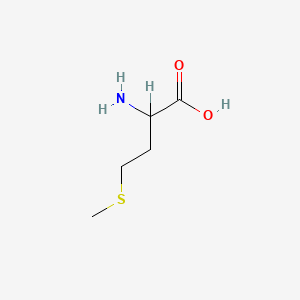 Amino acid
- Category
- Amino acid
What DL-Methionine is, and what it does.
- Does it work
- It suits people whose protein intake runs low or plant-heavy, since methionine is one of the amino acids plant proteins carry least of.
- How much to take
- No dose figure is on record for supplemental methionine. Most of what people get arrives in dietary protein, and it's normally taken with a meal.
- Time to feel it
- There's no acute effect to time. Methionine status shows on an amino acid or homocysteine panel rather than in how a day goes.
- The first dose
- Day one passes quietly. The amino acid joins the pool your body is already drawing on for protein synthesis and for methylation.
- With regular use
- Over weeks it feeds the methylation pool and cysteine supply. The change reads out on a blood panel rather than as a sensation.
- How well tolerated
- Well tolerated in amounts near food intake. Large single amounts raise homocysteine, so keep B12, B6 and folate covered, and anyone pregnant should check first.
- How it feels
- Nothing subjective. It's a building block, and its work sits in protein synthesis and methylation chemistry rather than in anything you'd sense.
- The overlooked benefit
- The D half isn't wasted. Liver and kidney convert D-methionine to the L form in two steps, and for methionine that conversion runs efficiently in humans.
The proof, claim by claim.
What these words mean
These words describe the research, not the molecule's worth. Research strength is how much work stands behind one claim, and it is never a product score.
- methyl donor supply through S-adenosylmethionineNarrative review
- initiation of protein synthesis as an indispensable amino acidNarrative review
3 more claims
- cysteine and glutathione precursor supply through transsulfurationNarrative review
- conversion of the D isomer to L-methionine in humansRandomised trial
- sulfur amino acid adequacy on plant-based protein intakesNarrative review
Why these belong in the same formula, 19 pairings
Why these belong in the same formula. Each row says what the basis is, from settled biochemistry through to a trial that measured the pair.
Methionine synthase uses methylcobalamin to move a methyl group from folate onto homocysteine, regenerating methionine. Without adequate B12 that recycling step stalls and homocysteine accumulates. Adding methionine raises flux through a pathway whose exit depends on this cofactor.
5-methyltetrahydrofolate supplies the methyl group that methionine synthase transfers. Folate and B12 work as a pair here, and a shortfall in either produces the same bottleneck. This is the main reason methionine, folate and B12 are discussed together.
The transsulfuration route that disposes of homocysteine by converting it toward cysteine runs on two pyridoxal-5-phosphate dependent enzymes. When methionine intake rises, this is the arm that carries the surplus. Low B6 status narrows that exit.
Pyridoxal-5-phosphate is the form the enzymes actually bind, and pyridoxine has to be phosphorylated and oxidised to get there. That conversion itself needs riboflavin-derived FMN. The practical point is that the coenzyme, not the vitamin name, is what the pathway uses.
MTHFR carries a flavin cofactor derived from riboflavin, and it is the enzyme that produces the methylfolate used for remethylation. Riboflavin status influences that step measurably, particularly in people carrying the thermolabile MTHFR variant. It is the quietest of the B vitamins in this pathway and the most often missed.
Betaine provides a second, folate-independent route back from homocysteine to methionine, operating mainly in liver and kidney. It is the backup lane when the folate route is limited. This is the classic pairing when methionine load is being pushed.
Choline is oxidised to betaine, so choline supply feeds the same folate-independent remethylation route. The traffic runs both ways, since making phosphatidylcholine from phosphatidylethanolamine consumes three methyl groups from SAM. Choline and methionine sit on opposite ends of the same methyl budget.
Glycine N-methyltransferase soaks up excess SAM by methylating glycine to sarcosine, which is the body's way of buffering a methyl surplus. High methionine intake without glycine leaves that buffer short of substrate. It is a genuine counterweight rather than an additive partner.
Methionine adenosyltransferase converts methionine plus ATP into S-adenosylmethionine, the universal methyl donor. Supplying SAMe directly bypasses that ATP-consuming step. Taking both means arriving at the same pool by two routes, so the total methyl load is what matters.
Cysteine is made from homocysteine, so dietary cysteine spares methionine that would otherwise be consumed to produce it. In protein-quality terms cysteine is the sparing partner for methionine and the two are usually assessed together. Adequate cysteine lowers how much methionine has to be committed downstream.
N-acetylcysteine is deacetylated to cysteine and enters the same pool that methionine feeds through transsulfuration. That makes it an alternative sulfur source rather than an amplifier. Combining both raises total sulfur amino acid load, which is the thing to keep an eye on.
Cysteine derived from methionine is the rate-limiting amino acid for glutathione synthesis, with glycine and glutamate making up the tripeptide. Methionine supply therefore sits upstream of glutathione capacity. Whether extra methionine raises glutathione depends on whether cysteine was the limiting step in the first place.
Cysteine can be oxidised toward taurine instead of being used for glutathione, so the two compete for the same precursor. Supplying taurine directly leaves more cysteine available for other uses. This is a branch point rather than a straightforward addition.
The betaine-dependent remethylation enzyme carries a catalytic zinc that activates the thiol of homocysteine. Zinc status therefore touches the folate-independent arm of the pathway. It is an easy cofactor to overlook when the discussion is dominated by B vitamins.
Making carnitine requires trimethylating lysine residues using three methyl groups from SAM, which methionine supplies. Dietary carnitine removes that methyl expense. This is one of the larger fixed methyl costs in normal metabolism.
Carnitine synthesis needs a lysine skeleton and methionine-derived methyl groups together, so the two amino acids are joint inputs to the same product. Neither alone completes the route. This is a genuine co-substrate relationship rather than a marketing pairing.
Guanidinoacetate methyltransferase uses SAM to make creatine, and this reaction accounts for a large share of daily methylation demand. Taking creatine reduces endogenous synthesis and therefore spares methyl groups. The interaction runs in the direction of creatine reducing methionine demand rather than the other way round.
Sulfur from methionine ultimately leaves as sulfate, produced by molybdenum-dependent sulfite oxidase. That is the exit valve for a raised sulfur amino acid load. Molybdenum requirements are small but the step is obligatory.
Methionine residues are readily oxidised to methionine sulfoxide and act as sacrificial oxidant sinks in proteins. Ascorbate participates in the broader redox network that keeps those pools in balance. The link is mechanistic and drawn from biochemistry rather than from a trial of the pair.
Nothing specific on file for DL-Methionine. Match the label to the daily amount above, and tell your doctor what you take.
Not medical advice. Show the label to your pharmacist.What DL-Methionine actually does.
It is a fifty-fifty mix of two mirror-image versions. Your body builds protein from only one of them.
3 more mechanisms
The mirror-image half is flipped into the usable form by the liver and kidneys, and methionine is one of the amino acids where this works well.
It gets turned into the body's main methyl donor, the molecule that hands out chemical tags across metabolism.
Once it drops off its methyl tag it becomes homocysteine, which either gets recycled back or gets converted onward toward cysteine.
Where DL-Methionine comes from.
It is made in a chemical plant, not grown or fermented. The reaction that builds it cannot tell left from right, so you end up with an even mix of both mirror images, which is exactly what the DL in the name means.
What this route gives you
Chemically synthesised. The molecule is identical to the one a plant or an animal makes, and building it deliberately means a known purity, a fixed dose and no crop contaminants. For several nutrients this is the only route that reaches a usable amount.
6 steps on record
Acrolein is made from propylene, and methyl mercaptan from methanol plus hydrogen sulfide.
Methyl mercaptan adds across acrolein to give the aldehyde intermediate that carries the sulfur side chain.
The aldehyde reacts with hydrogen cyanide and ammonium carbonate in a Bucherer-Bergs reaction to build the hydantoin ring.
The hydantoin is opened with base to give the methionine salt. Because the ring forms without stereocontrol, the product is racemic, which is where the DL comes from.
Neutralisation precipitates DL-methionine, which is filtered, washed and recrystallised.
Dried and milled to a free-flowing white crystalline powder, assayed by titration or chromatography.
Some suppliers now use fermentation to make L-methionine directly. A label reading DL-methionine indicates the chemical route, since fermentation gives the single L form.
Getting DL-Methionine from food.
The whole-food sources on file. A supplement closes the gap, it does not replace dinner.
A gram-for-gram figure (how much of each you would eat to match a dose) will appear here once it is sourced and reviewed. This page will not print a number it cannot cite.
The forms it comes in.
4 more forms
The essence, in one line each.
- Dietary DL-methionine improved growth measures alongside changes in redox and intestinal markers in the birds studied.Animal study. Lv B et al., 2025 (Poultry Science). PMID 40782610 ↗
6 more findings
- DL-methionine supplied above the estimated requirement altered intestinal morphology and antioxidant measures in the animals studied.Animal study. Morales A et al., 2023 (Journal of Animal Science). PMID 36383458 ↗
- DL-methionine supplementation shifted tissue and plasma antioxidant status and oxidation product concentrations.Animal study. Zeitz JO et al., 2020 (Animals). PMID 33167600 ↗
- DL-methionine in a low-fishmeal diet stimulated ASCT2-mediated amino acid transport and TOR/S6K signalling.Animal study. He Y et al., 2022 (British Journal of Nutrition). PMID 35393926 ↗
- Methionine and methionyl-methionine supplementation offset several adverse effects of a low fishmeal diet on antioxidant and intestinal measures.Animal study. Yu H et al., 2024 (Antioxidants). PMID 38539892 ↗
- DL-methionine and the free-acid hydroxy analogue produced broadly similar growth and carcass outcomes at the levels tested, with no difference detected between sources.Animal study. Medeiros PT et al., 2026 (Animals). PMID 42353423 ↗
- A review of amino acid supplementation in cardiovascular and kidney contexts, in which methionine is discussed among the amino acids covered rather than tested on its own.Systematic review. Mikolajetz D et al., 2026 (Cardiovascular Research). PMID 41560345 ↗
Chosen from the 7 we read for DL-Methionine.
Problems people have reported.
Read this carefully. These are 403 voluntary, unverified reactions reported to the FDA (openFDA). The number mostly reflects how popular DL-Methionine is, not how risky it is. A report is not proof DL-Methionine caused anything. It is a signal of what to watch for, nothing more.
3 more reported effects
Source: openFDA adverse-event reports. Voluntary reporting, not an incidence rate.
FDA Disclaimer: These statements have not been evaluated by the Food and Drug Administration. This information is for educational purposes only and is not intended to diagnose, treat, cure, or prevent any disease. Consult your healthcare provider before starting any supplement regimen.