Gelatin (Bovine).
Beef-derived gelatin used to make softgel and hard capsule shells, with trace collagen content. Forms a capsule shell that dissolves quickly in your stomach to release supplement contents.
Reviewed March 2026
- Category
- Compound
- Also filed under
- Time tested capsule materialReliable dissolutionTrace collagen peptides
What Gelatin (Bovine) is, and what it does.
- Does it work
- It's a capsule material, not a health supplement. Reliable and well-tested for its actual purpose.
- How much to take
- Not applicable. The shell contains maybe 75-150mg of gelatin. You'd need 2,500-10,000mg for collagen benefits.
- Time to feel it
- The shell softens in stomach fluid and gives up its fill within minutes, which is the whole job. It isn't an active, so it has no onset of its own.
- The first dose
- Capsule dissolves in your stomach within a few minutes. No effect from the gelatin itself.
- With regular use
- No long-term effects from capsule-shell amounts of gelatin.
- How well tolerated
- Well tolerated for most people. Decades of use. Not suitable for vegetarians, vegans, or some religious dietary requirements.
- How it feels
- You don't feel gelatin capsule shells. They dissolve and the contents do their thing.
- The overlooked benefit
- Heat, humidity or stray aldehydes make gelatin cross-link, and a cross-linked shell opens more slowly. That's why dissolution gets retested after storage.
The proof, claim by claim.
These words describe the research, not the molecule's worth. Research strength is how much work stands behind one claim, and it is never a product score.
- Reliable capsule dissolution
- Provides collagen benefit
Questions people ask about Gelatin (Bovine).
- Does the capsule give me collagen?
- Technically yes, but the amount (75-150mg) is 20-50x less than what you'd need for any collagen benefit. Don't count on it.
- Is bovine gelatin safe with BSE concerns?
- Modern pharmaceutical gelatin is certified BSE-free. Strict regulations require sourcing from BSE-free herds and processing that removes any prion risk.
- Should I switch to vegan capsules?
- Only if you have a dietary reason (vegan, halal, kosher). For health purposes, both capsule types work fine.
Why these belong in the same formula. Each row says what the basis is, from settled biochemistry through to a trial that measured the pair.
The hydroxylases that convert proline and lysine residues into their hydroxylated forms need ascorbate to keep their iron centre reduced. Gelatin supplies the residues, vitamin C makes the modification possible.
Around a third of gelatin's residues are glycine because the collagen repeat requires a small residue at each third position. Extra glycine feeds the same pool and supports normal connective tissue turnover.
Proline is hydroxylated after it is built into the collagen chain, and hydroxyproline is what stabilises the triple helix. Added proline widens the substrate pool for that conversion.
Lysine residues are the anchor points that lysyl oxidase uses to cross-link adjacent collagen strands. Gelatin runs low in lysine, so co-dosing balances the profile.
Lysyl oxidase carries a copper ion at its active site and cannot form collagen cross-links without it. Copper status therefore sets how much of the supplied amino acid becomes stable matrix.
Bovine gelatin and collagen peptides are the same parent protein at different degrees of hydrolysis, so they draw on one glycine, proline and hydroxyproline pool. Stacking both mostly adds dose rather than a new mechanism.
Zinc is the catalytic metal in matrix metalloproteinases and in enzymes of protein synthesis, both of which govern collagen turnover. Amino acid supply alone does not compensate for low zinc.
Tannins bind proline-rich proteins such as gelatin and drop them out of solution, the reaction used industrially to clarify beverages. Co-dosing reduces the intact protein available for digestion.
Gelatin carries essentially no tryptophan, the reason it counts as an incomplete protein. Pairing the two closes that gap in the amino acid profile.
Gelatin is unusually rich in glycine, and glycine handling runs through pyridoxal-5-phosphate dependent enzymes including the glycine cleavage system and serine hydroxymethyltransferase. Adequate B6 status is what lets a large glycine load be metabolised normally rather than accumulating. This is settled cofactor biochemistry, not a combination trial.
Glycosyltransferases that build the proteoglycan ground substance around collagen fibres are manganese dependent. Gelatin supplies the amino acid raw material. Manganese sits on the enzymes that assemble the surrounding matrix. The pairing is a cofactor relationship rather than a tested combination.
Silicon is found in connective tissue and has been described as contributing to normal collagen and glycosaminoglycan formation. Paired with gelatin the two act on different points of the same structural pathway, one supplying amino acids and one associated with matrix cross-linking. Human combination data is limited, so this sits below the level of a settled cofactor relationship.
Glucosamine feeds glycosaminoglycan synthesis while gelatin supplies the glycine and proline that dominate the collagen triple helix. Formulators pair them because they contribute different building blocks to the same connective tissue, supporting joint comfort and mobility during normal activity. The rationale is structural rather than from a head to head combination trial.
Chondroitin is a sulfated glycosaminoglycan of cartilage matrix and gelatin is denatured collagen from the same tissue class. Together they cover both the fibrous and the hydrated components of connective tissue. The pairing is common in joint formulas and rests on tissue composition rather than a combination study.
Hyaluronic acid holds water in the extracellular matrix that collagen fibres sit within. Gelatin contributes the peptide side, hyaluronic acid the hydration side. Combining them is a formulation logic drawn from tissue structure.
MSM supplies sulfur used in the disulfide and sulfation chemistry of connective tissue, an element gelatin is poor in because collagen carries almost no cysteine. The two are complementary on composition grounds. Human data on the combination is thin, so this stays at a modest confidence.
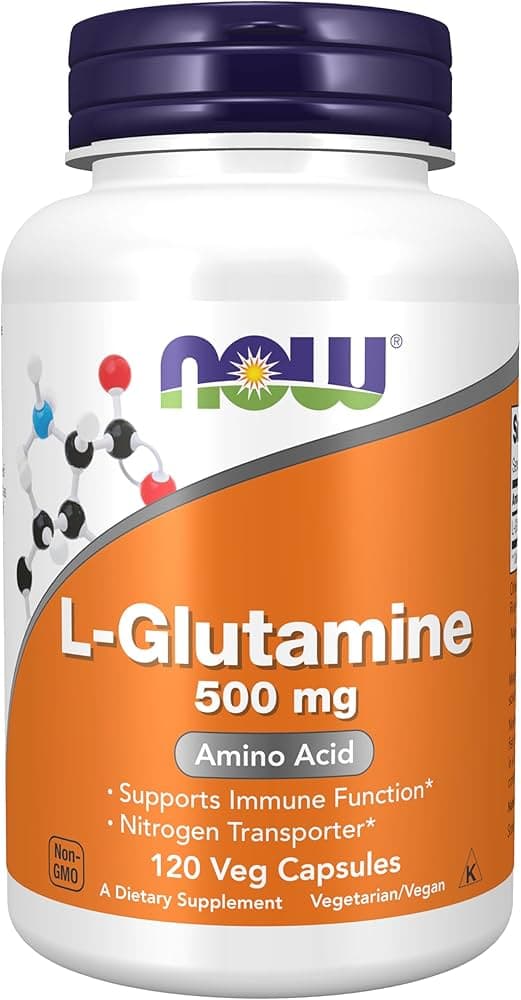
Glutamine is a preferred fuel for enterocytes and gelatin supplies glycine and proline that the gut wall also uses. Both are ordinary amino acid substrates rather than active drugs. The pairing supports normal intestinal lining turnover on substrate grounds, not from a trial of the two together.
Gelatin itself contains a meaningful share of arginine alongside glycine and proline, so supplemental arginine adds to the same free amino acid pool. Arginine is also the precursor for proline and ornithine synthesis. The relationship is amino acid metabolism, established and uncited.
Gelatin is a protein and reaches the bloodstream only as di- and tripeptides and free amino acids after proteolysis. Pancreatic and supplemental proteases carry out that hydrolysis. Where protein digestion is sluggish, enzyme support is what makes the substrate usable.
Pepsin performs the first cut of dietary protein in the stomach and works only in an acidic environment. Gelatin taken as a protein source depends on that initial hydrolysis before intestinal peptidases finish the job. This is standard digestive physiology.
Betaine hydrochloride lowers gastric pH, and pepsinogen only converts to active pepsin below roughly pH 5. For a protein like gelatin the practical effect is on the first stage of digestion. The mechanism is well described. How much it changes amino acid delivery in ordinary use is not well quantified.
Proanthocyanidins bind proline-rich proteins and precipitate them, which is the classic tannin and gelatin interaction used as an analytical test for centuries. Taken in the same mouthful, a high tannin extract can complex gelatin peptides before digestion. Separating the two by an hour avoids the issue.
Galloylated catechins bind gelatin and other proline-rich proteins and form insoluble complexes, the same chemistry that makes strong tea taste astringent. Co-ingestion can tie up both partners. Spacing them out is the practical answer.
Biotin is a carboxylase cofactor involved in normal keratin infrastructure, while gelatin supplies collagen amino acids to skin and nail beds. The two support different proteins in the same tissue. Combination evidence in people is limited.
Talk to a doctor before taking Gelatin (Bovine) if any of these apply to you: Not suitable for vegetarians/vegans, Not halal unless certified, Bovine source raises concerns for some. These are flags to check first, not effects Gelatin (Bovine) is known to cause.
Not medical advice. Show the label to your pharmacist.What Gelatin (Bovine) actually does.
Gelatin is partly broken down collagen, so its amino acid makeup looks like collagen's, lots of glycine, proline and hydroxyproline, and almost none of two other amino acids.
Hydroxyproline in collagen is made after the protein chain is built, by an enzyme that needs iron and vitamin C. Eating hydroxyproline directly doesn't skip that step, the enzyme still needs its helpers.
Gelatin forms a gel that melts and re-sets with temperature, which is why a gelatin capsule shell holds its shape on the shelf but softens in the stomach.
A gelatin capsule shell dissolves in stomach fluid to release what's inside, and that dissolving is separate from whatever chemistry the filling itself has.
Getting Gelatin (Bovine) from food.
The whole-food sources on file. A supplement closes the gap, it does not replace dinner.
A gram-for-gram figure (how much of each you would eat to match a dose) will appear here once it is sourced and reviewed. This page will not print a number it cannot cite.
The forms it comes in.
The essence, in one line each.
- In 64 adults with excess body weight, 20 g a day of a water-swelling bovine collagen for 12 weeks lowered body weight, body mass index and systolic blood pressure, raised fat-free mass, and increased reported fullness.Randomised trial. López-Yoldi et al., 2024 (Nutrients). PMID 39458544 ↗
- In 15 active women, 15 g a day of collagen peptides raised post-exercise GLP-1 and insulin and lowered food intake at the next meal by about 10 percent (roughly 41 kcal), in a very small sample.Randomised trial. Reynolds et al., 2025 (The British journal of nutrition). PMID 40685650 ↗
- The authors compared gelatin preparations for antioxidant activity and reported increased collagen expression in cultured human skin fibroblasts, a cell-level marker rather than a clinical outcome.In vitro study. Peng et al., 2025 (Food Chemistry: X). PMID 40791881 ↗
- Dual-stage crosslinked gelatin and alginate bioink produced printable scaffolds that supported cell viability, which speaks to gelatin as a structural biomaterial and not to oral intake.In vitro study. Phan et al., 2026 (Polymers). PMID 42280543 ↗
- A gelatin sponge served as the carrier matrix for stromal cells in a preclinical revascularisation model, so the gelatin role reported here is as a delivery scaffold.Animal study. Locatelli et al., 2026 (International Journal of Molecular Sciences). PMID 42074124 ↗
These are the studies our verdict leans on, chosen from the 4,921 we read for Gelatin (Bovine). The full linked list is below.
FDA Disclaimer: These statements have not been evaluated by the Food and Drug Administration. This information is for educational purposes only and is not intended to diagnose, treat, cure, or prevent any disease. Consult your healthcare provider before starting any supplement regimen.