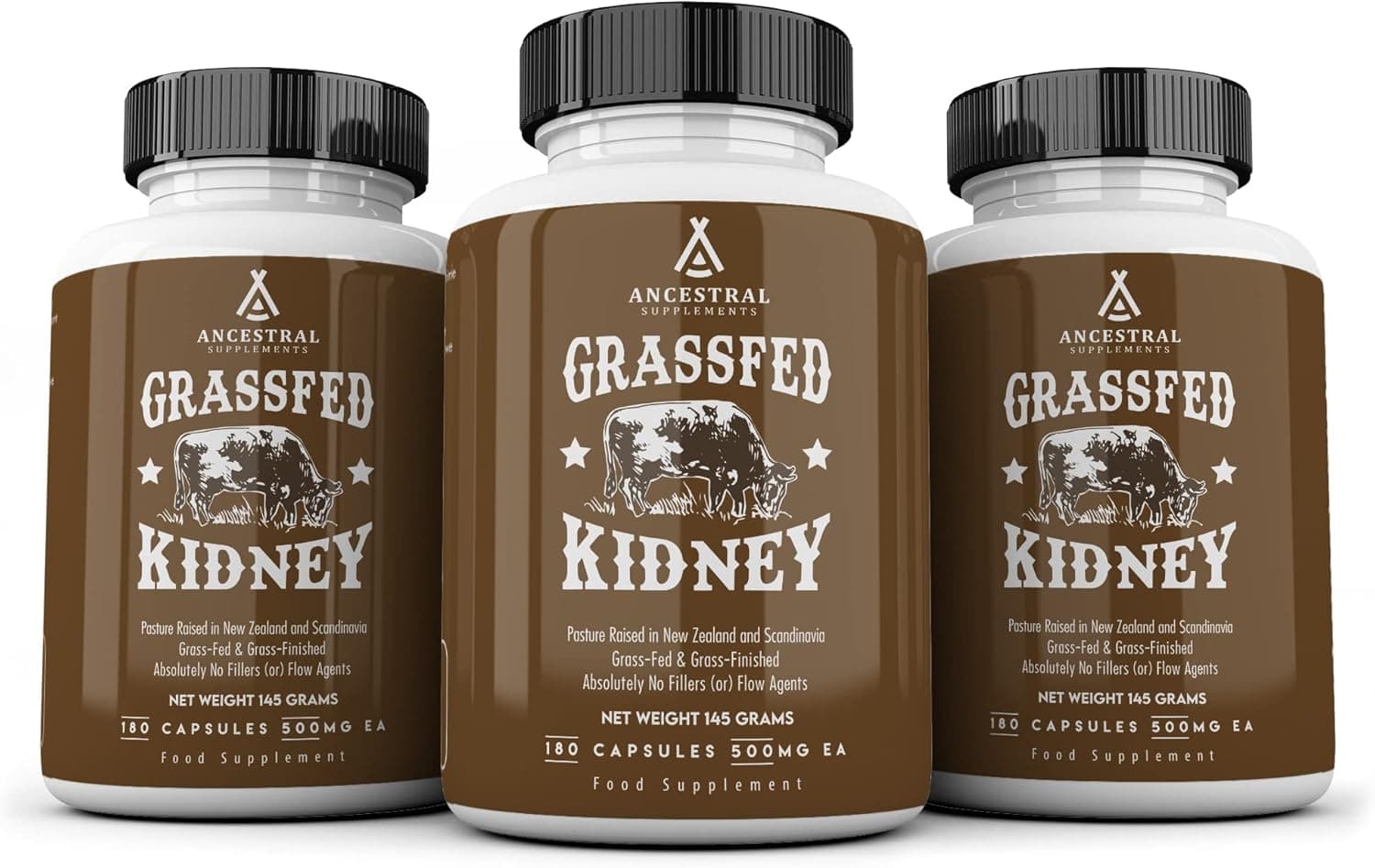
Heart Glandular Bovine.
Heart Glandular Bovine supplementation for targeted health support. Provides concentrated cardiac tissue nutrients including CoQ10, carnitine, B vitamins, and organ-specific peptides. Supports heart function through nutrient delivery.
Reviewed March 2026
- Category
- Glandular
What Heart Glandular Bovine is, and what it does.
- Does it work
- Decent way to get CoQ10 and other heart nutrients in whole-food form. If you believe in ancestral nutrition, this fits. Pure CoQ10 supplements might be more efficient for specific goals.
- How much to take
- 500-1500mg daily (1-3 capsules typically). Grass-fed, freeze-dried forms preserve nutrients best.
- Time to feel it
- Think in weeks. It works as a food-form nutrient source, so change turns up on iron and B12 markers and in day-to-day stamina rather than on a set day.
- The first dose
- Nothing noticeable. This isn't a stimulant. Nutritional support takes time.
- With regular use
- Benefits emerge over weeks to months if you were deficient in any of the nutrients provided. Energy and exercise tolerance may improve.
- How well tolerated
- Generally well tolerated if sourced properly. Quality control is crucial.
- How it feels
- Mostly nothing immediate. Long-term users report sustained energy. It's subtle, not dramatic.
- The overlooked benefit
- The iron here is heme iron from muscle tissue, absorbed by its own route and less affected by tea, coffee or phytate in the same meal than a mineral iron salt.
200 to 500mg a day is where Heart Glandular Bovine works.
Source: Glandular therapy reviews; no controlled clinical trials
The proof, claim by claim.
These words describe the research, not the molecule's worth. Research strength is how much work stands behind one claim, and it is never a product score.
- Provides CoQ10Nutritional analysis confirms CoQ10 content
- Supports heart functionVia nutrient provision, not directly studied
- 'Like supports like'Plausible for nutrients, unproven for peptides
- Better than supplementsSupplements provide more targeted, higher doses
Questions people ask about Heart Glandular Bovine.
- Is 'like supports like' real science?
- Partially. Organ meats do contain nutrients concentrated in those organs. Heart is high in CoQ10. Whether tissue-specific peptides have unique benefits is less proven.
- Why not just take CoQ10?
- You can. Glandulars provide a broader nutrient profile. If you specifically need CoQ10, supplements give you more and more precisely dosed.
- Is there a BSE/mad cow risk?
- Theoretical. Reputable companies source from BSE-free countries (US, New Zealand, Australia) and avoid brain/spinal tissue. Check sourcing.
- How much CoQ10 is in heart glandular?
- Variable but typically 2-4mg per gram of tissue. Much less concentrated than CoQ10 supplements. You're getting a complex, not a targeted dose.
- Is grass-fed really better?
- For glandulars, yes. Grass-fed animals have higher CoQ10 and better fatty acid profiles. The difference matters more here than in muscle meat.
Why these belong in the same formula. Each row says what the basis is, from settled biochemistry through to a trial that measured the pair.
Cardiac muscle is among the most mitochondria-dense tissues and carries one of the highest coenzyme Q concentrations of any organ, so bovine heart tissue supplies some of the same molecule. A formula using both is stacking one source on another rather than adding a separate nutrient.
Heart muscle holds a large free and acyl carnitine pool because it runs mainly on fatty acid oxidation. Bovine heart tissue therefore contributes carnitine alongside any that is added separately.
Taurine is the most abundant free amino acid in mammalian cardiac muscle, where it takes part in calcium handling and cell volume regulation. Heart tissue supplies it in the same formula as any added taurine.
Organ tissue from ruminants is one of the densest dietary sources of cobalamin, held largely as adenosylcobalamin in mitochondria. A heart glandular therefore carries B12 whether or not it is declared separately.
Cardiac muscle is rich in myoglobin and cytochromes, so the iron it carries is largely in the heme form absorbed through a separate route from non-heme iron. Adding a separate heme iron source overlaps with what the tissue already supplies.
Calcium taken in the same meal reduces uptake of both heme and non-heme iron at the enterocyte, and heart tissue delivers its iron in the heme form. Separating the two by a few hours avoids the overlap.
Cytochrome c oxidase needs both copper and heme iron to move electrons to oxygen, and cardiac muscle is dense in that enzyme. Organ tissue supplies the iron side generously and copper less predictably. The pairing is respiratory-chain enzymology, not a tested supplement combination.
Zinc, copper and non-heme iron share intestinal transport capacity, so a large load of one can lower uptake of another taken at the same time. A mineral-rich tissue powder brings that competition into a single capsule. Spacing the standalone mineral away from the glandular is the ordinary answer.
Ascorbate reduces ferric to ferrous iron and keeps it soluble, which raises absorption of the non-heme iron fraction. Cardiac tissue supplies mostly heme iron, which uses a different route, so the effect applies to part of the load rather than all of it. Say which fraction is in play before implying a whole-product effect.
Riboflavin becomes FAD, the cofactor of succinate dehydrogenase and of the flavoproteins that feed electrons into the coenzyme Q pool. A CoQ10-bearing tissue is therefore only as useful as the flavin supply feeding into it. This is respiratory-chain biochemistry.
NAD, made from niacin, carries the electrons that dehydrogenases hand to complex I upstream of coenzyme Q. Supporting the quinone pool without the nucleotide pool addresses one half of a two-part system. Established cofactor chemistry, no combination study needed or available.
Lipoic acid is the covalently bound cofactor of pyruvate and alpha-ketoglutarate dehydrogenase, the entry points for substrate oxidation in heart muscle. It sits upstream of the same electron flow that carnitine and coenzyme Q serve. Whether supplemental lipoate reaches those enzyme complexes is a separate question from the cofactor role itself.
Almost every enzyme that binds or transfers ATP binds it as a magnesium complex, so magnesium is a condition of energy metabolism rather than a participant in it. A tissue powder aimed at mitochondrial support runs into that requirement immediately. Cofactor pharmacology, stated as such.
Thioredoxin reductase is a selenoenzyme and participates in keeping quinones and thiols in their reduced state. That places selenium status alongside any coenzyme Q the tissue supplies. The link is enzymology. No trial has paired selenium with a glandular preparation.
Reduced coenzyme Q regenerates alpha-tocopherol after it has quenched a lipid radical in a membrane, so the two work as a couple rather than in parallel. A CoQ10-bearing tissue and a tocopherol both land in the same lipid compartment. Freeze-dried organ powder also carries oxidisable fat that a tocopherol protects during storage.
Methionine synthase needs both methylcobalamin and 5-methyltetrahydrofolate, so B12 from animal tissue does little for the cycle without folate present. Organ meats supply the B12 side well and the folate side unevenly, with liver much richer than heart. The pairing is textbook one-carbon metabolism.
Betaine offers a folate-independent way to remethylate homocysteine to methionine, running in parallel with the B12 and folate route that animal tissue feeds. It is a second lane on the same road. Nothing here concerns a measured combination.
Cardiac and skeletal muscle both hold creatine and phosphocreatine, so a muscle-tissue powder contributes a small amount toward the same pool a creatine dose fills. The amounts are not comparable: a supplemental gram dwarfs what a capsule of dried tissue can carry. Additive in direction, very unequal in size.
Ribose is the pentose backbone of the adenine nucleotides, which is why it is grouped with carnitine and coenzyme Q in cardiac-support formulas. The pairing rationale is metabolic bookkeeping rather than a combination trial. Confidence is deliberately low.
Long-chain omega-3 fats are structural components of cardiac membrane phospholipid, and the same membranes hold the coenzyme Q that organ tissue supplies. Formulators pair them for that shared compartment. The reasoning is compositional. No study has measured the two together.
Desiccated organ powder is largely denatured protein and needs ordinary gastric and pancreatic proteolysis to release its amino acids and bound cofactors. Protease blends are added on that reasoning, particularly in larger multi-capsule servings. Practice, not measured benefit.
Pepsin only works at low gastric pH, and mineral release from a protein matrix depends on the same acidity. Acidifiers are paired with tissue powders for that reason. The rationale is digestive physiology. It has not been tested with a glandular product.
Nothing specific on file for Heart Glandular Bovine. Match the label to the daily amount above, and tell your doctor what you take.
Not medical advice. Show the label to your pharmacist.What Heart Glandular Bovine actually does.
Heart muscle is one of the most mitochondria-dense tissues you've got. That's why dried heart brings real amounts of coenzyme Q10, heme iron as myoglobin, taurine, carnitine and B vitamins. It follows straight from what the tissue does, and that's the honest case for it.
Swallowed tissue protein gets broken into amino acids and short peptides by stomach and pancreatic enzymes before any of it is absorbed. Whole proteins from a dried organ don't get delivered to the matching organ in the person eating them, because digestion offers no such route.
Coenzyme Q10 in tissue doesn't like heat or oxygen, and neither do the tocopherols travelling with it. Drying temperature, air exposure and time on the shelf decide how much of the declared cofactor content is still there in the capsule.
Heme iron from muscle tissue takes a different absorption route than mineral iron salts, and phytate and polyphenols in the same meal bother it less. So a tissue powder and an iron salt behave differently in a formula even when the iron figures look comparable.
Getting Heart Glandular Bovine from food.
The whole-food sources on file. A supplement closes the gap, it does not replace dinner.
A gram-for-gram figure (how much of each you would eat to match a dose) will appear here once it is sourced and reviewed. This page will not print a number it cannot cite.
The forms it comes in.
FDA Disclaimer: These statements have not been evaluated by the Food and Drug Administration. This information is for educational purposes only and is not intended to diagnose, treat, cure, or prevent any disease. Consult your healthcare provider before starting any supplement regimen.