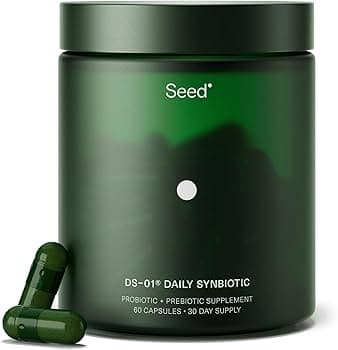
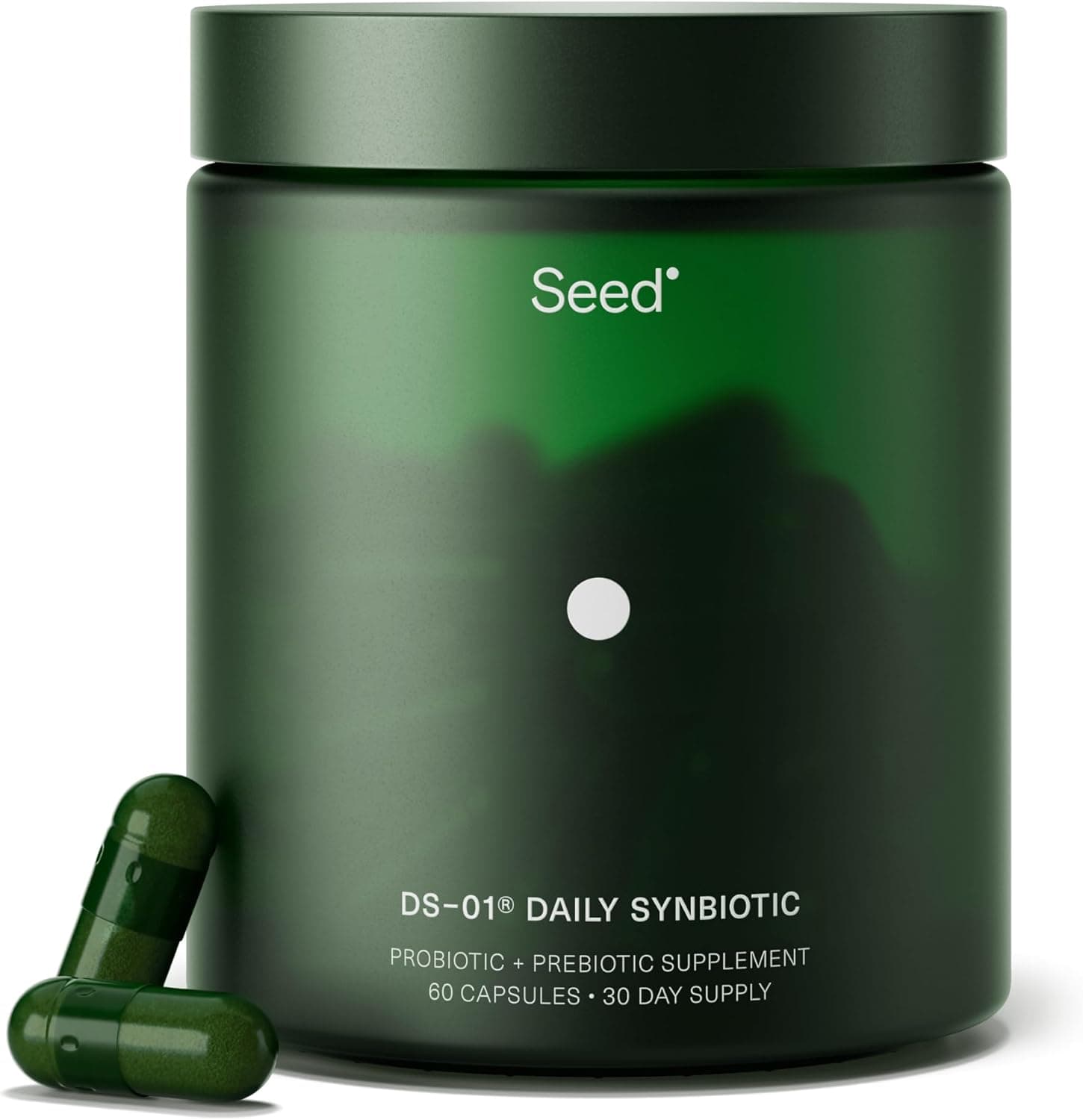
Ligilactobacillus salivarius SD-LS1-IT.
A probiotic strain with specific benefits for oral health, gum health, and upper GI balance. Supports oral health by competing with pathogenic mouth bacteria (especially those causing gingivitis and periodontitis). Also supports upper GI balance and general immune function.
Reviewed March 2026
- Category
- Probiotic
- Also filed under
- Oral healthGum healthUpper GI balanceImmune support
What Ligilactobacillus salivarius SD-LS1-IT is, and what it does.
- Does it work
- Suits people focused on gum comfort and fresher breath, and anyone who wants a live strain that works in the mouth rather than the gut. It sits alongside brushing and flossing.
- How much to take
- 1-5 billion CFU daily. For oral health benefits specifically, use lozenges or chewable tablets that dissolve in the mouth. Swallowed capsules primarily benefit the gut, not the mouth.
- Time to feel it
- Give it three to four weeks. Oral studies read gum bleeding scores and plaque bacteria counts at four to eight weeks, so the change is measured before it is obvious.
- The first dose
- Nothing noticeable. The bacteria need time to establish in your oral microbiome. Some people report a slightly different 'mouth feel' after a few days, but most won't notice anything initially.
- With regular use
- Across four to eight weeks, studies report lower plaque bacteria counts, less bleeding when brushing and better breath markers. The effect holds while you keep taking it.
- How well tolerated
- Well tolerated in trials, with no meaningful side effects reported in adults or children. Anyone with a seriously weakened immune system should check with their clinician first.
- How it feels
- A cleaner feeling mouth and milder morning breath. Gums that bleed less when you floss. Subtle enough that most people notice its absence more than its presence.
- The overlooked benefit
- This species already lives in the human mouth and upper gut, so a lozenge that dissolves slowly puts it where it belongs. A swallowed capsule delivers it somewhere else.
1 to 10 CFU a day is where Ligilactobacillus salivarius SD-LS1-IT works.
Source: L. salivarius oral health trials; Neville & O'Toole 2010 review
The proof, claim by claim.
These words describe the research, not the molecule's worth. Research strength is how much work stands behind one claim, and it is never a product score.
- Improves gum health
- Reduces bad breath
- Prevents cavities
Questions people ask about Ligilactobacillus salivarius SD-LS1-IT.
- Do I swallow it or let it dissolve?
- For oral health: dissolve in your mouth. That's the whole point. The bacteria need direct contact with your oral tissues to colonize and compete with harmful species. For gut health: swallowing is fine, but you'd lose the unique oral advantage.
- Can it replace my dental hygiene routine?
- Absolutely not. Think of it as an add-on to brushing and flossing, not a replacement. It supports your oral microbiome but doesn't clean plaque off your teeth. Your dentist would not approve of using this instead of brushing.
- Will mouthwash kill it?
- Yes, most mouthwashes (especially antiseptic ones like Listerine) will kill probiotics on contact. Take your oral probiotic at least 30 minutes after using mouthwash, or use them at different times of day.
- How is this different from regular probiotics?
- Most probiotics are designed for gut health and come in swallowed capsules. L. salivarius oral formulas are specifically designed to dissolve in the mouth and colonize oral tissues. Different delivery, different target.
- Do I need a specific strain for oral health?
- L. salivarius and L. reuteri are the two most studied species for oral health. Not all probiotic species have demonstrated oral benefits. Random gut probiotics held in your mouth probably won't help your gums.
- How long until my dentist notices a difference?
- Most studies show measurable improvements in gum health markers at 4-8 weeks. Your dentist might notice reduced bleeding on probing and improved gum pocket measurements at your next regular checkup.
Why these belong in the same formula. Each row says what the basis is, from settled biochemistry through to a trial that measured the pair.
Single strains are routinely blended with other lactic acid bacteria so a product covers more than one colonisation niche. Blending is a formulation convention rather than a demonstrated interaction between strains. Any specific claim would need a study of that exact blend.
Species in this group produce lactic acid and compete with other bacteria for surface attachment sites. Combining strains broadens the range of niches a product addresses. Strain-specific effects do not transfer between species, so a blend is not the sum of its parts.
Bifidobacteria dominate the lower gut while salivarius-type lactobacilli are associated with the mouth and upper tract. The pairing spreads coverage across sites. The rationale is ecological, not a measured combination effect.
Inulin is a fructan that many lactobacilli can ferment to short-chain acids. Supplying a fermentable substrate alongside a live strain is the standard synbiotic construction. Whether it changes the strain's behaviour in the mouth, where residence time is short, is unstudied.
Short-chain fructooligosaccharides are fermented by lactobacilli and are not digested by human enzymes. They are used as the carbohydrate partner in synbiotic formats. Note that fermentable sugars in an oral product also feed acid-producing bacteria on the tooth surface, which is why oral formats usually choose non-fermentable sweeteners instead.
Galactooligosaccharides resist human digestion and are fermented by lactic acid bacteria in the lower gut. They pair with live strains in capsule and powder formats. The pairing is substrate biochemistry rather than a tested clinical combination.
S. boulardii is a yeast, so it is unaffected by antibacterial agents that would knock back a lactobacillus. Formulators combine the two so at least one component survives a wider range of conditions. The reasoning is microbiological rather than a combination trial result.
Lactoferrin binds iron and limits its availability to iron-requiring bacteria, while lactic acid bacteria compete for attachment sites and lower local pH. Lactobacilli themselves have low iron requirements compared with many competitors. The two act by different routes on the same surface, which is the basis for pairing them in oral care formats.
Zinc is required for the epithelial cell turnover that maintains normal mucosal barriers, and zinc salts are used in oral care for their effect on volatile sulphur compounds. A live strain works on the microbial side of the same surface. Zinc salts at high local concentration are also antibacterial, so formulation order and dose matter for viability.
Ascorbate is the cofactor that prolyl and lysyl hydroxylase need to build stable collagen, and gum connective tissue depends on that collagen. The probiotic side of the pairing is microbial. Note that ascorbic acid is acidic and can reduce the viability of live cells in a moist format.
CoQ10 sits in the mitochondrial respiratory chain of every human cell including gingival fibroblasts, and it is a common component of oral care supplements. The probiotic acts on the microbial side. The pairing is conventional rather than evidenced as a combination.
Essential oils are used for flavour in lozenges, and menthol-bearing oils show antibacterial activity against oral organisms in laboratory testing. That same activity can reduce the viability of the live strain sharing the tablet. Formulators separate or micro-encapsulate the two for this reason.
Propolis flavonoids inhibit a broad range of bacteria in laboratory assays, and that range is not selective for the organisms a formulator wants to suppress. Co-formulating it with a live strain risks reducing viable counts. The interaction is a formulation problem rather than a physiological one.
Catechins inhibit growth of several oral bacteria in laboratory work and bind proteins on contact. In a shared lozenge they can reduce viable cell counts of a co-formulated strain. Sequential rather than simultaneous use avoids the conflict.
Vitamin D status influences antimicrobial peptide expression at mucosal surfaces and supports normal calcium handling in mineralised tissue. A live oral strain acts through microbial competition instead. The two sit on different arms of the same picture, and no combination study exists.
Talk to a doctor before taking Ligilactobacillus salivarius SD-LS1-IT if any of these apply to you: May cause initial digestive adjustment. These are flags to check first, not effects Ligilactobacillus salivarius SD-LS1-IT is known to cause.
Not medical advice. Show the label to your pharmacist.What Ligilactobacillus salivarius SD-LS1-IT actually does.
This one is homofermentative, meaning it turns sugars mostly into lactic acid. That lowers the pH of whatever small patch it is sitting in.
Species in this group naturally live in the human mouth and upper digestive tract. That is why they get built into lozenges and chewables instead of capsules designed to open further down.
Competitive exclusion is the core idea. A living strain parks on attachment sites and eats up local nutrients that other organisms would otherwise have used.
Probiotic effects do not hand off between strains of one species. Data on a specific designated strain is not evidence for a different strain wearing the same species name.
Where Ligilactobacillus salivarius SD-LS1-IT comes from.
The bacteria are grown in a tank, washed off the liquid they grew in, then frozen and dried so they survive on a shelf. The label count is how many are still alive.
Built by fermentation, the same way vitamin B12 and many amino acids are made at scale. Controlled conditions, consistent output.
A defined or semi-defined medium supplying sugars, a nitrogen source such as peptone or yeast extract, and mineral salts.
The banked strain is grown in a temperature and pH controlled vessel until the target cell density is reached.
Cells are separated from spent medium by centrifugation or filtration and concentrated into a paste.
The concentrate is mixed with a protectant and lyophilised so cells survive drying and storage.
Viable counts are measured by plating, and the powder is diluted with a carrier to a declared CFU per gram.
Blended and compressed at low temperature, with moisture-barrier packaging. Oral formats are built to keep cells viable while the tablet dissolves slowly in the mouth.
The growth medium composition and the cryoprotectant blend are usually proprietary, and dairy or soy-derived medium components are a common undisclosed allergen route.
Getting Ligilactobacillus salivarius SD-LS1-IT from food.
The whole-food sources on file. A supplement closes the gap, it does not replace dinner.
A gram-for-gram figure (how much of each you would eat to match a dose) will appear here once it is sourced and reviewed. This page will not print a number it cannot cite.
The forms it comes in.
FDA Disclaimer: These statements have not been evaluated by the Food and Drug Administration. This information is for educational purposes only and is not intended to diagnose, treat, cure, or prevent any disease. Consult your healthcare provider before starting any supplement regimen.