Modified Corn Starch.
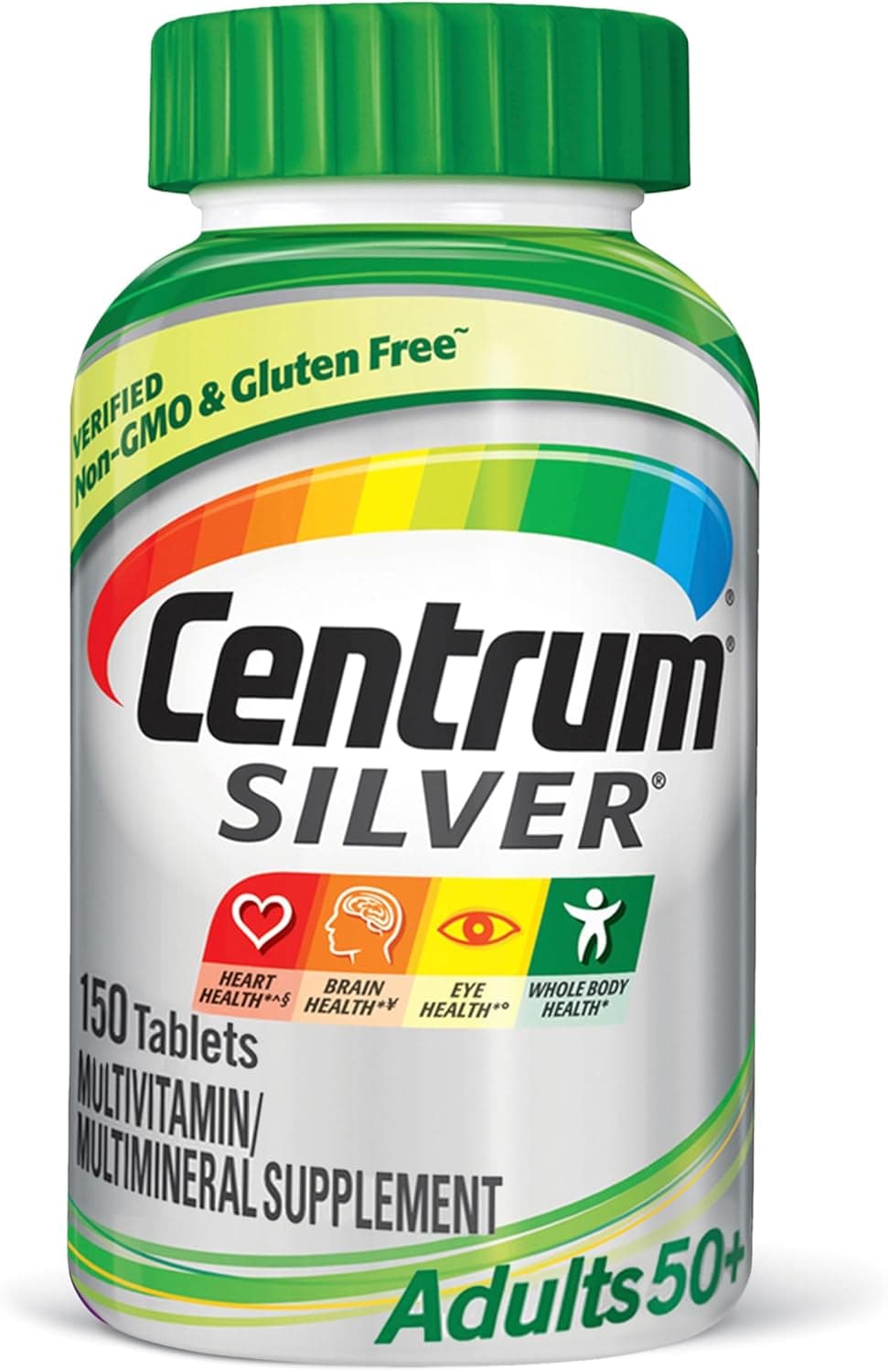
Chemically tweaked corn starch used to help tablets bind together and break apart properly. Helps tablets bind together during manufacturing and disintegrate properly in your stomach.
Reviewed March 2026
- Category
- General
- Also filed under
- Tablet binderDisintegrantImproved stability over regular starch
What Modified Corn Starch is, and what it does.
- Does it work
- It is a formulation aid rather than something taken for an effect. It suits a tablet that has to survive the bottle and still break apart on time in your stomach.
- How much to take
- There is no dose figure on record and none applies to you. The manufacturer sets the amount by what the tablet needs to bind and then disintegrate.
- Time to feel it
- It is a formulation aid rather than an active, so it has no onset of its own. Its job finishes in minutes, when the tablet swells and breaks apart in your stomach.
- The first dose
- It swells with stomach fluid and the tablet breaks apart within minutes, then it is digested like any other starch. There is no active effect arriving.
- With regular use
- It is digested to glucose like other starch. The cross-linked and retrograded fraction that escapes amylase reaches the colon and is fermented to short-chain fatty acids.
- How well tolerated
- FDA GRAS. All modifications used in supplements are approved for food use.
- How it feels
- Nothing subjective. Where it shows up is a tablet that holds together in the bottle and disintegrates on schedule once you have swallowed it.
- The overlooked benefit
- The same three words on a label cover several different processes, and the choice between cross-linked and pregelatinised decides whether a tablet holds up to humidity and still breaks apart on time.
The proof, claim by claim.
These words describe the research, not the molecule's worth. Research strength is how much work stands behind one claim, and it is never a product score.
- Well tolerated food additive
Questions people ask about Modified Corn Starch.
- Is modified corn starch the same as GMO corn?
- No. 'Modified' refers to how the starch is processed (chemically or physically), not genetic modification. Though the corn source may be GMO, that's a separate issue.
- Can I be allergic to modified corn starch?
- If you have a corn allergy, possibly. The protein content is very low after processing, but severe corn allergies should be discussed with your doctor.
- Does it add calories?
- Technically yes, but the amounts in a tablet (maybe 50-100mg) add less than 1 calorie. Meaningless.
- Why not use regular corn starch?
- Modified versions have better binding, disintegration, or stability properties. Regular starch doesn't perform as well in tablet manufacturing.
- Is it safe for people with celiac disease?
- Yes. Corn is naturally gluten-free, and the modification process doesn't introduce gluten.
- Should I look for supplements without it?
- Only if you have a corn allergy. Otherwise, it's well tolerated and helps your tablet work properly.
Why these belong in the same formula. Each row says what the basis is, from settled biochemistry through to a trial that measured the pair.
Alpha-amylase cleaves the alpha-1,4 bonds of the starch backbone to maltose and short dextrins. Chemical modification is what alters how quickly the enzyme can work on it.
Enzyme blends contain amylase and glucoamylase that hydrolyse starch to glucose. A starch excipient in the same formula is substrate for that activity.
Modified starch supplies the emulsifying surface and maltodextrin the glassy matrix in spray-dried oil powders. The pair is the long-standing wall system for encapsulated fats and fat-soluble vitamins.
Gum arabic and octenyl succinate starch are the two conventional emulsifying carriers for encapsulating oils. Formulators use them together or substitute one for the other depending on oil load.
Cross-linking and substitution move part of the starch into the fraction that resists small-intestinal amylase. That portion reaches the colon and is fermented like a soluble fibre.
Modified starch and galactomannan gums are combined so that one supplies body and the other supplies suspension and freeze-thaw stability. The two build different network structures, so the blend holds texture across a wider temperature and shear range than either alone. This is texture engineering, not a nutritional interaction.
Pectin gels through calcium bridging or acid and sugar, while cross-linked starch thickens through swollen granules that resist shear. Formulators pair them to get both gel set and viscosity in the same acidic product. The interaction is physical.
Octenyl succinylated starch and lecithin are both surface-active and are used together at the oil and water interface, the starch stabilising by steric bulk and the phospholipid by lowering interfacial tension. Combining them gives a finer, more stable emulsion droplet than either does alone at the same load. The pairing is standard in beverage emulsions and encapsulated oils.
Octenyl succinylated starch is one of the two standard wall materials, alongside maltodextrin, for spray-drying omega-3 oils into a free-flowing powder. The modified starch emulsifies the oil, and the dried matrix limits its contact with oxygen. That protection is why a powdered omega-3 does not turn rancid on the shelf as fast as the neat oil.
Carotenoid beadlets use modified starch as the emulsifier and matrix former so that an oil-soluble pigment disperses in water and survives processing. Without the carrier the pigment neither disperses nor keeps. The role is delivery.
Modified and pregelatinised starches are used as bulking carriers and as protective matrices around freeze-dried cells, where they lower water activity and buffer mechanical stress during tabletting. The starch is not a fermentable substrate at the small quantities involved. It keeps the cells intact, nothing more.
Retrograded and chemically cross-linked starch fractions resist small-intestinal amylase and reach the colon, where bacteria ferment them into short-chain fatty acids with butyrate prominent among them. A butyrate supplement provides the end product directly. The two reach the same molecule by different routes.
Certain bifidobacteria and Ruminococcus species carry the enzymes needed to break down resistant starch granules, and cross-feeding then passes intermediates to butyrate producers. How much of a given modified starch is fermentable depends on the modification, not on the label term. The relationship is microbiological and varies by product.
Modified starch is added to protein powders as an anti-caking and dispersing aid and to give body in ready-to-mix drinks. It contributes carbohydrate calories to the serving, which is worth reading on the panel. The role is formulation rather than nutrition.
Pregelatinised starch works as a binder and disintegrant in tablets containing dense mineral loads like calcium carbonate, holding the compact together and then swelling to break it apart in water. Mineral-heavy tablets are difficult to compress without it. The relationship is mechanical.
Viscous soluble fibre slows the rate at which glucose released from the digestible starch fraction reaches the intestinal surface. That changes absorption kinetics, not the total absorbed. Both are frequently present in the same fibre-fortified powder.
Konjac glucomannan forms a high-viscosity solution at low concentration and interacts with starch during gelatinisation, raising viscosity beyond what either contributes alone. In a supplement powder that combination changes mouthfeel and the rate of gastric emptying. Fluid intake matters when both are present, since together they take up considerable water.
Talk to a doctor before taking Modified Corn Starch if any of these apply to you: Corn-derived (rare corn allergy), May be chemically modified. These are flags to check first, not effects Modified Corn Starch is known to cause.
Not medical advice. Show the label to your pharmacist.What Modified Corn Starch actually does.
Regular corn starch is a mix of straight and branched glucose chains packed into granules, and modifying it changes how the granules behave without changing that it's still glucose.
Cross-linking adds bonds between chains so the granules swell without rupturing under heat, acid, or mixing.
One treatment attaches a fat-loving side group to the starch chain, turning a water-loving material into one that can stabilize oil-in-water mixtures.
Pre-cooking and drying the starch beforehand lets it hydrate and thicken in cold water without needing further cooking.
Where Modified Corn Starch comes from.
Corn is soaked and milled to pull out the starch, which is washed until it is nearly pure. That starch is then altered, either with a chemical reagent or with heat and moisture, so it holds up to acid, freezing or high heat in a product. What ends up on the label is the same three words no matter which route was taken.
Made from a plant. What ends up in the capsule tracks the harvest, so batch testing and a stated marker matter more here than with a made molecule.
Waxy maize is chosen when almost pure amylopectin is wanted for clarity and stability. Standard dent corn gives the usual amylose and amylopectin mix. High-amylose maize is used where a resistant fraction is the goal.
Kernels are steeped in warm water with sulfur dioxide to soften them, then milled and separated by centrifugation and hydrocyclone into germ, fibre, gluten protein and starch slurry.
The starch slurry is washed repeatedly to strip residual protein, fat and soluble sugars, since even small protein carryover causes off-flavours and colour in the finished ingredient.
Chemical routes react the washed slurry with sodium trimetaphosphate or phosphorus oxychloride for cross-linking, propylene oxide for hydroxypropylation, or octenyl succinic anhydride for emulsifying character, under controlled pH and temperature. Physical routes use heat and limited moisture, or drum gelatinisation, with no reagent. Acid modification uses dilute acid below the gelatinisation point.
After reaction the slurry is neutralised and washed to remove reagent residues and salts, with residual reagent levels held to the limits set for the food-additive designation.
Lots are checked against viscosity, pH, moisture, particle size and, where relevant, degree of substitution, so the material performs to a fixed specification in a customer's process.
The modified starch is dewatered and flash or drum dried, then milled and screened to a specified particle size.
The specific modification and the source crop are almost never stated on a supplement panel, and modified food starch in some markets comes from wheat rather than maize.
Getting Modified Corn Starch from food.
The whole-food sources on file. A supplement closes the gap, it does not replace dinner.
A gram-for-gram figure (how much of each you would eat to match a dose) will appear here once it is sourced and reviewed. This page will not print a number it cannot cite.
The forms it comes in.
The essence, in one line each.
- Three modified whole-grain corn flours changed dough handling and finished loaf quality parameters in European-style bread. The endpoints are food-technology measures, not measures in people.In vitro study. Tianying et al., 2026 (Food Science and Nutrition). PMID 41695100 ↗
- Physically modified starch produced by heat-moisture processing of cassava root was associated with changes in performance, glucose handling and carcass yield in the animals fed it, which supports that physical modification alters how a starch is digested.Animal study. Incharoen et al., 2026 (Veterinary Medicine International). PMID 42318135 ↗
- Corn starch served as the basal carbohydrate in the experimental diets. The reported findings concern the supplemented alpha-lipoic acid, sprouted wheat and enzyme package rather than the starch itself.Animal study. Fazlollah et al., 2026 (Poultry Science). PMID 42176580 ↗
- Xylanase and phytase changed gut microbiota measures and phytate degradation on cereal-based diets in which starch was the basal carbohydrate. The starch itself was not the variable under test.Animal study. Ayres et al., 2026 (Poultry Science). PMID 42019472 ↗
These are the studies our verdict leans on, chosen from the 4 we read for Modified Corn Starch. The full linked list is below.
The studies, linked.
1 source behind our Modified Corn Starch verdict: peer-reviewed studies and registered clinical trials. Every one links straight to PubMed, the journal, or ClinicalTrials.gov. Read them yourself.
- Clinical trialGastrointestinal Assessment of Three Novel Resistant Starch Type IVClinicalTrials.gov ↗40 participants, Completed
Evidence surfaced via Semantic Scholar (Allen Institute for AI) and ClinicalTrials.gov. Ranked by study type and citation weight, not cherry-picked.
FDA Disclaimer: These statements have not been evaluated by the Food and Drug Administration. This information is for educational purposes only and is not intended to diagnose, treat, cure, or prevent any disease. Consult your healthcare provider before starting any supplement regimen.