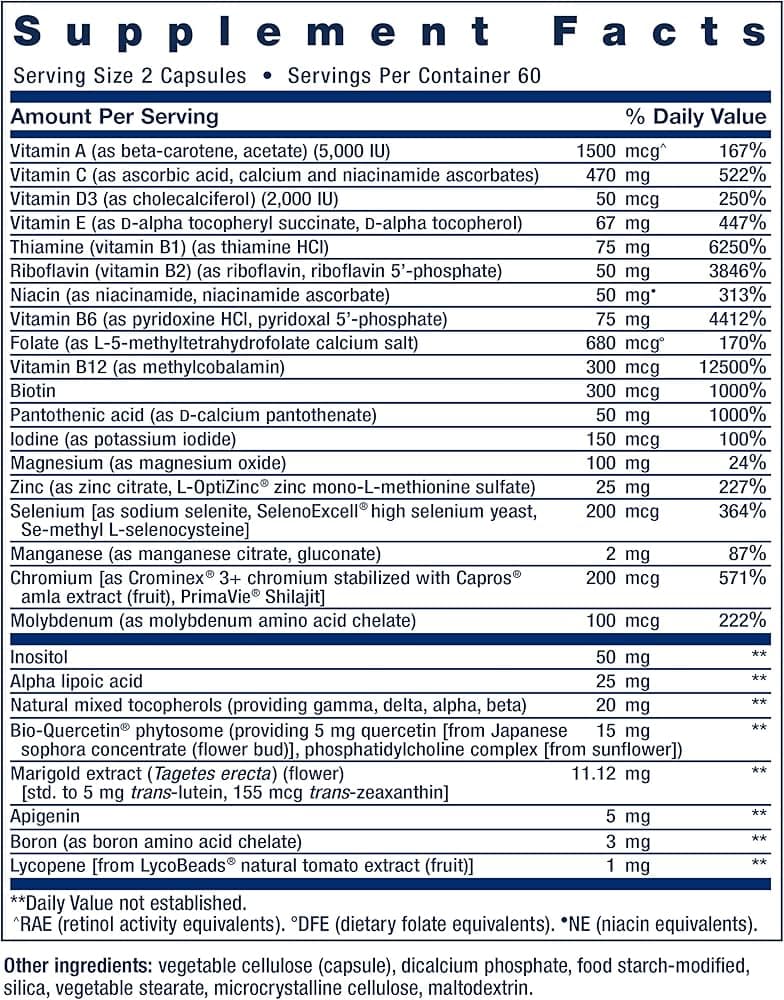
Modified Food Starch.
A chemically or physically modified starch used as a binder or thickener in your supplement. It thickens, binds and holds a formula stable through heat, acid and freezing, so a powder or liquid keeps its texture from the factory to your glass.
Reviewed March 2026
- Category
- General
- Also filed under
- Effective binder and thickenerImproves supplement texture
What Modified Food Starch is, and what it does.
- Does it work
- A formulation aid rather than an active. It suits anyone who wants a plant-derived, gluten-free thickener holding a supplement's texture and emulsion together.
- How much to take
- No dose figure is on record and none applies. The formulator sets the level by the texture and shelf stability the product needs.
- Time to feel it
- It thickens the mix and holds the format together, then breaks down like any starch once amylase reaches it. It's a carrier, not an active, so there's no onset to wait for.
- The first dose
- Nothing arrives as an effect. It is doing its work on the product, then it breaks down like any starch once amylase reaches it.
- With regular use
- Digested to glucose like other starch. The retrograded and cross-linked fraction reaches the colon, where bacteria ferment it to short-chain fatty acids.
- How well tolerated
- Long-standing food use and generally well tolerated. The word modified describes processing after harvest and says nothing about whether the source crop was genetically engineered.
- How it feels
- Nothing subjective. It shows up as a powder that mixes smoothly and a liquid that does not separate on the shelf.
- The overlooked benefit
- Modified describes a process applied to the starch after harvest. It says nothing about whether the source crop was genetically engineered, and those are two separate questions.
The proof, claim by claim.
These words describe the research, not the molecule's worth. Research strength is how much work stands behind one claim, and it is never a product score.
- Modified means GMO
Questions people ask about Modified Food Starch.
- Does 'modified' mean it's GMO?
- No. Modified refers to how the starch was processed, not the genetics of the source plant.
- Is it safe?
- Yes. FDA GRAS. Used in food for decades.
- Why do some people avoid it?
- Personal preference for 'clean' labels. Not a health concern at supplement doses.
Why these belong in the same formula. Each row says what the basis is, from settled biochemistry through to a trial that measured the pair.
Several starch modification routes deliberately raise the RS3 fraction, which is the same physical entity sold as resistant starch. When both appear on a label the undigested carbohydrate load reaching the colon adds together. This is a compositional overlap rather than a tested combination.
Starch that escapes amylase digestion is fermented by colonic bacteria to acetate, propionate and butyrate. A modified starch with a high resistant fraction therefore supplies substrate for the same end product that oral butyrate delivers directly. The overlap is mechanistic and the amount reaching the colon depends entirely on which modification was used.
Inulin and the resistant portion of a modified starch are fermented in overlapping regions of the colon. Combining them raises total fermentable load, which is why gas and bloating complaints are generally reported to track the sum rather than either one alone. Formulators often stagger the two for that reason.
Supplemental alpha-amylase acts directly on the starch backbone, and modification changes how accessible that backbone is. Cross-linked and highly substituted starches resist enzymatic breakdown, while pregelatinised starch is hydrated and readily attacked. The pairing is a digestion interaction, not a nutritional benefit claim.
A carbohydrase blend shortens starch chains in the gut lumen before brush border enzymes finish the job. Where a modified starch is used as a capsule or tablet filler, that filler is part of what those enzymes act on. The effect is on the excipient, not on the active it carries.
OSA-modified starch carries hydrophobic octenyl groups on a hydrophilic glucose backbone, so it sits at an oil-water interface. That is how liquid oils are converted into free-flowing powders. The starch is the vehicle here and contributes nothing nutritional.
Spray-dried omega-3 powders are usually built on a modified starch or starch plus protein wall that limits oxygen contact with the oil core. The starch determines powder flow, dispersion and how quickly the core is released. It is a formulation function and not an absorption claim.
Astaxanthin is oil-soluble and light-sensitive, so commercial powders embed it in a starch or gum matrix. The carrier keeps the carotenoid dispersible in a dry blend. Any effect belongs to the carotenoid, not to the starch.
Modified and resistant starch fractions serve both as a physical carrier that buffers dried cells during processing and as fermentable substrate once in the colon. Which of the two dominates depends on the modification and the strain. The supporting work is mostly in vitro and model systems.
Pregelatinised and cross-linked starches thicken aqueous systems, and psyllium forms a gel in the same compartment. Together they raise luminal viscosity more than either alone, which slows gastric emptying and can slow the dissolution of anything co-dosed. The interaction is physical.
Guar galactomannan associates with the amylopectin fraction and raises viscosity beyond the sum of the two. Food and supplement formulators use the pair to hold a suspension with less total hydrocolloid. The consequence is texture, not nutrition.
Pregelatinised and acid-thinned starches are digested quickly and contribute to the postprandial glucose rise, while highly cross-linked and resistant fractions contribute much less. Chromium is taken for normal glucose metabolism support, so the starch grade in the same product shapes the glycaemic context. This is a directional mechanism, not a measured combination result.
Talk to a doctor before taking Modified Food Starch if any of these apply to you: Some consumers prefer to avoid modified starches. These are flags to check first, not effects Modified Food Starch is known to cause.
Not medical advice. Show the label to your pharmacist.What Modified Food Starch actually does.
Starch is a chain of glucose units, and digestive enzymes cut it down step by step into free glucose for absorption.
Modifying starch is a physical, enzymatic, or chemical process that changes how it thickens and holds up to heat, acid, shear, and freeze-thaw cycles, without changing the glucose backbone itself.
The word 'modified' describes what was done to the starch after harvest, and it says nothing about whether the source crop was genetically engineered, since those are two separate questions.
One treatment attaches a small fat-loving group at a low level, which is why this type of starch can stabilize oil-in-water mixtures and coat spray-dried oils and carotenoids.
The forms it comes in.
The essence, in one line each.
- Cassava root modified by heat and moisture processing altered growth performance, glucose handling and carcass measures in the animals studied.Animal study. Incharoen T et al., 2026 (Veterinary Medicine International). PMID 42318135 ↗
- Enzymatic modification of oat fibre changed digestion behaviour under a simulated older-adult gastrointestinal model.In vitro study. Zhou Z et al., 2026 (Food Chemistry). PMID 42208432 ↗
- Adding wheat gluten and phosphate to plantain flour noodles changed starch structure and downstream fermentation behaviour in a gut model.In vitro study. Shen S et al., 2026 (International Journal of Biological Macromolecules). PMID 41519337 ↗
- The authors report associations between food preference patterns, micronutrient insufficiency and autonomic measures. Associations of this kind do not establish cause.Cohort study. Kovalchuk T et al., 2026 (Frontiers in Nutrition). PMID 42039897 ↗
These are the studies our verdict leans on, chosen from the 4 we read for Modified Food Starch. The full linked list is below.
FDA Disclaimer: These statements have not been evaluated by the Food and Drug Administration. This information is for educational purposes only and is not intended to diagnose, treat, cure, or prevent any disease. Consult your healthcare provider before starting any supplement regimen.