Serratiopeptidase.
Research-backed compound with potential health benefits. Enzyme from silkworm bacteria. Breaks down non-living proteins.
Reviewed March 2026
- Category
- Compound
What Serratiopeptidase is, and what it does.
- Does it work
- Multiple studies show benefit for swelling and pain. Quality varies.
- How much to take
- Enteric coating important. Stomach acid destroys unprotected enzyme.
- Time to feel it
- Comfort changes are described over one to two weeks of daily use. It's taken away from food so the enzyme isn't spent on the protein in your meal.
- The first dose
- Day one is quiet. The coated tablet has to clear the stomach before the enzyme is released, so there's no same-day effect to track.
- With regular use
- Weeks of daily use are where the trials read out, reporting changes in swelling and comfort scores across roughly two to six weeks.
- How well tolerated
- Generally well tolerated, with mild stomach upset the usual complaint. Check with a clinician if you take blood thinners, or if you're pregnant.
- How it feels
- There's no kick to it. What people describe is puffiness and stiffness easing gradually over weeks rather than anything landing on the day.
- The overlooked benefit
- Its strength is declared in enzyme units, not milligrams, so two products at the same milligram figure can carry different activity. The unit count is the number to read.
60,000 to 120,000 IU a day is where Serratiopeptidase works.
Source: Same enzyme as serrapeptase. Bhagat et al., Indian J Pharm Sci, 2013
The proof, claim by claim.
These words describe the research, not the molecule's worth. Research strength is how much work stands behind one claim, and it is never a product score.
Serratiopeptidase is documented in the library. The clinical read is in the queue. Nothing about the strength of the research prints until the read is done.
- a healthy inflammatory responseRandomised trial
- joint comfort and swellingRandomised trial
- mucus consistency and clearance in the airwaysRandomised trial
- hydrolysis of structural and fibrous proteinsIn vitro study
Why these belong in the same formula. Each row says what the basis is, from settled biochemistry through to a trial that measured the pair.
Serratiopeptidase is a metalloprotease and bromelain a cysteine protease, so they cut peptide bonds at different sites. Systemic enzyme blends pair them to cover a wider range of substrate sequences than either alone.
Papain is a cysteine protease with different bond preferences from serratiopeptidase's metalloprotease chemistry. Classic systemic enzyme formulas pair them so more of a given protein substrate is broken down.
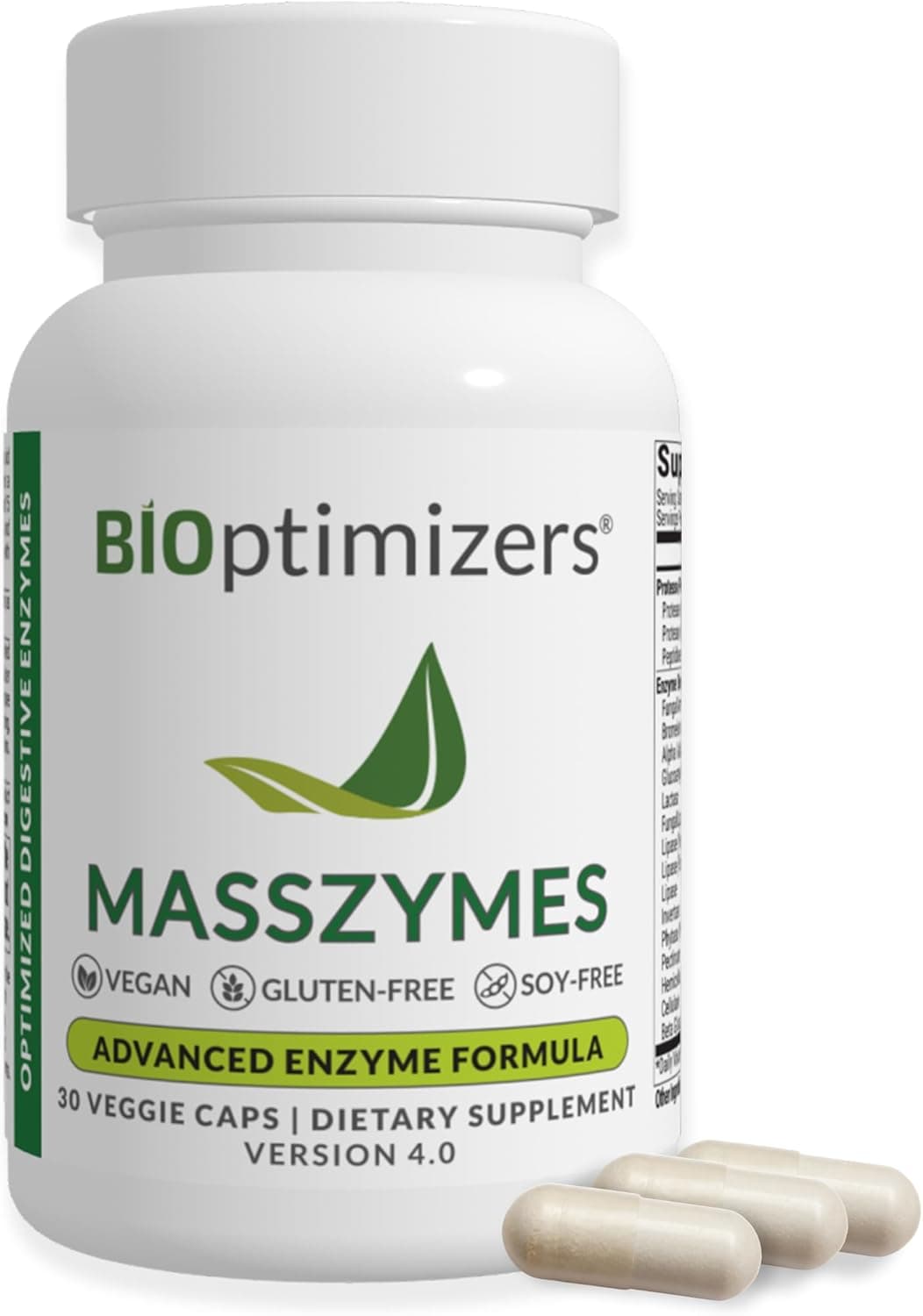
Wobenzym is a fixed protease blend of trypsin, chymotrypsin and bromelain with rutin. Adding serratiopeptidase stacks onto an already substantial protease load, so the two count as one total.
Nattokinase degrades fibrin directly and serratiopeptidase also acts on fibrin and fibrinogen. Used together their effects on normal clot formation add up, so the pairing deserves an explicit flag.
Lumbrokinase is a fibrinolytic enzyme group acting on the same fibrin substrate. Combining two fibrin-acting enzymes produces an additive effect on normal clotting.
EPA shifts eicosanoid balance toward less platelet aggregation, a different route to the same end point as a fibrin-acting enzyme. The two effects on normal clotting stack.
Ginkgolide B antagonises platelet activating factor, reducing platelet aggregation by a mechanism separate from fibrin breakdown. Paired with a fibrinolytic enzyme the two act additively on normal clotting.
Garlic organosulfur compounds reduce platelet aggregation, adding to the enzyme's effect on fibrin. The combination is a stack on normal clotting, not two unrelated ingredients.
Salicin is converted to salicylate, which dampens platelet thromboxane production. Combined with a fibrin-acting enzyme the two effects on normal clotting add.
Pepsin is active at gastric pH and cleaves peptide bonds indiscriminately, including those of an ingested enzyme. Serratiopeptidase taken without an enteric coat is exposed to that digestion before it ever reaches the small intestine. This is the single reason nearly every commercial product is enteric coated. The interaction is established digestive physiology.
Serratiopeptidase loses tertiary structure at strongly acidic pH and becomes a pepsin substrate. Taking a gastric acidifier in the same dose window works against an uncoated enzyme. An enteric-coated tablet is largely shielded from this, so the interaction depends on the delivery form rather than on the molecule alone.
Bicarbonate neutralises stomach acid and pushes pepsin outside its active pH range. That protects an ingested protease long enough to reach the duodenum. Enteric coating achieves the same end by a different route, so the pairing matters mainly for uncoated powders. Read it as formulation logic rather than as a demonstrated clinical combination.
The enzyme belongs to the serralysin family and coordinates a single zinc ion in its HEXXH motif, which polarises the water molecule that attacks the peptide bond. Chelating that zinc abolishes activity in vitro. The cofactor is bound in the manufactured enzyme rather than supplied by the diet, so this describes how it works and is not a reason to dose zinc with it.
Pancreatin carries trypsin and chymotrypsin alongside lipase and amylase, so it adds proteolytic capacity in the small intestine. Systemic enzyme blends have combined microbial and pancreatic proteases for decades on exactly this logic. Both are also enteric protected for the same reason. The combination is formulation convention with a clear mechanistic basis.
Rutin is a flavonol glycoside that has been included in European systemic enzyme preparations for decades beside proteases. The pairing is historical formulation practice rather than a separately demonstrated interaction. It is worth stating plainly so the composition of these blends is legible.
Rutin's aglycone turns up in the same product category as systemic enzymes, aimed at normal recovery after exertion. Enzymes act in the gut and circulation on protein substrates while flavonols act as redox agents, so the two are not doing the same job. The pairing is convention plus complementary mechanism, not a tested combination.
Boswellic acids and systemic proteases occupy the same shelf and are combined in many joint comfort and post-exertion products. Their mechanisms do not overlap, which is the usual argument for combining them. No combination trial anchors the pair, so this is formulation practice described honestly.
Amylase, lipase and protease blends face the same gastric survival constraint as serratiopeptidase and are formulated with the same coatings. Where a product carries both, they widen the range of substrates handled in the upper small intestine. Read it as complementary enzymology, not as one enzyme improving the other.
Alpha-tocopherol at high intakes has been reported to reduce platelet aggregation in human studies. Serratiopeptidase is routinely stacked with nattokinase and other fibrinolytic enzymes, which carry their own effects on clot handling. Stacking several such agents compounds an effect on normal clotting that is worth flagging to anyone on anticoagulant medication, which is a matter for their clinician.
In the cited poultry work the enzyme and a single-strain Bacillus subtilis probiotic were given together at different enzyme levels. The relevance to a human supplement is indirect because the model is a bird and the endpoints are production measures. It is included because the combination itself was the thing measured, which is rare for this enzyme.
Nothing specific on file for Serratiopeptidase. Match the label to the daily amount above, and tell your doctor what you take.
Not medical advice. Show the label to your pharmacist.What Serratiopeptidase actually does.
Serratiopeptidase is a zinc-dependent protein-cutting enzyme made by Serratia bacteria. A zinc atom held in place inside it switches on a water molecule, and that's what snips protein chains apart.
It's a fairly big protein, around 50 kilodaltons, and stomach acid unfolds it while the stomach enzyme pepsin digests it. That's why oral products use enteric coating or delayed-release capsules to get it past your stomach.
Strip the zinc out with a binding agent and the enzyme stops cutting protein in lab studies. That's the standard way researchers show it really is a zinc-dependent enzyme.
Labels declare activity in enzyme units rather than milligrams of powder, because the same weight of material can carry different protein-cutting capacity depending on purity and handling.
Where Serratiopeptidase comes from.
It is grown, not picked. Bacteria in a fermentation tank release the enzyme, the liquid is filtered and cleaned up, and the resulting powder is measured by how much protein-cutting activity it has rather than by weight. The last step is a coating that keeps stomach acid from destroying it.
Produced by a cultured organism rather than harvested. The strain is selected and the conditions are controlled, so batches sit closer together than a field crop.
A carbon and nitrogen source medium is prepared and sterilised for the bacterial culture that will secrete the enzyme.
Serratia marcescens, originally isolated from the silkworm gut, is grown in submerged culture and secretes the protease into the broth. Modern production also uses recombinant expression in other hosts, and the cited work explored a cell-free expression route.
Cells and solids are removed by centrifugation and filtration so only the secreted enzyme remains in the liquid phase.
The clarified broth is concentrated by membrane filtration and further purified to remove host proteins, pigment and residual medium components before drying.
Each lot is assayed for proteolytic activity against a defined substrate and adjusted with a carrier so the declared units per gram are consistent.
The standardised powder is tabletted and film coated with an acid-resistant polymer, or filled into an acid-resistant capsule, so the enzyme is not exposed to gastric acid.
Getting Serratiopeptidase from food.
The whole-food sources on file. A supplement closes the gap, it does not replace dinner.
A gram-for-gram figure (how much of each you would eat to match a dose) will appear here once it is sourced and reviewed. This page will not print a number it cannot cite.
The forms it comes in.
The essence, in one line each.
- Different levels of the proteolytic enzyme fed with a single-strain Bacillus subtilis probiotic changed production and gut measures in broilers, with the authors reporting an interaction between enzyme level and the probiotic.Animal study. Mushtaq M et al., 2024 (Poultry Science). PMID 38295498 ↗
- The authors expressed serratiopeptidase in a cell-free system and recovered active enzyme, presenting the route as a production method for the protein.In vitro study. Meng Y et al., 2023 (Molecules). PMID 37049893 ↗
- A review of enzyme-based approaches names serratiopeptidase among proteolytic enzymes discussed for their protein-degrading activity, summarising the mechanistic literature rather than reporting new measurements.Narrative review. Narayanan KB et al., 2025 (Pharmaceutics). PMID 40430897 ↗
These are the studies our verdict leans on, chosen from the 3 we read for Serratiopeptidase. The full linked list is below.
The studies, linked.
5 sources behind our Serratiopeptidase verdict: peer-reviewed studies and registered clinical trials. Every one links straight to PubMed, the journal, or ClinicalTrials.gov. Read them yourself.
- Clinical trialEfficacy of Oral Serratiopaptidase Vs Dexamethasone on Post-Operative Inflammation After Exodontia. An Experience at Tertiary Care Hospital Karachi Pakistan.ClinicalTrials.gov ↗110 participants, Completed
- Clinical trialEfficacy of Serratiopeptidase After Surgical Removal of Mesioangular Mandibular Third Molars: A Randomized Controlled TrialClinicalTrials.gov ↗110 participants, Completed
- Clinical trialEvaluation of Combined Effect of Oral Premedications on Enhancing the Effectiveness of Inferior Alveolar Nerve Block in Mandibular Teeth With Symptomatic Irreversible PulpitisClinicalTrials.gov ↗Phase 3, 96 participants, Completed
- Clinical trialComparison of Efficacy of Serratiopeptidase and Escin After Impacted Mandibular Third Molar Surgery: A Randomized Controlled Clinical TrialClinicalTrials.gov ↗Phase 3, 24 participants, Completed
- Clinical trialEfficacy Evaluation of the Dose Regimen of Serratiopeptidase (Serodase 5 mg Tablet) in the Treatment of Inflammation After Third Molar SurgeryClinicalTrials.gov ↗Phase 4, 112 participants, Unknown
Evidence surfaced via Semantic Scholar (Allen Institute for AI) and ClinicalTrials.gov. Ranked by study type and citation weight, not cherry-picked.
Problems people have reported.
Read this carefully. These are 114 voluntary, unverified reactions reported to the FDA (openFDA). The number mostly reflects how popular Serratiopeptidase is, not how risky it is. A report is not proof Serratiopeptidase caused anything. It is a signal of what to watch for, nothing more.
Source: openFDA adverse-event reports. Voluntary reporting, not an incidence rate.
FDA Disclaimer: These statements have not been evaluated by the Food and Drug Administration. This information is for educational purposes only and is not intended to diagnose, treat, cure, or prevent any disease. Consult your healthcare provider before starting any supplement regimen.