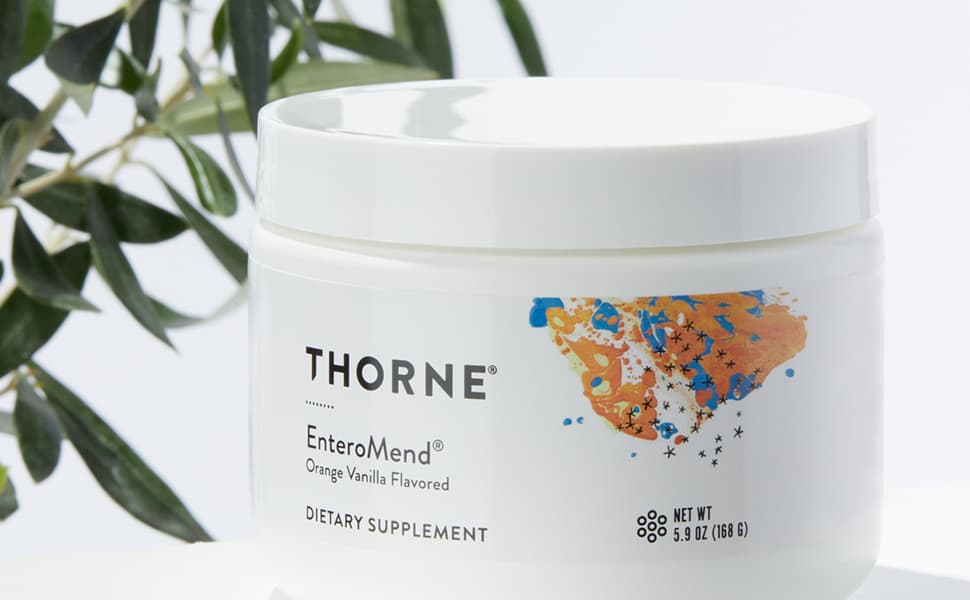
Zinc-L-Carnosine.
Chelated zinc for stomach and intestinal lining repair.
Reviewed March 2026
- Category
- Gut health
What Zinc-L-Carnosine is, and what it does.
- Does it work
- Suits people who want zinc acting on the stomach and gut lining rather than absorbed and gone. If you take other zinc, count the elemental total.
- How much to take
- Start with 75mg to 150mg a day of the complex, usually split into two, taken between meals so it can settle on the lining.
- Time to feel it
- Four to eight weeks is the span the human work uses. Changes in stomach comfort build across that window rather than arriving in a dose.
- The first dose
- Day one is quiet. The complex is adhering and dissociating slowly along the lining, and that is a physical process with no sensation to it.
- With regular use
- Weeks of daily use are where reported gains in stomach comfort and lining integrity sit. Long runs want copper considered alongside the zinc.
- How well tolerated
- Well tolerated in the trials on record, with occasional nausea or constipation. Sustained zinc intake lowers copper absorption, so pair copper with long courses.
- How it feels
- Less burning and less heaviness after eating, building gradually. No lift, no sedation, nothing sharp about it.
- The overlooked benefit
- It is one molecule, not two ingredients side by side. The low solubility is what keeps it on the mucosa instead of absorbing high in the tract.
75 to 150mg a day is where Zinc-L-Carnosine works.
Source: NIH ODS + Prasad 2008 zinc review
The proof, claim by claim.
These words describe the research, not the molecule's worth. Research strength is how much work stands behind one claim, and it is never a product score.
- gastric mucosal integrity and everyday stomach comfortRandomised trial
- intestinal permeability markersRandomised trial
- mucosal adherence from low solubility and slow dissociationIn vitro study
- carbonyl quenching and metal chelation by carnosineIn vitro study
- normal enzyme and immune function from the zinc deliveredMeta-analysis
Questions people ask about Zinc-L-Carnosine.
- When should I take it?
- With food, ideally a meal containing some fat for better absorption. Morning or evening, pick one and stick with it.
- How long until I notice something?
- If you're deficient, you might notice within 1-2 weeks. For general maintenance, give it 4-8 weeks.
- Can I get enough from food?
- Sometimes. If your diet is solid and varied, you might not need to supplement. But deficiency is more common than most people think. A blood test is the only way to know for sure.
- Can I take too much?
- Yes. More isn't better with minerals. Stick to the recommended dose. High doses can compete with other minerals for absorption.
- Can I take it with other supplements?
- Usually fine. The main thing to watch is not doubling up on the same ingredient from different products. If you're on prescription meds, check with your pharmacist first.
- Who benefits most from this?
- People with a specific, evidence-backed need. Zinc L Carnosine Pepzin has strong research. If your situation matches the studied use case, it's one of the more reliable supplements you can take.
Why these belong in the same formula. Each row says what the basis is, from settled biochemistry through to a trial that measured the pair.
Zinc L-carnosine is a one-to-one polymeric chelate, so roughly a quarter of its mass is elemental zinc. Adding a separate zinc source raises the total elemental zinc a formula delivers and counts toward the same intake.
The chelate's other half is L-carnosine, the beta-alanyl-L-histidine dipeptide. The intact complex is what adheres to the stomach lining, so free carnosine is a companion rather than a replacement.
Sustained zinc intake induces metallothionein in enterocytes, and that protein binds copper more tightly than zinc, holding it in cells that are later shed. Long-running zinc formulas therefore carry a small amount of copper to keep the ratio steady.
Zinc and non-heme iron both pass through DMT1 at the intestinal brush border, so a large dose of one lowers uptake of the other in the same window. Separating the doses by a couple of hours removes the competition.
High calcium intake in the same meal lowers zinc absorption, partly through shared luminal binding and partly through phytate-calcium-zinc complexes. It is a dose-timing issue rather than an incompatibility.
Glutamine is the preferred respiratory fuel of rapidly dividing enterocytes and supports tight junction protein expression. It supplies energy for the same turnover that zinc carnosine signalling supports.
Carnosine is the dipeptide beta-alanyl-L-histidine, so histidine is one of its two building blocks. Feeding studies in pigs and other production animals show tissue histidine-dipeptide content tracks dietary histidine supply. Histidine availability therefore sets a ceiling on how much carnosine the body can assemble.
Carnosine synthase joins beta-alanine to histidine, and beta-alanine availability is the limiting factor for endogenous carnosine in muscle. This is textbook pathway biochemistry rather than an interaction with the zinc complex itself. It matters for anyone thinking about carnosine status generally rather than about local gastric action.
Phytic acid in grains and legumes binds zinc tightly in the gut lumen and is the single largest dietary determinant of zinc absorption. Phytase hydrolyses phytate to lower-phosphate inositols that hold zinc far more weakly. In a high-phytate meal this is the difference that decides how much zinc is available.
Galloyl-rich tannins from tea, coffee and some fruit extracts chelate divalent metals including zinc in the gut lumen. Taken in the same swallow, some of the zinc is bound and unavailable. Spacing the two by an hour or two is the ordinary handling.
Zinc is required for synthesis of retinol-binding protein and is a cofactor for retinol dehydrogenase, the enzyme that interconverts retinol and retinal. Low zinc status therefore constrains how the body moves and uses vitamin A. The relationship runs in one direction here: zinc supports vitamin A handling.
The zinc L-carnosine complex is poorly soluble and its behaviour at the gastric mucosa depends on the local acid environment, where it dissociates and adheres. Changing gastric acidity, upward with an acid source or downward with acid-reducing medication, changes where and how fast that happens. Anyone on acid-suppressing medication should raise the timing question with a clinician.
Deglycyrrhizinated licorice is used for mucosal support through mucus-related mechanisms distinct from the zinc complex. The two are frequently combined in gut formulas. Whole licorice carrying glycyrrhizin affects mineralocorticoid signalling and blood pressure, so the deglycyrrhizinated form is what is normally used at daily doses.
Slippery elm mucilage is a polysaccharide that hydrates into a viscous layer over mucosal surfaces, a physical action rather than a biochemical one. Pairing it with zinc L-carnosine puts a physical demulcent alongside a mucoadhesive complex. The combination is common practice and has not been tested as a pair in the papers available here.
Marshmallow root polysaccharides swell in water and coat mucosal tissue, the same physical mechanism as other demulcents. It contributes viscosity and no competing absorption pathway. Consider the pairing conventional rather than studied.
Live cultures act through colonisation resistance, organic acid production and epithelial signalling, none of which overlaps with a zinc-dipeptide chelate. Gut formulas commonly carry both. Very high mineral concentrations can be inhibitory to some strains in vitro, so formulators normally separate them physically in a capsule or dose them apart.
This yeast is not a bacterium and is unaffected by most antibacterial pressures, which is why it is used alongside other gut agents. It shares no absorption route with zinc L-carnosine. The pairing rests on each agent's own role.
Butyrate is the preferred oxidative fuel of colonic epithelial cells and supports normal barrier maintenance from the luminal side. Zinc L-carnosine acts mainly in the upper gut. The two therefore cover different segments rather than duplicating each other.
Curcuminoids modulate NF-kB signalling in epithelial cells, and carnosine contributes carbonyl quenching and metal binding, so the two arrive at mucosal support from different chemistry. Curcumin also chelates divalent metals, so co-dosing in one swallow can tie up some zinc. Separate them if mineral delivery is the priority.
Ginger has a long record of use for nausea and upper gut comfort, with gingerols acting on gastric motility and serotonergic signalling. That is a different lever from a mucoadhesive zinc complex. The pairing is a formulation convention.
Chamomile flavonoids including apigenin are used traditionally for gut comfort and relaxation of smooth muscle. Nothing in it competes with zinc absorption at ordinary amounts. Keep it at the level of traditional pairing.
Menthol relaxes gastrointestinal smooth muscle through calcium channel effects, which is why enteric-coated preparations are used for lower gut comfort. Uncoated peppermint relaxes the lower oesophageal sphincter and can worsen reflux for some people. That direction matters when the goal is upper gut comfort.
Glycine is a substrate for glutathione synthesis and for mucin and collagen protein, all of which the gut wall turns over quickly. It does not compete with zinc for absorption. The rationale is substrate supply alongside a locally acting complex.
Nothing specific on file for Zinc-L-Carnosine. Match the label to the daily amount above, and tell your doctor what you take.
Not medical advice. Show the label to your pharmacist.What Zinc-L-Carnosine actually does.
It is one zinc ion locked onto one carnosine molecule, not zinc and carnosine sitting loose in the same capsule.
Because it barely dissolves, it tends to sit on the gut lining and release its zinc there instead of being whisked straight into the bloodstream.
Enzymes in the blood cut carnosine back into its two amino acids fairly quickly.
Zinc is a working part inside a very large number of enzymes and gene-reading proteins.
Where Zinc-L-Carnosine comes from.
Two amino acids are joined into carnosine, cleaned up, then combined with zinc under carefully held conditions so the two lock together as one compound. The result is filtered, dried and checked for how much zinc it contains.
Chemically synthesised. The molecule is identical to the one a plant or an animal makes, and building it deliberately means a known purity, a fixed dose and no crop contaminants. For several nutrients this is the only route that reaches a usable amount.
L-histidine is normally produced by bacterial fermentation of a sugar substrate. Beta-alanine is made by chemical synthesis. Both are supplied as crystalline amino acids to specification.
The two amino acids are joined into the dipeptide by protected-intermediate chemical synthesis, or in some routes enzymatically, followed by deprotection.
Carnosine is crystallised and washed to remove unreacted amino acids, coupling reagents and residual solvent, then assayed for identity and optical purity.
Purified L-carnosine is reacted with a soluble zinc salt under controlled pH so that a 1:1 zinc-carnosine complex precipitates rather than a mixture of free zinc and free dipeptide.
The precipitated complex is filtered, dried and milled, then assayed for zinc content and blended with carriers for capsules, tablets or granules.
Which coupling route a given supplier uses, the fermentation strain behind the histidine and the exact pH and solvent conditions for the chelation step are trade specifics and are not disclosed on labels.
Getting Zinc-L-Carnosine from food.
The whole-food sources on file. A supplement closes the gap, it does not replace dinner.
A gram-for-gram figure (how much of each you would eat to match a dose) will appear here once it is sourced and reviewed. This page will not print a number it cannot cite.
The forms it comes in.
The essence, in one line each.
- Across 13 studies of carnosine forms including zinc-L-carnosine, most cognitive measures showed no detectable difference from placebo, with a small pooled gain of 0.62 points (95% CI 0.23 to 1.01) on the Mini-Mental State Examination when L-carnosine was combined with anserine or antioxidants.Meta-analysis. Hsiao et al., 2026 (Nutrients). PMID 42123986 ↗
- Pooling human trials of carnosine and histidine-containing dipeptides, the authors reported changes in circulating inflammation and oxidative-stress markers. These are biomarkers, not clinical outcomes, and the pooled trials cover the dipeptide family rather than the zinc complex specifically.Systematic review. Saadati et al., 2024 (Nutrition Reviews). PMID 38086332 ↗
- In a two-centre randomised controlled trial the authors reported fewer regurgitation episodes in infants given zinc L-carnosine than in the comparator group. A single trial in infants does not transfer to adult dosing.Randomised trial. Piccirillo et al., 2026 (Frontiers in Pediatrics). PMID 42093671 ↗
- The authors reported changes in eating-behaviour ratings when zinc L-carnosine was added on top of existing psychiatric care. The design is uncontrolled add-on, so improvement cannot be attributed to the ingredient.Open-label trial. Sakae et al., 2020 (Journal of Clinical Psychopharmacology). PMID 33044355 ↗
- A single-patient report describing improvement in gastric mucosal findings after a course of zinc L-carnosine. One case describes what happened to one person and cannot establish an effect.Case report. De Bastiani et al., 2025 (The American Journal of Case Reports). PMID 41264559 ↗
- A review of preclinical work on carnosine's carbonyl-quenching, metal-binding and antioxidant behaviour in nervous-tissue models. Mechanism evidence from cells and animals, with no human outcome data.Narrative review. Barbati et al., 2025 (AIMS Neuroscience). PMID 41527663 ↗
- In mice with high blood sugar and reduced bone density, zinc carnosine was reported to lessen bone loss and shift bone-turnover markers. An animal model result that does not transfer to people.Animal study. Gao et al., 2026 (Molecular Medicine Reports). PMID 41170739 ↗
- Raising dietary histidine relative to lysine changed intestinal measures and tissue histidine-dipeptide content in growing pigs, which shows carnosine concentrations track precursor supply.Animal study. Cheng et al., 2023 (Journal of Animal Science). PMID 36440959 ↗
- Higher dietary histidine to lysine ratios were reported to raise histidine-containing dipeptide content in tissue alongside growth and blood measures, supporting the precursor dependence of carnosine.Animal study. Siebert et al., 2026 (Animals). PMID 42278008 ↗
These are the studies our verdict leans on, chosen from the 589 we read for Zinc-L-Carnosine. The full linked list is below.
The studies, linked.
2 sources behind our Zinc-L-Carnosine verdict: peer-reviewed studies and registered clinical trials. Every one links straight to PubMed, the journal, or ClinicalTrials.gov. Read them yourself.
- Clinical trialEfficacy of Zinc L-carnosine (Hepilor®) in Maintaining Remission of Gastroesophageal Reflux Disease: a Randomised, Double-blind, Placebo-controlled StudyClinicalTrials.gov ↗Phase 4, 80 participants, Unknown
- Clinical trialEfficacy of a Zinc-L-Carnosine -Based Mouth Rinse on Periodontal Tissues and Pain After Scaling and Root Planing - a Randomized Clinical Trial; a Randomized Controlled TrialClinicalTrials.gov ↗Phase 3, 75 participants, Unknown
Evidence surfaced via Semantic Scholar (Allen Institute for AI) and ClinicalTrials.gov. Ranked by study type and citation weight, not cherry-picked.
FDA Disclaimer: These statements have not been evaluated by the Food and Drug Administration. This information is for educational purposes only and is not intended to diagnose, treat, cure, or prevent any disease. Consult your healthcare provider before starting any supplement regimen.