
Vitamin D3NHANES 2005 to 2006
About 41% of US adults
have blood vitamin D below the level considered sufficient.
Peer-reviewed analysisCreatine Monohydrate is the lead active here, studied most for strength. 22 human studies on Creatine Monohydrate back this formula, each one cited. Each serving carries 20 mg of Niacin, inside the range the published research used. Who it fits: for everyone, adults.
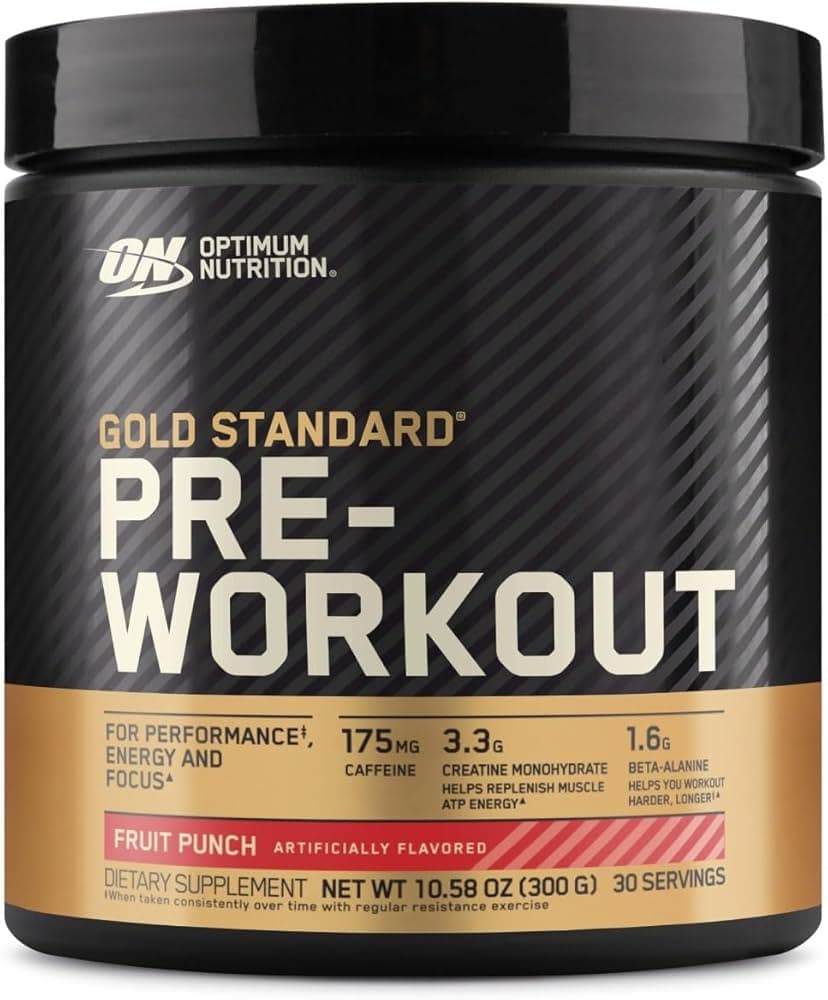 Verified by IngredientMD
The panel on the left is the one we evaluated, line by line.
All 19 actives checked against the clinical evidence: dose, form, and what the research actually shows.
Doses, ratios, and how the ingredients work together. That assessment is the verdict above: "Stronger in a pair".
The verdict is public and identical whether or not a brand pays. A formula that does not clear the bar gets nothing.
Read by the engine against 2.1 million data points from clinical trials, PubMed and more than a hundred vetted sources. No individual reviewer is named or implied.
Cross-checked against 3,249 documented interactions for these actives.
Public health figures the engine matched to this formula's ingredients. Reported by their source, cited and dated, never written by the brand.
About 41% of US adults
have blood vitamin D below the level considered sufficient.
Peer-reviewed analysisAbout 42% of Americans
take in less calcium than the estimated average requirement.
NHANES24.2% of US adults
aged 18 and over met both the aerobic and muscle strengthening activity guidelines in 2020, in the National Health Interview Survey.
CDC National Center for Health Statistics, 202231% of US adults
said they were taking protein supplements such as powders, drinks, or bars, in a Pew Research Center survey fielded in July 2026.
Pew Research Center, 202621.1% of the US population
aged 15 and over took part in sports, exercise, or recreation on an average day in 2023, in the American Time Use Survey.
US Bureau of Labor Statistics, 202457.6%
During 2017 to 2018, 57.6% of US adults aged 20 and over reported using a dietary supplement in the past 30 days.
CDC National Center for Health Statistics41.3% of US men aged 18 to 34
met both the aerobic and muscle strengthening activity guidelines in 2020, the highest rate of any age and sex group, in the National Health Interview Survey.
CDC National Center for Health Statistics, 202237% of US adults aged 18 to 29
said they were taking protein supplements such as powders, drinks, or bars, roughly double the rate among adults aged 65 and over, in a Pew Research Center survey fielded in July 2026.
Pew Research Center, 202659 to 66 days
was the median time it took adults to make a new daily health habit automatic across the studies a 2024 review pooled, with individuals ranging from 4 to 335 days.
Systematic review and meta-analysis, 202461% to 74%
About 61 to 74 percent of adults refilling a long-term medicine on their own stopped within a year, versus 33 to 44 percent on one set pickup day.
Cohort study, 2015USDA advises fortified foods or supplements after 50
In its national intake tables USDA notes that "it is advised that individuals over 50 meet their B12 requirement with fortified foods or supplements".
NHANESMeta-analysis, 2017
In older adults doing resistance training, adding creatine increased lean tissue mass by about 1.37 kg and produced greater chest and leg press strength than training alone across 22 trials.
Open Access Journal of Sports MedicineSystematic review and meta-analysis, 2018
Across 46 trials, moderate caffeine doses of 3 to 6 mg per kg shortened endurance time-trial times by about 2.2 percent and raised power output by about 3 percent.
Sports MedicineMeta-analysis, 2024
Across 10 trials in 318 athletes, vitamin D3 raised blood vitamin D by about 14.8 nmol/L and hinted at better muscle strength, though few trials leave that uncertain.
Frontiers in NutritionMeta-analysis, 2005
Caffeine lowered the rating of perceived exertion during exercise by about 5.6 percent versus placebo across 21 studies, so a given effort felt easier.
Scandinavian Journal of Medicine & Science in SportsMeta-analysis, 2005
Across 30 trials in 4,749 people, niacin raised HDL cholesterol by about 16 percent, lowered triglycerides by about 20 percent, and lowered LDL cholesterol by about 14 percent.
Journal of the American College of CardiologyRandomised trial, 2014
Pantethine, a vitamin B5 derivative, lowered LDL cholesterol by about 11 percent from baseline versus placebo over 16 weeks in adults at low to moderate cardiovascular risk.
Vascular Health and Risk ManagementSystematic review and meta-analysis, 2016
Across 14 placebo-controlled trials totaling about 9,000 people, extended-release niacin lowered blood lipoprotein(a) by about 23 percent.
MetabolismSystematic review and meta-analysis, 2014
Across 7 trials of 441 people, niacin improved a blood vessel dilation test by about 2 percentage points.
Vascular MedicineSystematic review and meta-analysis, 2023
Across 8 randomized trials, creatine improved memory performance in healthy people, with the largest effect in adults aged 66 to 76.
Nutrition ReviewsMeta-analysis, 2014
Pooling 30 trials of 5,615 adults, vitamin D gave a small rise in overall muscle strength, with no measurable effect on muscle mass or power.
Journal of Clinical Endocrinology and MetabolismMeta-analysis, 2003
Combining about 100 controlled studies, creatine gave a small but real improvement in short, intense exercise under 30 seconds, with no improvement seen in running or swimming.
International Journal of Sport Nutrition and Exercise MetabolismSystematic review, 2026
A comparison of protein, creatine and omega-3 found each supported muscle strength and endurance outcomes to a different degree alongside training.
NutrientsRandomised trial, 2025
In 40 healthy men and women, 33 days of creatine before a muscle-damaging workout sped up strength recovery, with less stiffness and fatigue, and less swelling in the women.
NutrientsRandomised trial, 2005
Participants taking Panax notoginseng before endurance exercise showed improved endurance performance measures compared with the control condition.
Journal of Strength and Conditioning ResearchMeta-analysis, 2025
Pooled trials in volleyball players found better performance on jump and sport-specific tests after caffeine than after placebo.
NutrientsMeta-analysis, 2026
Pooled trials in rugby players found that a single caffeine dose improved various physical performance measures specific to the sport.
Frontiers in NutritionRandomised trial, 2026
Compared combined beta-alanine plus sodium bicarbonate against each alone on physical capacity measures in trained participants. The design is what makes the comparison informative for stacking decisions.
International Journal of Sports Physiology and PerformanceRandomised trial, 2015
Pantethine lowered blood triglycerides by about 17 percent from baseline over 8 weeks in adults with moderate dyslipidemia, while a related compound, coenzyme A, lowered them further.
Journal of Clinical LipidologyMeta-analysis, 2020
Across eight trials in 2,110 adults with high blood sugar, niacin shifted cholesterol, triglycerides, LDL and HDL by 0.28 to 0.42, with no detected change in blood sugar or HbA1c.
MedicineRandomised trial, 2022
In 8 healthy adults taking 5 grams of creatine monohydrate daily for 14 days, muscle creatine content rose, while creatyl-L-leucine at the same dose produced no change.
International journal of sport nutritionRandomised trial, 2014
An oral pantothenic acid supplement significantly lowered total facial blemish count versus placebo after 12 weeks, with fewer inflammatory blemishes.
Dermatology and TherapyRandomised trial, 2025
Vitamin D3 supplementation changed the inflammatory protein CHI3L1 and oxidative stress markers in adults with a chronic demyelinating condition. These are markers, not clinical outcomes.
Neuropsychopharmacology ReportsSystematic review and meta-analysis, 2018
Caffeine produced a small increase in maximal muscle strength (standardized mean difference 0.20) and muscle power (0.17) over placebo, pooled across ten strength trials and ten power trials.
Journal of the International Society of Sports NutritionRandomised trial, 2026
In a crossover trial of 30 healthy adults aged 18 to 80, four weeks of an astragalus and panax saponin extract taken with whey protein raised valine absorption by about 14% and leucine by about 8%, with grip strength up 5.2% versus 2.4% on placebo and blood zonulin down 13.0% versus 0.9%.
NutrientsRandomised trial, 2025
In 22 trained adults, a single dose of a multi-ingredient pre-workout drink containing AstraGin raised total volume load by about 4.4% and repetition rate by about 2.2% across 5 and 15 minute high-intensity sessions, with no change in total repetitions completed. The design cannot attribute the effect to any one ingredient.
Journal of the International Society of Sports NutritionSystematic review and meta-analysis, 2010
Caffeine improved orientation and attention (standardized mean difference 0.55) and reduced errors on cognitive tests versus placebo, in a Cochrane review of 13 randomized trials in shift workers.
Cochrane Database of Systematic ReviewsRandomised trial, 2024
In adults with high blood sugar and weak kidneys, astragalus for 48 weeks slowed kidney decline by about 4.6 and cut blood pressure by about 7.9 mmHg versus standard care.
PhytomedicineCohort study, 2026
Reports an association between dietary thiamin, riboflavin and niacin intake and elevated blood pressure and pulse pressure. An association in intake data, not a demonstration of cause.
MedicineMeta-analysis, 2024
Across 20 studies, daily vitamin D3 raised blood vitamin D levels by about 10.4 nmol/L more than the same dose of vitamin D2, roughly 40 percent more.
Advances in NutritionRandomised trial, 2020
In a controlled dietary intervention in adults, changing sodium and potassium intake shifted how the body handled calcium and phosphate, indicating that sodium intake affects normal mineral balance.
The Journal of Clinical Endocrinology and MetabolismSystematic review, 2024
Across 32 trials in 2,462 adults with high blood sugar and weak kidneys, astragalus was linked to less protein in urine and a lower kidney marker, only an association.
Renal FailureRandomised trial, 2026
Microencapsulated sodium butyrate was tested against abdominal symptom scores and carbohydrate metabolism markers in adults with high blood sugar. Again a butyrate trial in which sodium is the carrier salt.
Scientific ReportsMeta-analysis, 2012
In trials directly comparing the two forms, vitamin D3 raised blood 25-hydroxyvitamin D more than vitamin D2 did (P = 0.001).
American Journal of Clinical NutritionRandomised trial, 2025
In adults with high blood sugar already on medicine, a citrus flavonoid supplement was linked to better blood sugar and metabolic markers, though the tested product may not match every bioflavonoid complex.
Frontiers in NutritionSystematic review, 2026
A systematic review catalogued gastrointestinal symptoms reported across sodium bicarbonate dosing protocols and described how symptom burden varies with dose, timing and whether the dose is split or given with food.
European Journal of Sport ScienceRandomised trial, 2025
A high-dose vitamin C supplement enriched with citrus bioflavonoids lowered markers of inflammation and platelet activation in the adults studied.
NutrientsRandomised trial, 2024
In 40 healthy adults averaging 56 years, six months of a multi-ingredient astragalus-based supplement was followed by longer median telomere length (p = 0.01) and a lower share of short telomeres, a cellular marker, while the placebo group showed no change.
NutrientsMeta-analysis, 2025
Pooling controlled trials of astragalus polysaccharides given alongside conventional hospital care, the authors report differences in reported quality-of-life and tolerability measures versus control. The trials were mostly small and conducted in one region.
Naunyn-Schmiedeberg's Archives of PharmacologyRandomised trial, 2026
In 24 active adults doing 10 weeks of resistance training, astragalus root added no detectable strength gain over placebo, though two inflammation markers rose on placebo but not with astragalus.
NutrientsRandomised trial, 2021
Chronic pantothenic acid supplementation did not produce a detectable change in muscle coenzyme A content or cycling performance, which is a failure to detect a difference rather than a demonstration that none exists.
Applied Physiology, Nutrition, and MetabolismRandomised trial, 2019
Thiamin supplementation did not improve left ventricular ejection fraction in the participants studied. This is a failure to detect a difference in an imaging marker, not evidence that no difference exists.
The American Journal of Clinical NutritionMeta-analysis, 2014
Across 23 trials of 4,082 adults, vitamin D raised bone mineral density at the femoral neck by about 0.8%, with no measurable change at the spine, hip, or other sites.
LancetRandomised trial, 2026
In healthy adults reporting knee discomfort, 12 weeks of astragalus saponins showed within-group gains in single-leg step-down count and knee range of motion, but no significant difference against placebo, so the effect is unconfirmed.
NutrientsSystematic review, 2023
Across 18 studies, pyridoxine on its own and in combinations improved nausea scores in pregnancy on both the Rhode and PUQE scales, a use with a long clinical track record.
Archives of Gynecology and ObstetricsRandomised trial, 2026
A randomised trial tested an algorithm-driven sodium supplementation protocol against usual care and measured growth in infants born preterm.
Pediatrics Open ScienceRandomised trial, 2026
Thiamin supplementation improved the thiamin pyrophosphate effect, a blood marker of thiamin adequacy, in children whose levels were low.
Scientific reportsRandomised trial, 2025
In a trial of 104 very preterm infants, oral sodium supplementation raised daily weight gain by 3.6 grams per kilogram compared with placebo.
BMJ Paediatrics OpenPopulation figures from public health data. Context for the category, not a statement about any individual and not a claim about this product.
Each line below was derived from this formula's own record at the time of verification. Nothing here was written by the brand, and nothing can be added that the evidence does not carry.
One pairing in this formula has been studied as a combination in human trials. Each finding below is what a named study measured, cited and dated, never written by the brand.
In a 2025 network meta-analysis of 16 randomized trials in healthy adults, folic acid taken together with vitamins B6 and B12 lowered blood homocysteine more than any single supplement, with the 1 mg folic acid plus 7.2 mg B6 plus 20 micrograms B12 arm ranked most effective versus placebo (mean difference -1.03 micromol/L, 95% CI -1.71 to -0.36).
Research strength. Research strength says how much work stands behind the combination. It is never a product score.
Fail closed. Where actives were studied on their own rather than together, each shows on its own evidence, never a combined effect no trial measured.
Independent record. Every finding is cited to a named trial, dated, and never written by the brand.
Findings from trials that studied these actives as a combination. Context for how the actives were tested together, not a statement about any individual and not a claim about this product.
Time-to-effect windows the engine read from the trial record. Each is a window a named study measured, cited and dated, never written by the brand.
In the trial record, blood vitamin D rises for about 3 months of daily vitamin D3 and then holds at a plateau, near 69 nmol/L at 1,000 IU a day, from a starting level near 41 nmol/L.
In the controlled depletion study the EFSA reference opinion reviews, restricting thiamin intake to 0.009 to 0.015 mg/MJ for 30 days brought urinary free thiamin excretion from a mean of 0.283 mg/24 h down to undetectable levels by day 18 of the depletion period.
In the same depletion and repletion record the EFSA reference opinion reviews, erythrocyte transketolase activity fell progressively to about 75% of baseline during the 30-day depletion period and returned to its baseline value after 1 week of thiamin repletion.
An expert consensus on vitamin B6 use, developed by a six-member Delphi panel with a structured evidence-quality assessment, calculated from pharmacokinetic parameters that complete clearance of vitamin B6 from the body takes a washout period of about 20 to 40 days after intake stops.
A systematic review and Bayesian meta-analysis drew on 108 articles from 14,002 screened records and modelled blood folate against folic acid intake using one-compartment pharmacokinetic models. Red blood cell folate rose 1.78 fold from baseline to steady state at 375 to 570 ug folic acid per day, and reaching that steady state took a median of 36 weeks, 95% credible interval 27 to 52 weeks. Serum or plasma folate rose 11.6% for every 100 ug per day of folic acid intake, 95% credible interval 8.4 to 14.9.
A kinetic study in six healthy men aged 22 to 31 gave 3.6 umol per day, 1.6 mg, of deuterium-labelled folic acid for four weeks, with folate tracked in serum, erythrocytes and urine by microbiological assay and gas chromatography mass spectrometry. Serum folate reached its maximum concentration in about 18 days, while isotopic labelling of erythrocyte folate kept rising across the whole four weeks. After supplementation stopped, red blood cell folate and urinary folate excretion declined linearly, and serum folate fell with a slow-phase half-life of 18.7 days. One study, six men, no control group.
A randomised, double-blind, parallel-group dose-finding trial in 120 older people with mild vitamin B12 deficiency, defined as serum B12 of 100 to 300 pmol/L with methylmalonic acid at or above 0.26 umol/L, gave daily oral cyanocobalamin at 2.5, 100, 250, 500 or 1000 ug for 16 weeks. Mean plasma methylmalonic acid fell 16%, 16%, 23%, 33% and 33% across those doses. Daily doses of 647 to 1032 ug accounted for 80% to 90% of the estimated maximum reduction. The window was measured on a blood marker of B12 status, not on a symptom.
An open-label randomised single-dose pharmacokinetic study in 20 healthy men aged 20 to 45, conducted and authored by staff of Emisphere Technologies, the developer of the SNAC carrier under test, measured serum vitamin B12 after one 5 mg cyanocobalamin tablet, with six men on the marketed tablet. Time to peak serum B12 was 6.83 hours for the marketed tablet and 0.5 hours for the carrier coformulation. Absolute bioavailability was 2.16% and 5.09% respectively. One trial, six men per arm. Serum concentration was measured, not any symptom.
A randomised cross-over trial in ten women of mean age 69 gave a single 500 mg dose of calcium as citrate fasting, citrate with a meal, fortified juice or a dairy product meal, with blood drawn before and at 1, 2, 4 and 6 hours. Serum ionised and total calcium increased significantly from baseline over six hours, with the rise similar after fortified juice, delayed when citrate was taken with a meal and smaller after the dairy meal. A separate double-blind cross-over trial in 25 postmenopausal women measured parathyroid hormone and a bone resorption marker 12 hours after a single calcium dose. Ten participants is a small sample, and what moved was blood chemistry, not a sensation.
In the excretion studies the EFSA reference opinion reviews, urinary output closely tracked dietary sodium once intake was held steady: 98% of dietary sodium appeared in 24-hour urine in a 3-day study, and 86% of sodium ingested over 4 weeks was recovered in 24-hour urine collected during the same period.
In the controlled metabolic study the EFSA reference opinion reviews, young men held at constant sodium intakes for 29 days per level showed rising average daily urinary aldosterone excretion as intake was stepped down from 4.9 g/day to 2.5 g/day.
In the trial record, muscle creatine stores rise to a loaded level over about 4 weeks at 3 g daily, or about 1 week with a higher loading dose, and return toward baseline about 4 weeks after stopping.
In the trial record, muscle carnosine rises about 59% over 4 weeks of daily beta-alanine, with further gains, about 80%, by 10 weeks.
In a randomised double-blind crossover trial in 19 recreationally active women, a single 8 g dose of citrulline malate taken 60 minutes before testing raised total work in a 5-repetition isokinetic leg extension protocol compared with placebo, with no difference in peak torque and no difference in the 50-repetition protocol. A separate crossover trial in 10 well-trained men using 12 g 60 minutes before high-intensity cycling found no change in time to exhaustion or power.
In a double-blind placebo-controlled crossover trial, 15 resistance-trained women took 4 mg per kg body mass of caffeine 60 minutes before a strength and power battery. Squat one-repetition maximum rose 4.5 percent and countermovement jump height 7.6 percent against placebo. A separate crossover trial in 11 active adults began its cycling tests 45 minutes after a 3 mg per kg capsule and recorded a peak-power increase of about 4 percent on the first day of ingestion.
One crossover trial mapped the day-to-day time course in 11 healthy active adults taking 3 mg per kg per day for 20 consecutive days. Peak cycling power in the incremental test stayed about 4.0 percent above placebo for the first 15 days and the difference then lessened. Wingate peak power was still raised on days 1, 4, 15 and 18 by about 4.9 percent. The authors describe the shrinking margin as progressive tolerance. This is one trial with 11 participants.
Windows measured in the cited trials. Context for how the active behaves over time, not a statement about any individual and not a claim about this product.
12 ingredients, from each one's own page.
25-hydroxyvitamin D climbs over roughly six to twelve weeks of daily dosing before it plateaus. It's a blood level you watch rather than a feeling.
There is no onset to time in the usual sense. Status markers such as erythrocyte transketolase activity move across weeks, and that is where the change is read.
Nothing to wait for at everyday amounts. Niacin status shows up on blood work rather than as a sensation. The flush from the nicotinic acid form arrives within 30 minutes.
Nothing quick. Conversion to the active coenzyme happens within hours, but plasma pyridoxal 5-phosphate takes a couple of weeks to settle at a new level.
Red cell folate climbs over roughly four to eight weeks. It's a blood panel change rather than a sensation.
Markers move first. Methylmalonic acid and homocysteine start shifting within a week or two, while anything you would notice takes several weeks of daily use.
There's no onset you would time. It feeds coenzyme A within days, and the effect sits in metabolism and blood levels rather than in a sensation.
No acute sensation. Parathyroid hormone responds within hours, while bone density shifts over a year or more of steady intake, so this reads on a panel and a scan.
Fast. Sodium shifts fluid within an hour or two, which is why an electrolyte drink lands quickly when you have been sweating.
Give it two to four weeks of daily use for muscle stores to fill. A higher first week reaches the same place in about five to seven days.
There is no timeline of its own to give. It acts on the absorption of whatever it sits beside, so any change follows that other ingredient's own timeline.
Circulatory and recovery measures in notoginseng research are read across weeks. Traditional use for bruising after exertion runs shorter, over several days.
How each ingredient usually behaves over time, from its own page on IngredientMD. General timing for the ingredient, not a measurement of this product.
What each form is, and where it fits in a formula. Measured findings carry the study that reported them.
The animal-sourced form of vitamin D, made in skin under UVB light and produced commercially from lanolin. Fat-soluble, so it travels with dietary fat and is stored in body fat.
In a 12-week double-blind randomised controlled trial in 108 young women in urban Bangalore, most of whom began vitamin D-deficient, daily vitamin D3 at 400, 600 or 800 IU in a fortified wafer raised serum 25-hydroxyvitamin D, parathyroid hormone fell over time, and effects on bone-turnover markers were modest and not dose specific. The 800 IU dose brought 65 percent of participants to sufficiency.
The free-acid form of vitamin B3, pyridine-3-carboxylic acid. It is the reference form of niacin, a small water-soluble molecule carrying a bare carboxylic acid group on the pyridine ring.
The free acid form of vitamin B5, an amide of pantoic acid and beta-alanine, supplied as a viscous hygroscopic oil or a stabilised liquid rather than a dry salt.
Creatine crystallised with one water molecule per creatine molecule, roughly 88 percent creatine by mass, weakly soluble in cold water.
Fine off-white to tan powder, water dispersible, carrying triterpene saponins from both roots. The manufacturer standardises to its own internal marker profile rather than a publicly named compound.
The free beta amino acid, freely water soluble, supplied as a crystalline powder
The non-protein amino acid citrulline in its uncombined free form, not bonded to another acid, mineral, or carrier. Every labelled gram is citrulline itself.
In a randomized double-blind placebo-controlled crossover trial, 10 healthy men took 6 g/day of free-form L-citrulline for 7 days. Tolerance to severe-intensity cycling and total work completed were higher than placebo, while L-arginine at the same dose was not.
An acetylated ester of L-carnitine, carrying an added acetyl group on the carnitine backbone. It is usually sold as the hydrochloride salt for handling.
A mixed extract of peel and pulp carrying hesperidin, naringin, eriocitrin and residual pectin, usually declared as total bioflavonoids by a colorimetric assay.
Descriptions of the form itself, read from the cited studies. Not a comparison between products and not a statement about any individual.
It is a powder, so the serving scales to the amount you want and mixes into something you already drink.
Put an earned verification on your own product page.
These statements have not been evaluated by the Food and Drug Administration. This product is not intended to diagnose, treat, cure, or prevent any disease. This record is not medical advice. Always consult your healthcare provider before starting any supplement regimen.