Artificial Flavor.
Lab-made flavoring compounds added to make your supplement taste better. Makes supplements taste better by mimicking natural flavors.
Reviewed March 2026
- Category
- General
- Also filed under
- Improves supplement taste
What Artificial Flavor is, and what it does.
- Does it work
- Does its job (taste). No health value.
- How much to take
- There's no intake figure for it. A formulator sets it at a fraction of a percent of the powder, tuned by taste, so the amount is a recipe decision.
- Time to feel it
- Instantly. Taste is the whole job, so you get the answer the moment the powder hits your tongue, and there's no build up waiting behind it.
- The first dose
- The drink tastes of berry or mint instead of the raw ingredients. That's day one in full, since flavour isn't an active and nothing accumulates.
- With regular use
- Weeks of use change nothing in the body. What flavour does over months is keep a formula pleasant enough that people keep taking the actives in it.
- How well tolerated
- Generally well tolerated at trace amounts. Some individuals may be sensitive to specific artificial flavors.
- How it feels
- You taste something fruity, minty, or otherwise pleasant instead of bitter ingredients.
- The overlooked benefit
- Most of what you call flavour is smell arriving from the back of your mouth, so holding your nose while you drink flattens a flavoured powder almost completely.
The proof, claim by claim.
These words describe the research, not the molecule's worth. Research strength is how much work stands behind one claim, and it is never a product score.
- FDA-approved and safe
- Some individuals are sensitive
Questions people ask about Artificial Flavor.
- Are artificial flavors dangerous?
- At supplement amounts, no. The doses are microscopic. But if you prefer natural, that's a reasonable choice.
- Is natural flavor always better?
- Chemically, many 'natural' flavors are identical molecules to their 'artificial' counterparts. The difference is the source, not the molecule.
- Can I find unflavored versions?
- Usually yes, especially for capsules and tablets. Powders and gummies almost always have some flavoring.
Why these belong in the same formula. Each row says what the basis is, from settled biochemistry through to a trial that measured the pair.
Steviol glycosides carry a lingering bitter and liquorice-like tail, and flavour systems are added specifically to mask it. The flavour occupies the same aftertaste window rather than changing the sweetener chemically.
Mogrosides sweeten with a slow onset and a fruity off-note, so flavours are paired with them to round the profile. This is why monk fruit is nearly always formulated inside a flavour system rather than alone.
Erythritol contributes bulk, a mild sweetness and a distinct negative heat of solution that reads as cooling on the tongue. Mint and citrus flavour systems are often built to work with that cooling, and other profiles are built to mask it. The pairing is a sensory design decision. It says nothing about absorption or metabolism.
Small amounts of sodium chloride reduce the perceived bitterness of other components and increase the perceived intensity of many aroma-driven flavours, an effect measured repeatedly in sensory panels. Powdered supplement formats use this to make bitter actives palatable. The mechanism is central taste processing rather than any chemical reaction in the mix.
Most aroma molecules are lipophilic and will not disperse in water on their own, separating into a ring at the surface. Lecithin's phospholipids sit at the oil-water interface and hold a fine emulsion. This is why lecithin appears in flavoured liquids and reconstituted powders. It changes distribution in the product, not anything in the body.
Flavour concentrates are frequently diluted into a neutral oil so they can be dosed accurately and dispersed evenly. MCT oil is chosen for its low viscosity, neutral taste and oxidative stability compared with long-chain plant oils. The oil also slows release of volatiles, which lengthens the perceived flavour. The role is delivery.
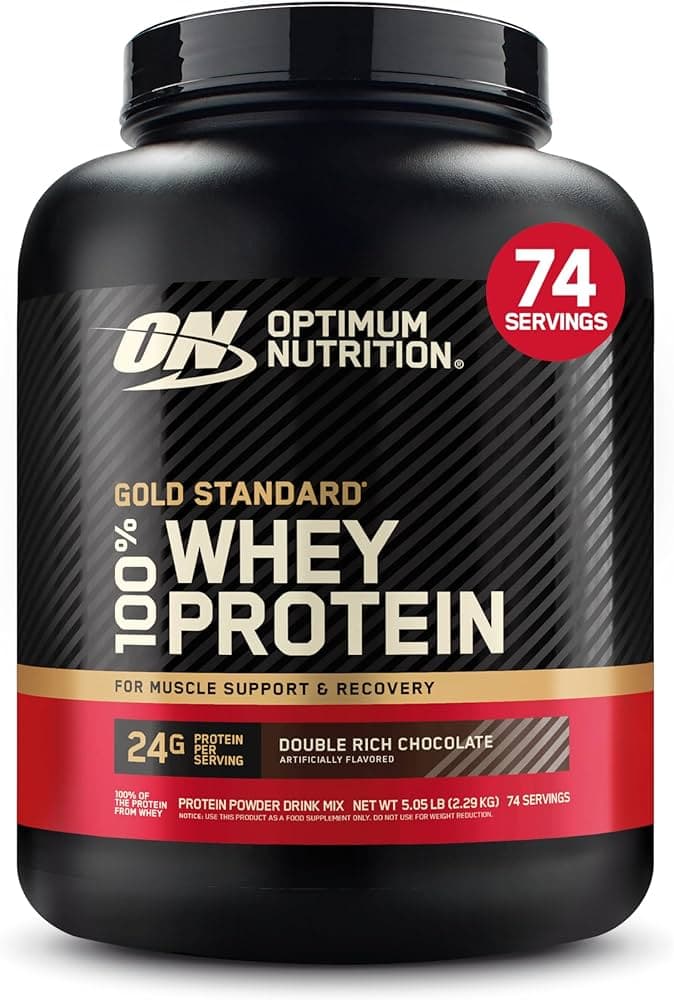
Aroma compounds, especially aldehydes and ketones, associate with hydrophobic pockets on whey proteins and with free thiol groups. Bound volatiles do not reach the nose, so a flavour dosed for water tastes weaker in a protein matrix and its balance shifts as some notes bind more than others. Flavour loading in protein powders is raised to compensate. This is a genuine competitive interaction inside the product.
Casein binds hydrophobic aroma compounds within its micellar structure, and it releases them more slowly than whey does. The result is a flavour that reads as muted at first and lingers longer. Formulators adjust the flavour system rather than the protein. The same is true in the other direction, since flavour loading changes how the protein base tastes.
Caffeine activates multiple bitter taste receptors, and above a low threshold it dominates a formula's taste. Fruit and citrus flavour systems plus sweeteners and a trace of sodium are the usual answer in powdered pre-workout and energy formats. Nothing about this changes caffeine absorption or its effects. It is masking.
Liquid flavour is emulsified into a gum arabic solution and spray-dried, leaving the aroma oil encapsulated inside a dried carbohydrate shell. That shell keeps volatiles from evaporating and slows oxidation until water rehydrates it. It is the reason a powder can hold a flavour that would otherwise flash off. The pairing is process rather than nutrition.
Maltodextrin dilutes a concentrated flavour to a dosable strength and forms part of the dried matrix in spray-dried and agglomerated powders. It also carries flavour through a blend so a small addition distributes evenly. Its low oxygen permeability when dried helps hold volatiles. Its presence explains why a labelled flavour amount is mostly carrier by weight.
Citric acid supplies the sourness that fruit flavour profiles are built against, and lowering pH changes how sweet and bitter notes register. It also affects the stability of certain aroma molecules, since some esters hydrolyse faster in acid. Flavour houses specify a target pH range for this reason. The interaction is chemical and sensory, inside the product.
Talk to a doctor before taking Artificial Flavor if any of these apply to you: Some individuals may be sensitive to certain artificial flavors, Contains synthetic compounds. These are flags to check first, not effects Artificial Flavor is known to cause.
Not medical advice. Show the label to your pharmacist.What Artificial Flavor actually does.
Artificial flavor is a defined blend of individual aroma chemicals mixed into a carrier solvent or dried carbohydrate base.
The difference between artificial and natural flavor is about where the molecule came from, not what it actually is, the synthetic and plant-derived versions of the same compound are chemically identical.
What we call flavor is mostly smell, aroma molecules reach smell receptors from the back of the mouth, while the tongue only picks up the basic tastes plus texture and temperature.
These aroma compounds are used in tiny amounts, often less than one percent of a finished powder, because our noses can detect many of them at extremely low concentrations.
Where Artificial Flavor comes from.
Each smell molecule is made and purified on its own, then a flavourist blends dozens of them to a recipe that matches a target taste. The blend is either dissolved in a carrier liquid or dried onto a starch or gum so it survives in a powder. Calling it artificial describes where the molecules came from, not what they are.
The same molecule is reached more than one way. Which route a given product used is a manufacturing choice, and the finished compound is the same either way.
Individual aroma chemicals start from simple building blocks: alcohols and organic acids for esters, guaiacol or lignin-derived streams for vanillin, terpene fractions from turpentine or citrus processing for many terpenoid notes.
Esters are made by direct esterification, aldehydes by controlled oxidation, lactones by cyclisation. A growing share of the same molecules is made instead by microbial fermentation or enzymatic conversion, though a fermentation-derived molecule may still sit under the artificial label depending on the source substrate and the jurisdiction's definition.
Each aroma chemical is purified, usually by fractional distillation, and released against identity and purity specifications since impurities at trace level can dominate the smell.
A flavourist combines dozens of purified single molecules to a fixed formula that reproduces a target profile, adjusting top, middle and base notes. The blend is the intellectual property and is why the label reads as one ingredient.
The blend is diluted into a liquid carrier, or emulsified and spray-dried onto a carbohydrate wall material, then packed under nitrogen and away from light because the volatiles oxidise.
The forms it comes in.
The essence, in one line each.
- The review describes how metabolomics and lipidomics are applied to characterise flavour compounds in meat products, naming flavour analysis as the practical application rather than testing any added flavouring in people.Narrative review. Li et al., 2026 (Foods). PMID 42073289 ↗
These are the studies our verdict leans on, chosen from the 1 we read for Artificial Flavor. The full linked list is below.
FDA Disclaimer: These statements have not been evaluated by the Food and Drug Administration. This information is for educational purposes only and is not intended to diagnose, treat, cure, or prevent any disease. Consult your healthcare provider before starting any supplement regimen.