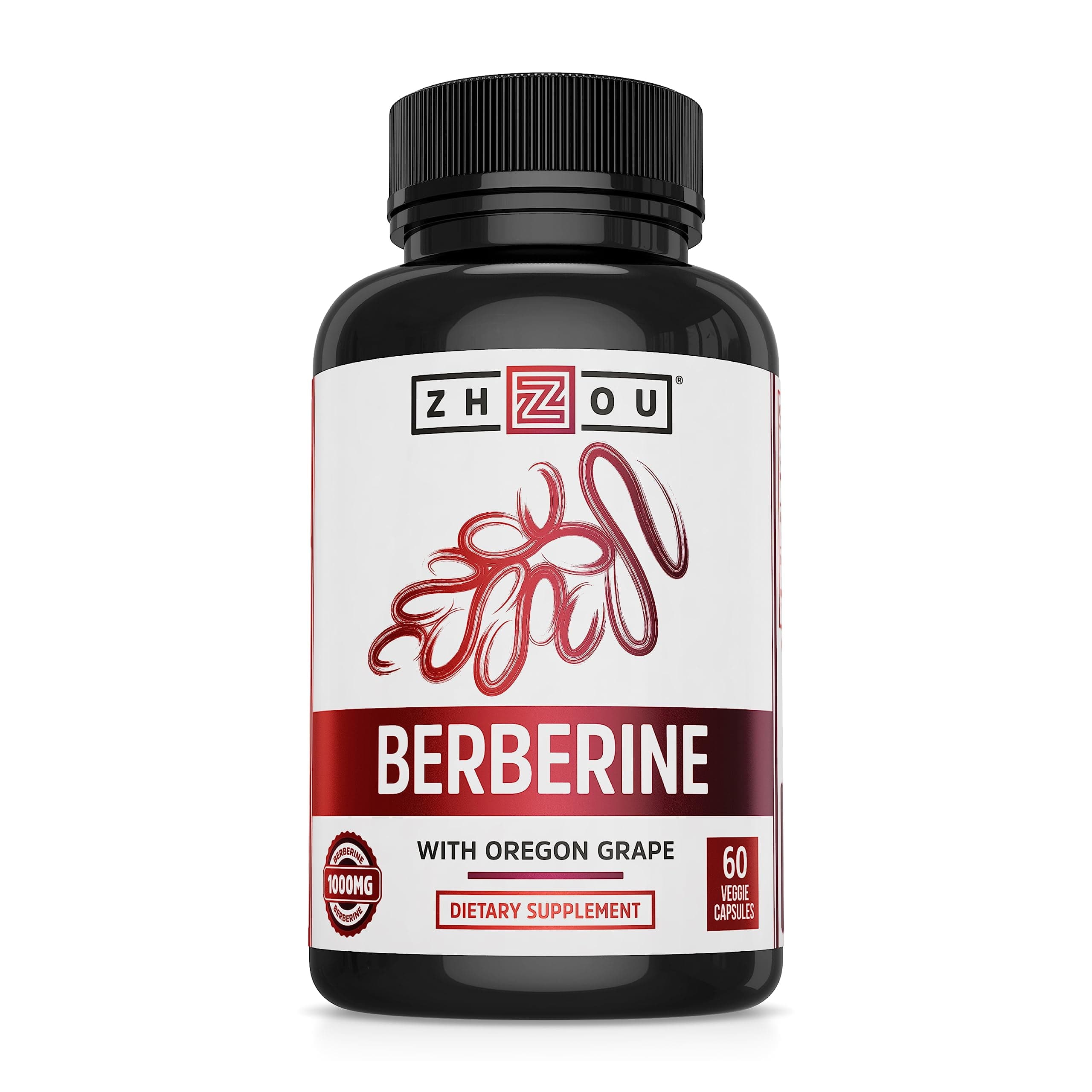
Oregon Grape.
Berberine-containing herb used for skin and digestive issues. Berberine source. Skin, digestion, blood sugar support.
Reviewed March 2026
- Category
- Herb
- Also filed under
- Skin healthDigestiveAntimicrobial
What Oregon Grape is, and what it does.
- Does it work
- Moderate. Traditional use strong. Modern studies limited.
- How much to take
- Start with 500 to 1,500mg a day of root or root extract, which is the band this root works in day to day. Extracts standardised to berberine tell you what you're getting.
- Time to feel it
- Digestive changes tend to show up within a week or two. Anything to do with skin is slower, usually four to eight weeks of daily use before it's visible.
- The first dose
- A sharply bitter taste, and for some people a bit of gut activity. Day one is about tolerance. The alkaloids do their work across weeks.
- With regular use
- Over four to eight weeks people report steadier digestion, with skin changes on the slower end. The glucose and lipid angle rests on berberine chemistry more than on trials of this root.
- How well tolerated
- Contains berberine. Same cautions apply. Avoid in pregnancy.
- How it feels
- Digestive support. Skin changes over weeks. Bitter flavor.
- The overlooked benefit
- Standardising to berberine describes only part of this root. Berbamine, jatrorrhizine and oxyacanthine ride along, so two extracts with the same berberine figure aren't identical.
500 to 1,500mg a day is where Oregon Grape works.
Source: Muller et al., Phytomedicine, 2003; Slobodnikova et al., Phytomedicine, 2004
The proof, claim by claim.
These words describe the research, not the molecule's worth. Research strength is how much work stands behind one claim, and it is never a product score.
- skin appearance and clarityRandomised trial
- antimicrobial activity of isoquinoline alkaloidsIn vitro study
- healthy glucose and lipid handling via AMPK activationIn vitro study
Questions people ask about Oregon Grape.
- When should I take it?
- Timing matters less than consistency. Pick a time that works for you and take it daily.
- Can I take it with other supplements?
- Usually fine. The main thing to watch is not doubling up on the same ingredient from different products. If you're on prescription meds, check with your pharmacist first.
- Any side effects to watch for?
- Most people tolerate it well at recommended doses. GI upset is the most common complaint with any supplement. Start with a lower dose and work up. If something feels off, stop and reassess.
- Who benefits most from this?
- People who've already covered the basics (diet, sleep, exercise) and want to fine-tune. It's not essential, but could be worthwhile for the right person.
Why these belong in the same formula. Each row says what the basis is, from settled biochemistry through to a trial that measured the pair.
The berberine in Oregon grape root is pumped back into the gut lumen by intestinal P-glycoprotein, which is why so little of an oral dose reaches the blood. Piperine inhibits that efflux pump and slows first-pass metabolism, raising berberine exposure from the same dose.
Oregon grape root is standardised to berberine, so stacking it with isolated berberine adds to one alkaloid load rather than bringing anything new. Count the two together when working out total intake, since gut tolerance tracks the combined alkaloid dose.
Oregon grape and barberry are both Berberis-family roots carrying berberine, berbamine and jatrorrhizine. Combining them raises total alkaloid load from one shared pharmacology rather than adding a second mechanism.
Goldenseal carries berberine alongside hydrastine and canadine, so it overlaps Oregon grape's alkaloid profile. Western herbal practice has paired the two bitter alkaloid roots for well over a century.
Berberine-type alkaloids are pumped back into the gut lumen by P-glycoprotein, which is why so little is absorbed. Silymarin inhibits P-gp and CYP3A4, so co-dosing raises systemic alkaloid exposure from the same milligram amount.
Cynarin from artichoke stimulates bile flow, and Oregon grape's bitter alkaloids act on the same upper digestive reflex. Bitters formulas layer the two for a stronger bile response.
Dandelion root sesquiterpene lactones are bitter secretagogues acting on the same gastric and biliary reflex arc as berberine-bearing roots. The pair is standard in traditional bitters blends.
Carvacrol and thymol disrupt microbial membranes while berberine-type alkaloids act on microbial cell division and efflux. Formulas combine them so two unrelated antimicrobial mechanisms cover the same lumen.
Berberine-type alkaloids inhibit CYP3A4, the enzyme that clears monacolin K. Putting the two in one formula raises monacolin exposure above what the label amount implies, so this pairing needs deliberate handling.
Berberine-type alkaloids are broadly antimicrobial and do not spare ingested lactobacilli sharing the same lumen. Co-dosing in one capsule can lower delivered viable counts, so separating the doses is normal practice.
Both berberine, the marker alkaloid of Oregon grape, and curcumin are substrates of intestinal P-glycoprotein and are heavily conjugated on first pass. Co-dosing means the two compete for the same efflux and conjugation capacity, which is why they are often formulated together with a bioavailability aid. The interaction is pharmacokinetic and has not been quantified for this specific pairing here.
Oregon grape extracts standardised to berberine are commonly blended with chromium in products aimed at normal glucose metabolism. Chromium acts on insulin signalling while berberine-type alkaloids act through AMPK activation, so the routes differ. Anyone already using something that lowers blood sugar should have the combination reviewed by their clinician because the effects can stack.
Gymnema and berberine-bearing herbs such as Oregon grape appear together in the same category of blends. The mechanisms are separate, gymnemic acids acting at sweet taste and intestinal sugar handling and berberine at AMPK. The pairing is formulation convention rather than a tested combination.
Licorice is a long-standing harmonising and demulcent addition to bitter alkaloid herbs like Oregon grape in traditional formulae. It softens the taste and the mucosal impact of a strongly bitter root preparation. This is a preparation tradition, not a measured pharmacological synergy.
Ginger is a conventional companion to bitter roots in digestive formulae, where the bitter principle stimulates secretion and ginger addresses the upper gut. The pairing shows up repeatedly in herbal practice. No controlled combination data is presented here.
Berberine and related isoquinoline alkaloids are metabolised by gut bacteria to more absorbable dihydro forms, and they also alter the composition of that same community. A yeast probiotic is not a bacterium, so it is not itself a target of that antibacterial pressure. The direction and size of the combined effect on the microbiome has not been measured here.
Oregon grape's alkaloids shift bacterial populations while inulin feeds saccharolytic ones, so the two push the microbial community in different ways at the same time. Whether that nets out as complementary or opposing depends on the community and has not been measured. Read it as mechanistic rather than clinical.
Mucilaginous herbs are the traditional counterweight to a strongly bitter alkaloid preparation, coating mucosa that the bitter would otherwise stimulate hard. The trade-off is that a mucilage layer can also slow the absorption of what sits alongside it. Separating the two doses by an hour is the usual practice.
Tannins precipitate isoquinoline alkaloids out of solution, which is classical phytochemistry and the basis of the old tannin antidote for alkaloid ingestion. Taking a tannin-rich preparation with an Oregon grape extract can therefore lower how much alkaloid stays dissolved and available. Spacing the two apart avoids the interaction.
Activated charcoal adsorbs small organic molecules including plant alkaloids across its whole surface without selecting between them. Anything taken close to a charcoal dose is partly bound and passes through. Several hours of separation is the standard way around it.
Quercetin inhibits P-glycoprotein and competes for sulfation and glucuronidation capacity, the same routes that clear berberine-type alkaloids on first pass. Co-dosing can therefore raise alkaloid exposure relative to the herb taken alone. The effect direction is established pharmacology. The magnitude for this herb is not quantified here.
Talk to a doctor before taking Oregon Grape if any of these apply to you: medication interactions, pregnancy avoid. These are flags to check first, not effects Oregon Grape is known to cause.
Not medical advice. Show the label to your pharmacist.What Oregon Grape actually does.
The root and root bark carry a family of alkaloids, mainly berberine with a few close relatives, and those alkaloids are what a standardised extract is measured against.
Berberine carries a permanent charge in the gut, which keeps it from slipping through membranes easily. That is the main reason herbs built on it are absorbed poorly.
Berberine is also a target of a gut pump called P-glycoprotein, so a good share of what gets into the gut wall is pushed straight back out.
Two of its other alkaloids have different chemistry from berberine, so two extracts standardised only to berberine can still differ in what they actually contain.
Where Oregon Grape comes from.
The bright yellow root is dug, washed, dried and soaked in an alcohol and water mix that pulls out the active alkaloids. The liquid is filtered and either bottled as a tincture or dried into a powder that is tested for how much berberine it contains.
Made from a plant. What ends up in the capsule tracks the harvest, so batch testing and a stated marker matter more here than with a made molecule.
Roots are dug from cultivated or wild-collected shrubs. Species identity matters because several Berberis and Mahonia relatives are sold under overlapping common names and differ in alkaloid profile.
Roots are washed free of soil, cut, and dried at controlled temperature to a stable moisture level before any extraction. The yellow colour of the cut root comes from the berberine itself.
Milled root is percolated or macerated with a water and ethanol mix, which suits the alkaloid fraction. Acidified water is used in some processes because the alkaloids are more soluble as salts.
The extract is filtered clear of plant solids and the solvent is stripped under vacuum at low temperature to limit alkaloid degradation.
The concentrate is assayed by HPLC and diluted with a carrier such as maltodextrin or rice flour to hit a declared berberine percentage.
The material is either spray dried into a free-flowing powder for capsules and tablets, or held as a liquid tincture in a stated alcohol strength.
Labels often name the common name only. Because several Berberis and Mahonia species share it and differ in alkaloid content, the botanical species and plant part are the details worth looking for.
Getting Oregon Grape from food.
The whole-food sources on file. A supplement closes the gap, it does not replace dinner.
A gram-for-gram figure (how much of each you would eat to match a dose) will appear here once it is sourced and reviewed. This page will not print a number it cannot cite.
The forms it comes in.
FDA Disclaimer: These statements have not been evaluated by the Food and Drug Administration. This information is for educational purposes only and is not intended to diagnose, treat, cure, or prevent any disease. Consult your healthcare provider before starting any supplement regimen.