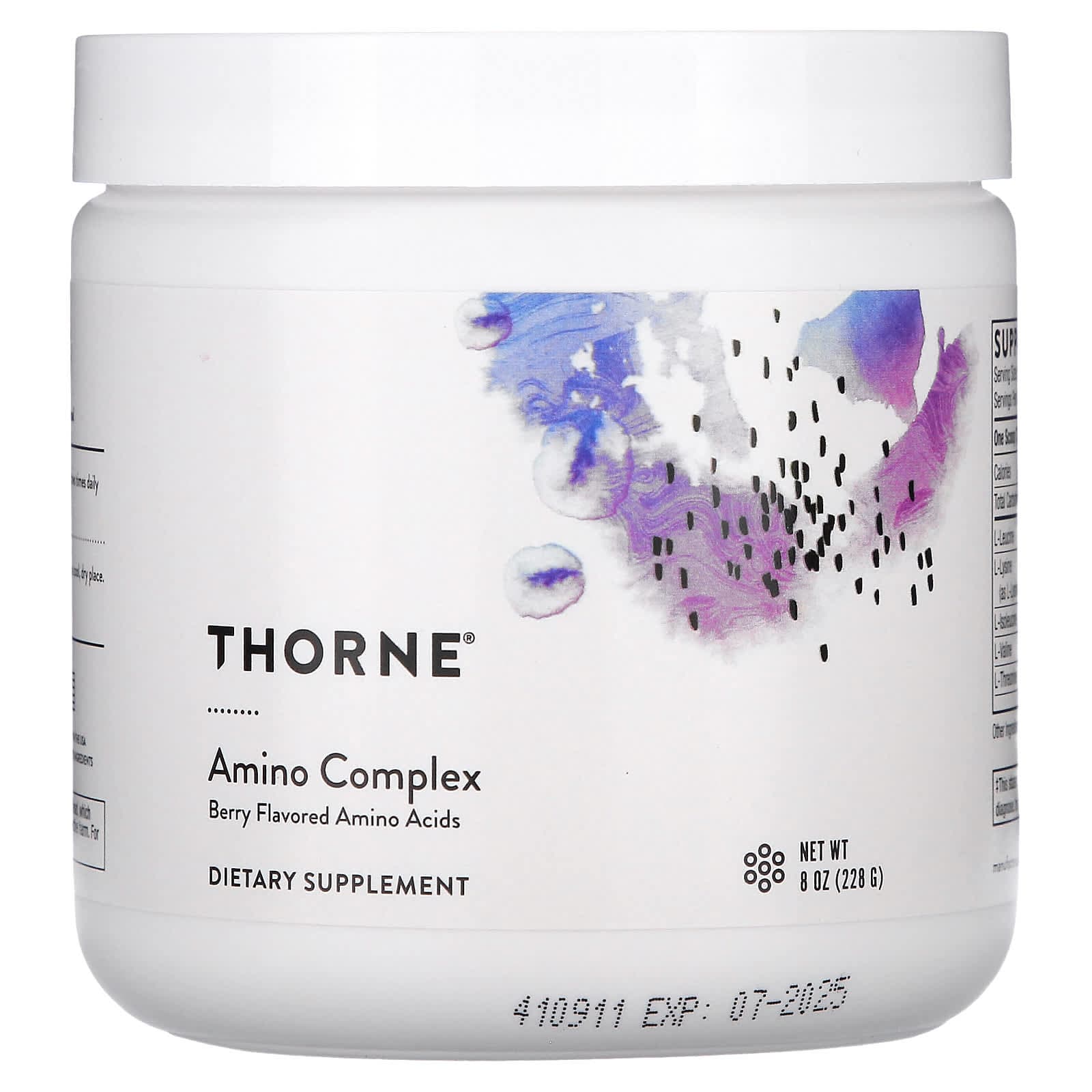
Threonine.
Supports collagen production and may aid muscle recovery. It's a building block for proteins. Your body uses it to make collagen for skin, elastin for stretchiness, and to repair muscle tissue after exercise.
Reviewed March 2026
- Category
- Amino acid
- Also filed under
- Muscle RecoveryCollagen SupportImmune Function Support
What Threonine is, and what it does.
- Does it work
- Suits lower protein intakes, plant-forward eaters and hard trainers topping up amino acids. If eggs, dairy or meat feature daily, your intake is likely already there.
- How much to take
- 500mg to 2 grams daily. Start on the lower end. No need to get fancy with timing. Just be consistent.
- Time to feel it
- It goes into protein synthesis the same day you take it. Anything you might notice in skin or recovery builds across four to eight weeks.
- The first dose
- Nothing. It's a building material, not a stimulant. Your body just stocks it away for when it's needed.
- With regular use
- After several weeks, you might see subtle improvements in skin health or feel a bit better recovered from the gym. The effects are not dramatic.
- How well tolerated
- Well tolerated. It's a component of the food you eat every day. The only real caution is for those with pre-existing kidney or liver conditions.
- How it feels
- Like nothing. It's not a 'feel' supplement. The benefits are structural and happen behind the scenes over time.
- The overlooked benefit
- Gut mucus is unusually rich in threonine, so a large share of what you eat goes into building the mucin layer lining your intestine rather than into muscle.
500mg a day is where Threonine works.
Source: WHO/FAO/UNU protein requirements report; Mao et al. (2011)
The proof, claim by claim.
These words describe the research, not the molecule's worth. Research strength is how much work stands behind one claim, and it is never a product score.
Threonine is an essential amino acid with known roles in protein synthesis and immune function. However, supplementation benefits are primarily observed in specific cases like deficiency or high physical stress. General benefits for the average person are less pronounced.
- indispensable amino acid requirementNarrative review
- intestinal mucin synthesisAnimal study
- amino acid supply for muscle protein synthesisRandomised trial
- glycine supply through threonine catabolismNarrative review
- protein quality of plant-based dietsCohort study
- collagen and connective tissue compositionNarrative review
Questions people ask about Threonine.
- Do I really need to supplement this?
- Probably not. If you eat enough meat, dairy, or lentils, you're likely fine. This is for filling specific dietary gaps.
- Is this for muscle building like creatine?
- No. It helps repair muscle as a building block, but it won't directly make you stronger or bigger like creatine does.
- Will it make my skin look younger?
- It helps your body produce collagen, which is good for skin. But don't expect it to erase wrinkles. Think of it as supplying the factory, not running the factory.
- Can I just get this from a protein shake?
- Yes. A scoop of whey or casein protein will have plenty of threonine. A dedicated supplement is only for targeted use.
- What's the best time to take it?
- Doesn't matter. Morning, post-workout, before bed. Consistency is far more important than timing.
- What's the difference between L-Threonine and Threonine?
- Same thing for supplement purposes. 'L-' just refers to its chemical shape, which is the form your body uses.
Why these belong in the same formula. Each row says what the basis is, from settled biochemistry through to a trial that measured the pair.
Threonine is converted to glycine through the threonine dehydrogenase and threonine aldolase routes, so threonine intake feeds the glycine pool directly. Both amino acids are then drawn on heavily for connective tissue and gut mucin protein synthesis.
Pyridoxal 5-phosphate, the active form of vitamin B6, is the coenzyme for threonine dehydratase and threonine aldolase. Without adequate B6 status the enzymes that route threonine into glycine and into energy metabolism run slowly.
O-linked sugar chains attach to the hydroxyl side chains of serine and threonine residues, and mucin proteins of the gut lining are unusually rich in both. Supplying the two together matches how the mucus layer is actually built.
In cereal and plant protein, lysine is the first limiting essential amino acid and threonine is usually next, so protein formulation has paired them for decades. Adding threonine without lysine leaves the same ceiling on how much of the protein the body can use.
Threonine breakdown produces propionyl-CoA, which is carboxylated and then rearranged to succinyl-CoA by a B12-dependent mutase. That last step stops without B12.
Propionyl-CoA carboxylase, the enzyme handling threonine-derived propionyl-CoA, depends on biotin. Biotin status gates that exit.
The ketoacid dehydrogenase complex that processes threonine-derived 2-oxobutyrate carries an FAD component. Riboflavin keeps that flavin charged.
The ketoacid dehydrogenase step downstream of threonine uses NAD as its electron acceptor. Niacin maintains that pool.
Threonine carbon travels as acyl-CoA intermediates, so coenzyme A availability limits the route. Pantothenic acid is the precursor of that coenzyme.
Threonine is the most abundant amino acid in intestinal mucin and glutamine is the enterocyte's preferred fuel. Gut formulas carry both so mucus turnover has substrate and energy.
Threonine and lysine are the amino acids most often limiting in cereal protein, so blends balance them together. Raising one alone leaves the same ceiling in place.
Mucin is threonine-rich while the intestinal lining runs on glutamine as fuel. Supplying both covers substrate and energy for normal mucus turnover.
The dehydrogenase route oxidises threonine to 2-amino-3-ketobutyrate using NAD+ as the electron acceptor, and that intermediate is cleaved to glycine and acetyl-CoA. Without an oxidised NAD pool the route stalls and flux shifts toward the dehydratase pathway instead. This is settled enzymology and needs no combination trial to state.
Glycine produced from threonine is either used for protein synthesis or cleaved by the glycine cleavage system, which loads a one-carbon unit onto tetrahydrofolate. Folate availability therefore sets how much of that glycine can be disposed of through the one-carbon route rather than accumulating. The link is established metabolism. It is not a claim that threonine changes folate status.
The dehydratase route removes water and ammonia from threonine to give alpha-ketobutyrate, which is decarboxylated to propionyl-CoA. In bacteria that same alpha-ketobutyrate is the committed precursor of isoleucine, which is why fermentation strains engineered to overproduce threonine have to manage the isoleucine branch. In humans the two amino acids converge on propionyl-CoA rather than on each other.
Threonine and the branched-chain amino acids are absorbed through overlapping neutral amino acid transporters, so a large free-form bolus of one lowers the uptake rate of the others taken at the same moment. The effect is on rate and timing rather than on total absorption from a mixed meal. It is the main reason single free amino acids behave differently from the same amino acids inside a protein.
Valine and threonine compete for the same class of sodium-dependent neutral amino acid transporters in the small intestine. When free amino acids are given together in large amounts, uptake of each is slower than when either is given alone. Inside an intact protein the competition largely disappears because peptide transport handles most of the load.
Free tryptophan and free threonine draw on shared neutral amino acid transport, so timing matters when both are taken as isolated powders. The practical size of this competition at supplement intakes has not been characterised in humans. Read it as a transport mechanism rather than a measured interaction.
Threonine is an indispensable amino acid, so all of it comes from the diet, and a complete protein such as whey supplies it in proportion with the other eight. Adding free threonine on top of an adequate protein intake changes the balance of the free amino acid pool rather than filling a gap. Where total protein is low, the protein source is what determines threonine supply.
Collagen peptides are not a complete protein: they carry almost no tryptophan and comparatively little threonine, so a diet leaning on collagen for protein needs its indispensable amino acids from elsewhere. Threonine sits alongside that gap because it is also the residue that carries most O-linked glycosylation. Pairing them is about completing the profile, not about a combination effect.
The combination was tested together in laying birds, with the authors reporting changes in the amino acid composition of eggs relative to the control diet. The rationale offered is that a bacterial supplement alters gut conditions and mucin turnover, and threonine is the amino acid mucin draws on most heavily. This is a non-human feeding study and does not carry across to people as an effect.
O-linked glycosylation attaches N-acetylgalactosamine to the hydroxyl of a serine or threonine residue, and mucins carry hundreds of such sites per molecule. Amino sugar availability and threonine availability therefore both feed the same glycoprotein assembly. The connection is biochemical. No combination has been tested at supplement intakes.
Phenylalanine is a large neutral amino acid that shares carrier capacity with threonine at the intestinal brush border. Taken as free powders at the same time, each slows the other's uptake. The magnitude at ordinary supplement doses is not established.
Tyrosine and threonine are both neutral amino acids taken up by overlapping transporters, so a large free-form dose of one changes the timing of the other. Spacing free amino acid doses apart removes the question. This is transport physiology, not an observed clinical interaction.
Histidine and threonine are absorbed through overlapping carriers, so simultaneous large free-form doses compete. Both are also indispensable, so a shortfall in either limits protein synthesis regardless of how much of the other is present. The competition is transport-level and short-lived. The indispensability point is the more consequential one.
Casein clots in the stomach and releases amino acids over several hours, giving a slower and flatter rise in plasma threonine than a free amino acid dose. That difference in delivery shape matters more than total threonine content for how the amino acid is used. Both routes supply the same molecule.
Talk to a doctor before taking Threonine if any of these apply to you: Kidney issues, Liver issues, Pregnancy, Breastfeeding. These are flags to check first, not effects Threonine is known to cause.
Not medical advice. Show the label to your pharmacist.What Threonine actually does.
Threonine is one of the nine amino acids humans have to eat. Plants and bacteria build it from aspartate and we don't carry that pathway, so every gram arrives on your plate or in a capsule.
Its side chain carries a hydroxyl group. That makes it one of the spots protein kinases add phosphate to, and one of only two residues that carry O-linked sugar chains.
O-linked sugars attach to that hydroxyl on threonine or on serine. Gut mucins are unusually loaded with both, which is why making mucus pulls hard on threonine supply.
One breakdown route uses a dehydrogenase plus NAD+ to make an intermediate, which then gets cleaved into glycine and acetyl-CoA.
Where Threonine comes from.
Bacteria are fed sugar in a tank and make threonine, which they release into the liquid. The bacteria are filtered off, the threonine is separated out and crystallised, then tested and dried into a powder.
Built by fermentation, the same way vitamin B12 and many amino acids are made at scale. Controlled conditions, consistent output.
Fermentation runs on a sugar source, usually glucose from corn or cassava starch or sucrose from cane, along with an inorganic nitrogen source such as ammonia or ammonium sulfate.
Selected strains of Escherichia coli or Corynebacterium glutamicum, bred or engineered to release the feedback controls on the aspartate pathway, convert the sugar into threonine and excrete it into the broth over a batch or fed-batch run.
Biomass is removed from the broth by centrifugation or membrane filtration, leaving a clarified liquor containing threonine and residual fermentation salts and sugars.
The liquor is passed over ion exchange resin to separate threonine from other broth components, then concentrated and cooled so threonine crystallises. Crystals are washed and recrystallised where a higher grade is required.
Batches are assayed for L-threonine content and optical rotation to confirm the L-isomer, and checked against limits for heavy metals, residual solvents and microbial counts.
The washed crystals are dried, milled to a target particle size and packed. Some of the output is then coated or blended into premixes for animal feed rather than sold as a single powder.
Getting Threonine from food.
The whole-food sources on file. A supplement closes the gap, it does not replace dinner.
A gram-for-gram figure (how much of each you would eat to match a dose) will appear here once it is sourced and reviewed. This page will not print a number it cannot cite.
The forms it comes in.
The essence, in one line each.
- In 15 healthy adults, a threonine intake of 15 mg per kg of body weight per day was enough to hold indicator amino acid balance, while 7 mg per kg per day was not, and raising intake to 46 mg per kg per day added nothing further.Randomised trial. Borgonha et al., 2002 (The American Journal of Clinical Nutrition). PMID 11916756 ↗
- In 11 healthy men studied at six intakes, the mean daily threonine requirement measured 10.5 to 12.1 mg per kg of body weight, and stretching the adaptation period from 1 day to 7 days did not change the figure.Randomised trial. Szwiega et al., 2023 (The Journal of Nutrition). PMID 37004875 ↗
- Screening 11,408 records down to 66 human studies, this review found the adult threonine requirement rests on a small set of studies in men aged 19 to 50, with no threonine data in children, adolescents or pregnancy.Systematic review. Burstad et al., 2025 (The American Journal of Clinical Nutrition). PMID 40610129 ↗
- A review of amino acid supplementation trials found effects on blood pressure and vascular markers that varied by amino acid, with limited human data for threonine specifically.Systematic review. Mikolajetz et al., 2026 (Cardiovascular research). PMID 41560345 ↗
- In a randomised double-blind controlled study of supplemental L-threonine in healthy adults, the authors reported no adverse findings on the monitored clinical and laboratory measures at the intakes and duration tested. A failure to detect a signal is not evidence that none exists.Randomised trial. Matsumoto H et al., 2025 (Amino Acids). PMID 40419835 ↗
- Dietary L-threonine supplementation was reported to lessen the changes in intestinal barrier and immune signalling markers produced by a lipopolysaccharide challenge. The measures were tissue and molecular markers rather than clinical outcomes.Animal study. Chen Y et al., 2018 (British Journal of Nutrition). PMID 29770758 ↗
- In mice fed a high-fat diet, threonine supplementation was reported to limit fat accumulation relative to the unsupplemented high-fat control.Animal study. Chen J et al., 2022 (Food and Function). PMID 35766226 ↗
- High dietary threonine supplementation was reported to change growth performance measures, blood health biomarkers and intestinal histology in the fed animals, with the response varying by inclusion level.Animal study. Khalid A et al., 2025 (Veterinary World). PMID 40342743 ↗
- L-threonine supplementation was reported to change productive and reproductive performance measures, eggshell quality, serum metabolites and immune response markers in laying birds.Animal study. Omary MA et al., 2024 (Journal of Animal Physiology and Animal Nutrition). PMID 38389325 ↗
- Graded dietary threonine levels were reported to change growth performance, liver and kidney function markers and blood hormone measures in broilers, with an economic efficiency analysis alongside.Animal study. Abo Ghanima MM et al., 2023 (Poultry Science). PMID 37321031 ↗
- Bacillus subtilis DSM32315 with L-threonine supplementation was reported to alter the amino acid composition of eggs compared with the control diet.Animal study. Azzam MM et al., 2023 (Frontiers in Veterinary Science). PMID 37680390 ↗
- In ovo threonine supplementation was reported to change ileal expression of nutrient transporter genes in the hatched birds. Gene expression is a molecular marker rather than a performance outcome.Animal study. Andrade MFS et al., 2022 (Journal of Animal Physiology and Animal Nutrition). PMID 34958492 ↗
- L-threonine supplementation interacted with diet complexity in its effect on nutrient digestibility and nitrogen and energy balance in the fed animals.Animal study. Koo B et al., 2020 (Journal of Animal Science). PMID 32307532 ↗
- Rumen-protected isoleucine, leucine, methionine and threonine added to low-protein diets were reported to improve the measured performance and nitrogen use variables. Threonine was one of four amino acids given together and its separate contribution was not isolated.Animal study. Qin X et al., 2025 (Animals). PMID 40362024 ↗
- Pooling amino acid supplementation trials in challenged broiler chicks, the authors reported growth performance differences favouring supplementation. Threonine is named among the amino acids reviewed rather than analysed alone.Meta-analysis. Izadi Yazdanabadi F et al., 2025 (Veterinary Medicine and Science). PMID 39708315 ↗
- A combined lipid emulsifier supplementation strategy was reported to reduce the adverse effects of the challenge diet on the measured performance variables. Threonine appears within the dietary amino acid context rather than as the tested variable.Animal study. Yu M et al., 2026 (Journal of Animal Science). PMID 41913048 ↗
- The study reported effects of a feed additive on methane output, performance, rumen microbiome and metabolome measures, with threonine appearing among the metabolites profiled rather than as the intervention.Animal study. Amancio BR et al., 2026 (Journal of Animal Science). PMID 41761576 ↗
These are the studies our verdict leans on, chosen from the 1,524 we read for Threonine. The full linked list is below.
The studies, linked.
1 source behind our Threonine verdict: peer-reviewed studies and registered clinical trials. Every one links straight to PubMed, the journal, or ClinicalTrials.gov. Read them yourself.
- Clinical trialDetermination of the Difference in Uptake and Utilization of Two Amino Acids by the Splanchnic BedClinicalTrials.gov ↗Phase 1, 6 participants, Completed
Evidence surfaced via Semantic Scholar (Allen Institute for AI) and ClinicalTrials.gov. Ranked by study type and citation weight, not cherry-picked.
Problems people have reported.
Read this carefully. These are 1,572 voluntary, unverified reactions reported to the FDA (openFDA). The number mostly reflects how popular Threonine is, not how risky it is. A report is not proof Threonine caused anything. It is a signal of what to watch for, nothing more.
Source: openFDA adverse-event reports. Voluntary reporting, not an incidence rate.
FDA Disclaimer: These statements have not been evaluated by the Food and Drug Administration. This information is for educational purposes only and is not intended to diagnose, treat, cure, or prevent any disease. Consult your healthcare provider before starting any supplement regimen.