
Calcium (from Calcium Carbonate)WWEIA NHANES 2009 to 2010
About 42% of Americans
take in less calcium than the estimated average requirement.
NHANESPapaya Fruit Powder is the lead active here, studied most for breaking down what you eat. Bromelain (from Pineapple) is the most studied active here, with 14 human studies behind it, each one cited. Who it fits: for everyone, adults.
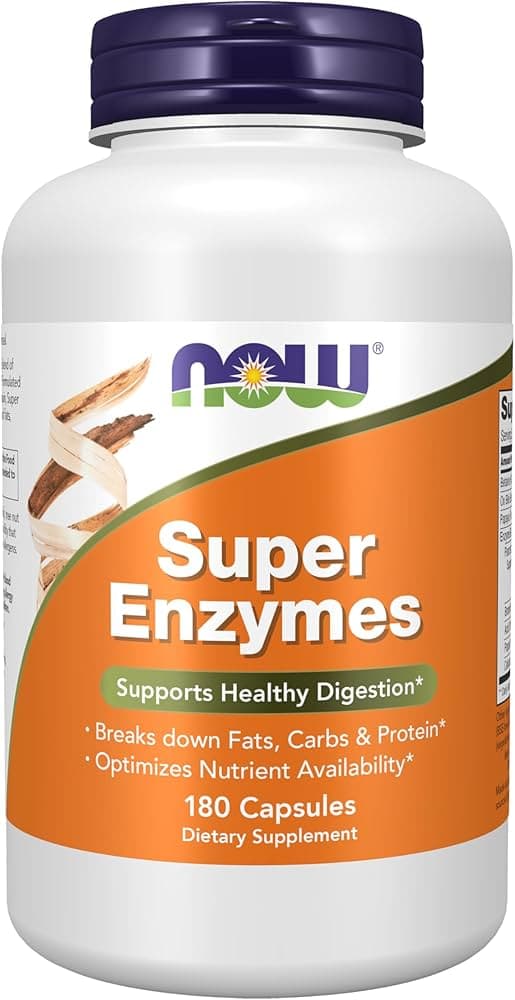 Verified by IngredientMD
The panel on the left is the one we evaluated, line by line.
All 13 actives checked against the clinical evidence: dose, form, and what the research actually shows.
Doses, ratios, and how the ingredients work together. That assessment is the verdict above: "Backed by human trials".
The verdict is public and identical whether or not a brand pays. A formula that does not clear the bar gets nothing.
Read by the engine against 2.1 million data points from clinical trials, PubMed and more than a hundred vetted sources. No individual reviewer is named or implied.
Cross-checked against 1,516 documented interactions for these actives.
Public health figures the engine matched to this formula's ingredients. Reported by their source, cited and dated, never written by the brand.
About 42% of Americans
take in less calcium than the estimated average requirement.
NHANES24% of US adults
say digestive health is the most important aspect of their overall health, per a 2022 IFIC survey on gut health and probiotics.
International Food Information Council, 202252% of US adults
believe common digestive symptoms such as bloating and abdominal pain are just a normal part of life, per a 2026 Harris Poll conducted for Oshi Health.
The Harris Poll for Oshi Health, 202657.6%
During 2017 to 2018, 57.6% of US adults aged 20 and over reported using a dietary supplement in the past 30 days.
CDC National Center for Health Statistics58% of the recommended fiber intake
was reached on average by US consumers, who ate 8.1 grams of fiber per 1,000 calories in 2017 to 2018 versus the 14 grams recommended, per USDA Economic Research Service analysis of federal food consumption survey data.
USDA Economic Research Service, 202340% of US adults
aged 18 and over report they experience bloating at least a few times a month, with 5% saying they experience it daily, per a 2023 Ipsos poll conducted for MDVIP.
Ipsos, 202334% of US adults
aged 18 and over report they experience abdominal discomfort or pain at least a few times per month, with women about twice as likely as men to report it several times weekly, per a 2023 Ipsos poll conducted for MDVIP.
Ipsos, 202328% of US adults
aged 18 and over say that digestive issues impact the quality of their life, a share that rises to about a third among those aged 18 to 44, per a 2023 Ipsos poll conducted for MDVIP.
Ipsos, 202332% of US adults
say they actively try to consume probiotics, and among them 60% try to do so at least once a day, per a 2022 IFIC survey on gut health.
International Food Information Council, 202259 to 66 days
was the median time it took adults to make a new daily health habit automatic across the studies a 2024 review pooled, with individuals ranging from 4 to 335 days.
Systematic review and meta-analysis, 202461% to 74%
About 61 to 74 percent of adults refilling a long-term medicine on their own stopped within a year, versus 33 to 44 percent on one set pickup day.
Cohort study, 2015Clinical trial (healthy-volunteer pilot, n=6), 2013
A single dose of betaine HCl lowered stomach acid pH by about 4.5 units within 30 minutes in healthy volunteers with suppressed acid.
Molecular PharmaceuticsControlled trial, 2004
Men taking a multi-enzyme blend containing papain around a 30-minute downhill run recovered knee strength better and rated soreness lower than placebo, an effect from the blend, not papain alone.
Journal of Sports SciencesRandomised trial, 2023
In a double blind trial, adults with recurring fullness and upper abdominal discomfort after meals reported greater symptom relief on a digestive enzyme blend than on placebo.
Biomedicine & pharmacotherapyRandomised trial, 2013
Adults with long-standing digestive complaints who took 20 ml of papaya daily for 40 days reported less constipation and bloating than placebo, but the effect faded once stopped.
Neuro Endocrinology LettersMeta-analysis, 2019
Across six trials after wisdom tooth removal, bromelain reduced pain in the first 24 hours and improved sleep and appearance, with no detectable effect on swelling or jaw opening.
Medicina Oral Patologia Oral y Cirugia BucalCohort study, 2026
In this real-world study the authors report on enteric-coated pancreatin capsules used for postprandial fullness and upper abdominal discomfort, describing symptom scores and tolerability over the observation period.
Saudi Journal of GastroenterologyMeta-analysis, 2023
Across a review of 54 clinical reports with 39 pooled, oral bromelain lowered pain scores slightly more than control, by about 0.27 points on the pain scale, and topical bromelain shortened time to complete wound debridement by about 6.9 days.
Nutrition and HealthSystematic review, 2024
Reviewing the human and mechanistic evidence, bromelain's most consistently reported effects were on swelling, post-surgical recovery and markers of inflammation.
NutrientsRandomised trial, 2024
A pineapple extract and bromelain preparation taken after lower wisdom tooth removal reduced swelling and reported pain compared with the control regimen.
NutrientsRandomised crossover trial, 2014
When stomach acid was pharmacologically suppressed, adding 1,500 mg of betaine HCl restored the acidic environment needed to absorb a pH-dependent drug, raising its blood exposure about 6.7-fold back to roughly normal levels.
The AAPS JournalOpen-label trial, 2022
A fermented papaya and noni preparation was assessed against oxidative stress and inflammatory markers. The reported endpoints are laboratory markers and the material is a fermented preparation rather than plain fruit powder.
NutrientsRandomised trial, 2026
Oral multienzyme supplementation was reported to alter postprandial plasma nutrient concentrations after a mixed meal in healthy adults. Amylase is one enzyme within the blend, and plasma nutrient concentrations are markers rather than clinical outcomes.
The Journal of nutritionSystematic review, 2023
Across seven randomised trials using roughly 100 to 1200 mg a day for one to 16 weeks, the effect of bromelain on circulating inflammatory markers such as interleukin-6 and C-reactive protein was inconsistent, with some trials showing reductions and others detecting no difference.
Clinical Nutrition ESPENOpen-label trial, 1997
A 13C-labelled triglyceride breath test was used to monitor fat digestion during pancreatin supplementation, giving a non-invasive marker of how much lipolysis the dose supported rather than a clinical outcome.
Zeitschrift fur GastroenterologieSystematic review, 2025
Across the trials reviewed, supplemental pancreatic enzymes raised the share of dietary fat absorbed in adults whose own enzyme output is low, and were generally well tolerated.
DigestionSystematic review, 2025
Across the studies reviewed, bromelain was associated with improved blood sugar handling and insulin sensitivity markers in adults with raised blood sugar, though the human trial base was small.
The Journal of pharmacy and pharmacologyMeta-analysis, 2016
Pooling randomised trials, pancreatic enzyme supplements did not show a detectable reduction in abdominal pain compared with placebo, which is a failure to find a difference rather than proof there is none.
Canadian journal of gastroenterology and hepatologyCase-control, 2026
In adults with elevated liver fat, gene variants including one for a fat-processing enzyme were linked to liver measures, an association rather than a cause.
Nutricion HospitalariaOpen-label trial, 2018
Snacks fortified with papaya fruit seeds were assessed in a preliminary school feeding study, with the authors reporting changes in stool parasite egg counts. The study is small, uncontrolled and used seed rather than fruit flesh.
BMC Complementary and Alternative MedicinePopulation figures from public health data. Context for the category, not a statement about any individual and not a claim about this product.
Each line below was derived from this formula's own record at the time of verification. Nothing here was written by the brand, and nothing can be added that the evidence does not carry.
Time-to-effect windows the engine read from the trial record. Each is a window a named study measured, cited and dated, never written by the brand.
A randomised cross-over trial in ten women of mean age 69 gave a single 500 mg dose of calcium as citrate fasting, citrate with a meal, fortified juice or a dairy product meal, with blood drawn before and at 1, 2, 4 and 6 hours. Serum ionised and total calcium increased significantly from baseline over six hours, with the rise similar after fortified juice, delayed when citrate was taken with a meal and smaller after the dairy meal. A separate double-blind cross-over trial in 25 postmenopausal women measured parathyroid hormone and a bone resorption marker 12 hours after a single calcium dose. Ten participants is a small sample, and what moved was blood chemistry, not a sensation.
Windows measured in the cited trials. Context for how the active behaves over time, not a statement about any individual and not a claim about this product.
12 ingredients, from each one's own page.
No acute sensation. Parathyroid hormone responds within hours, while bone density shifts over a year or more of steady intake, so this reads on a panel and a scan.
Within a single meal. The acid arrives as the capsule dissolves and fades as the stomach empties, so it works meal by meal rather than building up.
Same meal. Bile salts act in the gut lumen while food is there, so the effect belongs to that meal rather than to a course of weeks.
Within an hour or two of the meal you take it with. The vitamin C and carotenoid side shows up as nutrient intake over weeks rather than as a sensation.
They act on the meal they arrive with, so comfort after that meal is the first thing you notice, usually within an hour or two.
It works on the meal it's swallowed with, so comfort after a fatty meal is a same-day matter rather than something that accumulates.
It works on the meal it's taken with, so comfort after a starchy plate is a same-sitting thing rather than something that builds over weeks.
The same meal. It works in the acid of the stomach in the hour after you swallow it, so any change in post-meal heaviness turns up straight away.
It works inside the meal you take it with, so any difference in comfort after a fatty meal shows up within an hour or two rather than over weeks.
With a meal it acts on that meal, inside an hour. Taken between meals for comfort and recovery, most reports describe several days of steady daily use.
Within the meal itself. It starts breaking protein apart as soon as it meets food, so any difference in comfort turns up over the hour or two after eating.
It works on the meal it is taken with, so any easing of gas or fullness after a fibrous plate shows up within a few hours. There is no build-up phase between doses.
How each ingredient usually behaves over time, from its own page on IngredientMD. General timing for the ingredient, not a measurement of this product.
What each form is, and where it fits in a formula. Measured findings carry the study that reported them.
Calcium carbonate is the calcium salt of carbonic acid, an alkaline white powder that is poorly soluble in water and goes into solution in acid. It carries 40 percent elemental calcium by weight, so 1250 mg of the salt supplies 500 mg of calcium.
In a randomised four-period, three-way crossover in 24 vitamin D replete postmenopausal women, marketed calcium carbonate, encapsulated calcium carbonate and marketed calcium citrate produced identical 24-hour time courses for the increment in total serum calcium, with no significant between-product difference in serum iPTH suppression. An earlier meta-analysis of 15 studies in 184 subjects reported calcium absorption from citrate higher than from carbonate by 20.0% across the whole set, 27.2% on an empty stomach and 21.6% with meals, so the two bodies of evidence do not agree. Carbonate is 40% elemental calcium by weight. In a randomised double-blind crossover in 27 healthy women, 500 mg/day of calcium as carbonate did not change stool frequency or Bristol Stool Form Scale scores.
The 1:1 hydrochloride salt of trimethylglycine, a crystalline solid that dissociates in aqueous acid to release hydrochloric acid.
Spray-dried or vacuum-dried bovine bile containing a natural mix of taurine and glycine conjugated cholic, deoxycholic and chenodeoxycholic acids together with biliary phospholipid and pigment.
Descriptions of the form itself, read from the cited studies. Not a comparison between products and not a statement about any individual.
It is a tablet, so the amount per serving is fixed and it stores well.
Put an earned verification on your own product page.
These statements have not been evaluated by the Food and Drug Administration. This product is not intended to diagnose, treat, cure, or prevent any disease. This record is not medical advice. Always consult your healthcare provider before starting any supplement regimen.