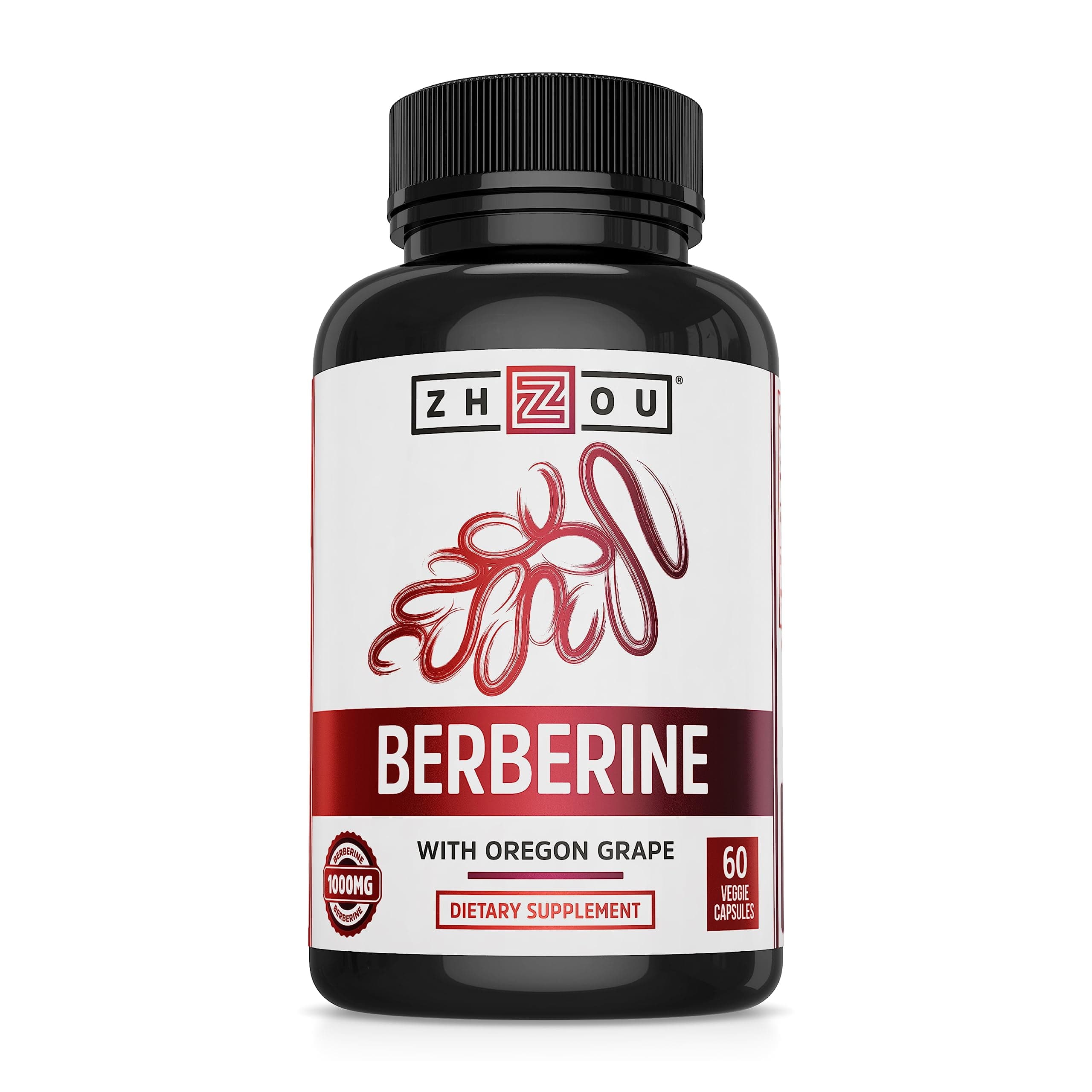
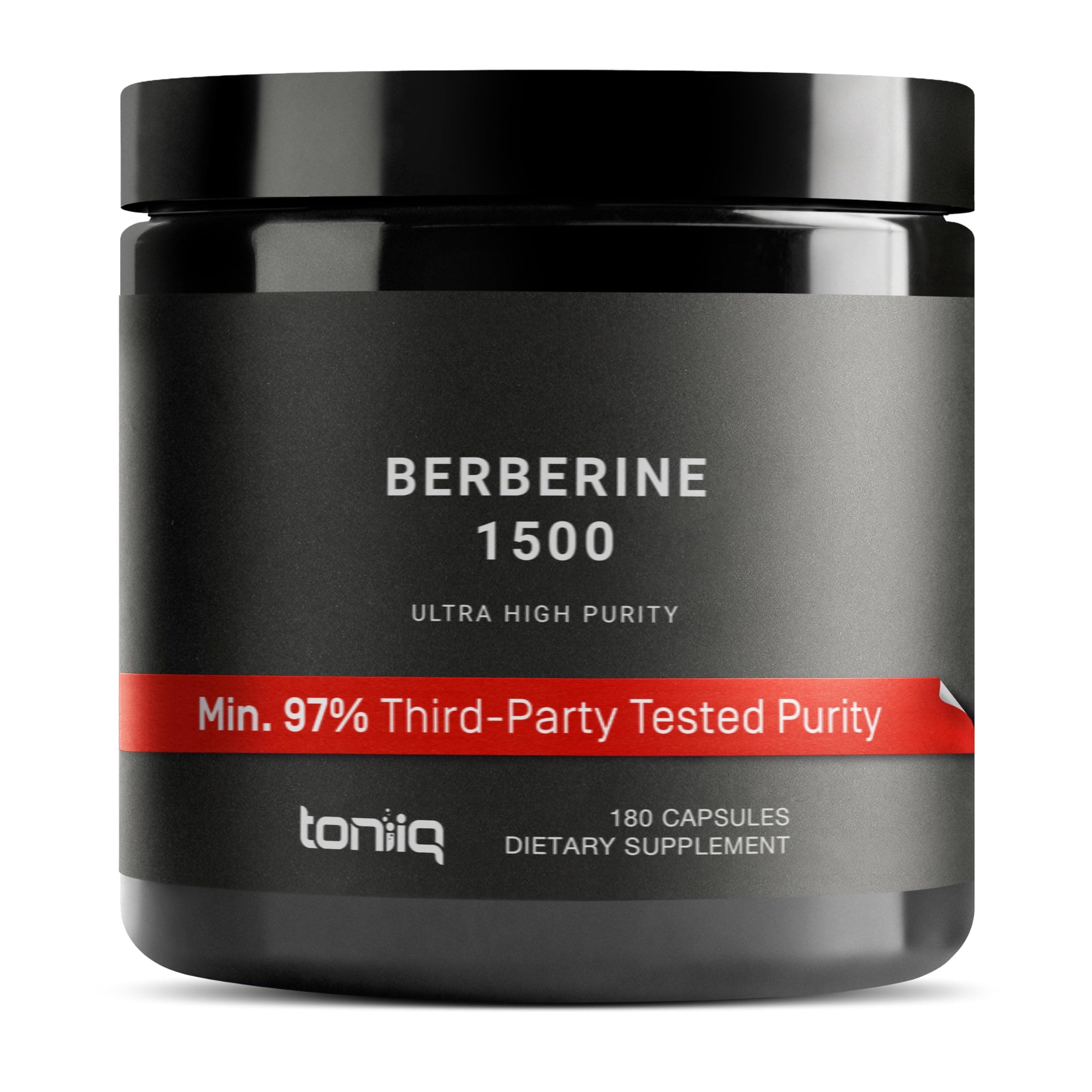
Berberine HCl.
Plant alkaloid for blood sugar and cholesterol
Reviewed March 2026
- Category
- Blood sugar
- Also called
- Berberin Hydrochloride
What Berberine HCl is, and what it does.
- Does it work
- Suits adults supporting healthy glucose metabolism and normal lipids. If you take prescription medicine, clear it with your doctor, since it shares clearance enzymes with many drugs.
- How much to take
- Start with 2 to 3mg a day, the daily maintenance band on record for this entry, taken with a meal. Spreading intake across meals is what keeps the stomach comfortable.
- Time to feel it
- From about the first week of daily use, with the three-month marker still moving at three months.
- The first dose
- Quiet, mostly. A few people notice gut gurgling or a looser stool on the first day, and that usually settles once the amount is split across meals.
- With regular use
- Weeks of daily use show up on a fasting glucose and lipid panel. Most of the movement lands between weeks four and twelve rather than in the first fortnight.
- How well tolerated
- Generally well tolerated, with gut upset the usual complaint. It slows enzymes that clear many medicines, so run it past your doctor. Not for pregnancy or breastfeeding.
- How it feels
- There isn't much to feel. The people who report anything describe fewer energy dips after eating and a quieter sweet tooth in the afternoon.
2 to 3mg a day is where Berberine HCl works.
Source: Yin 2008 meta + Dong 2012 glucose study
In a 3-month open-label trial, 48 adults with poorly controlled type 2 diabetes took berberine alongside existing treatment. Fasting and postprandial blood glucose were lower from week 1 through the end of the trial, and HbA1c fell from 8.1% to 7.3%. In a separate 3-month double-blind trial, 116 adults with type 2 diabetes and dyslipidaemia took 1.0 g daily and HbA1c fell from 7.5% to 6.6% against placebo. No washout period was measured in either trial.
The proof, claim by claim.
These words describe the research, not the molecule's worth. Research strength is how much work stands behind one claim, and it is never a product score.
- Healthy glucose metabolismMeta-analysis
- Cholesterol already in the normal rangeMeta-analysis
- Triglycerides already in the normal rangeMeta-analysis
- Hepatic LDL receptor expressionNarrative review
- Healthy body compositionRandomised trial
- Gut bacterial compositionRandomised trial
Questions people ask about Berberine HCl.
- When should I take it?
- Timing matters less than consistency. Pick a time that works for you and take it daily.
- Can I take it with other supplements?
- Usually fine. The main thing to watch is not doubling up on the same ingredient from different products. If you're on prescription meds, check with your pharmacist first.
- Any side effects to watch for?
- Most people tolerate it well at recommended doses. GI upset is the most common complaint with any supplement. Start with a lower dose and work up. If something feels off, stop and reassess.
- Who benefits most from this?
- People with a specific, evidence-backed need. Berberine Hcl has strong research. If your situation matches the studied use case, it's one of the more reliable supplements you can take.
Why these belong in the same formula. Each row says what the basis is, from settled biochemistry through to a trial that measured the pair.
Much of an oral berberine dose never reaches the blood because a pump in the gut wall, P-glycoprotein, pushes it back into the intestine before it can cross over. Silymarin from milk thistle is regarded as a P-glycoprotein antagonist, and the two are formulated together so that more of the berberine is absorbed.
Piperine from black pepper extract slows the same intestinal efflux pump and first-pass enzymes that clear berberine before it is taken up. That shared route is the long-standing reason it is added to poorly-absorbed compounds like berberine to support their uptake.
Barberry root is a natural source of the same alkaloid, so its content adds to the isolated berberine HCl rather than contributing a separate mechanism.
Oregon grape carries berberine and related protoberberines, so pairing it with berberine HCl raises the combined alkaloid load on the same transport and clearance routes.
Goldenseal supplies berberine alongside hydrastine, stacking on the same exposure as isolated berberine HCl.
Silymarin inhibits P-glycoprotein and the metabolising enzymes that clear berberine, so more of the dose remains in circulation.
Berberine raises the AMP to ATP ratio and activates AMPK, while lipoic acid works as a mitochondrial dehydrogenase cofactor and redox agent in the same fuel-handling machinery.
Chromium supports insulin receptor signalling while berberine acts downstream through AMPK and glucose transporter movement, covering two steps of normal glucose metabolism.
Inositol phosphoglycans carry the insulin signal inside the cell, a step distinct from the AMPK activation berberine drives.
Cinnamon polyphenols slow carbohydrate breakdown at the brush border while berberine acts inside the cell, so the two address different stages of a carbohydrate load.
Gymnemic acids act at the gut surface on sweet taste receptors and glucose uptake, a separate site from berberine's intracellular AMPK action.
Monacolin K inhibits cholesterol synthesis at HMG-CoA reductase while berberine raises LDL receptor expression to clear lipoprotein from blood. The two act on supply and clearance.
Berberine is antimicrobial and reshapes gut flora, while gut bacteria are what convert it to the more absorbable dihydroberberine. Same-time dosing can cut culture viability and the alkaloid's own activation, so doses are usually separated.
Charcoal binds alkaloids in the gut, so berberine taken alongside it is adsorbed and largely not absorbed. The two need hours of separation.
The psyllium gel traps small molecules and slows gastric emptying, which further reduces uptake of an alkaloid that is already poorly absorbed.
Quercetin inhibits the P-glycoprotein pump that returns berberine to the gut lumen, raising the absorbed fraction.
Berberine raises the cellular AMP to ATP ratio in part by acting on mitochondrial complex I, which is the entry point of the same electron transport chain that coenzyme Q10 shuttles electrons through at complex III. Formulators pair them on that mechanistic reasoning rather than on a co-administration trial. What is established here is the shared pathway, not a measured combined effect in people.
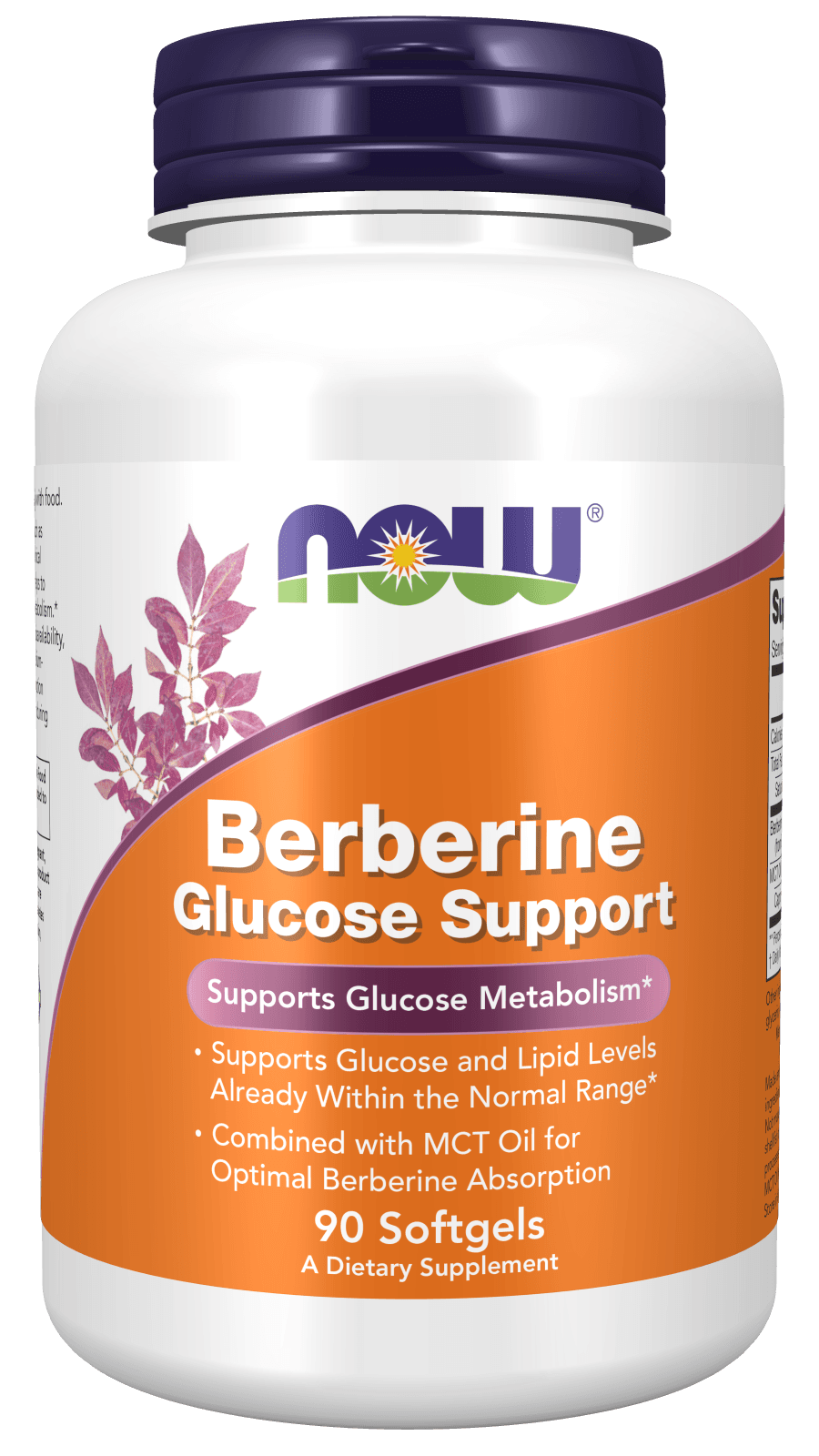
Berberine hydrochloride dissolves poorly in water and its oral absorption is low, so a lipid carrier is one of the standard ways formulators try to keep more of it in solution through the small intestine. Medium-chain triglycerides are used because they disperse readily and need less bile than long-chain fats. The rationale is formulation chemistry. The size of any absorption gain in humans is not something this pairing establishes.
Tannins bind alkaloids and form poorly soluble complexes, which is why tannin-rich preparations and strong tea have long been used to precipitate alkaloids in the laboratory. Berberine is a quaternary alkaloid and behaves the same way. Taking a tannin-heavy preparation in the same mouthful is expected to reduce how much berberine stays dissolved for absorption.
Berberine stays mostly in the gut lumen, and reviews of its mechanism place a large share of its activity in the interaction between the compound and the resident bacteria, including a shift toward short-chain fatty acid producers. Butyrate is the end product that reasoning points at, so supplying it directly is a mechanistic complement rather than a tested pair. The review this rests on is a narrative synthesis, not a combination trial.
Resistant starch reaches the colon undigested and is fermented to short-chain fatty acids, which is the same downstream currency implicated in berberine's luminal activity. The pairing supplies substrate on one side and a microbiota-modifying compound on the other. No combination trial defines what happens when both are taken together.
Galactooligosaccharides are selectively fermented by bifidobacteria and are used when the goal is to feed that group specifically. Because berberine's own activity is heavily gut-mediated, formulators pair the two to push in the same direction. This is reasoning from mechanism, and the combination has not been characterised in people.
Gut bacteria reduce berberine to dihydroberberine, which is the form far better taken up by intestinal cells, so the resident community is part of how a dose is handled. Berberine in turn has broad antimicrobial activity, which means the interaction runs both ways and is not simply additive. Separating the two by several hours is the cautious approach when someone wants both.
This probiotic is a yeast rather than a bacterium, so it is less exposed to berberine's antibacterial activity than a lactobacillus would be. That difference is why it appears in stacks intended to keep a live organism viable alongside berberine. Viability under co-administration has not been measured for this pair.
Bitter melon and berberine both act on glucose handling by different routes, so their effects on blood sugar are expected to stack. That is a flag, not a recommendation: additive is exactly the word to use. No trial has measured the two together.
Glucomannan forms a viscous gel that slows how quickly glucose appears in the blood after a meal, which points in the same direction as berberine but by a purely physical route. The same viscosity can slow the dissolution and absorption of a co-swallowed compound, so the interaction cuts both ways. Spacing the two is the practical handling.
EGCG and berberine are both described as acting on AMP-activated protein kinase signalling, and both are substrates for intestinal efflux transport that limits their absorption. Pairing them is a shared-pathway argument. Nothing here establishes a measured combined effect in people.
Glutathione and malondialdehyde are among the markers most often measured in berberine mechanism studies, which tells you the compound is being studied in a redox context. Supplying glutathione alongside it is a marker-level rationale, not an outcome-level one. Keep the distinction: a change in an oxidative marker is not the same as a change in how someone feels or functions.
Nothing specific on file for Berberine HCl. Match the label to the daily amount above, and tell your doctor what you take.
Not medical advice. Show the label to your pharmacist.What Berberine HCl actually does.
Berberine carries a permanent positive charge, which makes it mix well with water but not with cell membranes, and that's the structural reason plain oral berberine isn't absorbed all that well.
Gut bacteria convert berberine into a form that crosses the gut wall far more easily, and it's converted back once inside, so your gut bacteria are actually part of how it gets absorbed, not just along for the ride.
A pump in the gut wall sends absorbed berberine back out into the gut, which caps how much net uptake you end up getting.
Berberine blocks a step in how mitochondria make energy, shifting the cell's energy balance and switching on an energy-sensing enzyme. That's the most cited explanation for its downstream effects on blood sugar and fat handling.
Where Berberine HCl comes from.
It starts as bright yellow plant root or bark. The active compound is pulled out with acidified water or alcohol, turned into a salt with hydrochloric acid so it crystallises, then washed and recrystallised until the powder is almost entirely berberine. A lab test confirms the number on the label.
Made from a plant. What ends up in the capsule tracks the harvest, so batch testing and a stated marker matter more here than with a made molecule.
Commercial supply comes from Berberis species root and bark, Phellodendron bark, Coptis rhizome and related plants. The alkaloid content varies by species, plant part and growing conditions, which is why an assay rather than a plant name defines the input.
Because berberine is a permanently charged cation, it extracts into acidified water or alcohol. The crude extract carries related alkaloids such as palmatine and jatrorrhizine alongside it.
The cation is precipitated as its chloride. The chloride salt crystallises readily and is only sparingly soluble, which is the property that makes it convenient to isolate and also the property that limits its dissolution later.
Repeated crystallisation removes the related alkaloids and plant residues. This step is where a 97 percent grade is separated from a crude yellow extract.
Batches are assayed for berberine content and for the related alkaloids that travel with it. A grade statement on a certificate refers to this assay, not to the plant of origin.
The dried salt is milled and blended, sometimes with a lipid or phospholipid carrier. Particle size matters here because dissolution is the rate-limiting step for a poorly soluble salt.
Which plant species a batch came from is frequently not stated, and some material is made by chemical synthesis rather than extraction.
Getting Berberine HCl from food.
The whole-food sources on file. A supplement closes the gap, it does not replace dinner.
A gram-for-gram figure (how much of each you would eat to match a dose) will appear here once it is sourced and reviewed. This page will not print a number it cannot cite.
The forms it comes in.
The essence, in one line each.
- Pooling 37 randomized trials in 3,048 adults with high blood sugar, berberine lowered fasting blood glucose by about 0.82 mmol/L and HbA1c by about 0.63 percentage points, without raising the rate of low blood sugar.Systematic review and meta-analysis. Xie et al., 2022 (Frontiers in Pharmacology). PMID 36467075 ↗
- Across placebo-controlled randomized trials in adults, berberine lowered LDL cholesterol by about 0.50 mmol/L and total cholesterol by about 0.45 mmol/L.Systematic review and meta-analysis. Liu et al., 2025 (Frontiers in Pharmacology). PMID 40740996 ↗
- Pooling 12 randomized trials, berberine supplementation modestly lowered body weight by about 2.1 kg and waist circumference by about 1.1 cm.Systematic review and meta-analysis. Asbaghi et al., 2020 (Clinical Nutrition ESPEN). PMID 32690176 ↗
- In adults with above-normal blood sugar, adding a berberine-containing nutraceutical to usual care improved glycaemic markers more than usual care alone over the study period.Randomised trial. Sartore et al., 2021 (Nutrients). PMID 34371883 ↗
- In healthy adults, goldenseal, a berberine-containing botanical, lowered the measured activity of the CYP2D6 and CYP3A4 drug-processing enzymes.Randomised trial. Gurley et al., 2005 (Clinical pharmacology and therapeutics). PMID 15900287 ↗
- Goldenseal, a berberine-containing botanical, showed no detectable change in digoxin handling in healthy adults in this controlled study.Randomised trial. Gurley et al., 2007 (Drug metabolism and disposition: the biologic). PMID 17079360 ↗
- A broad review of berberine's biology, pharmacology and nutritional context, drawing together the glucose- and lipid-handling mechanisms attributed to it.Narrative review. Asghari P et al., 2025 (Metabolism open). PMID 41089338 ↗
- The authors place much of berberine's intestinal and lipid-lowering activity in its interaction with the gut microbiota rather than in systemic exposure.Narrative review. Gao C et al., 2025 (Metabolites). PMID 39997743 ↗
- Berberine supplementation shifted somatotropic-axis markers and improved glucose tolerance test results. Measured in animals, so it grounds a mechanism and not a human effect.Animal study. Ghavipanje N et al., 2022 (BMC Veterinary Research). PMID 36153497 ↗
- A low dose was metabolised without detectable changes in gut morphology or microbiota composition. A failure to detect a change at that dose, not evidence that none occurs.Animal study. Mouchtoglou C et al., 2025 (Animals). PMID 40867778 ↗
- A registered protocol for a polyherbal supplement that names berberine among its components. It describes a study design and reports no outcomes.Randomised trial. Feinberg T et al., 2019 (Trials). PMID 30616613 ↗
- A review of food and supplement approaches to cholesterol handling that names berberine among the agents with a described mechanism.Narrative review. Jacobo-Velazquez DA et al., 2025 (Nutrients). PMID 40871675 ↗
These are the studies our verdict leans on, chosen from the 296 we read for Berberine HCl. The full linked list is below.
Problems people have reported.
Read this carefully. These are 95 voluntary, unverified reactions reported to the FDA (openFDA). The number mostly reflects how popular Berberine HCl is, not how risky it is. A report is not proof Berberine HCl caused anything. It is a signal of what to watch for, nothing more.
Source: openFDA adverse-event reports. Voluntary reporting, not an incidence rate.
FDA Disclaimer: These statements have not been evaluated by the Food and Drug Administration. This information is for educational purposes only and is not intended to diagnose, treat, cure, or prevent any disease. Consult your healthcare provider before starting any supplement regimen.