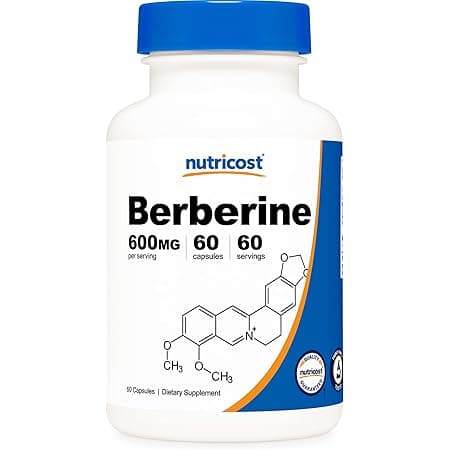
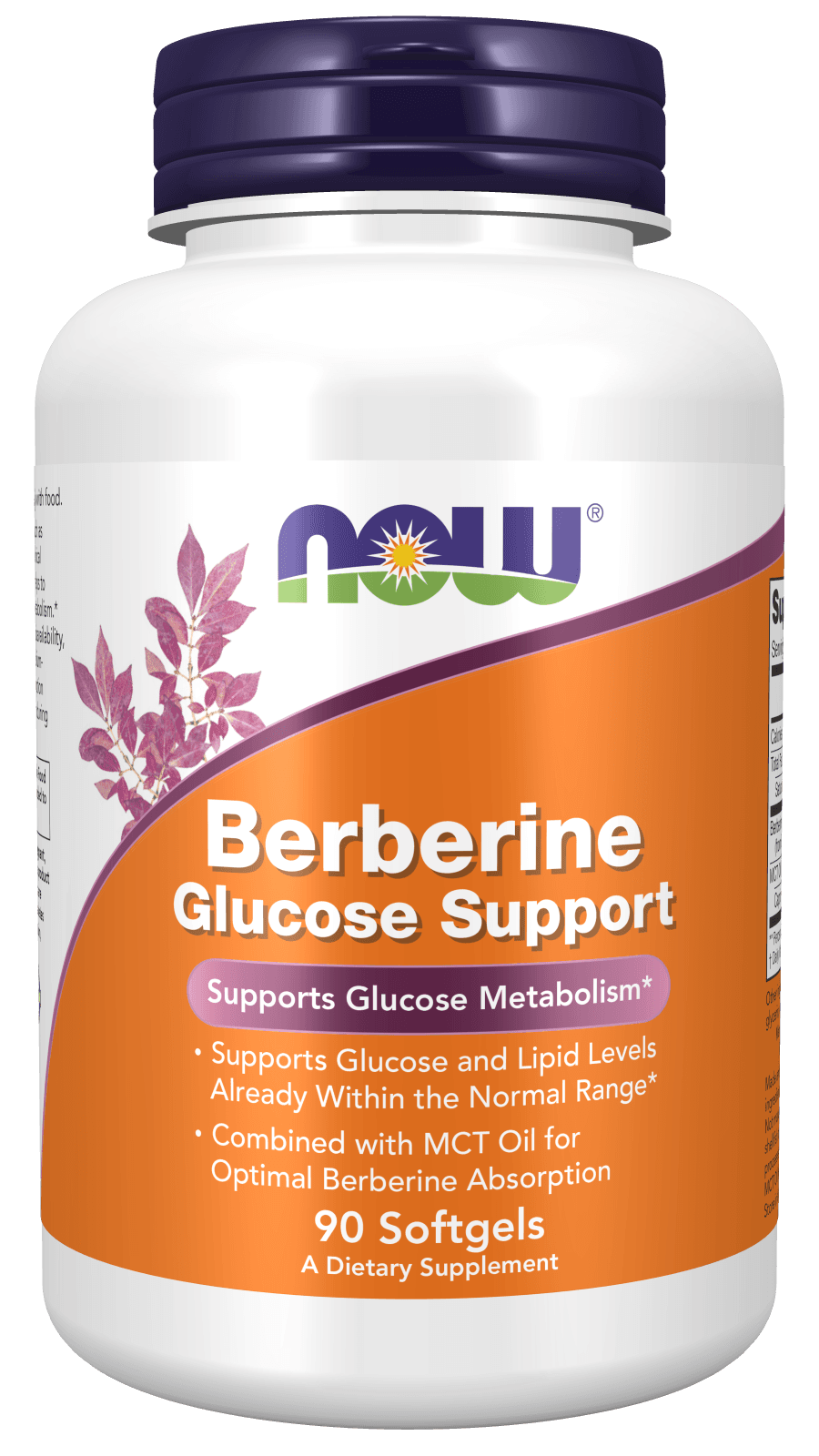
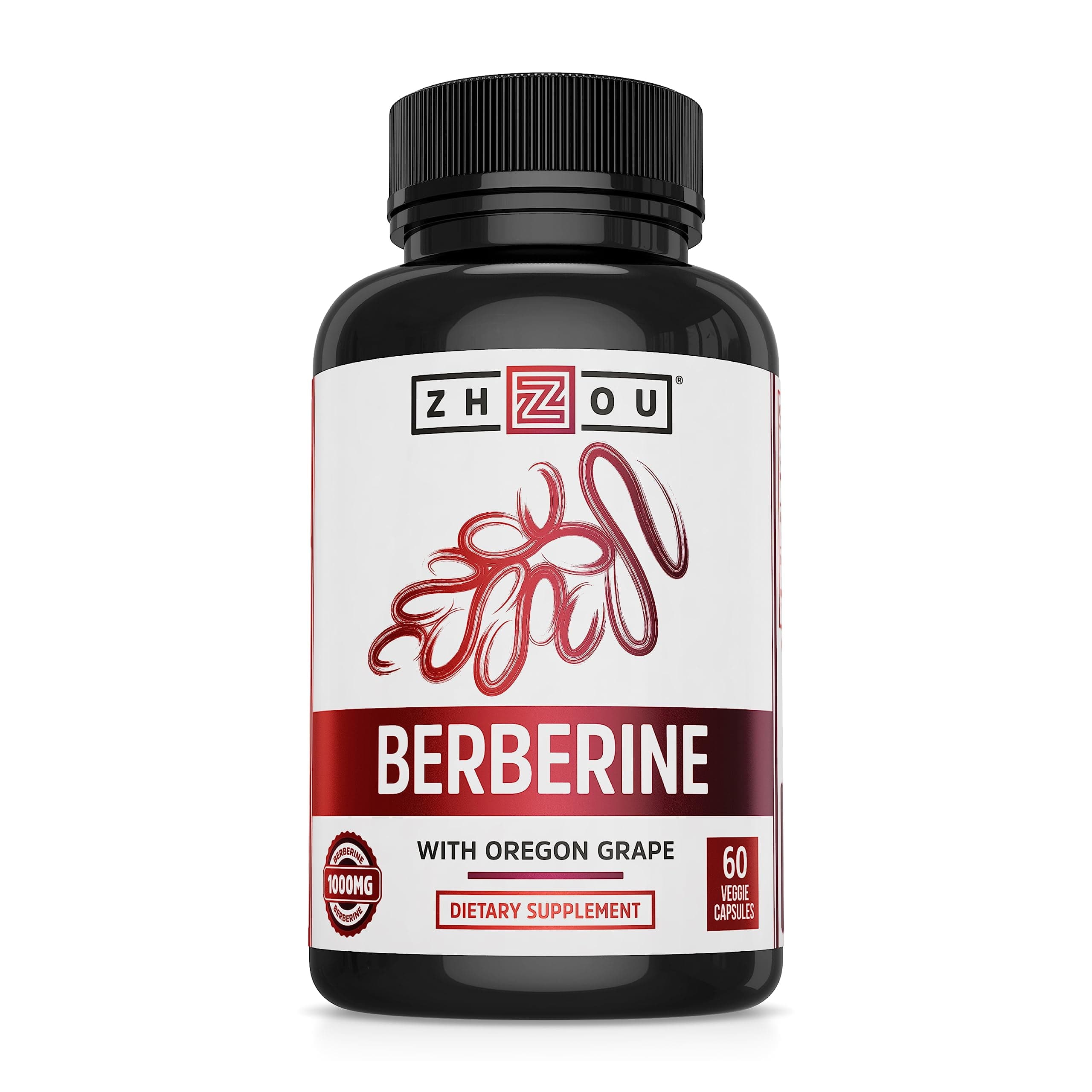
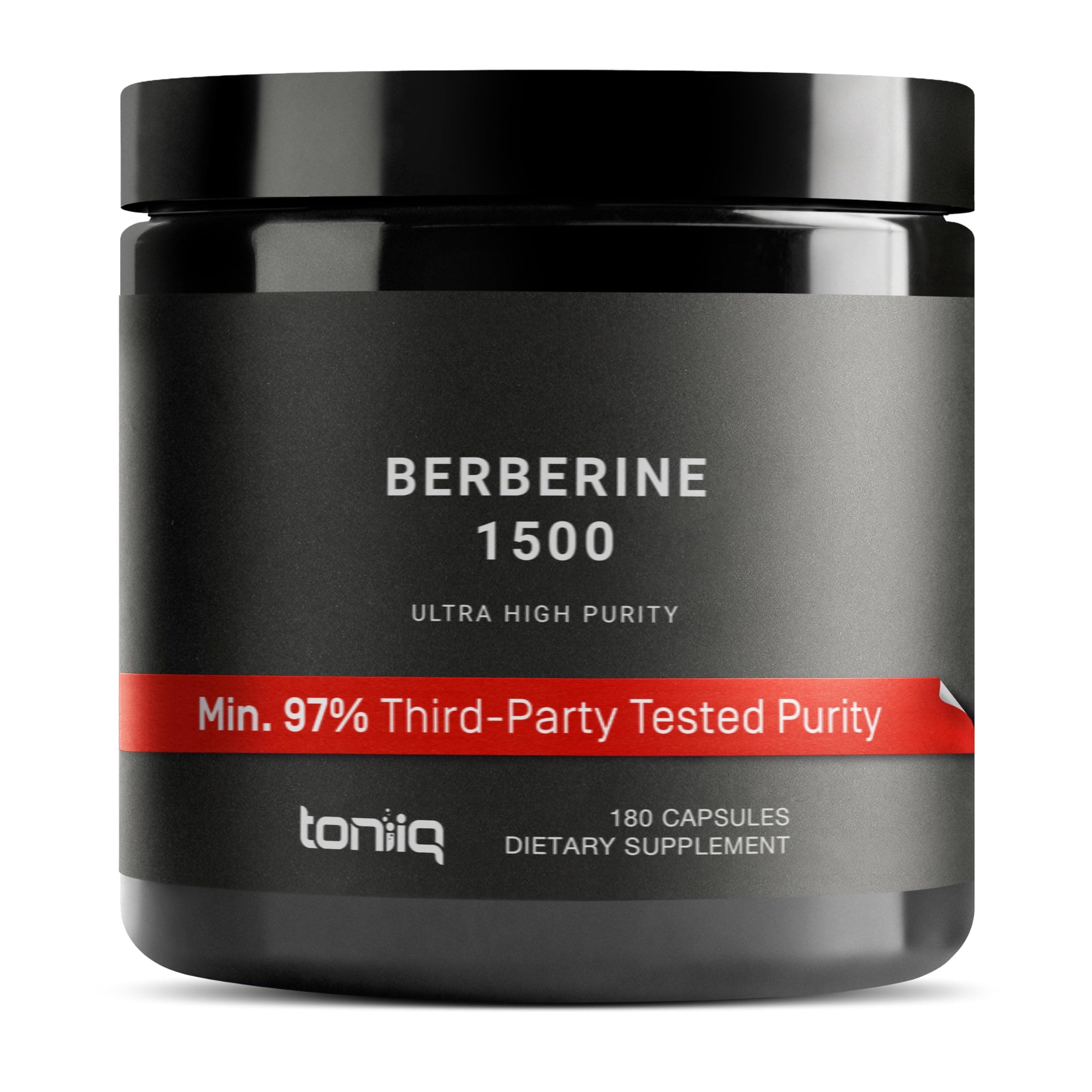
Berberine Hydrochloride.
Research-backed compound with potential health benefits. Helps your body handle sugar better and can lower LDL cholesterol. Think of it as a metabolic tune-up.
Reviewed March 2026
- Category
- Compound
- Also called
- Berberine HCl
What Berberine Hydrochloride is, and what it does.
- Does it work
- For people with blood sugar issues or high cholesterol? Yes. Solid human studies back this up. For general health? Probably not necessary.
- How much to take
- 1000-1500mg daily, split into 2-3 doses with meals. Taking it all at once is a recipe for an upset stomach. Start with 500mg once a day.
- Time to feel it
- From about the first week of daily use, with the three-month marker still moving at three months.
- The first dose
- Maybe some stomach gurgles. That's it. The real action is happening on a cellular level, not something you feel immediately.
- With regular use
- After 1-2 months, blood tests should show improvement in glucose and lipid markers. That's the actual goal.
- How well tolerated
- The GI side effects are real. Not for pregnant or breastfeeding women.
- How it feels
- You don't 'feel' it work. The proof is in your lab results. The main feeling might be an upset stomach if your dose is too high or taken without food.
- The overlooked benefit
- The chloride is just there to make a stable, weighable crystal. In stomach acid it lets go, and the positively charged berberine ion is what does the work.
500 to 1,500mg a day is where Berberine Hydrochloride works.
Source: Yin 2008 meta + Dong 2012 glucose study
In a 3-month open-label trial, 48 adults with poorly controlled type 2 diabetes took berberine alongside existing treatment. Fasting and postprandial blood glucose were lower from week 1 through the end of the trial, and HbA1c fell from 8.1% to 7.3%. In a separate 3-month double-blind trial, 116 adults with type 2 diabetes and dyslipidaemia took 1.0 g daily and HbA1c fell from 7.5% to 6.6% against placebo. No washout period was measured in either trial.
The proof, claim by claim.
These words describe the research, not the molecule's worth. Research strength is how much work stands behind one claim, and it is never a product score.
Berberine Hydrochloride is documented in the library. The clinical read is in the queue. Nothing about the strength of the research prints until the read is done.
- Healthy glucose metabolismMeta-analysis
- Cholesterol already in the normal rangeMeta-analysis
- Triglycerides already in the normal rangeMeta-analysis
- AMP-activated protein kinase signallingIn vitro study
- Gut bacterial compositionRandomised trial
- Healthy body compositionRandomised trial
Questions people ask about Berberine Hydrochloride.
- Is this the same as Metformin?
- It has similar effects on blood sugar, but a different mechanism. Don't swap one for the other without talking to your doctor.
- Will it help me lose weight?
- Maybe a little, as a side effect of better blood sugar control. It is not a weight loss pill.
- Why does my stomach hurt after taking it?
- You probably took too much at once. Split the dose throughout the day and always take it with food. It's notoriously hard on the gut.
- How long until I see results?
- Give it at least a month, then get blood work done. The changes are measured in labs, not how you feel day-to-day.
- Why are the pills so yellow?
- That's the natural color of the compound. It's a bright yellow plant alkaloid.
Why these belong in the same formula. Each row says what the basis is, from settled biochemistry through to a trial that measured the pair.
Berberine is a substrate of the P-glycoprotein pump in the gut wall, so much of an oral dose gets pushed back into the intestine before it can be absorbed. Silymarin from milk thistle blocks that same pump, which lets more of the berberine stay absorbed, and that is the reasoning behind the fixed-dose formulas that pair the two.
Piperine inhibits P-glycoprotein efflux and slows first-pass metabolism, which raises how much berberine from the hydrochloride salt reaches circulation.
Silymarin flavonolignans inhibit both the efflux pump and the metabolising enzymes acting on berberine, so more of the dose stays available.
Barberry root supplies the same alkaloid, so its content adds to the isolated hydrochloride rather than bringing a second mechanism.
Oregon grape carries berberine and related protoberberine alkaloids, stacking on the same exposure and the same clearance routes.
Goldenseal delivers berberine plus hydrastine, so the total alkaloid load rises when it sits alongside the isolated salt.
Berberine activates AMPK by shifting the AMP to ATP ratio, while lipoic acid serves mitochondrial dehydrogenases and cellular redox in the same fuel-handling system.
Chromium supports insulin receptor signalling while berberine acts downstream through AMPK and glucose transporter trafficking, so the two cover separate steps.
Inositol phosphoglycans relay the insulin signal inside the cell, a different point from berberine's AMPK activation.
Cinnamon polyphenols slow carbohydrate digestion at the gut surface while berberine works intracellularly, so a carbohydrate load is addressed at two stages.
Gymnemic acids act on sweet taste receptors and intestinal glucose uptake, a site separate from berberine's intracellular action.
Monacolin K inhibits HMG-CoA reductase to slow cholesterol synthesis while berberine raises LDL receptor expression to clear lipoprotein, so supply and clearance are both covered.
Berberine is antimicrobial and shifts gut flora, yet gut bacteria are also what reduce it to the better absorbed dihydro form. Co-dosing can lower culture viability and the alkaloid's own activation, so doses are normally separated.
Charcoal adsorbs alkaloids in the gut, so berberine taken with it is bound and largely unabsorbed. Hours of separation are needed.
Psyllium gel traps small molecules and slows gastric emptying, reducing uptake of an alkaloid whose absorption is already low.
Quercetin inhibits P-glycoprotein, the pump that returns berberine to the gut lumen, so co-dosing raises the absorbed fraction.
Both berberine and curcuminoids are substrates of intestinal P-glycoprotein and are heavily metabolised on first pass, which is the main reason oral exposure to either stays low. Co-ingestion can change how much of each reaches the portal circulation because they compete for the same efflux and conjugation capacity. The direction of that change depends on dose and timing rather than being fixed. Read it as mechanistic rather than clinically measured.
Berberine is a quaternary ammonium cation with poor passive membrane permeability, so it is often complexed with phospholipids into a phytosome style particle. The phospholipid gives the charged alkaloid a lipophilic exterior that partitions into the enterocyte membrane more readily than the naked salt. This is a delivery-side pairing, not an added biological effect.
Berberine hydrochloride dissolves poorly in water at intestinal pH and better in the presence of lipid and bile-driven micelles. A medium chain triglyceride vehicle raises the fraction held in a dispersed, absorbable state. The evidence here is formulation chemistry rather than a human absorption trial.
Much of an oral berberine dose stays in the gut lumen and is acted on by resident bacteria, including reduction to dihydroberberine, which is absorbed more readily than the parent cation. Fermentable fibres shift the composition and activity of that same bacterial population. The two therefore act on one another indirectly through the microbiota rather than through a shared receptor.
Colonic bacteria convert a portion of berberine to dihydroberberine, and resistant starch feeds the same fermentative community while generating short chain fatty acids. Both inputs land on gut microbial metabolism, so the pairing is plausible on pathway grounds. No combination trial is being cited for it.
Berberine raises the AMP to ATP ratio and activates AMPK, and catechins have been described as converging on the same energy-sensing node. Stacking two AMPK-directed inputs is mechanistically additive on paper. Whether that translates into a larger measured effect in people has not been established, and both are also P-glycoprotein substrates, which complicates dosing.
Berberine has broad antimicrobial activity in vitro against bacteria and some yeasts, so a live organism taken at the same time may face a less hospitable lumen. Separating the doses by several hours is the usual formulation answer. This is an anti-synergy flag on mechanistic grounds, not a measured loss of viable counts in people.
St John's wort is a well characterised inducer of CYP3A4 and P-glycoprotein, and berberine is handled by both. Induction lowers systemic exposure to a co-taken substrate. This is textbook transporter pharmacology, and it points to keeping the two apart rather than combining them.
Berberine has been described as upregulating hepatic LDL receptor expression through a post-transcriptional route, while EPA and DHA act mainly on hepatic triglyceride synthesis and secretion. The two therefore support normal blood lipid handling by non-overlapping mechanisms. Combining them is additive in principle. No head to head combination trial is cited here.
Berberine acts largely through AMPK-linked glucose uptake, and bitter melon constituents have been described as acting on insulin signalling and intestinal glucose absorption. Taken together the glucose-lowering directions add rather than cancel. Anyone already managing blood sugar with medication should have the combination reviewed by a clinician, because the additive direction is the point.
Deoxynojirimycin from white mulberry slows intestinal alpha-glucosidase activity, so less glucose arrives per unit time, while berberine works downstream on cellular uptake and hepatic output. The two act at different points on the same journey. The additive direction is mechanistic and worth flagging for anyone stacking blood sugar support.
Berberine partially inhibits mitochondrial complex I, which shifts electron leak and reactive oxygen species production, and glutathione is the main intracellular buffer for that shift. The co-occurrence index also flags reactive oxygen species and glutathione alongside berberine in the literature. This is a marker-level relationship, not a measured clinical outcome.
Berberine acts in part by mildly restraining mitochondrial respiratory complex I, and coenzyme Q10 shuttles electrons from complexes I and II onward. The two touch the same chain from opposite directions. Read it as a mechanistic interaction to be aware of rather than a demonstrated combination benefit.
Nothing specific on file for Berberine Hydrochloride. Match the label to the daily amount above, and tell your doctor what you take.
Not medical advice. Show the label to your pharmacist.What Berberine Hydrochloride actually does.
Berberine carries a permanent positive charge, and that structural feature is why it does not cross the gut lining easily and why so little of it makes it into the blood.
A gut pump called P-glycoprotein grabs some of the berberine that enters gut cells and pushes it right back out before it can reach the bloodstream.
The hydrochloride form is just berberine's salt form. Once it hits stomach acid it splits apart, and it is the berberine part that does the work.
Gut bacteria convert some berberine into dihydroberberine, a form that crosses into the body more easily and gets turned back into berberine once inside.
Where Berberine Hydrochloride comes from.
It starts as a bright yellow compound in the roots and bark of plants like barberry and goldthread. Makers pull it out with an acidic solvent, clean it up, and lock it into a salt form that stays stable in a capsule.
Made from a plant. What ends up in the capsule tracks the harvest, so batch testing and a stated marker matter more here than with a made molecule.
Berberine is concentrated in the roots, rhizomes and stem bark of Berberis species, Coptis chinensis, Phellodendron and Hydrastis canadensis. Species and plant part set the starting alkaloid percentage.
Milled plant material is extracted with acidified water or an ethanol and water mixture, which holds the alkaloid in solution as a protonated cation.
The crude extract is passed over ion exchange or adsorption resin to separate berberine from co-extracted alkaloids such as palmatine and jatrorrhizine, then crystallised.
The purified base is treated with hydrochloric acid to give the hydrochloride, which is the stable, weighable, non-hygroscopic solid used in supplements.
Batches are assayed by HPLC against a berberine hydrochloride reference standard, commonly to 97 percent or higher, with limits on the related alkaloids.
The dried salt is blended with flow aids and filled. Some manufacturers instead complex it with phospholipid before filling.
The forms it comes in.
The essence, in one line each.
- Pooling adult trials, berberine lowered triglycerides by about 24 mg/dL, total cholesterol by about 21 mg/dL and systolic blood pressure by about 5 mmHg.Systematic review. Zamani et al., 2022 (Frontiers in Nutrition). PMID 36313096 ↗
- An umbrella review of earlier meta-analyses found berberine supplementation lowered fasting blood glucose and HbA1c, with an HbA1c effect size of about 0.57 standard deviations.Systematic review. Nazari et al., 2023 (Clinical Therapeutics). PMID 38016844 ↗
- Across 46 trials in adults with elevated blood sugar, berberine lowered HbA1c by about 0.73 percentage points and fasting glucose by about 0.86 mmol/L, and lowered insulin resistance scores.Meta-analysis. Guo et al., 2021 (Oxidative Medicine and Cellular Longevity). PMID 34956436 ↗
- Across 10 trials in 811 adults with elevated liver fat, berberine lowered the liver enzymes ALT and AST, with a standardised mean difference of about 0.72 for ALT.Meta-analysis. Nie et al., 2024 (Journal of Translational Medicine). PMID 38429794 ↗
- In adults with above-normal fasting blood sugar, a standardised berberine preparation lowered fasting glucose and HbA1c more than placebo over the trial.Randomised trial. Panigrahi et al., 2023 (BMC endocrine disorders). PMID 37679692 ↗
- Berberine absorption was low and slow in healthy adults, while dihydroberberine reached higher blood levels and blunted the post-meal glucose rise more.Randomised trial. Moon et al., 2021 (Nutrients). PMID 35010998 ↗
- In adults with raised liver fat, berberine shifted several blood vessel function markers, including VEGF, compared with placebo. These are markers, not outcomes.Randomised trial. Koperska et al., 2025 (Nutrients). PMID 41305635 ↗
- Reviewing the human evidence in adults with raised liver fat, berberine was among the few supplements with trial data reporting improved liver enzyme and blood lipid measures.Systematic review. Cicero et al., 2018 (Nutrients). PMID 30142943 ↗
- Dietary berberine hydrochloride was assessed for growth, immune markers, meat quality and faecal microbiota in broiler chicks, with the microbiota shift the authors highlight.Animal study. Chen J et al., 2026 (Frontiers in veterinary science). PMID 41789006 ↗
- In cultured cell lines berberine hydrochloride reduced proliferation and migration in the model reported, which is a cell-level observation and not a human outcome.In vitro study. Zhang H et al., 2025 (Scientific reports). PMID 40702096 ↗
These are the studies our verdict leans on, chosen from the 10,185 we read for Berberine Hydrochloride. The full linked list is below.
The studies, linked.
12 sources behind our Berberine Hydrochloride verdict: peer-reviewed studies and registered clinical trials. Every one links straight to PubMed, the journal, or ClinicalTrials.gov. Read them yourself.
- Clinical trialA Randomized, Placebo-controlled, Multicenter, Prospective Clinical Study of Berberine Hydrochloride in Preventing Recurrence and Carcinogenesis After Endoscopic Removal of Colorectal AdenomasClinicalTrials.gov ↗Phase 2, 1,108 participants, Completed
- Clinical trialA Randomized Trial of Berberine Hydrochloride to Prevent Colorectal Adenomas in Patients With Previous Colorectal CancerClinicalTrials.gov ↗Phase 2, 1,000 participants, Completed
- Clinical trialEfficacy and Safety of Berberine Hydrochloride, Amoxicillin and Rabeprazole Triple Therapy in the First Eradication of Helicobacter PyloriClinicalTrials.gov ↗Phase 4, 524 participants, Completed
- Clinical trialGene Modulation of NLRP3, IL-1β and TNF-α in Peripheral Blood of Patients With Exogenous Obesity Treated With BerberineClinicalTrials.gov ↗120 participants, Completed
- Clinical trialThe Effect of Berberine Hydrochloride in Familial Adenomatous Polyposis:a Prospective, Randomized, Double Blind, Placebo-controlled, Multicenter Clinical TrialClinicalTrials.gov ↗Phase 2, 100 participants, Completed
- Clinical trialPhase I Trial of Berberine in Subjects With Ulcerative ColitisClinicalTrials.gov ↗Phase 1, 18 participants, Completed
- Clinical trialEfficacy and Safety of Berberine on Primary Prevention of Cardiovascular Diseases and Diabetes in Metabolic Syndrome: a Randomized, Controlled TrialClinicalTrials.gov ↗Phase 4, 5,200 participants, Not yet recruiting
- Clinical trialA Multicenter, Placebo-controlled Clinical Study of Berberine Hydrochloride in Preventing Recurrence and Carcinogenesis After Endoscopic Removal of Colorectal Adenomas:6-year Retrospective Follow-up DataClinicalTrials.gov ↗891 participants, Recruiting
- Clinical trialProbiotics and BeRberine on the Efficacy and Change of Gut MicrObiota in paTients With Newly Diagnosed Type 2 diabEtes(PREMOTE Study)ClinicalTrials.gov ↗Phase 3, 400 participants, Unknown
- Clinical trialEffect of Berberine Hydrochloride on Blood Pressure and Vascular Endothelial Function in Patients With HypertensionClinicalTrials.gov ↗Phase 4, 30 participants, Unknown
- Clinical trialEffect of Administration of Berberine Versus Metformin on Glycemic Control, Insulin Sensitivity and Insulin Secretion in Patients With PrediabetesClinicalTrials.gov ↗Phase 4, 28 participants, Unknown
- Clinical trialThe Study of Berberine Affecting Metabolism, Inflammation Status, Endothelial Function and Thrombotic Events in Patients With Coronary Artery Disease by Remodeling Gut MicrobiotaClinicalTrials.gov ↗Phase 1, 24 participants, Unknown
Evidence surfaced via Semantic Scholar (Allen Institute for AI) and ClinicalTrials.gov. Ranked by study type and citation weight, not cherry-picked.
Problems people have reported.
Read this carefully. These are 357 voluntary, unverified reactions reported to the FDA (openFDA). The number mostly reflects how popular Berberine Hydrochloride is, not how risky it is. A report is not proof Berberine Hydrochloride caused anything. It is a signal of what to watch for, nothing more.
Source: openFDA adverse-event reports. Voluntary reporting, not an incidence rate.
FDA Disclaimer: These statements have not been evaluated by the Food and Drug Administration. This information is for educational purposes only and is not intended to diagnose, treat, cure, or prevent any disease. Consult your healthcare provider before starting any supplement regimen.