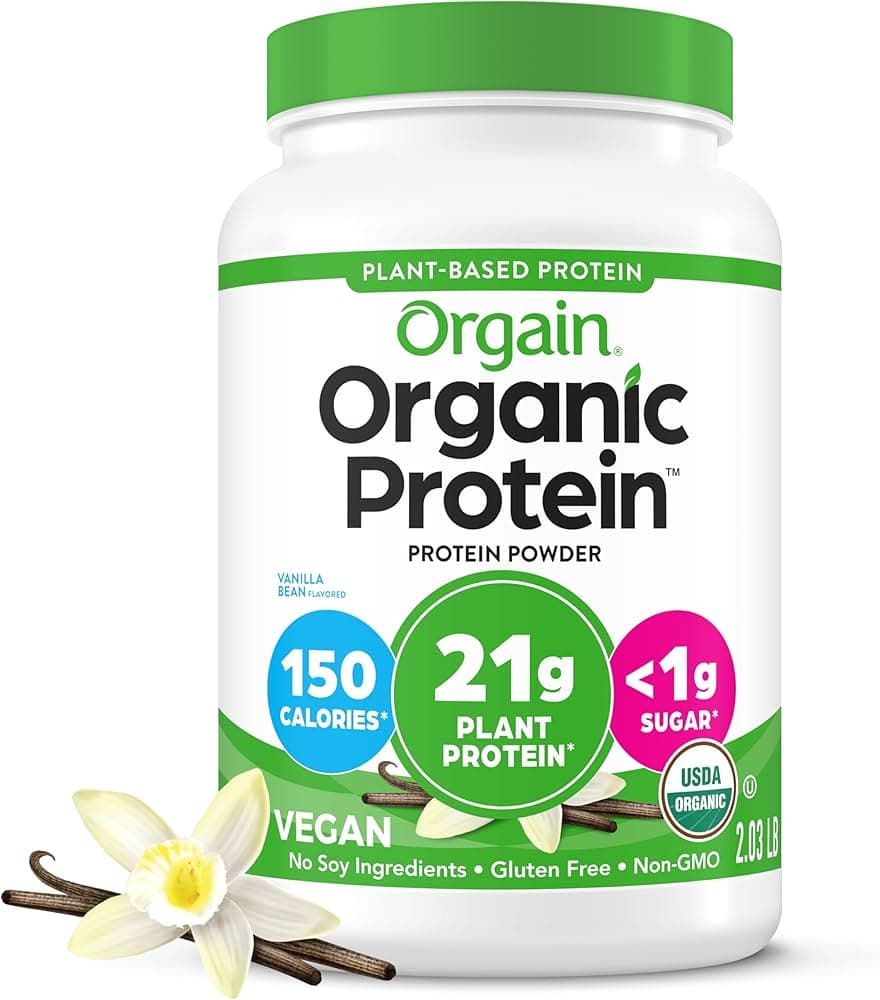
Hemp Protein Complete.
Hemp Protein Complete supplementation for targeted health support. Provides complete protein (all essential amino acids), fiber, and omega-3/omega-6 fatty acids. Supports muscle recovery, digestive health, and provides sustained energy.
Reviewed March 2026
- Category
- Protein
What Hemp Protein Complete is, and what it does.
- Does it work
- Great plant-based option if you want protein plus nutrition. Not for maximizing protein per calorie, but excellent for overall nourishment.
- How much to take
- 25-50g daily depending on protein needs. Typically 15g protein per 30g serving. Adjust based on your total protein intake.
- Time to feel it
- Protein works on daily total rather than on timing, so the useful window is weeks of hitting your target. Fullness after a shake is the one thing that shows up the same day.
- The first dose
- Sustained energy and satiety. Digests well for most people. Not as fast-acting as whey for post-workout.
- With regular use
- Supports muscle maintenance, provides daily fiber boost, contributes healthy fats. A solid staple in plant-based nutrition.
- How well tolerated
- Well tolerated. It's food. The only concern is digestive adjustment to fiber if you're not used to it. No THC issues.
- How it feels
- Grounding, sustaining energy. Less of a quick hit than whey. More like eating a balanced meal than taking a supplement.
- The overlooked benefit
- Hemp seed carries phytic acid, which ties up iron and zinc from the same meal. A vitamin C source alongside, or keeping the shake away from an iron serving, works around it.
15,000 to 30,000mg a day is where Hemp Protein Complete works.
Source: House et al. J Agric Food Chem 2010; plant protein reviews
The proof, claim by claim.
These words describe the research, not the molecule's worth. Research strength is how much work stands behind one claim, and it is never a product score.
- Complete protein sourceContains all essential amino acids
- Supports muscle maintenanceQuality protein with good digestibility
- Provides healthy fatsNutritional analysis confirms omega content
- Good for digestionFiber content supports gut health
Questions people ask about Hemp Protein Complete.
- Will hemp protein make me fail a drug test?
- No. Hemp protein comes from seeds which contain essentially zero THC. You'd have to consume impossible amounts to register anything.
- Is hemp protein complete?
- Yes. It contains all essential amino acids, though lower in lysine than some other proteins. Combining with legumes covers this easily.
- How does it compare to whey?
- Less protein per serving (15g vs 25g), slower absorption, but includes fiber and healthy fats that whey lacks. Different tools for different goals.
- Is hemp protein good for muscle building?
- Decent. The protein quality is good but concentration is lower. You'd need larger servings. Serious athletes often combine it with other proteins.
- Why does it taste earthy?
- You're eating ground hemp seeds. The earthy, nutty flavor is the whole food. Better products have milder taste. Chocolate versions help.
- Is organic hemp protein worth it?
- Yes for hemp. It's an efficient bioaccumulator, meaning it can pull heavy metals from soil. Organic, tested products reduce this concern.
Why these belong in the same formula. Each row says what the basis is, from settled biochemistry through to a trial that measured the pair.
Hemp protein is comparatively low in lysine while pea protein is rich in it and lower in sulfur amino acids, which hemp supplies better. Blending the two raises the limiting amino acid in each.
Lysine is the first limiting amino acid in hemp protein. Adding free lysine lifts the profile toward the reference pattern without changing the protein source.
Hemp carries less leucine per gram than dairy protein, and leucine is the residue that triggers muscle protein synthesis through mTOR. A small free-leucine addition brings a plant serving up to the same trigger level.
A free essential amino acid blend covers the residues a single seed protein is short on. It raises the usable fraction of the same serving rather than adding more total protein.
Hemp seed carries non-heme iron that sits in the poorly absorbed ferric form. Ascorbate reduces it to ferrous iron and holds it soluble at duodenal pH, which raises the fraction taken up.
Seed proteins retain phytic acid, which chelates zinc in the gut and lowers absorption. Take a zinc dose away from the shake, or choose a source processed to reduce phytate.
Phytate carried over from the seed binds iron tightly in the lumen. An iron supplement taken with hemp protein reaches the transporter in reduced amounts, so separate the doses.
High calcium in the same meal competes with zinc and non-heme iron for uptake and adds to the phytate load already present. Spacing the mineral from the protein serving avoids stacking two limits at once.
Phytase hydrolyses phytic acid in the gut and releases the minerals it had bound. Added to a seed protein it directly removes the chelation limit.
Seed proteins are less digestible than dairy because of their globulin structure and residual fibre. Added proteases raise the proportion broken down to absorbable peptides.
Creatine comes almost entirely from meat and fish, so plant-based protein contributes essentially none. Pairing hemp protein with creatine covers a pool the protein itself cannot supply.
B12 is produced by bacteria and is not present in seed protein in usable form. A plant protein base leaves this pool to be covered separately.
Hemp protein is edestin-dominant and carries less leucine per gram than whey, and leucine is the amino acid that most strongly triggers the mTOR signalling step in muscle protein synthesis. Blending the two raises the leucine density of a serving while keeping the plant fraction. This is a composition fact rather than a measured performance comparison.
Casein clots in the stomach and releases amino acids slowly. Hemp protein is digested at an intermediate rate. Blending gives a longer amino acid appearance profile from one serving. The individual digestion kinetics are established. The blended profile is inference from them.
Hemp protein contains all nine indispensable amino acids but sits low against reference patterns for lysine and, in some analyses, for the sulphur amino acids methionine and cysteine. Adding the limiting amino acid raises the usable proportion of the rest, which is the classic complementation argument. Which residue limits a given lot depends on its analysis, so the addition should follow the certificate rather than a rule of thumb.
Glutamine is the preferred energy substrate of small-intestinal epithelial cells and is consumed heavily by the gut before it reaches the circulation. Hemp protein supplies glutamine bound in its globulins along with the rest of the amino acid profile. Pairing free glutamine with a plant protein is a common gut-support construction and rests on the substrate role, not on a combination trial.
Beta-hydroxy-beta-methylbutyrate is a metabolite of leucine, and only a small fraction of dietary leucine is converted to it. Since hemp protein is not leucine-dense, adding HMB supplies the downstream metabolite directly rather than relying on that conversion. The precursor relationship is settled biochemistry. Whether the pairing changes any outcome has not been measured.
Hemp protein is notably rich in arginine relative to many other plant proteins, and arginine is the substrate nitric oxide synthase uses to make nitric oxide. Adding free arginine raises the pool from the same pathway. Bound arginine in a protein and free arginine are handled differently in the gut, so they are not interchangeable dose for dose.
Citrulline bypasses intestinal arginase and is converted to arginine in the kidney, which is why it raises plasma arginine more reliably than an equivalent dose of arginine itself. Hemp protein already contributes bound arginine. The pathway is textbook. Plasma arginine is a marker, not an outcome.
Pyridoxal 5-phosphate is the obligatory cofactor for aminotransferases and for most amino acid decarboxylases, so it sits in every pathway that handles a protein load. A higher protein intake raises the traffic through those enzymes. This is a nutrient prerequisite rather than an amplification of the protein's effect.
Hemp seed material carries phytic acid, which binds iron and zinc as insoluble complexes in the gut lumen. Iron already bound in a glycine chelate is less exposed to that binding than free ferrous ion from an inorganic salt. This is a formulation consideration for iron-fortified plant protein blends, and the practical effect size in a real meal matrix varies.
Hemp seed is a meaningful dietary source of magnesium, and the same phytic acid in the seed matrix also binds magnesium in the lumen. So the material both supplies the mineral and limits part of its own availability. A blend that also fortifies with magnesium should account for both directions.
Residual hemp seed oil in a cold-pressed protein contributes alpha-linolenic acid, which requires desaturation and elongation to become EPA and then DHA. That conversion in humans is limited, particularly the final step to DHA, and competes with linoleic acid for the same desaturase enzymes. A preformed EPA and DHA source supplies what the conversion route does not reliably deliver.
Hemp seed oil is among the few seed oils carrying gamma-linolenic acid alongside linoleic and alpha-linolenic acid. GLA is the product of delta-6 desaturase acting on linoleic acid, the same enzyme that starts the alpha-linolenic pathway. Supplying GLA directly steps past that shared bottleneck, and how much oil survives pressing determines how much a protein powder contributes.
Bromelain is a cysteine protease that hydrolyses peptide bonds across a broad range of substrates, including plant storage globulins such as edestin. Protein blends add proteases on the logic that plant globulins are more slowly digested than dairy proteins. Whether added protease measurably raises amino acid appearance from hemp protein in people has not been established.
Papain cleaves peptide bonds with broad specificity and is used in protein powders for the same reason as bromelain. Hemp protein's edestin fraction is a plausible substrate. The rationale is enzymology. A demonstrated gain in digestibility from adding it to hemp protein is not on record.
Pepsinogen converts to active pepsin only at low gastric pH, and pepsin performs the first stage of protein hydrolysis. Betaine hydrochloride is added to formulas to contribute acid to the gastric environment. The pH dependence is textbook, the practical contribution of a supplemental dose to gastric pH is uncertain, and anyone on acid-suppressing medication should not be adjusting this without a clinician.
Several Lactobacillus plantarum strains express phytase and reduce phytic acid during fermentation of plant material, which is how traditional fermentation improves mineral availability from seeds and grains. In a supplement taken together the exposure window is much shorter than a fermentation, so the effect is not equivalent. The enzymology is established, the in-use effect is not.
Taurine is not present in appreciable amounts in plant proteins and is synthesised endogenously from cysteine, a route that depends on sulphur amino acid supply. A diet built on plant proteins therefore starts from a lower dietary taurine intake. Adding it is gap-filling for that pattern rather than anything to do with the protein's own effect.
Valine, leucine and isoleucine share the branched-chain aminotransferase and branched-chain ketoacid dehydrogenase steps, so intake of one influences the handling of the others. Plant protein blends often add free branched-chain amino acids to lift a profile that sits below dairy protein. The shared catabolic pathway is textbook. No combination study is cited.
Hemp seed carries phytic acid, a hexaphosphate that binds divalent cations tightly in the gut lumen and reduces their absorption. Manganese, like zinc and iron, is a phytate target. Separating a mineral dose from a large seed-protein serving, or using a phytase-treated protein, addresses this. Phytate binding is established chemistry.
Copper is bound by phytic acid in the same way as zinc and iron, so a phytate-containing seed protein taken alongside a copper dose reduces the fraction available for absorption. The interaction is luminal and depends on the two being present together, so timing separation is the practical answer. This is mineral chemistry, not a measured deficit with hemp protein specifically.
Flax oil supplies alpha-linolenic acid, which must pass through delta-6 desaturase in competition with the linoleic acid that hemp residual oil supplies in larger amount. The ratio of the two therefore matters more than either total. Conversion of alpha-linolenic acid to long-chain omega-3 is inefficient in people, which is a settled finding and worth stating plainly.
Hemp protein concentrate carries substantial residual fibre from the seed hull, so adding a viscous fibre such as psyllium raises an already meaningful total fibre load in one serving. That matters for tolerance and for fluid intake more than for protein delivery. Both fibres' physical behaviour is well characterised.
Nothing specific on file for Hemp Protein Complete. Match the label to the daily amount above, and tell your doctor what you take.
Not medical advice. Show the label to your pharmacist.What Hemp Protein Complete actually does.
Hemp protein is mostly edestin, a storage protein, plus some albumin. Both supply all nine essential amino acids, but lysine runs low against the reference, and that shortfall caps how much of the rest gets used.
Digestibility, not just the amino acid list, is what separates plant and dairy proteins on scores like DIAAS. A protein can hold all nine and still deliver less of them, so contains-all-nine and matches-dairy are different claims.
Hemp carries less leucine per gram than whey, and leucine is the main trigger for muscle protein building. A bigger serving or a leucine-rich partner is how that gap usually gets closed.
Phytic acid in hemp seed latches onto iron, zinc, calcium and magnesium in the gut and lowers what you absorb from that meal. Phytase, whether added or made by microbes, breaks it down.
Where Hemp Protein Complete comes from.
Hemp protein is what is left after hemp seeds are pressed for their oil. The leftover cake gets milled into powder, and some makers then sieve out the fibre or wash the protein to concentrate it further. Because a little oil stays behind, storage matters. Lots are also tested for cannabinoids to stay inside legal limits.
Made from a plant. What ends up in the capsule tracks the harvest, so batch testing and a stated marker matter more here than with a made molecule.
Industrial hemp cultivars grown for seed under cultivar and THC limits set by the growing jurisdiction. Seed is cleaned, dried to a storage moisture and often dehulled before pressing.
Seed is mechanically expelled at controlled temperature to remove most of the oil. Press temperature governs how much oil comes out and how much heat the protein sees. The oil is sold separately and the cake becomes the protein feedstock.
Press cake is milled to a defined particle size. This is where a basic hemp protein powder stops.
Concentrates are made by sieving or air classification, which separates hull fibre mechanically. Isolates go through alkaline solubilisation and precipitation at the isoelectric point. Hydrolysates add an enzymatic cleavage step before drying.
Protein is determined by combustion or Kjeldahl nitrogen with a conversion factor, and lots are tested for cannabinoid content against the applicable limit, plus heavy metals, microbiology and peroxide value on the residual oil.
Packed as single-ingredient powder or blended with other plant proteins and amino acids to shift the amino acid pattern of the finished formula.
Getting Hemp Protein Complete from food.
The whole-food sources on file. A supplement closes the gap, it does not replace dinner.
A gram-for-gram figure (how much of each you would eat to match a dose) will appear here once it is sourced and reviewed. This page will not print a number it cannot cite.
The forms it comes in.
The essence, in one line each.
- This review pooled randomised trials of plant-based protein supplements and recovery of muscle function and soreness after resistance exercise in healthy young adults.Systematic review. Govindasamy et al., 2025 (Nutrients). PMID 40806155 ↗
- In the adults studied, a blend of plant proteins raised post-exercise muscle protein synthesis rates to a similar degree as whey protein.Randomised trial. VAN DER Heijden et al., 2024 (Medicine and science in sports and exercise). PMID 38537270 ↗
- A metabolomics-based trial in exercising adults reported selective changes in markers of gut permeability after hemp fibre ingestion. It tested the fibre fraction of hemp rather than hemp protein, and permeability markers are markers rather than clinical outcomes.Open-label trial. Nieman DC et al., 2025 (Nutrients). PMID 40284247 ↗
- Resistance training with or without peanut protein supplementation was compared for skeletal muscle and strength measures. Hemp protein appears only in the discussion of plant protein sources, so the trial grounds context on plant-protein supplementation and not an effect of hemp protein.Randomised trial. Lamb DA et al., 2020 (Journal of the International Society of Sports Nutrition). PMID 33317565 ↗
These are the studies our verdict leans on, chosen from the 521 we read for Hemp Protein Complete. The full linked list is below.
FDA Disclaimer: These statements have not been evaluated by the Food and Drug Administration. This information is for educational purposes only and is not intended to diagnose, treat, cure, or prevent any disease. Consult your healthcare provider before starting any supplement regimen.