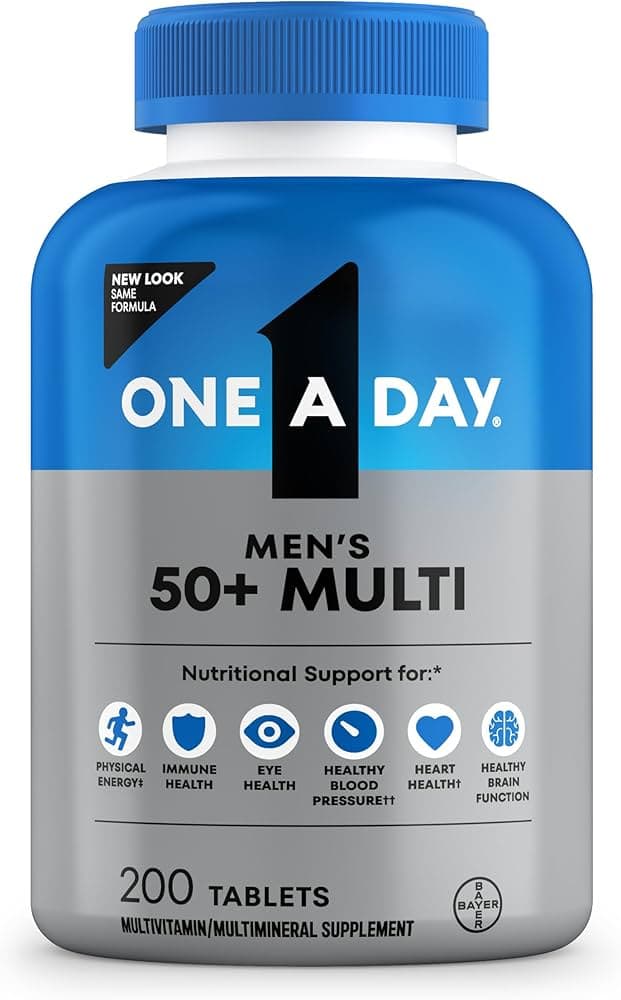
Manganese Sulfate.
An essential trace mineral that supports bone formation, antioxidant defense, and metabolism. Cofactor for MnSOD (antioxidant enzyme), bone formation enzymes, and amino acid metabolism.
Reviewed March 2026
- Category
- Mineral
- Also filed under
- Essential cofactor for antioxidant enzyme SODSupports bone formation and densityRequired for amino acid and carbohydrate metabolism
What Manganese Sulfate is, and what it does.
- Does it work
- Essential mineral with real biological importance. Supplementation makes sense in a multi, but most people get enough from food.
- How much to take
- 2-5mg daily. The adequate intake is 1.8mg (women) and 2.3mg (men). Don't exceed 11mg.
- Time to feel it
- No felt onset at any point. Manganese works through enzymes, so its contribution shows up in bone and connective tissue chemistry over months.
- The first dose
- Day one passes without sensation. The salt splits in stomach acid, a small percentage of the manganese is absorbed, and it moves into enzyme pools rather than producing a feeling.
- With regular use
- Supports long-term bone health and antioxidant defense.
- How well tolerated
- Well tolerated at recommended doses. Excess manganese can be neurotoxic, but this is mainly an occupational hazard (inhalation), not a supplement concern at normal doses.
- How it feels
- There's no sensation attached to it. The effect sits in enzyme activity in mitochondria, cartilage and bone matrix, which is lab territory rather than felt.
- The overlooked benefit
- Manganese and iron ride the same absorption transporter, so a big iron dose at the same meal cuts how much manganese you take up. Space them apart.
2 to 5mg a day is where Manganese Sulfate works.
Source: NIH ODS + Aschner 2017 review
The proof, claim by claim.
These words describe the research, not the molecule's worth. Research strength is how much work stands behind one claim, and it is never a product score.
- Essential for MnSOD antioxidant enzyme
- Supports bone health
- Excess is neurotoxic
Questions people ask about Manganese Sulfate.
- Do I need to supplement manganese?
- If you eat a varied diet with whole grains, nuts, and tea, probably not. A multivitamin dose is just insurance.
- Is manganese the same as magnesium?
- No. Different elements entirely. Manganese (Mn) is a trace mineral needed in milligrams. Magnesium (Mg) is a major mineral needed in hundreds of milligrams.
- Can I get too much?
- From supplements alone, unlikely if you follow label doses. The UL is 11mg/day. Toxicity from supplements is very rare.
- Should I worry about the neurotoxicity risk?
- At supplement doses (2-5mg), not at all. Manganism occurs from chronic inhalation of manganese dust in industrial settings, not from dietary intake.
Why these belong in the same formula. Each row says what the basis is, from settled biochemistry through to a trial that measured the pair.
Manganese sulfate dissociates to free manganese ions that use DMT1, the same carrier non-heme iron uses, so a co-dosed iron load reduces manganese uptake. Iron depletion raises DMT1 and lets more manganese in.
Both salts release free divalent ions in the stomach that then compete for DMT1 uptake. Unchelated forms show this competition more sharply than amino acid chelates, so dosing them apart matters.
High calcium in the same serving lowers manganese absorption from unchelated salts. Manganese still belongs in a bone product, because it runs the glycosyltransferase steps that build the matrix calcium mineralises.
Large zinc doses compete with manganese for shared intestinal divalent uptake. Downstream the two are not interchangeable, zinc serving cytosolic copper-zinc superoxide dismutase and manganese the mitochondrial enzyme.
Copper and manganese staff superoxide dismutase in different cell compartments, cytosol and mitochondria, so a trace blend needs both. They also share gut divalent uptake, which caps how much of either belongs in one dose.
Several manganese enzymes will bind magnesium at the same catalytic site, so their ratio decides which metal is used. Very large magnesium doses also blunt manganese uptake through shared divalent handling.
Pyruvate carboxylase carries both a biotin group and a manganese ion, so the two nutrients serve one carboxylation step in carbohydrate handling. Formulas built around that pathway carry them side by side.
Arginase is a manganese metalloenzyme, so manganese availability sets how quickly arginine is routed to ornithine and urea. Pairing them can shorten the arginine pool left for other uses.
Manganese is the metal cofactor for the glycosyltransferases that build glycosaminoglycans from glucosamine. Both forms also deliver sulfate, which is the group added to those chains during assembly.
Sulfation of cartilage glycosaminoglycans draws on the body's inorganic sulfate pool, which both the sulfate counter-ion and MSM feed. Manganese then supplies the metal cofactor for the glycosyltransferase steps in the same chain.
Ascorbate holds manganese reduced and lightly chelated in the gut lumen, which favours uptake of an unchelated salt. Ascorbate also runs the hydroxylation steps of collagen formation.
Phytic acid in cereals and legumes chelates manganese along with zinc and iron, holding it in a form that is not absorbed. Phytase cleaves phosphate groups from phytate and frees the bound cation. Work in broiler chickens has gone as far as re-examining manganese requirement estimates under phytase supplementation (Poultry Science, 2026), which is animal data and grounds the mechanism rather than a human dose.
Tannins and other galloyl polyphenols coordinate divalent cations through adjacent hydroxyl groups, forming complexes that are poorly absorbed. Manganese behaves like the other divalent minerals in this respect. Taking a manganese-containing formula with strong tea or a tannin-rich extract in the same window reduces what is available for uptake.
Epigallocatechin gallate carries galloyl and catechol hydroxyls that bind divalent cations, and this is well described for iron. Manganese is a divalent cation absorbed by overlapping routes, so the same binding is expected. The size of the effect on manganese specifically is less characterised than for iron, which is why this sits at promising rather than established.
Glutamine synthetase requires manganese at its catalytic site to condense glutamate and ammonia into glutamine, and it is one of the highest-manganese enzymes in the brain. Adequate manganese status is therefore part of normal glutamine handling. This is a cofactor relationship, not evidence that adding manganese to glutamine changes any measured outcome.
Xylosyltransferase and the other glycosyltransferases that build glycosaminoglycan chains on core proteins use manganese as their divalent metal cofactor. That is why manganese appears in joint-support formulas alongside glycosaminoglycan ingredients. The cofactor requirement is textbook. It does not by itself establish that supplemental manganese improves any joint measure.
Prolidase cleaves imidodipeptides containing proline and requires manganese at its active site, which places manganese in the normal turnover of collagen-derived peptides. A formula pairing collagen peptides with manganese is built on that cofactor logic. The relationship is enzymatic and established. The clinical consequence of adding manganese alongside collagen has not been measured here.
Manganese superoxide dismutase converts mitochondrial superoxide into hydrogen peroxide, and selenium-dependent glutathione peroxidase then reduces that peroxide to water. The two metals therefore hold consecutive steps of one detoxification sequence, and a gap at either step leaves an intermediate to accumulate. This is enzymology, not a claim that supplementing both changes a health outcome.
The hydrogen peroxide produced by manganese superoxide dismutase is cleared by glutathione peroxidase, which consumes reduced glutathione and regenerates it through glutathione reductase and NADPH. Manganese status governs the upstream step and glutathione supply governs the downstream one. The pairing is mechanistically coherent. Oral glutathione's own bioavailability is a separate question this row does not settle.
Menaquinone-7 supports the gamma-carboxylation of osteocalcin, while manganese serves as cofactor for the glycosyltransferases that build the proteoglycan component of bone matrix. The two act on different parts of matrix formation rather than competing. The pairing is mechanistic. No combination measurement supports it here.
Boron is described as influencing mineral and steroid hormone handling relevant to bone, and manganese serves as an enzyme cofactor in matrix synthesis. They are complementary rather than overlapping in mechanism. Evidence for the combination is thin, and boron's own mechanism is less firmly characterised than manganese's cofactor role.
Orthosilicic acid is associated with collagen and matrix formation, and manganese is required by the glycosyltransferases that build the proteoglycan side of that matrix. The pairing appears in connective tissue formulas on that basis. Both the silicon mechanism and the combination rest on limited evidence, so this row should stay at early.
Circulating manganese is distributed between transferrin, albumin and small ligands including histidine and citrate, and those low molecular weight complexes are part of how the ion moves between compartments. That makes histidine a physiologically relevant manganese ligand rather than an inert amino acid in the same capsule. Whether supplemental histidine changes manganese distribution in a person is not established.
Molybdenum is absorbed as molybdate, which shares transport with sulfate, so a high sulfate load can reduce molybdate uptake. The interaction here belongs to the sulfate anion in manganese sulfate rather than to manganese itself, which is a distinction worth stating on a label. It is also why a sulfate-salt mineral blend is not interchangeable with a chelate blend on this specific point.
A psyllium gel raises luminal viscosity and can bind or trap divalent cations, slowing their contact with absorptive surfaces. Manganese, like other divalent minerals, is subject to that physical effect. Quantification for manganese specifically is lacking, so the practical answer is to separate a fibre dose from a mineral dose in time.
Talk to a doctor before taking Manganese Sulfate if any of these apply to you: Excess manganese can be neurotoxic (mainly an occupational/inhalation risk), Those with liver disease should be cautious. These are flags to check first, not effects Manganese Sulfate is known to cause.
Not medical advice. Show the label to your pharmacist.What Manganese Sulfate actually does.
Manganese sulfate splits apart in stomach acid, and it's the free manganese ion that gets absorbed, while the sulfate part goes its own way.
Manganese is the working metal inside the mitochondrial form of superoxide dismutase, an enzyme that converts a reactive oxygen byproduct into hydrogen peroxide.
Manganese is needed by arginase, the enzyme that finishes the urea cycle by breaking down arginine into urea and another amino acid.
An enzyme that needs both manganese and biotin converts pyruvate into a molecule used in normal blood sugar production between meals.
Where Manganese Sulfate comes from.
Manganese sulfate is made by dissolving manganese ore, or a manganese by-product from metal refining, in sulfuric acid, then cleaning the resulting liquid of iron and heavy metals and crystallising it out. How clean it ends up depends on that purification step, not on where the ore came from, so the certificate of analysis is what tells you what you have. One thing to watch on a label: the anhydrous and hydrated versions carry different amounts of actual manganese per gram.
From a mineral source, then refined and usually bound to a carrier so the body can take it up.
Pyrolusite (manganese dioxide) or manganese carbonate ore is the usual starting material. Industrial manganese sulfate is also recovered as a by-product stream from ferromanganese and electrolytic manganese metal production, and from certain hydrometallurgical circuits
The ore is leached with sulfuric acid. Manganese dioxide requires a reducing agent in the leach because manganese has to be reduced from the tetravalent to the divalent state before it will dissolve as manganese sulfate. Carbonate ore dissolves directly with release of carbon dioxide
The leach liquor is neutralised and treated to precipitate iron, aluminium and heavy metals, then polished by sulfide precipitation or ion exchange. This step, not the ore body, is what determines the heavy metal profile of the finished salt, which is why supplement-grade material carries its own certificate of analysis
The purified solution is evaporated and cooled so manganese sulfate crystallises. Temperature governs which hydrate forms, which is how the monohydrate, tetrahydrate and higher hydrates are selected
Crystals are dried to the target hydrate and assayed for elemental manganese and for heavy metal limits against the applicable food or pharmacopoeial grade
Milled to a specified particle size for tablet, capsule or premix use
Whether a given lot came from primary ore leaching or from a metallurgical by-product stream is rarely stated on a supplement label, and neither route is inherently different in the finished salt once purification specifications are met.
Getting Manganese Sulfate from food.
The whole-food sources on file. A supplement closes the gap, it does not replace dinner.
A gram-for-gram figure (how much of each you would eat to match a dose) will appear here once it is sourced and reviewed. This page will not print a number it cannot cite.
Manganese Sulfate is a form of Manganese.
Manganese Sulfate is the sulfate form of Manganese. Same mineral, bound to a different partner, so absorption and feel differ from form to form.
See the other 3 forms
The essence, in one line each.
- Manganese sulfate supplementation alongside steroidal implants was assessed for growth performance and trace mineral status measures in cattle. These are production and status measures in a livestock species, not human outcomes.Animal study. Smerchek DT et al., 2024 (Journal of Animal Science). PMID 38456567 ↗
- Manganese requirement estimates for broiler chickens were re-examined under phytase supplementation, showing that phytate hydrolysis changes how much dietary manganese is needed. An animal requirement study, not a human dose.Animal study. Altevogt WE et al., 2026 (Poultry Science). PMID 42190479 ↗
- Organic manganese sources were evaluated as functional micronutrients for metabolic measures and growth in shrimp, with inorganic manganese salts as the comparison point.Animal study. Peng H et al., 2026 (Animal Nutrition). PMID 42306199 ↗
- Laccase and manganese peroxidase activities in Trametes versicolor responded differentially to chemical inducers, which illustrates manganese's role as an enzyme cofactor in a fungal system.In vitro study. Zarubin A et al., 2026 (Enzyme and Microbial Technology). PMID 42105680 ↗
- Manganese oxide nanoparticles showed cytotoxic signals in neuronal cell models while sparing liver and kidney cell lines. Nanoparticle exposure is a different chemical and exposure form from dietary manganese sulfate and should not be read across to it.In vitro study. Różaniecka-Zwolińska K et al., 2026 (Antioxidants). PMID 42193189 ↗
- A systematic review of nutrition and skin-condition literature names manganese among the micronutrients discussed. Manganese appears within a broader nutrient list rather than as the tested variable.Systematic review. Woolhiser E et al., 2024 (JMIR Dermatology). PMID 39102684 ↗
- A patent analysis and functional evaluation of mineral and vitamin complexes for pregnant ewes and lambs names manganese salts among the mineral components used in such formulations.Narrative review. Baibatyrova S et al., 2026 (Molecules). PMID 41900039 ↗
- A review of mineral and gut microbiota interactions in aquaculture names manganese among the trace minerals with described effects on gut health measures in fish.Narrative review. Aydin F et al., 2026 (Veterinary Research Communications). PMID 41973308 ↗
These are the studies our verdict leans on, chosen from the 8 we read for Manganese Sulfate. The full linked list is below.
The studies, linked.
2 sources behind our Manganese Sulfate verdict: peer-reviewed studies and registered clinical trials. Every one links straight to PubMed, the journal, or ClinicalTrials.gov. Read them yourself.
- Clinical trialA Randomized, Single-blind, Trial of Tralement Versus a Fixed-dose Trace Element Combination Product of Zinc, Copper, and Selenious Acid to Evaluate Manganese Safety in Pediatric Patients Requiring Long-term Parenteral NutritionClinicalTrials.gov ↗Phase 4, Withdrawn
- Clinical trialA Randomized, Single-blind, Trial of Tralement Versus a Fixed-dose Trace Element Combination Product of Zinc, Copper, and Selenious Acid to Evaluate Manganese Safety in Adult Patients Requiring Long-term Parenteral NutritionClinicalTrials.gov ↗Phase 4, Withdrawn
Evidence surfaced via Semantic Scholar (Allen Institute for AI) and ClinicalTrials.gov. Ranked by study type and citation weight, not cherry-picked.
Problems people have reported.
Read this carefully. These are 867,642 voluntary, unverified reactions reported to the FDA (openFDA). The number mostly reflects how popular Manganese Sulfate is, not how risky it is. A report is not proof Manganese Sulfate caused anything. It is a signal of what to watch for, nothing more.
Source: openFDA adverse-event reports. Voluntary reporting, not an incidence rate.
FDA Disclaimer: These statements have not been evaluated by the Food and Drug Administration. This information is for educational purposes only and is not intended to diagnose, treat, cure, or prevent any disease. Consult your healthcare provider before starting any supplement regimen.