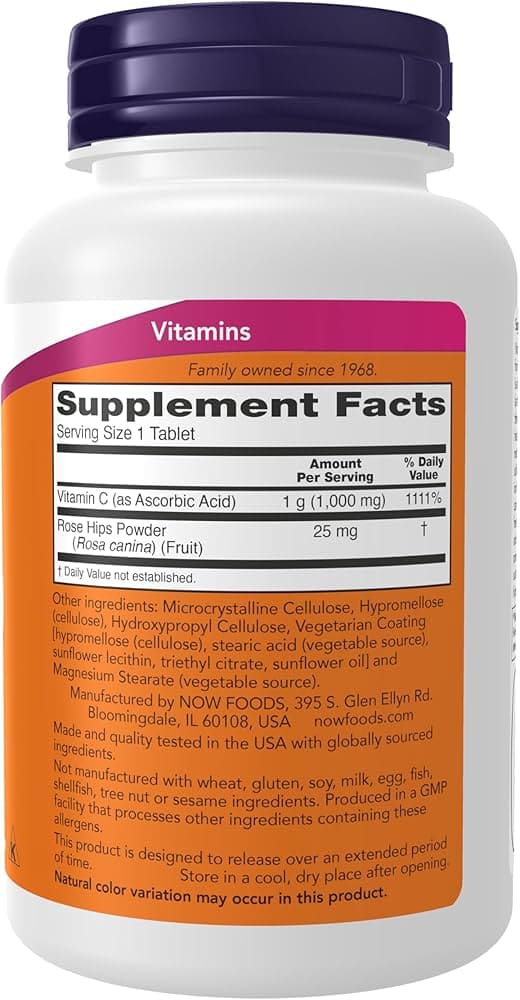
Rose Hip Rosa Canina.
Rose Hip Rosa Canina supplementation for targeted health support. Delivers vitamin C, carotenoids, tannins and the galactolipid GOPO from the whole fruit. Supports joint comfort, collagen building and everyday antioxidant intake.
Reviewed March 2026
- Category
- Antioxidant
What Rose Hip Rosa Canina is, and what it does.
- Does it work
- Reasonable vitamin C source though not exceptional. Worth trying for joint issues before moving to stronger interventions.
- How much to take
- 500-5000mg daily. Joint studies typically use 5g (5000mg) powdered rose hip.
- Time to feel it
- Three to six weeks of daily use. Trials that tracked joint comfort saw the change build across that window rather than in the first few days.
- The first dose
- Ascorbate from the fruit is absorbed within hours and shows in plasma the same day. Joint comfort is the slower half of the story.
- With regular use
- Reduced joint pain and stiffness (3-12 weeks to notice).
- How well tolerated
- Excellent. Traditional food with long safety history.
- How it feels
- Gradual improvement in joint comfort. Subtle overall.
- The overlooked benefit
- The same fruit pushes iron both ways: its ascorbate raises absorption while its tannins bind iron in the gut. Spacing it from an iron serving keeps the two apart.
2,500 to 5,000mg a day is where Rose Hip Rosa Canina works.
Source: Christensen et al. 2008 Scand J Rheumatol meta-analysis (3 RCTs); Warholm et al. 2003.
The proof, claim by claim.
These words describe the research, not the molecule's worth. Research strength is how much work stands behind one claim, and it is never a product score.
- Reduces osteoarthritis painMultiple trials + meta-analyses
- Contains high vitamin CNutritional analysis
- GOPO is the active joint compoundMechanism studies
- Well tolerated in long-term useTraditional use + trials
Questions people ask about Rose Hip Rosa Canina.
- Is it just vitamin C?
- No. Rose hip has unique compounds including GOPO (a galactolipid) that provide anti-inflammatory benefits beyond vitamin C. The whole extract works differently than pure vitamin C.
- What's GOPO?
- A galactolipid (glycoside of mono- and diglycerol) that appears to inhibit leukocyte migration and chemotaxis. The likely active compound for joint benefits.
- How long until it works?
- Joint benefits typically appear at 3 weeks, with continued improvement through 12 weeks. This isn't a fast-acting pain reliever.
- Is fresh rose hip better?
- Fresh has more vitamin C (which degrades with processing). But standardized extracts have consistent GOPO content for joint benefits. Different purposes.
- Can I make rose hip tea?
- Yes, traditional use. Good for vitamin C. For joint benefits, you'd need larger amounts than practical from tea. Supplements are more efficient.
Why these belong in the same formula. Each row says what the basis is, from settled biochemistry through to a trial that measured the pair.
Rose hip is one of the densest plant sources of ascorbic acid, so it contributes to the same vitamin C intake as an added dose. The accompanying flavonoids sit alongside ascorbate in the same redox network.
The ascorbate in rose hip reduces ferric iron to the ferrous form and holds it soluble at intestinal pH, which raises uptake of non-heme iron taken at the same meal. This is the classic reason vitamin C sits next to iron on a label.
Prolyl and lysyl hydroxylase need ascorbate to hydroxylate the proline and lysine residues that let a collagen triple helix hold together. Rose hip supplies that cofactor alongside the peptide substrate.
Proline is the residue that prolyl hydroxylase acts on, and that enzyme requires ascorbate to stay active. Supplying both gives the reaction its substrate and its cofactor together.
Lysyl hydroxylase converts lysine residues to hydroxylysine during collagen assembly and needs ascorbate as its reducing cofactor. Rose hip covers the cofactor side of that pair.
Ascorbate at the membrane surface reduces the tocopheryl radical back to alpha-tocopherol after it quenches a lipid radical. Rose hip's ascorbate and flavonoid content feeds that recycling step.
Large ascorbate intakes reduce copper to the cuprous state and have been reported to lower ceruloplasmin activity and copper absorption. Where a formula leans hard on vitamin C sources, copper is worth accounting for separately.
Ascorbate reduces the flavonoid phenoxyl radical back to its active form, so vitamin C rich botanicals extend the working life of a flavonol dose. Rose hip carries both classes natively.
Glucosamine supplies substrate for glycosaminoglycan assembly while rose hip's ascorbate is the cofactor for the collagen hydroxylation steps in the same connective tissue matrix. The pairing covers two different parts of matrix turnover.
The two act on different parts of the same tissue: one supplies sulfated glycosaminoglycan substrate, the other supports the hydroxylation step in collagen assembly. Joint formulas routinely combine them for that reason. No trial of the specific combination is cited here, so this is a pathway rationale at a modest confidence.
MSM is a small, well absorbed sulfone that feeds sulfur metabolism. Rose hip contributes polyphenols, carotenoids and vitamin C. They are combined for joint comfort and mobility formulas on the strength of separate literatures rather than a shared trial. Say that plainly rather than implying a tested pairing.
Combining a lipoxygenase-directed botanical with a polyphenol-rich fruit extract covers two separate points in inflammatory signalling. Both appear in joint comfort formulas. The rationale is mechanistic complementarity, and the combination itself has not been measured in the sources available here.
Rose hip fruit carries a mixed phenolic profile including flavonols and proanthocyanidins. Curcuminoids are lipophilic diarylheptanoids. Together they cover both aqueous and lipid compartments in an antioxidant panel. This is measurable in assay systems and is what the chemical-profile literature on Rosa canina describes, so it is a chemistry statement rather than a clinical one.
Bromelain is included in joint and recovery formulas for protein-degrading and absorption-related reasons. Rose hip is included for its phenolic and ascorbate content. Nothing about either interferes with the other. The combination is common practice with separate rationales.
Rose hip supports the collagen side of matrix chemistry through ascorbate-dependent hydroxylation. Hyaluronan is the hydrating polysaccharide in the same tissue. Skin and joint formulas pair them for that reason, and rose hip extracts are also used topically in dermatological preparations. The pairing rests on tissue biology, not a joint trial.
Matrix synthesis needs both an ascorbate-dependent step for collagen and manganese-dependent glycosyltransferase activity for the proteoglycan side. Rose hip contributes to the first. Manganese is required for the second. The cofactor requirement is textbook, so no citation is needed for the biochemistry itself.
Zinc sits in the catalytic site of a large set of remodelling and defence enzymes, so adequate status is a precondition for normal connective-tissue turnover. Rose hip does not supply meaningful zinc. The pairing is nutrient adequacy supporting a pathway, not a demonstrated combined effect.
Carotenoids and ascorbate protect different compartments and interact at the interface, with ascorbate able to regenerate oxidised lipid-phase antioxidants. Rosehip's own carotenoid content is part of what analytical work on the ripening fruit reports. Adding beta-carotene extends the same lipid-phase coverage.
Pomological work on rosehips tracks carotenoid accumulation as the fruit ripens, lycopene included, which is why deeply coloured hips test differently from early-picked ones. Supplemental lycopene adds to that lipid-phase pool. This is compositional and assay-level chemistry, not an outcome.
Xanthophylls sit at the membrane interface rather than deep in the bilayer, so they cover a different position from carotenes. Rose hip's water-soluble antioxidants cannot reach that phase. The combination broadens compartment coverage in an antioxidant formula.
Analytical work on commercially sold dried Rosa canina fruit reports a substantial phenolic content driving its radical-scavenging figures. Grape seed proanthocyanidins are the same structural class. Combining them raises total phenolic load, which is a chemistry result and not a claim about any body process.
Anthocyanins bring pH-dependent colour and scavenging chemistry that rose hip's flavonols and tannins partly duplicate. Formulators combine them mainly for a broader polyphenol spectrum. Overlap is worth stating so the pairing is not oversold as two separate mechanisms.
Taken at the same time, charcoal binds the very compounds a rose hip extract is taken for and reduces how much reaches absorption. This is the standard reason charcoal is dosed away from nutrients and medicines. Separating the two by a couple of hours is the usual handling.
Vitamin C degrades faster at neutral pH and in the presence of trace metals. A large carbonate dose buffers the stomach and moves the local pH upward. The practical response is to space them rather than to co-formulate, and the magnitude in a real meal has not been quantified here.
Nothing specific on file for Rose Hip Rosa Canina. Match the label to the daily amount above, and tell your doctor what you take.
Not medical advice. Show the label to your pharmacist.What Rose Hip Rosa Canina actually does.
Rose hip fruit is a concentrated food source of vitamin C, which your body needs as the cofactor for the two enzymes that hydroxylate proline and lysine while collagen is being put together.
Vitamin C breaks down with heat and oxidises readily, so the drying and extraction temperatures used on rose hips substantially change how much of it survives in the finished powder.
Rose hip polyphenols include condensed tannins, which bind plant-source iron in the gut and make it less soluble, while the vitamin C in the same fruit flips iron to the form that's taken up more readily.
Vitamin C works in the watery phase and carotenoids in the fatty phase, and vitamin C can regenerate oxidised fat-phase antioxidants right at the boundary. That's why a whole-fruit material tests differently from an isolated vitamin.
Where Rose Hip Rosa Canina comes from.
Rose hips are the fruit left after the wild rose flowers. They get picked when ripe, the seeds and their prickly hairs taken out, then dried and either ground into powder or extracted. How hot they are dried decides how much vitamin C is left, which is why two rose hip products can test quite differently.
Made from a plant. What ends up in the capsule tracks the harvest, so batch testing and a stated marker matter more here than with a made molecule.
The fruit of the dog rose, gathered after colour break in late summer to autumn, largely from wild stands in eastern and southeastern Europe and from managed hedgerows. Ripeness at harvest drives the carotenoid and ascorbate content of everything downstream.
Hips are washed, the achenes and their irritant hairs separated from the fleshy hypanthium, and the flesh dried by sun, air or low-temperature forced air. Drying temperature is the main determinant of how much vitamin C survives, because ascorbate degrades with heat and oxygen exposure.
Dried flesh is milled to a powder for whole-fruit products, or extracted with water or aqueous ethanol where a concentrated phenolic fraction is wanted. Seeds pressed separately give the seed oil, a compositionally different material.
Batches are tested for vitamin C by titration or chromatography and for total phenolics by colorimetric or chromatographic methods, and blended toward a declared figure. Some suppliers additionally assay the galactolipid marker. Retail-market analysis has found real spread between commercial samples, which is what standardisation exists to control.
Powder or extract is capsuled, tabletted or packed as a tea cut, typically with a moisture barrier because both ascorbate and anthocyanin-type pigments degrade with humidity and light.
Harvest maturity, drying method and drying temperature are almost never disclosed, and analytical work on retail samples shows they explain much of the variation between products.
Getting Rose Hip Rosa Canina from food.
The whole-food sources on file. A supplement closes the gap, it does not replace dinner.
A gram-for-gram figure (how much of each you would eat to match a dose) will appear here once it is sourced and reviewed. This page will not print a number it cannot cite.
The forms it comes in.
The essence, in one line each.
- Over 8 weeks, a standardised rose hip powder made from the seeds and shells of Rosa canina reduced crow's foot wrinkle depth and increased skin moisture and elasticity compared with placebo.Randomised trial. Phetcharat et al., 2015 (Clinical interventions in aging). PMID 26604725 ↗
- Across the studies included in this review, daily rosehip extract was associated with modest reductions in LDL cholesterol and blood glucose readings, both blood markers rather than measured health outcomes.Systematic review. Belkhelladi, 2023 (Cureus). PMID 38283449 ↗
- Commercially available dried Rosa canina fruit samples differed in phenolic and vitamin C content, and their antioxidant and antimicrobial activity in assay tracked that chemical profile.In vitro study. Miljković VM et al., 2024 (International Journal of Molecular Sciences). PMID 38473766 ↗
- The review sets out the constituents and formulation mechanisms behind rosehip-based products applied to the skin, and notes the evidence base is largely preclinical.Narrative review. Oargă Porumb DP et al., 2024 (Frontiers in Pharmacology). PMID 38666029 ↗
- Pomological and physical parameters of rosehips, including pigment-related composition, changed measurably across ripening stages.In vitro study. Medveckienė B et al., 2023 (Plants). PMID 36987001 ↗
These are the studies our verdict leans on, chosen from the 40 we read for Rose Hip Rosa Canina. The full linked list is below.
FDA Disclaimer: These statements have not been evaluated by the Food and Drug Administration. This information is for educational purposes only and is not intended to diagnose, treat, cure, or prevent any disease. Consult your healthcare provider before starting any supplement regimen.