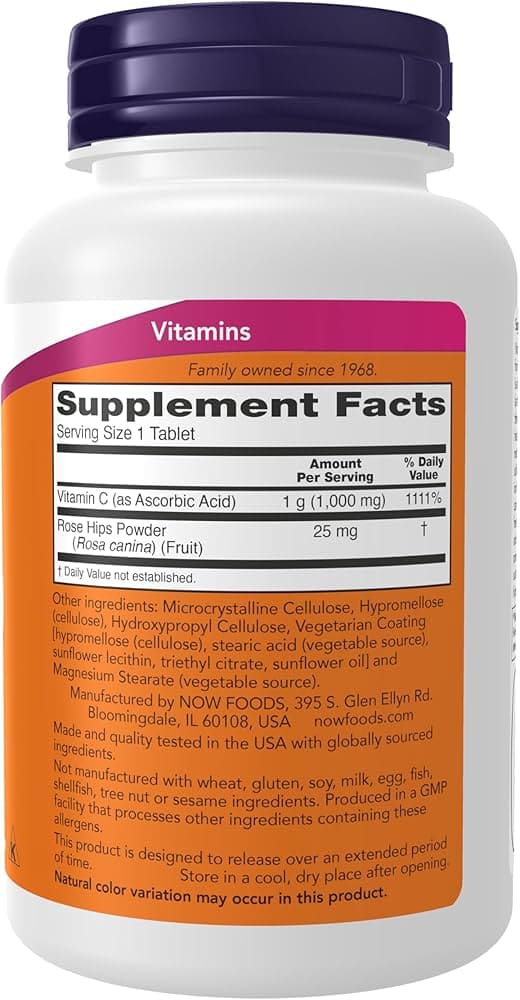
Vegetarian Coating.
A plant-based tablet coating. Makes your supplement easier to swallow and keeps moisture out. Coats tablets with a plant-based film for easier swallowing and moisture protection.
Reviewed March 2026
- Category
- General
- Also filed under
- Vegetarian friendly tablet coatingMoisture protectionImproved swallowability
What Vegetarian Coating is, and what it does.
- Does it work
- It's a coating. Does its job well.
- How much to take
- No dose figure is on record. The film is a few percent of the tablet's weight, decided by the coating run rather than by anything you choose.
- Time to feel it
- It isn't an active and has no onset. A standard film opens within minutes of swallowing. A delayed-release film stays shut until pH rises further along.
- The first dose
- The tablet goes down more easily and you taste nothing of the core. The film opens and the tablet does whatever it was made to do.
- With regular use
- Nothing accumulates. Over months its work is shielding a light-sensitive or moisture-hungry core so the last tablet in the bottle matches the first.
- How well tolerated
- Well tolerated. The film formers are plant cellulose, starch or a fermented polymer, all passing through as fibre. Read the coating line if you avoid talc or added colours.
- How it feels
- Smooth going down with no bitterness, which is most of the point. Beyond swallowing, there's nothing to experience.
- The overlooked benefit
- Coating weight gain, the percentage of film added to the core, is what sets how fast a tablet opens, so one core can be made to release early or further along.
The proof, claim by claim.
These words describe the research, not the molecule's worth. Research strength is how much work stands behind one claim, and it is never a product score.
- Equivalent to non-vegetarian coatings
Questions people ask about Vegetarian Coating.
- What's actually in a vegetarian coating?
- Usually hypromellose (plant cellulose), vegetable glycerin, and plant-based colorants. Exact formula varies by manufacturer.
- Is it as good as regular coatings?
- Yes. Functions identically for swallowability and protection. Just no animal products.
- How do I know if a coating is vegetarian?
- The label will say 'vegetarian coating' or list plant-based ingredients. Non-veg coatings use shellac, gelatin, or carmine.
Why these belong in the same formula. Each row says what the basis is, from settled biochemistry through to a trial that measured the pair.
Most vegetarian coatings are built on hypromellose as the film-forming polymer, with the rest of the system supporting it. The polymer supplies the continuous film that seals the tablet surface.
HPMC is the same cellulose ether written by its abbreviation and is the usual backbone of a plant-based coat. It replaces gelatin-derived film formers in vegetarian products.
Pullulan forms a clear film with low oxygen permeability and is combined with cellulose ethers in vegetarian shells and coats. It adds oxygen barrier where HPMC alone is weaker.
Gellan gum is used as the gelling aid in plant-based shell and coating systems to replace the setting behaviour gelatin would otherwise give. It sets a firm film in the presence of calcium ions.
Carrageenan is the seaweed gelling agent used with cellulose ethers to give plant-based shells and coats their set. It is chosen where a gelatin-like texture is wanted without animal material.
Talc is added to the coating suspension as an anti-tacking and opacifying solid so coated tablets do not stick together while drying. It also reduces film permeability slightly.
Glycerin plasticizes the cellulose-ether film so it flexes rather than cracking, and it holds a little residual moisture in the film. Plant-based coats need this because the polymers dry hard.
Peppermint oil is coated so the droplets pass the stomach intact and release lower in the gut, where the effect on smooth muscle tone is wanted. The coat is the reason the dosage form behaves differently from plain oil.
Serrapeptase is a protein and loses activity at gastric pH, so it is delivered behind a coating that stays intact in acid and opens at higher intestinal pH. The coat is what preserves enzyme activity to the absorption site.
Nattokinase is acid-labile and is routinely presented behind a delayed-release coat so the enzyme reaches the small intestine still folded. Uncoated material loses enzyme activity in the stomach.
When bromelain is wanted for systemic rather than digestive use it is coated so it is not degraded by gastric acid and pepsin. Digestive-use bromelain is deliberately left uncoated.
Coating a probiotic tablet or capsule raises the fraction of live cells that survive gastric transit and arrive in the intestine. Survival through acid is the main variable a delivery coat controls.
Pancreatic-type lipase loses activity at gastric pH, so enzyme products are commonly delivered inside a coating that stays intact in the stomach and dissolves further down. A plant-polymer enteric coat performs that function without animal-derived shellac or gelatin. The coating protects the payload. It contributes nothing of its own to digestion.
Alpha-amylase activity falls sharply at gastric pH, which is why supplemental blends are often coated rather than left exposed. A delayed-release plant polymer coat is one way of doing that. The coating is a delivery decision and not an active ingredient.
Lactase needs to reach the small intestine with activity intact, and gastric acid degrades it. Coating choices therefore decide how much survives transit. Note that lactase taken with a meal is sometimes formulated uncoated on purpose so it acts early, so the coating decision follows the intended timing.
Viable-organism products lose colony-forming units to gastric acid, and a delayed-release plant coating is one of the standard approaches to limiting that loss. Coating is one of several strategies, alongside strain selection and overage. It changes where the capsule opens, not what the organism does afterwards.
Delivered lactobacilli lose viability during gastric transit, and delayed-release plant polymer coatings are used to shift release past the stomach. Manufacturers measure the result as colony-forming units surviving a simulated gastric test. That is a laboratory measure of delivery, not a health outcome.
Bifidobacteria are anaerobes with limited acid tolerance, so protection through the stomach is a routine formulation goal. A plant polymer delayed-release coat is one route to it. Strain-level acid tolerance varies, so the coating matters more for some strains than others.
Soluble iron salts have a strong metallic taste and stain, which is why iron tablets are almost always film-coated. A plant-derived film does that job for products avoiding animal-derived materials. The coat addresses taste and appearance and does not change how much iron is absorbed.
Lecithin is used as a wetting agent and anti-tack aid in aqueous film-coating suspensions, helping the polymer spread evenly over tumbling tablets. It is an in-process aid rather than something a person takes for an effect. Small residual amounts remain in the finished film.
Calcium carbonate and similar mineral powders are used as opacifiers and fillers in film coats, particularly in products avoiding titanium dioxide. Their role is to hide the tablet core and protect light-sensitive actives. The quantity in a film coat is small relative to a nutritional calcium dose.
Riboflavin gives a yellow colour and is used as a colourant in coatings that avoid synthetic dyes. Its presence in a film is a colour decision, and the amount is far below a nutritional dose. It is also light-sensitive, which is one reason coloured coats are often opacified.
Beta-carotene is used to give orange to yellow shades in plant-based coatings. Like riboflavin it is present at colourant level, not nutritional level. Carotenoid colours are oxidation-sensitive, so opacity and packaging matter for shelf appearance.
Multi-enzyme blends contain components with different pH optima, and the coating decision determines whether release happens in the stomach or beyond it. Plant polymer coats give a vegetarian route to delayed release. Which choice suits a product depends on which enzymes are in it.
Talk to a doctor before taking Vegetarian Coating if any of these apply to you: Exact composition varies by manufacturer. These are flags to check first, not effects Vegetarian Coating is known to cause.
Not medical advice. Show the label to your pharmacist.What Vegetarian Coating actually does.
A vegetarian coating is a film made from plant-based or fermentation-derived polymers, applied to a tablet so no animal-derived gelatin or shellac is needed.
The coating is applied by spraying a polymer solution onto tablets tumbling in a heated rotating drum, so the liquid evaporates as it's sprayed and the film builds up gradually in thin layers.
A standard coating dissolves regardless of stomach acidity and releases the tablet's contents within minutes, while a delayed-release coating stays intact in the stomach and only dissolves once it reaches a less acidic part of the gut.
Coatings serve a handful of practical purposes, masking taste and odor, protecting sensitive ingredients from light or moisture, making tablets easier to swallow, and controlling where in the gut the tablet opens up.
Where Vegetarian Coating comes from.
The film on a tablet starts as either plant cellulose that has been chemically modified, starch from maize or tapioca, or a polymer grown by microbes in a fermenter. Whichever it is, it gets purified and sorted into grades, then mixed with water and a few helpers and sprayed onto tablets rolling around in a warm pan until the coat is thick enough. None of it is animal-derived, which is the whole point of the category.
The same molecule is reached more than one way. Which route a given product used is a manufacturing choice, and the finished compound is the same either way.
Cellulose ethers start from purified plant cellulose, starch films from maize, tapioca or pea starch, and pullulan and gellan from sugar fed to a production organism.
Cellulose is reacted with methylating and hydroxypropylating agents under alkaline conditions to give hypromellose. Pullulan and gellan are instead secreted by a cultured organism and recovered from the broth.
Salts, unreacted reagent and, for fermentation routes, cell mass are removed, and residual solvent is checked against pharmacopoeial limits.
Cellulose ethers are graded by viscosity and by degree of substitution, which together set film strength and dissolution behaviour. The grade is what a coating formulator specifies.
The polymer is dispersed in water with plasticiser, anti-tack agent, opacifier and colourant, then sprayed into a rotating pan of warm tumbling tablets until a target weight gain is reached.
A label naming only a vegetarian coating does not say which polymer was used, whether the coat is immediate or delayed release, or what opacifier and colourant it carries.
The forms it comes in.
FDA Disclaimer: These statements have not been evaluated by the Food and Drug Administration. This information is for educational purposes only and is not intended to diagnose, treat, cure, or prevent any disease. Consult your healthcare provider before starting any supplement regimen.