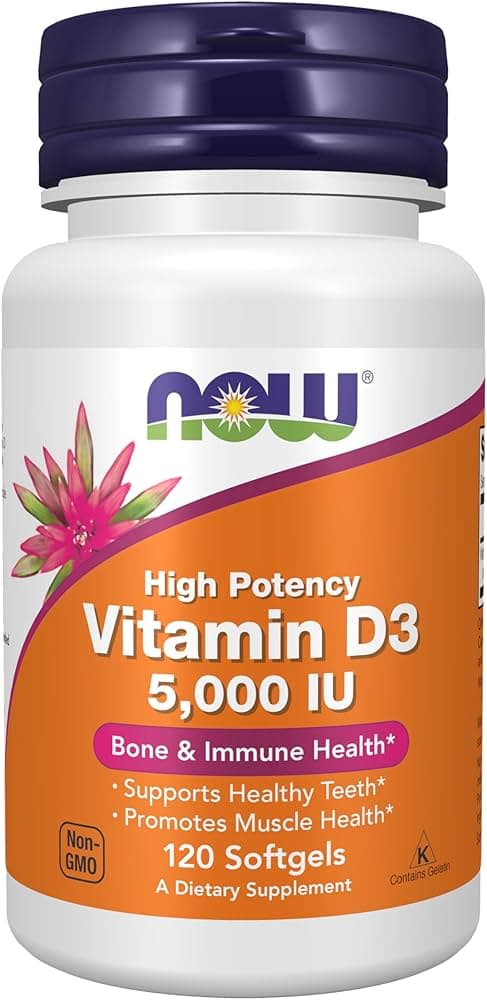
Bovine Gelatin (BSE-Free).
Beef-derived gelatin from BSE-free sources. Used to make capsule shells and softgels. Forms the capsule shell. BSE-free certification ensures safe sourcing from tested cattle herds.
Reviewed March 2026
- Category
- General
- Also filed under
- Well established capsule materialBSE free certification for safety assurance
What Bovine Gelatin (BSE-Free) is, and what it does.
- Does it work
- It's packaging material with a safety certification. Not a health ingredient.
- How much to take
- No daily amount is on record for the shell itself. Taken as hydrolysed gelatin for its glycine, it's used at spoonful scale as a food ingredient rather than as a capsule dose.
- Time to feel it
- The shell dissolves in the stomach within minutes. Taken as hydrolysed gelatin for its glycine, any change sits on a scale of weeks rather than days.
- The first dose
- The shell opens in your stomach within minutes and the fill takes over. Swallowed as a hydrolysed powder, day one is quiet and the glycine simply joins your amino acid pool.
- With regular use
- Weeks of use keep a steady trickle of glycine and proline coming in, the raw material for glutathione and creatine synthesis. As a shell, it keeps releasing on schedule.
- How well tolerated
- Well tolerated. BSE-free testing adds an extra layer of assurance.
- How it feels
- Like any other capsule. You won't notice a difference from non-certified gelatin.
- The overlooked benefit
- About a third of gelatin is glycine, the amino acid your body uses to build glutathione and creatine, so the hydrolysed form doubles as a glycine source.
The proof, claim by claim.
These words describe the research, not the molecule's worth. Research strength is how much work stands behind one claim, and it is never a product score.
- BSE-free certification eliminates prion risk
Questions people ask about Bovine Gelatin (BSE-Free).
- Should I worry about mad cow disease from gelatin capsules?
- No. The risk was always extremely low, and BSE-free certification essentially eliminates it. Testing protocols are thorough.
- Is this the same as regular gelatin?
- Same material, with additional source testing and certification for BSE. Functionally identical.
- Is bovine gelatin halal?
- Only if specifically certified halal. Standard bovine gelatin may not meet halal requirements. Check the label.
Why these belong in the same formula. Each row says what the basis is, from settled biochemistry through to a trial that measured the pair.
Gelatin supplies glycine, proline and hydroxyproline, and the body needs ascorbate as the cofactor for the enzymes that hydroxylate proline and lysine when building its own collagen. Pairing a gelatin or collagen source with vitamin C is long-standing practice for that reason.
Prolyl and lysyl hydroxylase keep their iron centres reduced only with ascorbate present. Supplying gelatin-derived amino acids without ascorbate leaves those steps short of a cofactor.
Every third residue of the collagen helix is glycine, so gelatin is the richest common dietary source of it. A formula pairing the two is stacking the same amino acid rather than adding a separate one.
Proline and its hydroxylated form make up a large share of gelatin's residues and are the amino acids in shortest supply when collagen is being assembled. Added proline feeds the same pool the gelatin supplies.
Lysine residues are hydroxylated and then cross-linked to give collagen fibrils their tensile strength. Gelatin is relatively low in lysine, so it is a sensible companion rather than a duplicate.
Gelatin is the classic protein used to precipitate tannins in the laboratory because its proline-rich chains bind them tightly. In a formula the two neutralise each other, leaving less free tannin and clouding or hazing the mix.
Catechins bind readily to proline-rich proteins such as gelatin, and the bound fraction is no longer free in solution. Formulators separate the two or account for the loss when they share a matrix.
Proanthocyanidins are measured in the laboratory by how much gelatin they precipitate, which is the same reaction that occurs in a shared formula. The complex reduces the free polyphenol available.
Gelatin supplies the glycine, proline and hydroxyproline that a body reuses when it builds its own collagen. Copper sits in the active site of lysyl oxidase, the enzyme that cross-links newly laid collagen fibrils into mature connective tissue. Without adequate copper the amino acid supply is present but the cross-linking step runs slowly. This is settled biochemistry rather than a combination trial.
Hydroxyproline, the residue that stabilises the collagen triple helix, is made after translation by prolyl hydroxylase, which needs ferrous iron in its catalytic centre alongside ascorbate. Gelatin delivers proline. The hydroxylation step is where iron status shows up. The relationship is a cofactor requirement, not an effect measured in a trial of the two together.
Collagen is continuously laid down and broken down, and the enzymes that do the breaking down are zinc metalloproteinases. Gelatin contributes substrate to the synthesis side of that cycle. Zinc status therefore sits on the remodelling side of the same normal turnover process.
Connective tissue is collagen fibres embedded in a proteoglycan ground substance. The glycosyltransferases that build those glycosaminoglycan chains use manganese as a cofactor. Pairing gelatin with manganese addresses two different parts of the same matrix rather than the same part twice.
Silicon appears in connective tissue and bone matrix and has been discussed as a contributor to normal collagen matrix formation. The evidence is largely observational and mechanistic rather than from controlled trials of the pair. Read the pairing as plausible support for normal connective tissue rather than a measured combined effect.
Gelatin is partially hydrolysed collagen. Collagen peptides are hydrolysed further to shorter chains. Both deliver the same glycine-proline-hydroxyproline rich amino acid pool, so taking both is additive rather than complementary. The practical difference is solubility and gelling behaviour, not composition.
Glucosamine feeds glycosaminoglycan synthesis while gelatin feeds the collagen protein side. The two are routinely formulated together for joint comfort and mobility support. Combination trials of gelatin with glucosamine specifically are sparse, so the basis is substrate logic plus formulation practice.
Chondroitin is a sulfated glycosaminoglycan of cartilage ground substance. Gelatin contributes collagen amino acids. They occupy different compartments of the same tissue. The pairing is common in products and is supported by composition rather than by a trial of the exact combination.
Hyaluronan holds water in the extracellular matrix. Collagen provides its tensile structure. Supplying amino acid substrate for one and a matrix polysaccharide for the other targets two different structural elements. The rationale is compositional, and combined clinical measurement is limited.
Gelatin is a protein and must be cleaved to peptides and amino acids before absorption. Betaine hydrochloride lowers gastric pH, which is the condition pepsinogen needs to convert to pepsin. People with low stomach acidity are the group in whom this step is rate-limiting.
Pepsin cleaves gelatin chains into large peptides in the stomach, and pancreatic proteases finish the job in the small intestine. Gelatin is unusually resistant to some proteases because of its high proline content, so the gastric step matters. This is standard digestive physiology.
Broad protease blends carry endopeptidase and exopeptidase activity that releases free amino acids and di-peptides from gelatin. The effect is on liberation of substrate, not on any downstream collagen outcome. Read it as a digestion step rather than a clinical result.
Most fish oil softgels are encapsulated in a bovine or fish gelatin shell plasticised with glycerol. The gelatin here is the delivery vehicle, not an active. That is why a gelatin declaration appears on many oil products that make no gelatin claim.
Gelatin sets by thermoreversible helix formation while pectin sets through a sugar-acid or calcium-dependent network. Formulators blend them to tune melt behaviour and chew, and pectin replaces gelatin where an animal-free gel is wanted. The interaction is textural, not physiological.
MSM supplies bioavailable sulfur, a component of the sulfated glycosaminoglycans and of methionine and cysteine, which gelatin itself contains very little of. The pairing covers an amino acid gap in gelatin's own profile. Evidence for the combination is formulation-led rather than trial-led.
Talk to a doctor before taking Bovine Gelatin (BSE-Free) if any of these apply to you: Not suitable for vegetarians/vegans, Not halal/kosher unless certified. These are flags to check first, not effects Bovine Gelatin (BSE-Free) is known to cause.
Not medical advice. Show the label to your pharmacist.What Bovine Gelatin (BSE-Free) actually does.
Gelatin is collagen that's been broken down by heat and acid or alkali treatment, leaving single protein chains that dissolve in hot water and set again as they cool.
About a third of gelatin's amino acids are glycine, with proline and a related compound making up much of the rest, giving it the repeating pattern typical of collagen.
Gelatin is missing the amino acid tryptophan and has very little of two others, so it's an incomplete protein and doesn't substitute for a complete protein source in the diet.
Hydroxyproline isn't taken in directly from food. It's formed inside the body when an enzyme modifies proline already built into a collagen chain, a process that needs vitamin C and iron.
Where Bovine Gelatin (BSE-Free) comes from.
Cattle hide and bone are soaked in acid or lime, then simmered so the collagen dissolves. The liquid is cleaned up, dried and ground into the powder or sheets you buy. Which soak was used decides whether it is called type A or type B.
Made from an animal material. Species and tissue are the things worth knowing, and both belong on a label.
Collagen-rich by-products of cattle processing, sourced under traceability schemes that document herd origin and age at slaughter.
Hide or demineralised bone is pretreated either with dilute acid over about a day, giving type A, or with a lime slurry over several weeks, giving type B. The step cleaves cross-links so the collagen can be extracted.
The conditioned stock is extracted in successive hot water stages. Heat denatures the triple helix into soluble single chains, which is the moment collagen becomes gelatin.
The dilute extract is filtered, deionised to remove residual salts, concentrated by evaporation and sterilised.
Batches are measured for gel strength and viscosity and blended to a target specification.
The concentrate is chilled to a gel, dried in a belt drier and milled to sheets, granules or powder.
Getting Bovine Gelatin (BSE-Free) from food.
The whole-food sources on file. A supplement closes the gap, it does not replace dinner.
A gram-for-gram figure (how much of each you would eat to match a dose) will appear here once it is sourced and reviewed. This page will not print a number it cannot cite.
The forms it comes in.
The essence, in one line each.
- The review surveys collagen sources, extraction and processing routes and their nutritional applications, naming gelatin as the partially hydrolysed product of collagen processing.Narrative review. Islam et al., 2025 (Marine Drugs). PMID 40422780 ↗
These are the studies our verdict leans on, chosen from the 1 we read for Bovine Gelatin (BSE-Free). The full linked list is below.
FDA Disclaimer: These statements have not been evaluated by the Food and Drug Administration. This information is for educational purposes only and is not intended to diagnose, treat, cure, or prevent any disease. Consult your healthcare provider before starting any supplement regimen.