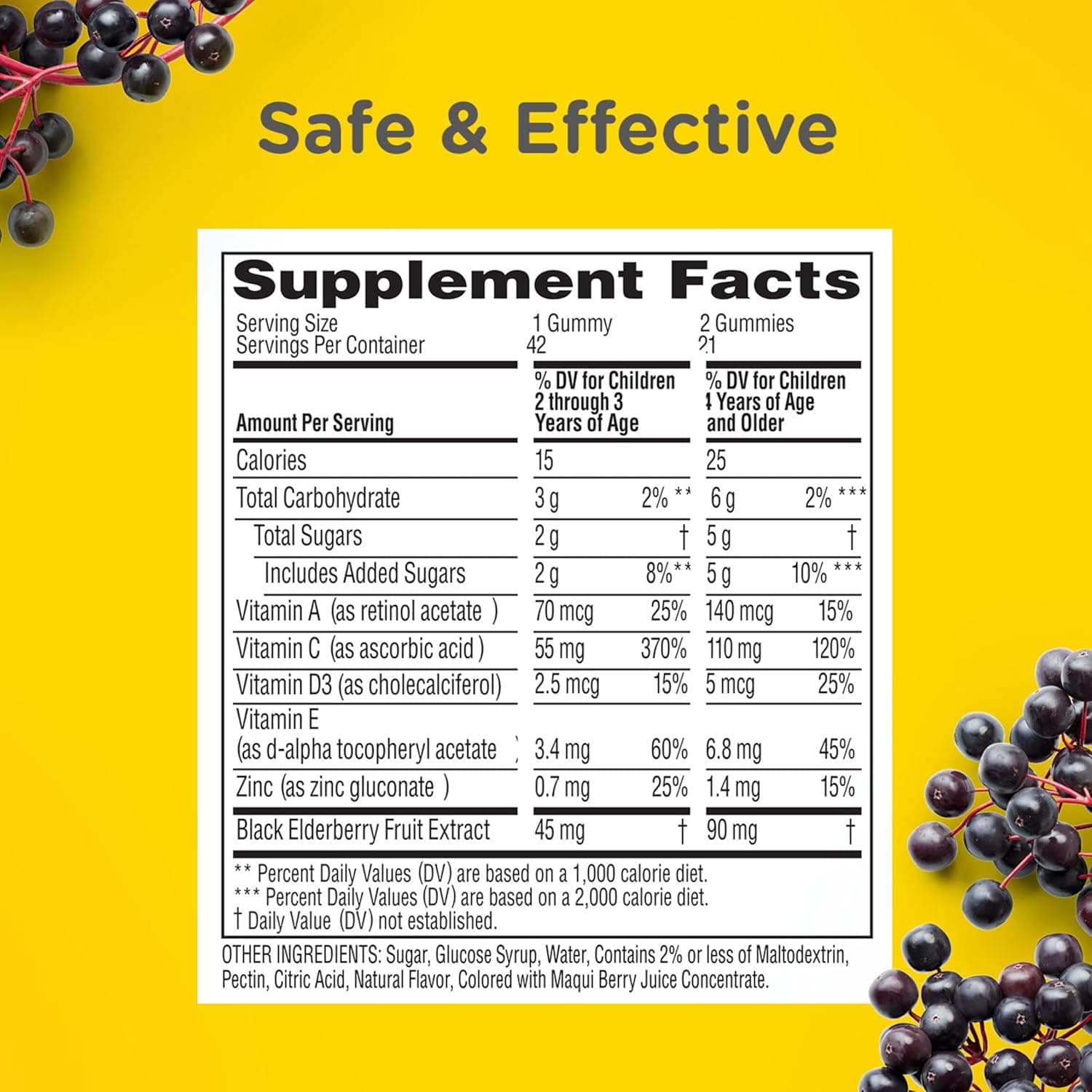
Maqui Berry Juice Concentrate (for Color).
Maqui berry juice concentrate used as a natural purple colorant in supplements. Colors your supplement a natural purple/dark shade. Maqui berries are antioxidant powerhouses, but the amount used for coloring is a fraction of what you'd need for health benefits.
Reviewed March 2026
- Category
- General
- Also filed under
- Natural purple/blue colorantContains trace anthocyanins
What Maqui Berry Juice Concentrate (for Color) is, and what it does.
- Does it work
- Great berry, wrong application. At coloring doses, you're getting color, not health benefits. Actual maqui extract supplements use 100-500mg.
- How much to take
- For coloring: whatever's in the product (trace). For actual health benefits from maqui: 100-500mg of standardized extract (not what this is).
- Time to feel it
- It sets the shade of the product and nothing else. It is a colour input used at colour levels, not an active, so it has no onset of its own.
- The first dose
- Your supplement looks pretty. That's the 24-hour report.
- With regular use
- No health effects from coloring amounts. If you want maqui benefits, take a dedicated maqui extract supplement.
- How well tolerated
- Well tolerated. It's berry juice. No concerns at any amount you'd encounter in supplements.
- How it feels
- You don't feel it. The colorant is there for your eyes, not your body.
- The overlooked benefit
- Delphinidin pigment fades with heat, light and rising pH, so a product that holds its purple through its shelf life is telling you something about how it was made and stored.
The proof, claim by claim.
These words describe the research, not the molecule's worth. Research strength is how much work stands behind one claim, and it is never a product score.
- Contains powerful antioxidants
- Provides health benefits in this product
- Better than artificial colors
Questions people ask about Maqui Berry Juice Concentrate (for Color).
- Am I getting maqui health benefits from this?
- No. The amount used for coloring is way too small. For real maqui benefits, you'd need a dedicated supplement with 100-500mg of extract.
- Is natural coloring better than artificial?
- From a safety standpoint, both are fine. Some people prefer natural colorants on principle. Neither affects how the active ingredients work.
- Why use maqui instead of other colorants?
- Maqui produces a vibrant purple and has great marketing appeal as a 'superfruit.' It's also stable and doesn't affect taste much.
- Could it stain my teeth?
- The amounts used for supplement coloring are too small to stain. Drinking actual maqui juice, though, can temporarily stain.
- Is maqui the same as acai?
- Different berries, similar vibes. Both are deep purple, high in anthocyanins, and marketed as superfruits. Maqui actually has higher antioxidant content per gram.
- Should I buy a separate maqui supplement?
- Only if you're interested in its antioxidant or blood sugar benefits. The research is promising but still early. Don't count on the coloring in other supplements.
Why these belong in the same formula. Each row says what the basis is, from settled biochemistry through to a trial that measured the pair.
Ascorbate can stabilise anthocyanin colour through co-pigmentation at some concentrations and accelerate its degradation at others, particularly where trace metals or oxygen are present. Formulators account for this rather than assuming ascorbate protects the colour. The interaction here is about pigment stability in the product, not about anything in the body.
Elderberry is a cyanidin-glycoside source and maqui is a delphinidin-glycoside source, so the two supply related but structurally different anthocyanins. Used together for colour they contribute to the same hue range. Delphinidin carries an extra hydroxyl on the B ring, which shifts its colour bluer and makes it less stable to heat and light than cyanidin.
Bilberry carries one of the widest anthocyanin profiles of any common fruit, including delphinidin glycosides shared with maqui. Both are used as natural colour sources and as polyphenol inputs. Stacking them raises total anthocyanin intake without introducing a new mechanism.
Proanthocyanidins and other colourless phenolics form stacking complexes with anthocyanin chromophores, deepening and stabilising colour, which is the same co-pigmentation chemistry that makes red wine colour persist. In a formulated product this raises colour hold at a given pigment load. The effect is on the pigment, not on the person.
Flavonols such as quercetin and rutin are classic co-pigments that associate with the flat anthocyanin cation and shield it from water attack at the 2 position. That association shifts the hue and slows fading. It is a colour-chemistry pairing rather than a nutritional one.
Rutin is the rutinoside of quercetin and acts as a co-pigment through the same stacking interaction with the anthocyanin chromophore. In beverages it is one of the practical tools for holding a purple hue. The role is formulation stability.
Anthocyanins and other polyphenols chelate iron, which both alters their colour, sometimes toward a blue or grey shift, and catalyses their oxidative breakdown. In the gut the same chelation lowers non-heme iron absorption, which is the established polyphenol interaction with iron. Both effects run in the same direction against the pairing.
Copper catalyses the oxidative degradation of anthocyanins and can produce off-colours through complexation. Trace copper in water or equipment is a known cause of colour loss in fruit-based products. Chelating agents in the formulation exist partly to hold this in check.
In aqueous solution ascorbate and anthocyanins degrade each other through a hydrogen-peroxide-mediated route, with losses on both sides that increase with oxygen and trace metals. This is a well-documented shelf-life problem in fruit beverages. It is why a purple colour and a high vitamin C declaration in the same bottle need a stability plan.
Anthocyanins exist as a red flavylium cation at low pH, shift through colourless carbinol pseudobase near neutral, and become blue quinoidal and eventually degrade at alkaline pH. Adding an alkalising agent to a maqui-coloured product changes the colour and reduces pigment stability. Colour hold in these products is a pH decision first.
Most ingested anthocyanin reaches the colon intact and is broken down by gut bacteria to smaller phenolic acids, including protocatechuic and gallic acid derivatives, which is where most systemic exposure actually comes from. Which organisms are present shapes what is formed. This is why intact anthocyanin measured in blood is a poor guide to total exposure.
The colonic community that converts anthocyanins to absorbable phenolic acids is itself shaped by fermentable fibre intake. Combining a prebiotic with a polyphenol source is reasoning from that conversion step. The size of any effect on phenolic acid output has not been established for maqui specifically.
Both are plant phenolics that donate hydrogen atoms to radicals in laboratory assays. Combining them raises measured antioxidant capacity of the mixture, which is a chemical property of the blend and not an outcome in a person. That distinction is worth keeping visible.
Tocopherols sit in the lipid phase while anthocyanins sit in the aqueous phase and at the interface, so in an emulsion the two cover different compartments. This is the standard rationale for pairing water-soluble and fat-soluble antioxidants in a formulation. It is a stability argument about the product.
Talk to a doctor before taking Maqui Berry Juice Concentrate (for Color) if any of these apply to you: Amount too small for antioxidant benefits. These are flags to check first, not effects Maqui Berry Juice Concentrate (for Color) is known to cause.
Not medical advice. Show the label to your pharmacist.What Maqui Berry Juice Concentrate (for Color) actually does.
The dark purple comes from a specific family of pigments that maqui carries more of than most fruits.
These pigments change colour with acidity, going red when acidic, fading near neutral and turning blue then breaking down when alkaline.
The chemical feature that makes maqui's pigment so blue-purple is the same one that makes it fade faster.
Very little of the pigment itself gets into the blood. Gut bacteria break most of it into smaller compounds, and those are what circulate.
Where Maqui Berry Juice Concentrate (for Color) comes from.
Maqui berries are pressed for their juice, the juice is filtered and gently boiled down under vacuum so the purple pigment survives, and the resulting concentrate is checked for colour strength. Only a small amount goes into the finished product, because it is there to set the shade.
Made from a plant. What ends up in the capsule tracks the harvest, so batch testing and a stated marker matter more here than with a made molecule.
Aristotelia chilensis fruit, largely wild-harvested from southern Chile and adjacent Argentina rather than cultivated at scale, which is why lot-to-lot anthocyanin content varies with season and site.
Berries are crushed and pressed to separate juice from skins and seeds. Most of the anthocyanin sits in the skin, so press conditions and any maceration step determine pigment recovery.
The juice is filtered or centrifuged to remove pulp and colloidal solids, since haze and suspended matter both interfere with colour consistency in a finished product.
Water is removed under reduced pressure at low temperature, because anthocyanins degrade rapidly with heat and this is the step where pigment is most easily lost.
The concentrate is set to a target soluble solids level and a colour specification measured spectrophotometrically, which is the number a colouring input is actually bought against.
Very small amounts of the concentrate are added to the finished formula to reach the intended hue, with the product's pH and light protection doing most of the work of holding it.
Colouring inputs are usually declared by name without an anthocyanin amount, so the quantity of pigment a serving delivers is not stated and cannot be inferred from the ingredient list position.
Getting Maqui Berry Juice Concentrate (for Color) from food.
The whole-food sources on file. A supplement closes the gap, it does not replace dinner.
A gram-for-gram figure (how much of each you would eat to match a dose) will appear here once it is sourced and reviewed. This page will not print a number it cannot cite.
The forms it comes in.
FDA Disclaimer: These statements have not been evaluated by the Food and Drug Administration. This information is for educational purposes only and is not intended to diagnose, treat, cure, or prevent any disease. Consult your healthcare provider before starting any supplement regimen.