Pairs well with23 on file
Why these belong in the same formula. Each row says what the basis is, from settled biochemistry through to a trial that measured the pair.
The deiodinase enzymes that convert thyroid hormone to its active form are selenoproteins, so iodine intake without adequate selenium leaves that conversion step short. Selenium also supports the glutathione peroxidase handling peroxide generated during hormone synthesis.
Selenomethionine is the well-absorbed selenium form that feeds the selenoprotein pool including the deiodinases. It supplies the cofactor that iodine-based hormone conversion depends on.
Thyroid hormone is built by attaching iodine atoms to tyrosine residues on thyroglobulin, so tyrosine is the backbone and iodine the addition. Neither builds the hormone without the other.
Thyroid peroxidase, the enzyme that incorporates iodine into tyrosine, is heme dependent and needs iron to function. Low iron status limits how well an iodine dose can be used.
Zinc is part of the thyroid hormone receptor zinc finger and contributes to peripheral hormone conversion. It supports the response to hormone rather than its synthesis, the step iodine covers.
The thyroid hormone receptor works as a heterodimer with the retinoid X receptor, so retinoid status shapes how the cell reads the hormone signal. Vitamin A also influences thyroglobulin handling.
Glucosinolate breakdown yields thiocyanate, which competes with iodide at the sodium-iodide symporter and lowers iodide uptake into the thyroid. A formula carrying both should not assume the iodine dose is fully taken up.
Sulforaphane preparations come from the same glucosinolate pool that also yields thiocyanate, the ion competing with iodide for the sodium-iodide symporter. The competition sits at the transporter, not at the hormone.
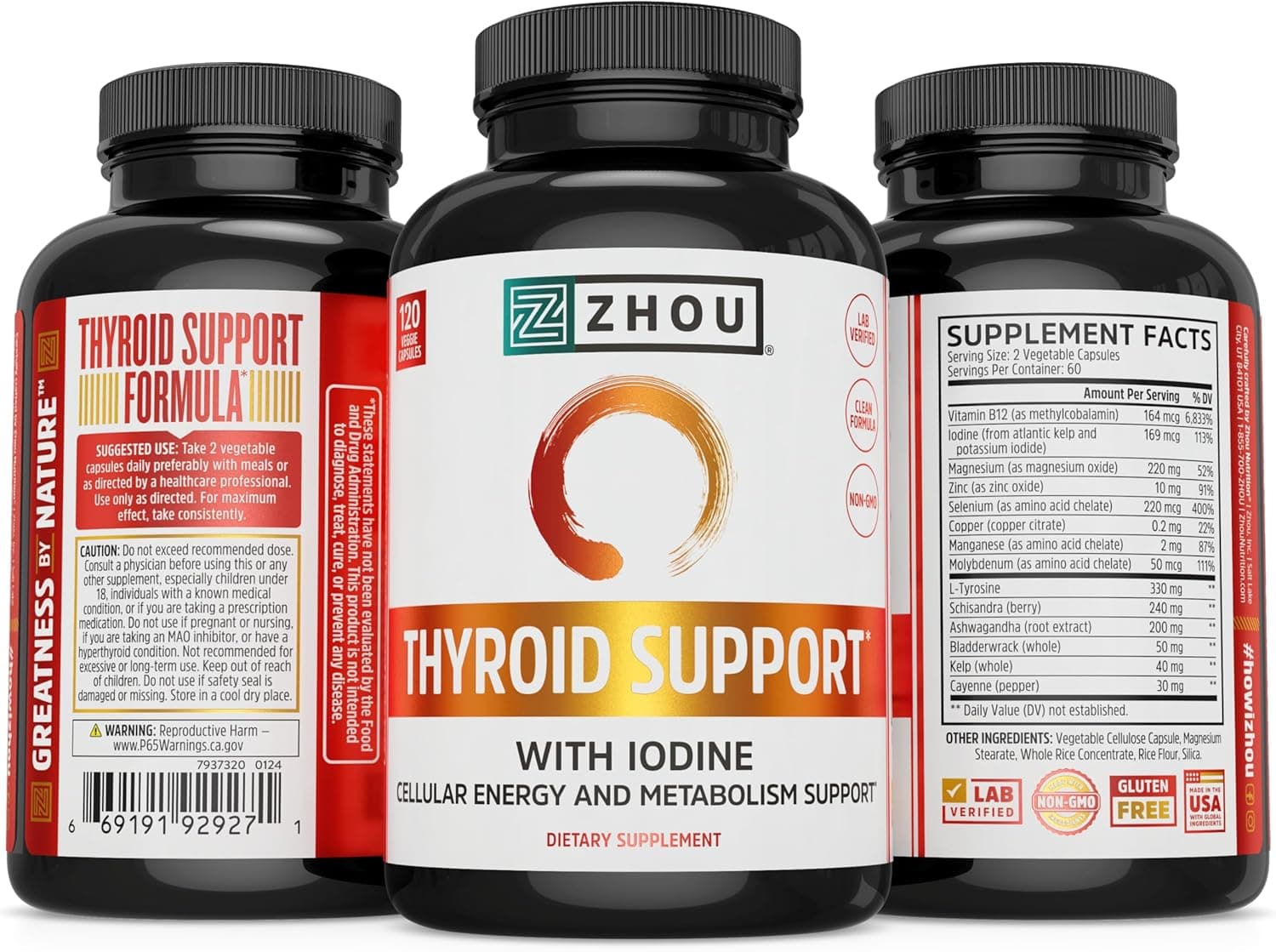
Bladderwrack is itself a brown seaweed with a variable and often high iodine content, so stacking it with kelp doubles the same nutrient. Total iodine across the formula is what matters, not the count of botanical names.
Added iodine and kelp-sourced iodine draw on the same intake ceiling, so the two must be summed rather than counted separately. Seaweed iodine content also varies batch to batch, which widens the total.
Potassium iodide supplies the identical iodide ion kelp provides, so the doses add directly. Formulas carrying both should state one combined iodine figure.
Lithium accumulates in thyroid tissue and slows the release of stored thyroid hormone, working against the intent of an iodine dose. This is settled pharmacology, seen most clearly at higher lithium intakes.
Alginate, the main structural polysaccharide of brown kelp, binds divalent cations and gels in their presence, which is the same chemistry used to make alginate beads in food manufacturing. Taken in the same meal, a large alginate load and a calcium dose can bind in the gut lumen. Spacing the two apart is the usual practical answer.
Alginate and fucoidan carry carboxyl and sulfate groups that bind transition metals, and this affinity is well documented in the material science of seaweed polysaccharides. A meaningful dose of whole kelp powder therefore adds a binding surface to the meal. The size of the effect on copper status in people has not been quantified.
The same anionic polysaccharide groups that bind calcium and copper will bind other divalent metals including manganese. Kelp itself contributes some manganese, so the net direction depends on dose and diet. This is inference from polymer chemistry rather than a measured interaction.
Ascorbate keeps non-heme iron in the ferrous state and forms an absorbable chelate, which raises uptake of plant-source iron in the same meal. Kelp is a plant-matrix iron source and also carries polyphenols that work against absorption. Taking ascorbate with the meal is the standard way this is handled for any non-heme source.
Alginate and fucoidan pass the small intestine undigested because human enzymes cannot cleave those linkages, and they arrive in the colon as substrate for bacteria that can. Fermentation products include short-chain fatty acids. Which organisms benefit is species and strain dependent, and a defined probiotic plus a kelp fibre load has not been tested as a pair in people.
Seaweed polysaccharides are fermented by colonic bacteria carrying the relevant polysaccharide utilisation loci, and plantarum is one of the species commonly co-formulated with plant fibres. A dog study of a prebiotic plus a non-viable lactobacillus that included kelp in the diet reported changes in faecal microbiota and fermentation end products. That is an animal composition marker, not a human outcome.
Both are viscous, water-holding non-digestible polysaccharides, so taking them together compounds gut viscosity and can slow the absorption of minerals and small molecules taken in the same window. That is a formulation consideration rather than a benefit. Separating a mineral dose from a combined fibre load by a couple of hours is the practical response.
Clay binders exchange and adsorb cations non-specifically in the gut lumen, and kelp contributes a mixed mineral load including iodide and trace metals. Nothing has measured the pair directly. The caution follows from how the binder behaves with any mineral-bearing food.
Isoflavones inhibit thyroid peroxidase in laboratory assays, the same enzyme that incorporates iodide during thyroid hormone synthesis. In studies of people with adequate iodine that inhibition has generally not translated into altered hormone levels. Since kelp is an iodine source, the two are worth naming together as a mechanistic interaction that is largely iodine-status dependent.
Fucoxanthin is the brown carotenoid that gives kelp its colour, so a whole-thallus kelp powder carries some of it while an iodine-standardised extract may not. Formulators pairing the two are effectively rebuilding part of the source material. The pairing is compositional rather than an interaction of two independent actives.
A carbonate calcium dose is large by mass and dissolves to free calcium ion in the stomach, which is exactly what alginate gels around. Whole kelp taken in the same meal will bind a share of it. Dosing them at different times avoids the question entirely.