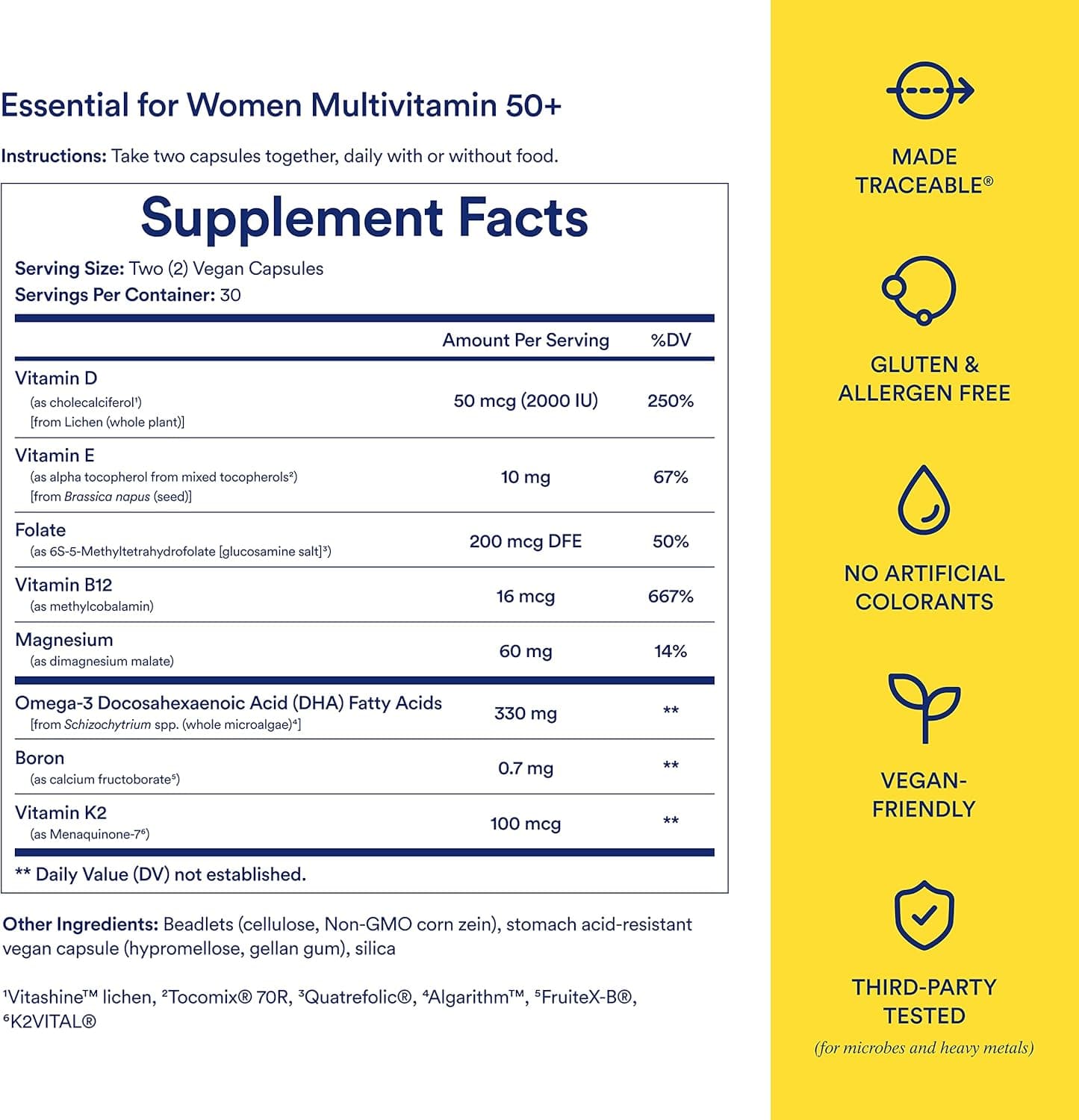
Non-GMO Corn Zein.
A corn protein used to coat tablets, giving them a smooth finish and protecting ingredients from moisture. Coats your tablet to protect ingredients from moisture, oxygen, and handling damage.
Reviewed March 2026
- Category
- General
- Also filed under
- Moisture resistant tablet coatingPlant based alternative to shellac
What Non-GMO Corn Zein is, and what it does.
- Does it work
- This one works on the tablet: a corn protein film that blocks moisture and gives a smooth finish. It suits anyone who wants a shellac-free, plant-only declaration.
- How much to take
- No dose figure is on record, and none applies. It is sprayed on at the thickness the tablet needs, not measured out as something you take.
- Time to feel it
- It's a coating rather than an active, so it has no onset of its own. It dissolves in the stomach within minutes and hands the tablet's contents over to digestion.
- The first dose
- Nothing. The coating dissolves and the tablet releases its contents.
- With regular use
- Nothing accumulates from a coating at these amounts. What continues is protection, with the actives inside staying drier and better shielded across the bottle's life.
- How well tolerated
- Well tolerated. It's corn protein. Unless you have a corn allergy, there's zero concern.
- How it feels
- A smooth tablet surface that goes down easily, and no taste of its own. It is a coating rather than an active, so nothing else registers.
- The overlooked benefit
- It does the same glossing and moisture-blocking job as shellac, which comes from an insect, so a shiny tablet can still carry a plant-only declaration.
The proof, claim by claim.
These words describe the research, not the molecule's worth. Research strength is how much work stands behind one claim, and it is never a product score.
- Well tolerated natural coating material
Questions people ask about Non-GMO Corn Zein.
- Is zein the same as corn starch?
- No. Zein is a protein. Corn starch is a carbohydrate. Different molecules, different functions. Zein makes a better coating. Starch is a better filler.
- Why specify non-GMO?
- Most US corn is genetically modified. Non-GMO zein comes from certified non-GMO corn. Whether GMO matters at this trace amount is debatable, but some consumers prefer it.
- Is it gluten-free?
- Yes. Zein is a corn protein. Corn doesn't contain gluten. Well tolerated in celiac disease.
- Does the coating affect absorption?
- No. Zein dissolves in your stomach, releasing the active ingredients for normal absorption.
- Is it vegan?
- Yes. It's plant protein from corn.
- Can I be allergic to it?
- Only if you have a corn protein allergy. Corn allergies are uncommon but real. If corn bothers you, mention this to your doctor.
Why these belong in the same formula. Each row says what the basis is, from settled biochemistry through to a trial that measured the pair.
Zein alone forms a brittle film, and glycerol inserts between the protein chains to lower the glass transition and give the coating flexibility. The pair is the standard basis for a workable zein film.
Zein is insoluble at stomach pH and swells as pH rises, so a zein layer shields acid-sensitive bacterial cells until they reach the small intestine. It is used as a plant-source alternative to shellac or methacrylate coats for this reason.
Volatile oils that would otherwise be released in the stomach are held by a pH-dependent zein coat that stays intact in acid and opens further down the tract. The coating is what makes the delayed-release form behave differently from a plain oil capsule.
Curcumin is highly lipophilic and poorly soluble in water, and zein is routinely used to form nanoparticles that carry such compounds in an aqueous product. The zein matrix keeps the payload dispersed and shields it from light and oxygen. This is a delivery relationship, not a pharmacological one, and it does not by itself establish a change in human absorption.
Quercetin aglycone is poorly water soluble and oxidises readily. Zein nanoparticle systems are used to disperse and protect flavonoids of this class in food and supplement matrices. The role is formulation delivery, and the relevance to what reaches the bloodstream is not settled by the encapsulation alone.
Resveratrol is light-sensitive and poorly soluble in water, and zein carriers are used to stabilise it in beverages and powders. The protein matrix limits isomerisation and oxidation during storage. Read it as shelf-stability and dispersion, not as a demonstrated absorption gain.
Astaxanthin is a highly oxidation-prone carotenoid that degrades on exposure to oxygen and light. A zein film or nanoparticle shell provides a hydrophobic barrier around the pigment. The benefit is product stability rather than any change in biological activity.
Beta-carotene is fat-soluble, intensely coloured and easily oxidised. Zein encapsulation disperses it into aqueous systems and slows oxidative loss during storage. The interaction is physical and formulation-level.
Coenzyme Q10 is a waxy, highly lipophilic quinone with very low aqueous solubility. Zein-based particles are one of the protein carriers used to disperse it in water-based formats. Dispersion is not the same as absorption, and no human comparison is claimed here.
Long-chain polyunsaturated fatty acids oxidise readily and produce off-odours as they do. A zein coating or wall material puts a hydrophobic protein barrier between the oil and atmospheric oxygen. The function is protective encapsulation, and it says nothing about the oil's own activity.
Live cultures lose viability on exposure to moisture, oxygen and gastric acid. Protein coatings including zein are used to delay wetting and slow acid contact during gastric transit. Survival gains are measured in formulation testing, and the effect varies by strain and by coating thickness.
This yeast is more acid-tolerant than most bacterial cultures but still benefits from a moisture barrier in a finished dosage form. Zein films are hydrophobic and slow water uptake in a hygroscopic blend. The relationship is protective, not nutritional.
Bifidobacteria are oxygen-sensitive and lose count quickly in an unprotected powder. A zein coating reduces oxygen and moisture ingress during shelf life. Any viability figure belongs to the specific formulation, not to the coating material in general.
Zein is a protein, so gastric pepsin cleaves it at aromatic and hydrophobic residues like any other dietary protein. That proteolysis is part of what breaks a zein coating down and releases the payload. The direction is that digestive proteolysis governs release timing rather than the coating resisting it indefinitely.
Pancreatic proteases continue the breakdown of zein in the small intestine after gastric pepsin has started it. Coating dissolution therefore depends on the enzymatic environment as well as on pH. Read this as release-profile chemistry, not as a nutrient interaction.
Any protease-containing enzyme blend will act on a zein coating, since zein is simply a plant storage protein. Formulators account for this when a zein film is used for delayed release in a product that also contains proteases. The interaction is one of release timing.
Zein solubility depends on solvent polarity and pH, and it swells more readily as pH rises above the acidic gastric range. Bicarbonate raises gastric pH when taken in quantity, which can shift where a zein-coated dose begins to release. The direction is a change in release location rather than a change in the active itself.
Betaine hydrochloride lowers gastric pH, which keeps a zein film in its less soluble, more compact state for longer. That can delay the onset of release from a coated dose. The size of that shift depends on the formulation and has not been quantified here.
Zein is a prolamin that is essentially devoid of lysine and tryptophan, which is why it is a poor standalone protein source despite being a protein. Added lysine complements that gap in any formulation where zein contributes meaningful protein mass. In a thin coating the protein contribution is negligible and the point is academic.
Tryptophan is the second essential amino acid effectively absent from zein's sequence, alongside lysine. Complementing with tryptophan is the standard nutritional correction where corn protein is a significant part of intake. As a coating material the mass involved is too small for this to matter.
Pectin is a hydrophilic polysaccharide and zein is a hydrophobic protein, so composite films of the two combine water-barrier and mechanical properties neither gives alone. Food-packaging and encapsulation work uses this pairing routinely. The relationship is material science, not physiology.
Guar gum contributes viscosity and film continuity to a coating dispersion that zein alone would leave brittle. Combining a galactomannan with a prolamin is a common way to tune coating flexibility. It is a processing choice with no physiological claim attached.
Lecithin phospholipids sit at the interface between zein particles and the aqueous phase and stop the particles from aggregating. Coating dispersions and zein nanoparticle systems commonly include an emulsifier for exactly this reason. The role is colloidal stability.
Cholecalciferol is fat-soluble, present at microgram levels and sensitive to oxidation, so it is almost always delivered on a carrier. Zein particles are one protein-based option for dispersing it into aqueous or powder formats. The interaction is carrier chemistry, not nutrient biology.
Lutein is a xanthophyll carotenoid that is lipophilic and degrades under light and oxygen. Zein encapsulation both disperses it and shields the conjugated double-bond system. Stability in the pack is the demonstrated effect here.
Talk to a doctor before taking Non-GMO Corn Zein if any of these apply to you: Corn-derived (avoid with corn allergy). These are flags to check first, not effects Non-GMO Corn Zein is known to cause.
Not medical advice. Show the label to your pharmacist.What Non-GMO Corn Zein actually does.
Zein is the main storage protein in corn, and it's defined by dissolving in alcohol-water mixes rather than in plain water or salt solution.
Its amino acid makeup makes zein water-repelling and, at the same time, a poor stand-alone source of complete protein.
Because zein dissolves in strong alcohol and comes back out of solution as the alcohol evaporates, it forms a continuous water-repelling film, which is what lets it work as a coating.
Zein films are brittle on their own and are usually blended with a softening ingredient like glycerol so they can flex without cracking during tablet handling.
Where Non-GMO Corn Zein comes from.
It is a protein taken out of corn. Corn is milled, the leftover protein meal is washed with an alcohol and water mix that dissolves this one protein, the colour and fat are cleaned off, and the protein is dried into a powder that gets redissolved to spray a coating onto tablets.
Made from a plant. What ends up in the capsule tracks the harvest, so batch testing and a stated marker matter more here than with a made molecule.
A co-product of corn wet milling, produced after starch, germ and fibre have been separated. Non-GMO status is carried by identity-preserved corn and supply-chain documentation, not by anything in the protein itself.
The meal is contacted with 60 to 90 percent ethanol or isopropanol, often warm and sometimes with an alkali or reducing agent, which dissolves the prolamin fraction and leaves the glutelins and starch behind.
The extract is filtered or centrifuged to remove solids, and lipids and carotenoid pigments are stripped with hexane or by adsorption to give a lighter-coloured, lower-odour product.
Zein is precipitated by chilling or by adding water to drop the alcohol concentration, then washed, dewatered and dried to a powder.
Product is graded on protein content, colour, residual solvent and moisture. Regular and de-pigmented grades exist and behave differently in a clear coating.
The powder is redissolved in aqueous ethanol at the point of use, either sprayed as a coating or precipitated into water as a colloidal carrier.
The specific solvent, whether hexane was used for pigment removal, and the grade of zein are almost never stated on a finished-product label.
Getting Non-GMO Corn Zein from food.
The whole-food sources on file. A supplement closes the gap, it does not replace dinner.
A gram-for-gram figure (how much of each you would eat to match a dose) will appear here once it is sourced and reviewed. This page will not print a number it cannot cite.
The forms it comes in.
FDA Disclaimer: These statements have not been evaluated by the Food and Drug Administration. This information is for educational purposes only and is not intended to diagnose, treat, cure, or prevent any disease. Consult your healthcare provider before starting any supplement regimen.