Sodium Citrate.
Gentler alternative to baking soda for buffering
Reviewed March 2026
- Category
- Compound
- Also filed under
- BufferingBetter ToleratedPerformance
What Sodium Citrate is, and what it does.
- Does it work
- Suits athletes doing repeated hard efforts who find baking soda rough on the stomach, and anyone wanting support for normal urinary alkalinity. It also earns its place as a formulation buffer.
- How much to take
- Start in the 200mg to 500mg a day band, dissolved in plenty of water. It's alkaline in solution, so it sits easier when it isn't concentrated.
- Time to feel it
- Blood bicarbonate climbs over roughly 60 to 120 minutes after a dose, the window buffering studies work in. Urine pH shifts within the same day.
- The first dose
- Mildly salty water and usually a quiet stomach, since no gas is released the way it is with bicarbonate. Buffering capacity is up within a couple of hours.
- With regular use
- Most effects take 2-8 weeks. Be patient.
- How well tolerated
- Generally well tolerated. Check with your doctor if on medications.
- How it feels
- Salty and slightly soapy in water. Far less fizzing and belching than baking soda, and in the effort people describe the burn arriving later.
- The overlooked benefit
- Citrate binds calcium in urine and raises urine pH, which is why it turns up in urinary support formulas as often as it does in sports buffering.
500 to 1,500mg a day is where Sodium Citrate works.
Source: AHA 2020 Guidelines; WHO 2023 sodium intake recommendations
The proof, claim by claim.
These words describe the research, not the molecule's worth. Research strength is how much work stands behind one claim, and it is never a product score.
- High-intensity exercise performanceMeta-analysis
- Blood bicarbonate and buffering capacityRandomised trial
- Urinary citrate and urine pHRandomised trial
- Chelation of calcium and other divalent cationsIn vitro study
Questions people ask about Sodium Citrate.
- When should I take it?
- Timing matters less than consistency. Pick a time that works for you and take it daily.
- Can I take it with other supplements?
- Usually fine. The main thing to watch is not doubling up on the same ingredient from different products. If you're on prescription meds, check with your pharmacist first.
- Any side effects to watch for?
- Most people tolerate it well at recommended doses. GI upset is the most common complaint with any supplement. Start with a lower dose and work up. If something feels off, stop and reassess.
- Who benefits most from this?
- People who've already covered the basics (diet, sleep, exercise) and want to fine-tune. It's not essential, but could be worthwhile for the right person.
What the trials show about these together.
Outcomes the engine found studied for these actives as a combination, not one at a time. Each is a finding a named trial measured, cited and dated, never written by the brand.
- EarlySodium Citrate + CarbohydrateHydration
In a randomized placebo-controlled trial in 26 athletes rehydrating after exercise, drinks containing sodium and carbohydrate retained about 74 to 77 percent of the fluid consumed over three and a half hours, compared with about 58 percent for plain water.
Ly et al., 2023 (Nutrients)PMID 38004153
Research strength. Research strength says how much work stands behind the combination. It is never a product score.
Fail closed. Where actives were studied on their own rather than together, each shows on its own evidence, never a combined effect no trial measured.
Independent record. Every finding is cited to a named trial, dated, and never written by the brand.
Findings from trials that studied these actives as a combination. Context for how the actives were tested together, not a statement about any individual and not a claim about this product.
Why these belong in the same formula. Each row says what the basis is, from settled biochemistry through to a trial that measured the pair.
Both raise extracellular bicarbonate and blood pH, so combining them stacks the same effect rather than adding a second mechanism. Trials examining them individually and together in high-intensity exercise have reported the alkalotic response and the gastrointestinal symptom pattern side by side. Splitting the total load between the two is sometimes done because the symptom profiles differ.
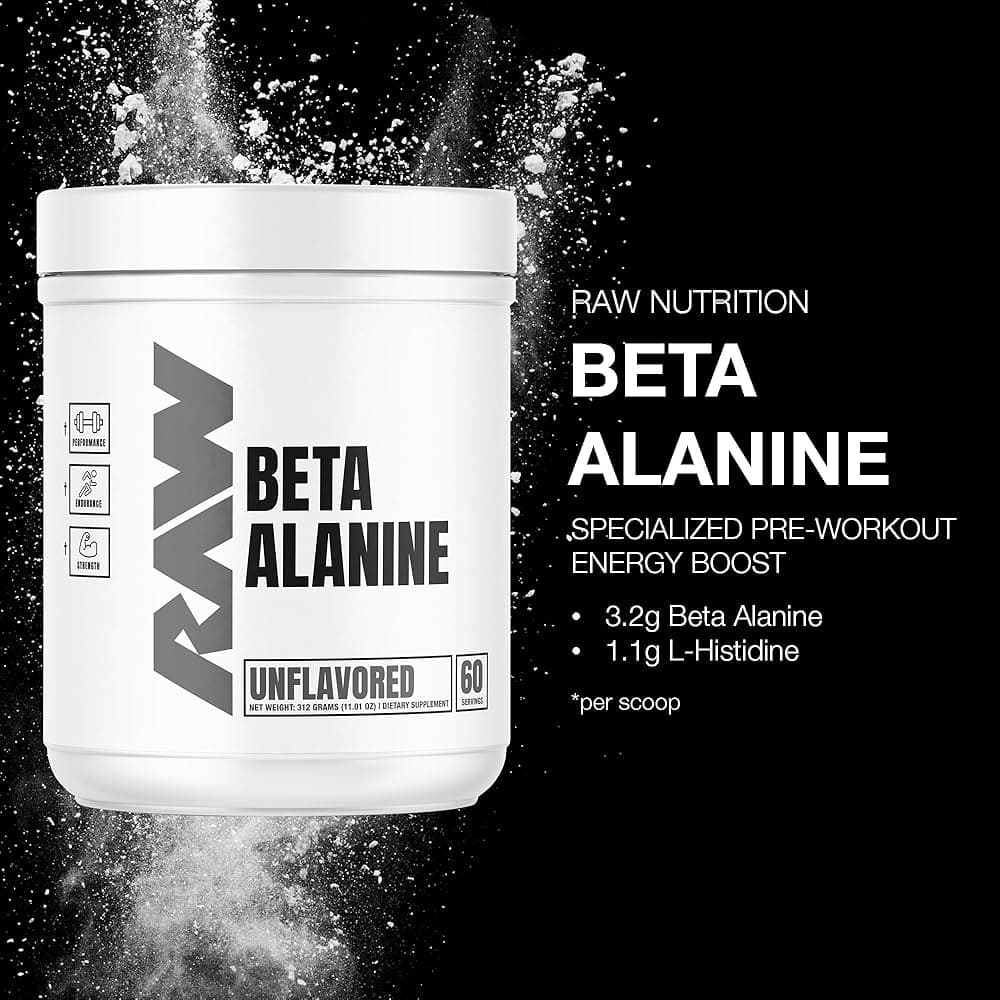
Beta-alanine raises muscle carnosine, which buffers hydrogen ions inside the fibre, while citrate raises bicarbonate outside it and steepens the gradient for efflux. The two act on opposite sides of the sarcolemma. The pairing is standard in buffering stacks and the mechanisms do not overlap.
Caffeine acts through adenosine receptor antagonism and central drive, while citrate works on extracellular buffering. Neither interferes with the other pharmacologically. Both are commonly taken before high-intensity efforts. Gastrointestinal tolerance is the practical limit when they are combined at full doses.
Creatine supports phosphocreatine resynthesis for very short efforts, while citrate buffering matters most for efforts long enough to accumulate hydrogen ions. The windows they help sit next to each other rather than overlapping. Creatine citrate is a separate salt and should not be confused with taking the two ingredients together.
Citrate binds ionised calcium with enough affinity that it is the standard anticoagulant in blood collection tubes and in extracorporeal circuits. In a supplement matrix the same binding lowers free calcium in solution. That is chemistry to account for in a formula, not a clinical effect.
Calcium carbonate needs gastric acid to dissolve, while citrate keeps calcium in a soluble complex over a wider pH range, which is why calcium citrate is the salt chosen when acid output is low. Adding sodium citrate to a carbonate formula raises the local pH and can work against carbonate dissolution. The two effects pull in different directions and depend on timing with food.
Citrate keeps magnesium in a soluble complex over the pH range of the gut, which is the reason magnesium citrate dissolves so much more readily than the oxide. Sodium citrate in the same formula contributes free citrate to that equilibrium. Osmotic effects in the bowel rise with the total citrate load.
Ferric iron precipitates as hydroxide as pH rises past the duodenum, and citrate forms a soluble complex that delays that. Ferric citrate is a recognised soluble iron species for this reason. Whether the complexed form is taken up as efficiently as free ferrous iron depends on the transporter route.
Citrate complexes iron released from ferrous sulfate and holds it in solution, but the complexed iron is not the exact species the DMT1 transporter prefers. The net direction depends on the citrate to iron ratio and on what else is in the meal. The interaction is real chemistry with an uncertain net effect on uptake.
Citrate binds zinc as it binds other divalent metals, which improves solubility in the formula but changes the species presented at the brush border. Zinc citrate is used commercially on the strength of that solubility. Direction of the net effect on uptake is not settled from the chelation chemistry alone.
Citrate salts of sodium and potassium both yield bicarbonate after hepatic metabolism, so the alkalinising effect adds up while the cation loads differ. Choosing between them is usually about which cation the formula can carry. The alkali is from the citrate, not from the metal.
Trisodium citrate carries three sodium ions per citrate, so the sodium load at ergogenic doses is substantial and adds to whatever sodium the rest of the formula and the diet supply. Anyone tracking total sodium should count this source. That is arithmetic from the formula, not a study result.
Hydration blends already carry sodium chloride and often citrate salts as the alkalinising component, so adding more sodium citrate raises both the sodium and the osmolality of the drink. High osmolality in the stomach slows gastric emptying and is one driver of the gut symptoms reported with citrate loading. Concentration and timing are the levers.
Sodium chloride and trisodium citrate both deliver sodium, and the totals add in a single serving. Only the citrate contributes alkali. The chloride does the opposite by supplying a strong anion. Formulators balance the two to hit a target sodium figure without unintended pH effects.
Ascorbic acid acidifies a solution while citrate buffers it toward neutral, so a formula containing both settles at a pH neither reaches alone. The buffering is often the reason citrate is present in an effervescent vitamin C product in the first place. The interaction is a formulation one and does not change the vitamin activity of the ascorbate anion.
Citric acid and sodium citrate together form the classic citrate buffer, holding a solution near a target pH across the range where citrate's ionisation steps sit. Effervescent and drink formulas use the pair for taste and stability at once. This is formulation chemistry, not a physiological synergy.
Nothing specific on file for Sodium Citrate. Match the label to the daily amount above, and tell your doctor what you take.
Not medical advice. Show the label to your pharmacist.What Sodium Citrate actually does.
Sodium citrate is the sodium form of citric acid, sold mostly as one particular salt version, and unlike citric acid itself, it dissolves easily in water and makes a mildly alkaline solution.
Citrate you swallow gets processed through the body's central energy cycle, and each molecule used that way leaves behind bicarbonate, which is why a citrate salt raises alkalinity without producing gas in your stomach the way plain bicarbonate does.
Raising bicarbonate outside cells helps pull acid and lactate out of working muscle more efficiently, which is the mechanism behind buffering strategies used around exercise.
Citrate binds tightly to certain minerals, it grabs onto calcium strongly enough to stop blood from clotting in a collection tube, and it also forms soluble complexes with magnesium, zinc and iron.
Where Sodium Citrate comes from.
Despite the citrus association, this is a fermentation product. A mould called Aspergillus niger is fed sugar from corn, cassava or molasses and pushed into overproducing citric acid, which is then cleaned up and neutralised with a sodium base to make the salt. Whether you get the dihydrate or the anhydrous powder comes down to how it was dried, and that changes how much citrate sits in a gram.
Built by fermentation, the same way vitamin B12 and many amino acids are made at scale. Controlled conditions, consistent output.
Starch is enzymatically hydrolysed to glucose, or sucrose from molasses is used directly, as the carbon source for fermentation.
Aspergillus niger converts the sugar to citric acid under controlled iron and manganese limitation, which is what forces citrate to accumulate rather than being consumed in the cycle.
Citric acid is recovered from the broth, classically by liming to calcium citrate followed by sulfuric acid treatment, or in newer plants by solvent extraction that avoids the gypsum by-product.
The acid solution is treated with activated carbon and ion exchange resin to remove colour, residual metals and fermentation by-products.
Purified citric acid is neutralised with sodium hydroxide or sodium carbonate to the mono, di or trisodium salt depending on how far the neutralisation is taken.
The salt is crystallised, and the drying conditions determine whether the dihydrate or the anhydrous form is isolated. Assay, pH and heavy metals are specified per pharmacopoeia monograph.
The crystals are dried and sized into fine, granular or coarse grades to suit tableting, effervescent or drink mix use.
Getting Sodium Citrate from food.
The whole-food sources on file. A supplement closes the gap, it does not replace dinner.
A gram-for-gram figure (how much of each you would eat to match a dose) will appear here once it is sourced and reviewed. This page will not print a number it cannot cite.
Sodium Citrate is a form of Sodium.
Sodium Citrate is the citrate form of Sodium. Same mineral, bound to a different partner, so absorption and feel differ from form to form.
See the other 2 forms
The essence, in one line each.
- Sodium citrate taken alone and with sodium bicarbonate raised blood buffering measures around high intensity exercise.Randomised trial. Martin et al., 2025 (International journal of sports physiology and performance). PMID 40840560 ↗
- Sodium citrate improved tennis skill performance compared with placebo in a crossover trial.Randomised trial. Cunha et al., 2019 (Journal of the International Society of Sports Nutrition). PMID 31370896 ↗
- Sodium citrate taken after dehydrating exercise altered stress hormone responses to a subsequent exercise bout.Randomised trial. Suvi et al., 2019 (Medicina). PMID 31013820 ↗
- Blood bicarbonate responses and gastrointestinal symptoms after sodium citrate varied within the same individual across repeated administrations, so a single trial of the dose does not fully predict the next one.Open-label trial. McManus et al., 2026 (Journal of the International Society of Sports Nutrition). PMID 41661559 ↗
- Acute sodium citrate supplementation was examined against placebo for competitive performance and blood lactate in trained competitors. Lactate is a marker rather than an outcome in itself.Randomised trial. Nabilpour et al., 2024 (Journal of Exercise Science and Fitness). PMID 38404749 ↗
- Reviewed the factors that shape blood alkalosis, gastrointestinal symptoms and exercise responses after sodium citrate, including dose, timing, fluid volume and co-ingested food.Narrative review. Urwin et al., 2021 (International Journal of Sport Nutrition and Exercise Metabolism). PMID 33440332 ↗
- An erratum correcting a report on the individual and combined effects of sodium bicarbonate and sodium citrate on high-intensity performance. The correction is to the record, not to the direction of the finding.Randomised trial. Erratum, 2025 (International Journal of Sports Physiology and Performance). PMID 41130448 ↗
- Compared prefilled with infused regional citrate anticoagulation for circuit life during continuous renal replacement therapy, which reflects citrate's calcium-binding chemistry in an extracorporeal circuit rather than any nutritional role.Randomised trial. Zou et al., 2026 (BMJ Open). PMID 41991269 ↗
- Co-supplementation with sodium citrate raised lipid and beta-carotene output in a modified Mucor circinelloides strain, which is a fermentation process finding about citrate as a carbon and buffering input.In vitro study. Zhang et al., 2026 (Scientific Reports). PMID 42374133 ↗
These are the studies our verdict leans on, chosen from the 25,582 we read for Sodium Citrate. The full linked list is below.
Problems people have reported.
Read this carefully. These are 44,938 voluntary, unverified reactions reported to the FDA (openFDA). The number mostly reflects how popular Sodium Citrate is, not how risky it is. A report is not proof Sodium Citrate caused anything. It is a signal of what to watch for, nothing more.
Source: openFDA adverse-event reports. Voluntary reporting, not an incidence rate.
FDA Disclaimer: These statements have not been evaluated by the Food and Drug Administration. This information is for educational purposes only and is not intended to diagnose, treat, cure, or prevent any disease. Consult your healthcare provider before starting any supplement regimen.