Coconut MCT Oil.
Medium-chain fats from coconut that your body converts to quick energy and help absorb fat-soluble supplements. Provides rapidly absorbed fats that convert to ketones for quick energy, while helping your body absorb fat-soluble nutrients better. In capsules, it mostly serves as a carrier oil.
Reviewed March 2026
- Category
- Compound
- Also filed under
- Enhances fat soluble nutrient absorptionQuick energy sourceSupports ketone production
What Coconut MCT Oil is, and what it does.
- Does it work
- For people eating low carbohydrate, anyone wanting fuel with no stimulant in it, and formulas built around fat-soluble actives that need an oil to sit in.
- How much to take
- 5-15g (1-3 teaspoons) daily for energy benefits. Start low. Many people jump to tablespoon doses and spend the day in the bathroom. In supplement capsules, you're getting much less than this.
- Time to feel it
- Within about 30 minutes to 3 hours of a single dose.
- The first dose
- At therapeutic doses (5-15g), you'll likely feel a mild energy boost within 30-60 minutes. Too much too soon causes stomach cramps and urgent bathroom trips. Start with 1 teaspoon.
- With regular use
- After 2-3 weeks, your gut adapts and you can handle higher doses. Energy benefits become more consistent. Some people on keto diets report improved mental clarity and endurance.
- How well tolerated
- Generally well tolerated but notorious for GI distress if you ramp up too fast. Start low, go slow. People with liver conditions should consult a doctor since MCTs are processed by the liver.
- How it feels
- An even, non-jittery lift inside the hour for most people, sometimes with warmth in the stomach. In carrier amounts its job is absorption of what it dissolves.
- The overlooked benefit
- It carries no linoleic or alpha-linolenic acid, so it is a fuel rather than a source of the essential fats, and it does not replace an omega-rich oil in the diet.
5 to 15g a day is where Coconut MCT Oil works.
Source: St-Onge et al., Am J Clin Nutr, 2008
On an 8-hour metabolic study day, healthy adults took a single 20 mL dose of tricaprylin (C8), tricaprin (C10), trilaurin (C12) or a mixed C8/C10 oil with breakfast, with a second dose four hours later. The rise in plasma acetoacetate, beta-hydroxybutyrate and total ketones was largest after C8 and occurred 0.5 to 3 hours after the dose. In a separate study, 10 healthy adults given single 10, 20 or 30 g doses with breakfast and sampled every 30 minutes for four hours showed roughly a two-fold rise in ketogenesis over the no-treatment control. In a randomised crossover in 8 lean adults and 8 adults with obesity, ketogenesis and metabolic rate rose and blood glucose fell over five hours, and the same response was present after eight days of daily intake. Blood ketones were measured, not alertness.
The proof, claim by claim.
These words describe the research, not the molecule's worth. Research strength is how much work stands behind one claim, and it is never a product score.
Coconut MCT Oil has emerging evidence, with 15 cited human studies on this page.
- Provides quick energy via ketone production
- Helps with weight loss
- Improves fat-soluble vitamin absorption
Questions people ask about Coconut MCT Oil.
- Will MCT oil help me lose weight?
- Modestly, at best. It can slightly increase calorie burn and fullness, but we're talking maybe 50-100 extra calories burned per day. It's not a magic weight loss solution.
- Why does MCT oil upset my stomach?
- Your gut needs time to adapt to concentrated MCTs. Start with 1 teaspoon, then increase by 1 teaspoon every few days. Most people can handle 1-2 tablespoons after a week of ramping up.
- MCT oil vs coconut oil: what's the difference?
- MCT oil is concentrated medium-chain fats extracted from coconut oil. Coconut oil is only about 60% MCTs and contains lauric acid, which doesn't convert to ketones as efficiently.
- Does the MCT oil in my supplement capsules matter?
- It helps your body absorb the main ingredient if it's fat-soluble. But the amount is too small for standalone energy or ketone benefits. Think of it as an absorption helper, not a therapeutic dose.
- C8 vs C10 vs C12: which is best?
- C8 (caprylic acid) is king for ketone production. C10 is decent. C12 (lauric acid) barely counts as an MCT in terms of metabolic behavior. Premium MCT oils highlight their C8 content.
- Can I cook with MCT oil?
- Not ideal for high-heat cooking. MCT oil has a low smoke point (around 320F). Better for adding to smoothies, coffee, salad dressings, or drizzling on finished dishes.
Why these belong in the same formula. Each row says what the basis is, from settled biochemistry through to a trial that measured the pair.
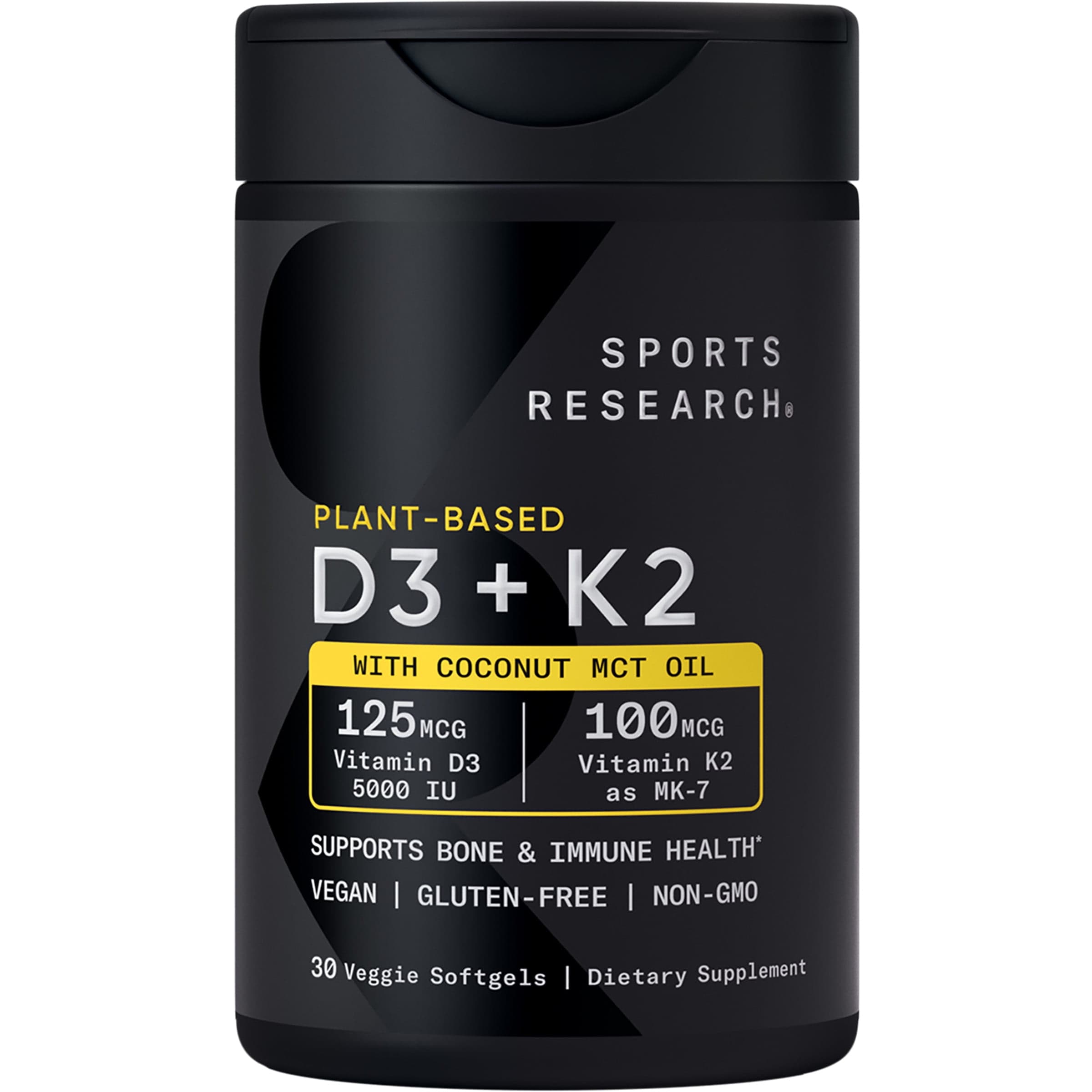
Vitamin D3 is fat soluble, so it dissolves into the mixed micelles that form when dietary fat is digested and is taken up more completely alongside a lipid than on an empty stomach. MCT oil supplies that lipid, which is why it is a common carrier in D3 drops and softgels.
Carnitine carries long-chain fatty acids across the inner mitochondrial membrane so they can be burned for energy, but the medium-chain fatty acids in MCT oil cross in without it. Pairing carnitine with MCT adds no fat-transport benefit for the MCT itself, which is already oxidized independently of the carnitine shuttle.
Curcuminoids are almost insoluble in water, so uptake depends on being dissolved in a lipid phase and carried in micelles. MCT is a standard vehicle for that in liquid and softgel forms.
MK-7 is a lipophilic quinone that needs fat present at the point of absorption. Suspension in MCT is routine formulation practice.
Tocopherol requires a lipid phase for absorption and also interrupts radical chain reactions in the oil itself. That dual role is why it is present in most oil-filled capsules.
Retinyl esters need lipid for micelle formation and lymphatic transport. MCT supplies that phase in liquid and softgel formats.
Ubiquinol is a large lipophilic molecule whose uptake depends on being pre-dissolved in oil. MCT is the common vehicle in ubiquinol softgels for that reason.
Astaxanthin absorption rises when it is delivered dissolved in oil rather than as a dry powder. MCT is a standard carrier in astaxanthin softgels.
Vitamin D is fat-soluble and needs lipid present to form the micelles that carry it across the gut wall. MCT is the usual carrier oil in vitamin D drops and softgels.
Caprylic acid is the C8 fatty acid released when this triglyceride is cleaved by lipase. The two names describe one molecule and its parent ester.
C8 oil is the isolated caprylic portion of the same medium-chain pool and converts to ketones faster than the C10 portion. Choosing between them is a decision about one material.
Monolaurin is the monoglyceride of lauric acid, the C12 fat abundant in coconut but largely absent from MCT oil. C12 behaves more like a long-chain fat, needing bile and chylomicron assembly, which is why MCT preparations exclude it.
MCT dissolves a lipophilic compound so it can enter micelles, and piperine slows the glucuronidation that clears it once absorbed. Uptake and retention are handled separately.
Carotenoid uptake depends on chylomicron assembly, which long-chain fatty acids drive far better than medium-chain ones. A medium-chain-only vehicle can therefore give lower beta carotene absorption than an equivalent long-chain oil.
Lutein needs a lipid vehicle to be absorbed, but medium-chain fatty acids are taken up largely into portal blood without being packaged into chylomicrons. Studies of carotenoid absorption have found long-chain fat to be the effective carrier. Using MCT alone as the fat in a carotenoid product is therefore a formulation choice worth understanding rather than an automatic enhancer.
Zeaxanthin is absorbed by the same lipid-dependent route as lutein and travels in the same lipoproteins. Medium-chain fat does not drive chylomicron assembly the way long-chain fat does. A mixed lipid base covers both requirements.
Lycopene is highly lipophilic and needs both a lipid vehicle and chylomicron packaging to reach circulation. The portal-route absorption of medium-chain fatty acids bypasses that packaging step. The point is not that MCT hinders it, but that it is not the same vehicle as a long-chain oil.
Phylloquinone is fat-soluble and travels in chylomicrons and their remnants after absorption. That route is driven by long-chain fat. A product pairing vitamin K1 with MCT alone is relying on a vehicle that behaves differently from the food matrix the vitamin normally arrives in.
Medium-chain triglycerides are hydrolysed more rapidly than long-chain ones and can even be absorbed intact to a degree, so they place less demand on pancreatic lipase. A supplemental lipase therefore adds less for the MCT fraction of a meal than for the long-chain fraction. Knowing which fat you are dosing tells you whether the enzyme has work to do.
Long-chain fatty acids need bile salt micelles to cross the unstirred water layer. Medium-chain ones are water-dispersible enough to be absorbed with far less micellar help. This is the settled reason MCT is used where bile flow is limited. Adding bile salts changes the picture for long-chain fat in the same meal, not for the MCT.
Phosphatidylcholine reduces interfacial tension and stabilises MCT droplets in a water phase, which is how emulsified and powdered MCT products are made. It also supplies choline in its own right. The relationship is manufacturing chemistry rather than a physiological pairing.
Lecithin is the standard emulsifier for dispersing MCT into hot drinks and for spray-drying it onto a carrier. Sunflower-derived lecithin is used where a soy-free label is required. This is formulation practice, not an interaction in the body.
MCT provides rapidly oxidised energy but contributes no linoleic, alpha-linolenic, EPA or DHA. A long-chain omega-3 source covers what MCT structurally cannot. Where MCT replaces a large share of dietary fat, that gap is the thing to watch.
EPA and DHA are incorporated into membrane phospholipids and act as mediator precursors, roles that medium-chain fatty acids do not fill at all. MCT is an energy substrate. The two occupy different jobs and the pairing is complementary rather than overlapping.
Low-carbohydrate patterns lower circulating insulin, and lower insulin reduces renal sodium reabsorption, so sodium and with it potassium and magnesium are lost more readily. MCT products aimed at that pattern commonly include electrolytes for this reason. The mechanism is established renal physiology. The pairing is convention rather than a tested combination.
Insulin promotes sodium reabsorption in the renal tubule, so when insulin falls on a carbohydrate-restricted pattern sodium excretion rises. That is why sodium is added to ketogenic-format products alongside MCT. The link is renal physiology, not something MCT itself does.
Sodium and potassium handling are coupled through aldosterone and the distal tubule, so a shift in one moves the other. Ketogenic-pattern products pair potassium with MCT for that reason. Potassium dosing has its own constraints and is not a free addition.
Magnesium is lost in urine alongside sodium when reabsorption falls, and magnesium is a cofactor in every ATP-dependent reaction including the ones burning the fatty acids MCT supplies. The pairing is conventional in this product class. It rests on renal physiology rather than a combination trial.
Caffeine raises catecholamines and promotes fatty acid release from adipose tissue, while MCT supplies fatty acids that are oxidised without needing carnitine transport. Both are routinely put in the same drink. Whether the combination adds anything beyond each part has not been measured.
Catechins are studied for effects on fat oxidation markers and are lipophilic enough to sit in an oil phase. MCT provides a rapidly oxidised substrate. The pairing is conventional and the combined effect is untested. Markers of fat oxidation are not body composition outcomes.
Leucine is one of the two purely ketogenic amino acids, catabolised to acetyl-CoA and acetoacetate rather than to glucose. Medium-chain fatty acids also yield acetyl-CoA rapidly in the liver. The overlap is at the level of a shared metabolic endpoint and no study has combined them for that purpose.
Choline is needed to make phosphatidylcholine, which is required for packaging and exporting triglyceride from the liver as very-low-density lipoprotein. A high fat load raises the demand on that pathway. This is settled hepatic biochemistry rather than a claim about the pairing.
Talk to a doctor before taking Coconut MCT Oil if any of these apply to you: Can cause digestive discomfort if you're not used to it, High calorie if taking large amounts. These are flags to check first, not effects Coconut MCT Oil is known to cause.
Not medical advice. Show the label to your pharmacist.What Coconut MCT Oil actually does.
Medium-chain triglycerides carry shorter fat chains, mostly two specific fatty acids, which is the chemical difference from the longer-chain fats that make up most of the fat in typical diets.
These shorter fats get absorbed mostly straight into the bloodstream and go directly to the liver, rather than being packaged up and traveling through the lymph system the way longer fats do.
They can enter cells' energy-producing machinery without needing a special carrier molecule that longer fats require, which is why they get burned for energy faster.
Fast liver burning of these fats produces more of a byproduct than the body's normal energy cycle can use up right away, and the extra gets turned into ketone bodies, which is why a dose can raise measurable ketones within hours.
Where Coconut MCT Oil comes from.
Coconut oil is broken into its individual fats, the shorter ones are distilled off from the rest, then joined back onto glycerol to make a clear oil. The label ratio of C8 to C10 tells you which fractions the maker kept.
Made from a plant. What ends up in the capsule tracks the harvest, so batch testing and a stated marker matter more here than with a made molecule.
Oil pressed or solvent-extracted from dried coconut kernel. Some commercial MCT is made from palm kernel oil, which has a similar medium-chain fraction, and the two are not always distinguished on a label.
The triglycerides are split with high-pressure steam into free fatty acids and glycerol.
The free fatty acid mixture is distilled to separate the eight and ten carbon fractions from the twelve carbon lauric acid and the longer chains.
The isolated medium-chain fatty acids are recombined with glycerol to reform triglycerides, which is what makes the finished material an oil rather than a free fatty acid.
Residual free fatty acid, odour and colour are removed. Free fatty acid content is the number that tracks how complete this step was.
The C8 to C10 ratio is set to specification and confirmed by gas chromatography of the fatty acid profile.
Filled as a clear liquid, or emulsified and spray-dried onto a carrier for powder formats.
Whether the feedstock was coconut or palm kernel is often not stated, since the medium-chain fractions are chemically the same, and this is the main sourcing question behind an MCT oil.
Getting Coconut MCT Oil from food.
The whole-food sources on file. A supplement closes the gap, it does not replace dinner.
A gram-for-gram figure (how much of each you would eat to match a dose) will appear here once it is sourced and reviewed. This page will not print a number it cannot cite.
The forms it comes in.
The essence, in one line each.
- Across 13 randomised trials in 749 adults, swapping long-chain fats for medium-chain triglycerides lowered body weight by about 0.51 kg and waist circumference by about 1.46 cm, with no detected change in blood lipids.Meta-analysis. Mumme and Stonehouse, 2015 (Journal of the Academy of Nutrition and Dietetics). PMID 25636220 ↗
- Pooling 11 trials, medium-chain triglycerides reduced how much people ate at a later meal under laboratory conditions compared with long-chain fats (effect size -0.44), while subjective appetite ratings and appetite hormones did not measurably shift.Systematic review. Maher and Clegg, 2020 (Critical Reviews in Food Science and Nutrition). PMID 32212947 ↗
- Across seven randomised trials, MCT oil left total, LDL and HDL cholesterol unchanged and raised triglycerides slightly, by about 0.14 mmol/L.Meta-analysis. McKenzie et al., 2021 (The Journal of Nutrition). PMID 34255085 ↗
- Across randomised trials, medium chain triglycerides were linked with modest improvements in memory measures in older adults with normal cognition.Systematic review. Giannos et al., 2022 (BMC geriatrics). PMID 36273115 ↗
- Taking glucose alongside medium chain triglycerides blunted the rise in blood ketones in healthy adults.Randomised trial. Frenser et al., 2026 (Scientific reports). PMID 41957196 ↗
- In older adults, medium chain triglyceride supplements lowered measured glucose uptake in walking related leg muscle, consistent with a shift toward fat derived fuel.Randomised trial. Mutoh et al., 2025 (Nutrients). PMID 40431447 ↗
- A preload of medium chain triglycerides with whey protein lowered the rise in blood sugar after a meal in adults with raised blood sugar.Randomised trial. Pabla et al., 2025 (The American journal of clinical nutrition). PMID 39732398 ↗
- A randomised, double-blind, controlled design testing medium-chain triglycerides in combination with moderate-intensity activity. The outcomes are specific to that protocol and dose and do not generalise to MCT taken alone.Randomised trial. Kojima et al., 2023 (Nutrients). PMID 37513691 ↗
- No difference in blood pressure variability or oxidative stress markers was detected between coconut oil supplementation and placebo. That is a failure to detect a difference, not evidence that none exists, and both endpoints are markers rather than clinical outcomes.Randomised trial. Júnior et al., 2021 (Nutrients). PMID 33670999 ↗
- A review of how medium-chain triglycerides are defined, regulated and categorised across German, Japanese and US frameworks, alongside a summary of their distinct absorption and oxidation handling.Narrative review. Heidt et al., 2026 (Nutrients). PMID 41978079 ↗
- A pooled analysis of virgin coconut oil trials against circulating cardiovascular risk markers. These are markers rather than events, and virgin coconut oil is a whole oil that is not the same material as fractionated medium-chain triglyceride.Meta-analysis. Zhang et al., 2025 (Diabetology and Metabolic Syndrome). PMID 41444640 ↗
- Reviews why medium-chain triglycerides are used where bile-dependent fat absorption is limited, since medium-chain fatty acids need far less micellar solubilisation than long-chain ones.Narrative review. Mancell et al., 2026 (Proceedings of the Nutrition Society). PMID 41502374 ↗
- Reviews interventions that raise circulating ketones in adults across clinical settings, with medium-chain triglycerides named among the routes used to do so.Systematic review. Mohib et al., 2025 (Nutrients). PMID 41097203 ↗
- Reviews how a single low-carbohydrate, high-fat meal affects post-meal blood fat levels and markers of blood vessel function. These are short-term markers measured after one meal, not outcomes.Systematic review. Wilson et al., 2025 (Nutrition Reviews). PMID 39094053 ↗
- Catalogues ketogenic interventions including medium-chain triglyceride routes across small trials in older adults, noting limited sample sizes and heterogeneous designs.Systematic review. Bohnen et al., 2023 (Frontiers in Neurology). PMID 36846143 ↗
- Compared the serum 25-hydroxyvitamin D response to vitamin D delivered in different lipid vehicles, so the endpoint is a status marker and the comparison is between delivery systems rather than between doses.Randomised trial. McCourt et al., 2023 (British Journal of Nutrition). PMID 36912075 ↗
- Reports the study protocol and primary endpoint of a randomised dietary intervention combining medium-chain triglyceride induced ketosis with fibre. A protocol-plus-primary-endpoint paper is a narrower report than a full trial result.Randomised trial. Heidt et al., 2023 (Nutrients). PMID 37686750 ↗
- Oral MCT oil was associated with reduced anxiety-like behaviour and with differences in serum BDNF in an animal model. An association in animals, and behaviour in rodents does not translate directly to human experience.Animal study. Yoshioka et al., 2026 (Scientific Reports). PMID 41942638 ↗
- A clinician-oriented review of contested nutrition questions that names coconut and medium-chain fat among the topics where the evidence is actively debated rather than settled.Narrative review. Miller et al., 2026 (JACC Advances). PMID 41666739 ↗
These are the studies our verdict leans on, chosen from the 4,980 we read for Coconut MCT Oil. The full linked list is below.
FDA Disclaimer: These statements have not been evaluated by the Food and Drug Administration. This information is for educational purposes only and is not intended to diagnose, treat, cure, or prevent any disease. Consult your healthcare provider before starting any supplement regimen.