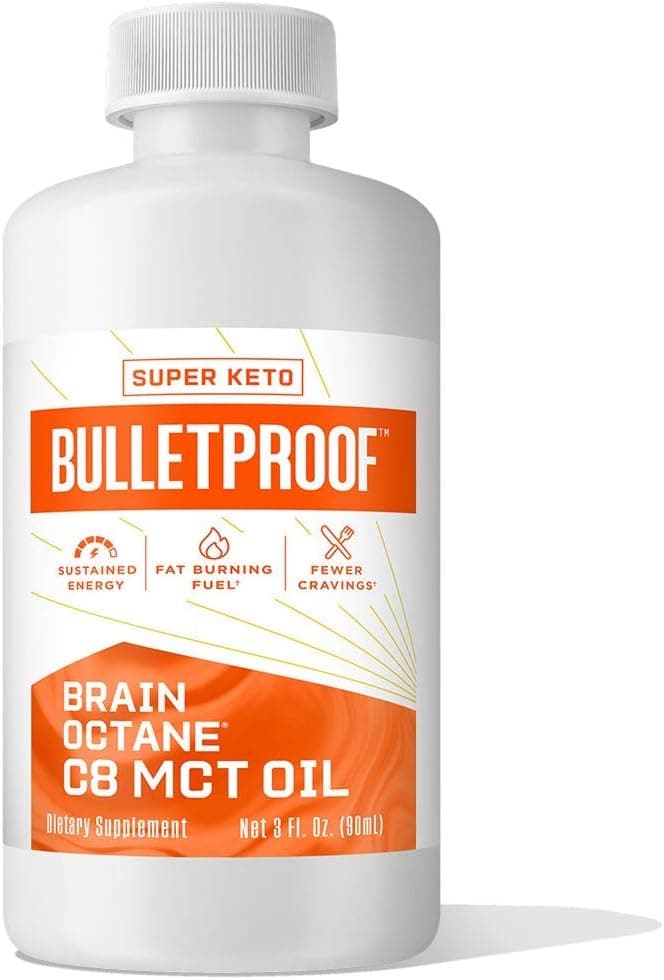
Coconut Oil.
Used as a carrier oil in softgels and as a source of medium-chain fats, though the health claims are overhyped. Carrier oil for fat-soluble ingredients. Contains some MCTs and lauric acid.
Reviewed March 2026
- Category
- General
- Also filed under
- Carrier for fat soluble ingredientsContains some MCTsAntimicrobial properties of lauric acid
What Coconut Oil is, and what it does.
- Does it work
- Fine as a carrier. Health claims are overhyped.
- How much to take
- No daily amount for coconut oil is on record. In a softgel it is the carrier, so the number to read is the active dissolved in it rather than the oil itself.
- Time to feel it
- As a carrier there is nothing to wait for. Its shorter fats do lift blood ketones within a couple of hours of a fat containing meal, a measured change rather than a felt one.
- The first dose
- A quiet day. In a capsule it does its carrier work during that serving, and a spoonful eaten as fat sits richly in the stomach while it is digested.
- With regular use
- No meaningful health impact at supplement doses.
- How well tolerated
- Well tolerated. Saturated fat concern is for dietary-level consumption.
- How it feels
- Neutral in a capsule. A spoonful of the oil itself is rich and slightly sweet, and sits heavy if you are not used to eating much fat at once.
- The overlooked benefit
- Because it is so highly saturated, it resists going rancid under heat and on the shelf, which is why it holds vitamin D, A, E and carotenoids steady inside a softgel.
The proof, claim by claim.
These words describe the research, not the molecule's worth. Research strength is how much work stands behind one claim, and it is never a product score.
- Coconut oil is a superfood
- Effective carrier for fat-soluble nutrients
Why these belong in the same formula. Each row says what the basis is, from settled biochemistry through to a trial that measured the pair.
Cholecalciferol needs dietary fat to prompt bile flow and to form the micelles that carry it into the enterocyte. Coconut oil is a common carrier oil in softgels for exactly this reason.
Retinyl esters are hydrolysed and then packaged into micelles built from dietary fat. An oil vehicle such as coconut oil raises the fraction that reaches circulation.
Tocopherol uptake depends on fat in the same dose, since it travels in micelles and then chylomicrons. Coconut oil also acts as the softgel fill that keeps the tocopherol in solution.
MK-7 is fat soluble and enters the body through the micellar route. Dissolving it in an oil such as coconut oil keeps it available for that route.
Carotenoid uptake climbs with the fat content of the meal because carotenoids must dissolve in the micellar lipid core. Coconut oil supplies that lipid.
Lutein needs a lipid phase to partition into before it can be taken up in the small intestine. An oil carrier does this whether the fat is long or medium chain.
Zeaxanthin shares lutein's xanthophyll structure and the same fat-dependent absorption route. Formulating it in oil keeps it dissolved and micelle-ready.
Lycopene is one of the most lipophilic carotenoids and is poorly absorbed without fat present. An oil vehicle supplies the phase it dissolves in.
Astaxanthin appears in plasma in proportion to the lipid it is delivered with. Oil-based softgels are the standard format for this reason.
Curcuminoids are nearly insoluble in water but dissolve in lipids, so an oil carrier keeps them in solution through the gut. This is the mechanism behind the long-standing practice of cooking turmeric in fat.
Ubiquinone is a bulky lipophilic molecule whose uptake depends on being presented in a lipid. Oil-filled softgels using coconut or MCT oil are the usual delivery form.
Plant sterols have to be dissolved in the micellar lipid phase to compete with cholesterol for space in the micelle, which is how they reduce cholesterol uptake. A fat vehicle is what puts them into that phase.
Beta-sitosterol is crystalline and poorly dispersed in water, so it acts only when solubilised in fat. Oil carriers are used to keep it micelle-available.
Roughly half the fatty acid in coconut oil is lauric acid, and monolaurin is the monoglyceride of lauric acid. Pancreatic lipase releases lauric acid and its monoglycerides from coconut triglycerides during digestion.
Coconut oil is the commercial source of medium chain triglycerides, which are split off and concentrated from it. The two therefore feed the same portal-vein route to the liver for beta-oxidation.
Caprylic acid is one of the medium chain fatty acids naturally present in coconut oil. Both are absorbed into the portal circulation without needing chylomicron packaging.
Capric acid is a native constituent of coconut fat and shares its medium chain absorption route. Supplying both simply raises the same pool of medium chain fatty acids.
Lecithin is the standard emulsifier used to disperse coconut and MCT oils into water-based drinks and powders. Its phospholipids sit at the oil and water interface and keep the droplets from coalescing.
Mixed tocopherols are added to edible oils as chain-breaking antioxidants that intercept lipid peroxyl radicals. They protect the small unsaturated fraction of coconut oil during storage.
Long-chain fatty acids must be esterified to carnitine by CPT1 to cross the inner mitochondrial membrane. Medium-chain fatty acids of eight and ten carbons enter largely without that step. Coconut oil delivers both classes, with lauric acid at twelve carbons behaving substantially like a long-chain fat. Adding carnitine therefore matters more for the long-chain fraction than for the medium-chain one, which is the opposite of how the pairing is often described.
Long-chain triglycerides need bile salts and micelle formation before absorption. Medium-chain triglycerides are hydrolysed faster and absorbed with far less dependence on bile. Since coconut oil is mostly lauric and longer chains, bile still matters for the bulk of it. The pairing is about digestion, not about a physiological effect of either.
Pancreatic lipase cleaves the outer positions of a triglyceride to release fatty acids and a monoglyceride. Medium-chain triglycerides are hydrolysed more rapidly than long-chain ones, and gastric lipase contributes as well. Where lipase output is reduced, fat handling and fat-soluble nutrient uptake both drop.
Blended enzyme products supply lipase alongside protease and amylase, so the fat-handling logic carries over. No pairing study with coconut oil is being cited. This is formulation and digestion context.
Phospholipids sit at the oil-water boundary and are what allows a fat to be dispersed into fine droplets. That larger surface area is what lipase works on. In formulation, phosphatidylcholine is the reason a coconut-oil-based emulsion stays a single phase.
Lecithin disperses coconut oil into water-based systems and keeps powdered oil ingredients free-flowing. The sunflower source is used for soy-free labelling. This is manufacturing practice and carries no claim about either ingredient's effect in the body.
Rosemary diterpenes chelate trace metals and scavenge radicals in the oil phase, which slows oxidation during storage and heating. Coconut oil is already largely saturated and so is comparatively resistant, but the unsaturated fraction and any co-formulated oil are not. The endpoint here is oil stability measured in the laboratory, not a physiological effect.
Coconut oil supplies almost no essential fatty acids, so displacing polyunsaturated fat with it lowers total intake of the long-chain omega-3 family. Conversely, a saturated oil base is a stable carrier for a highly oxidisable oil like DHA. The interaction is compositional, and which direction it matters in depends on the rest of the diet.
Substituting coconut oil for an unsaturated oil reduces the polyunsaturated share of the fat eaten. That is a displacement effect rather than an action of coconut oil on EPA. In formulation, the saturated base helps hold an EPA concentrate stable.
Fat intake is largely a fixed budget, so more coconut oil generally means less of something else. Trials that swap coconut oil for an oil rich in linoleic acid consistently show higher LDL cholesterol on the coconut oil arm. LDL cholesterol is a marker measured in blood, not a clinical outcome, and that distinction should stay attached to the finding.
Cholecalciferol needs a fat-containing meal and micelle formation to be absorbed well. An oil carrier supplies both the solvent and the fat stimulus for bile release. Coconut oil works as that carrier because it is liquid at body temperature and stable on the shelf.
Lauric acid and its monoglyceride monolaurin disrupt lipid membranes, and laboratory work shows activity against a range of bacteria including species used as probiotics. Whether that matters at food-level intakes in a human gut has not been established. It is flagged as a possible opposing direction rather than a demonstrated one.
Talk to a doctor before taking Coconut Oil if any of these apply to you: High in saturated fat, Raises LDL cholesterol, Often used as cheap filler in softgels, Health claims overstated. These are flags to check first, not effects Coconut Oil is known to cause.
Not medical advice. Show the label to your pharmacist.What Coconut Oil actually does.
Coconut oil is mostly saturated fat, with lauric acid as the single biggest component, plus smaller amounts of several other fatty acids and a small unsaturated fraction.
Lauric acid is often lumped in as a medium-chain fat, but at twelve carbons long it's mostly handled by the body like a long-chain fat, packaged for transport rather than going straight to the liver.
The truly medium-chain fats in coconut oil, at eight and ten carbons long, get absorbed straight into the bloodstream heading to the liver, skipping the usual fat-packaging step.
Those medium-chain fats can get into the cell's energy-producing mitochondria without needing the usual transport shuttle, which is why they're burned quickly and can raise ketone production.
Where Coconut Oil comes from.
Coconut oil is squeezed out of the white flesh of the nut. One route dries the flesh first, presses it, then cleans the oil with heat and filtering clay until it has no smell or colour. The other route works from fresh flesh, keeps the temperature low, and only filters, which is why it still smells of coconut. A further distillation step can pull out just the shorter fats to make the liquid MCT version.
Made from a plant. What ends up in the capsule tracks the harvest, so batch testing and a stated marker matter more here than with a made molecule.
Mature coconut meat, used either fresh for virgin oil or sun and kiln dried into copra for the refined route. Most supply comes from the Philippines, Indonesia and India.
The copra route dries the meat to low moisture before pressing. The virgin route either wet-mills fresh meat into a coconut milk emulsion that is then broken, or dries the grated meat at low temperature before expelling.
Screw presses express most of the oil. Large refineries follow with hexane extraction of the press cake to recover the remainder. Virgin production stops at the press.
For RBD material the crude oil is neutralised, passed over bleaching earth to remove colour, and steam-stripped under vacuum to remove free fatty acids and odour. Virgin oil skips this entirely and is only filtered.
Where the liquid MCT fraction is wanted, the oil is fractionally distilled to separate caprylic and capric triglycerides from the lauric and longer-chain portion.
Batches are checked by fatty acid profile on gas chromatography, plus free fatty acid, peroxide value and moisture, which is how a virgin grade is distinguished from a refined one.
The oil ships in drums, is filled into softgels, or is emulsified and spray-dried onto a carrier for powdered formats.
Getting Coconut Oil from food.
The whole-food sources on file. A supplement closes the gap, it does not replace dinner.
A gram-for-gram figure (how much of each you would eat to match a dose) will appear here once it is sourced and reviewed. This page will not print a number it cannot cite.
The forms it comes in.
The essence, in one line each.
- Pooled randomised trials mapping coconut oil dose against body weight, waist size and body fat, with any changes small.Meta-analysis. Gaeini et al., 2025 (BMC nutrition). PMID 40481535 ↗
- Coconut oil supplementation produced no detectable change in blood pressure variability or markers of oxidative balance compared with placebo.Randomised trial. Júnior et al., 2021 (Nutrients). PMID 33670999 ↗
- Comparing coconut oil, olive oil and butter, the trial found differing effects on plasma fatty acid profiles and on metabolic risk markers between the three fats.Randomised trial. Sowah et al., 2024 (Journal of Lipid Research). PMID 39490924 ↗
- Coconut oil supplementation during development was associated with reduced cortical excitability in adult animals in both normally nourished and overnourished groups.Animal study. Alves et al., 2021 (Food and Function). PMID 33720258 ↗
- Low-dose coconut oil supplementation was associated with hypothalamic inflammatory markers, behavioural changes and adverse metabolic findings in the animals studied. This is a finding in the unfavourable direction and belongs alongside the favourable ones.Animal study. Veras et al., 2021 (Molecular Nutrition and Food Research). PMID 33650755 ↗
- Virgin coconut oil supplementation was associated with reduced airway responsiveness and lower oxidative stress markers in the animal model used.Animal study. Vasconcelos et al., 2020 (Oxidative Medicine and Cellular Longevity). PMID 32089769 ↗
- Dietary virgin coconut oil was associated with changes in immune cell survival signalling markers in the animals studied.Animal study. Hima et al., 2019 (Journal of Complementary and Integrative Medicine). PMID 31536034 ↗
- A curcumin nano-emulsion combined with virgin coconut oil showed a cooperative protective effect against thermal oxidation of sunflower oil in the laboratory.In vitro study. Almasoudi et al., 2026 (Frontiers in Nutrition). PMID 42483650 ↗
- The review compares animal-derived and plant-derived oils, including coconut oil, on oxidative stress and inflammatory markers in ageing-related models.Systematic review. Alzunaidy et al., 2025 (Frontiers in Nutrition). PMID 41601899 ↗
These are the studies our verdict leans on, chosen from the 3,740 we read for Coconut Oil. The full linked list is below.
The studies, linked.
6 sources behind our Coconut Oil verdict: peer-reviewed studies and registered clinical trials. Every one links straight to PubMed, the journal, or ClinicalTrials.gov. Read them yourself.
- Clinical trialA Randomized Controlled Trial on the Efficacy and Safety of Virgin Coconut Oil Compared to Mineral Oil in the Treatment of Uremic XerosisClinicalTrials.gov ↗Phase 3, 45 participants, Completed
- Clinical trialComparing the Ketogenic Effect of Coconut Oil and Different Medium-chain TriglyceridesClinicalTrials.gov ↗10 participants, Completed
- Clinical trialProduction of a LRH-1 Ligand in Humans: A Randomized,Controlled, Cross-Over Feeding TrialClinicalTrials.gov ↗10 participants, Completed
- Clinical trialComparison Of Effect Of Local Application Of Polyfax Versus Coconut Oil On Outcome Of Plastibell Circumcision In A Tertiary Care HospitalClinicalTrials.gov ↗90 participants, Active not recruiting
- Clinical trialRandomised Trial of Different Dietary Fat Sources on Blood Lipids and Other CVD Risk Factors in Health Men and WomenClinicalTrials.gov ↗90 participants, Unknown
- Clinical trialEffects Of Dietary Fats on Gut Microbiota Composition and Metabolic Activity in Healthy AdultsClinicalTrials.gov ↗64 participants, Recruiting
Evidence surfaced via Semantic Scholar (Allen Institute for AI) and ClinicalTrials.gov. Ranked by study type and citation weight, not cherry-picked.
Problems people have reported.
Read this carefully. These are 2,284 voluntary, unverified reactions reported to the FDA (openFDA). The number mostly reflects how popular Coconut Oil is, not how risky it is. A report is not proof Coconut Oil caused anything. It is a signal of what to watch for, nothing more.
Source: openFDA adverse-event reports. Voluntary reporting, not an incidence rate.
FDA Disclaimer: These statements have not been evaluated by the Food and Drug Administration. This information is for educational purposes only and is not intended to diagnose, treat, cure, or prevent any disease. Consult your healthcare provider before starting any supplement regimen.