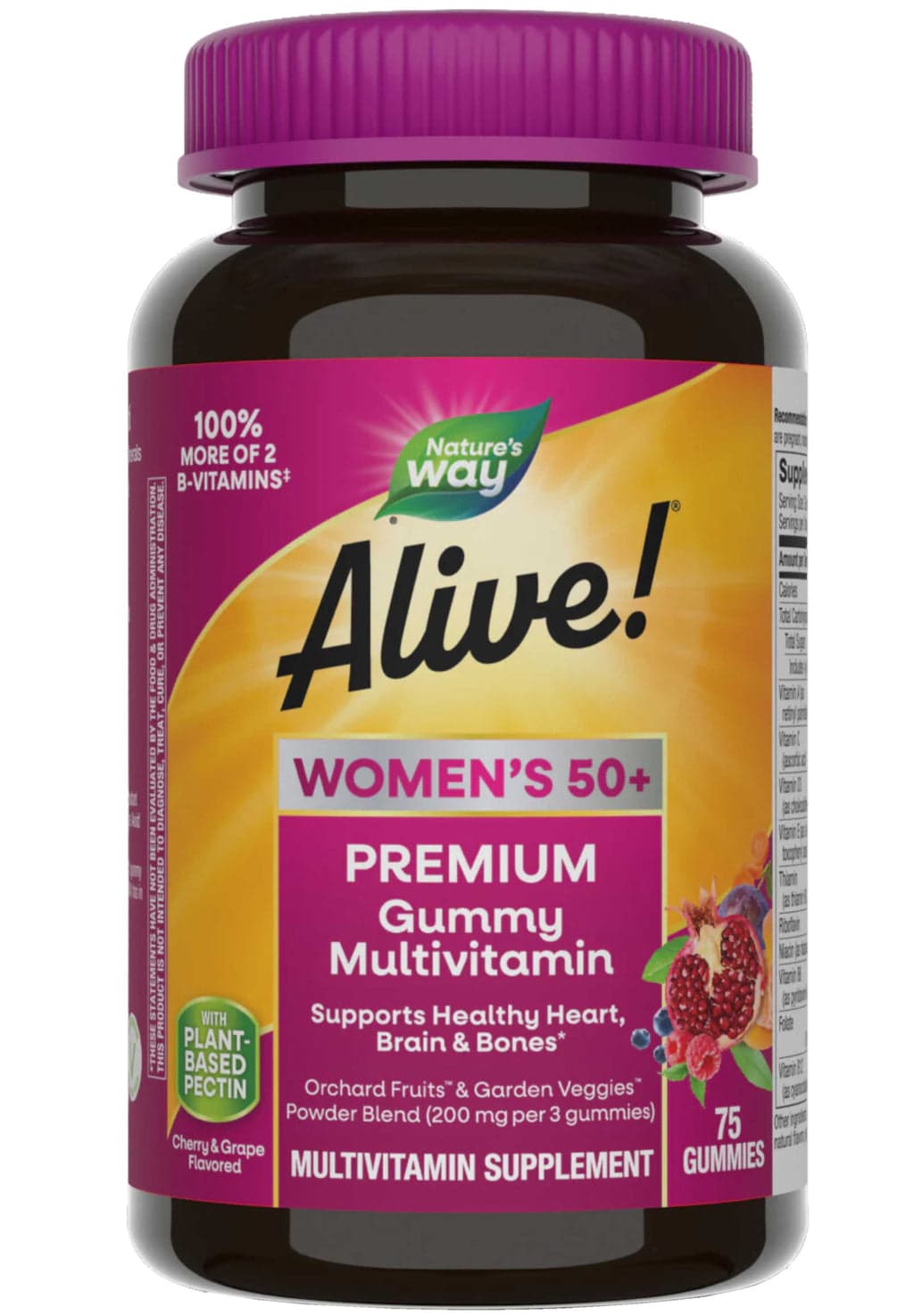
Fruit/Veggie Blend.
A generic dried fruit and vegetable blend providing trace phytonutrients as nutritional supplementation. Adds dried produce to a formula, bringing carotenoids, polyphenols and a little fibre. At a gram or two a day it's a top-up alongside the vegetables on your plate, not a stand-in for them.
Reviewed March 2026
- Category
- General
- Also filed under
- Trace phytonutrient contentMarketing appeal of whole foodsMay provide minor antioxidant support
What Fruit/Veggie Blend is, and what it does.
- Does it work
- Suits people whose fresh produce intake runs thin in busy weeks and who want plant compounds sitting alongside their vitamins. If you already eat several portions a day, food is doing this job.
- How much to take
- No meaningful dose exists at supplement levels. You'd need multiple grams of each powder to approach the nutrients in a single serving of real food.
- Time to feel it
- Nobody has measured a timeline for a generic blend. Blood carotenoid levels rise over weeks of daily intake, and that is where a change would be visible.
- The first dose
- Nothing happens. These trace amounts don't produce any detectable effect.
- With regular use
- No evidence supports health benefits from fruit/veggie blends at the milligram doses found in supplements.
- How well tolerated
- Well tolerated. It's dried food in amounts smaller than what sticks to your cutting board.
- How it feels
- You won't feel a thing. This ingredient is for the label, not your body.
- The overlooked benefit
- Vitamin C is heat sensitive and falls during drying and storage, so vitamin C declared on a produce blend has usually been added back rather than carried in by the fruit.
500 to 2,000mg a day is where Fruit/Veggie Blend works.
Source: General phytonutrient research
The proof, claim by claim.
These words describe the research, not the molecule's worth. Research strength is how much work stands behind one claim, and it is never a product score.
- Adds whole-food nutrition
- Provides antioxidants
Questions people ask about Fruit/Veggie Blend.
- Is this different from the 'Orchard Fruits' blend?
- Same concept, different marketing name. Both are tiny amounts of dried produce that don't do anything meaningful.
- Why is it in my multivitamin?
- So the label can say 'with real fruits and vegetables.' It's marketing, not nutrition.
- Would a dedicated greens powder be better?
- Yes, significantly. Greens powders provide 5-10g per serving vs. 100-300mg in these blends. Still not as good as real food though.
- Can I just eat more fruits and veggies instead?
- Absolutely. That's the correct answer. One serving of real produce beats a lifetime of this blend.
- Do the vitamins and minerals from this absorb?
- At these doses, absorption doesn't matter. Even 100% absorption of 10mg of dried kale gives you almost nothing.
- Is organic better for these blends?
- Organic is nice for real food. For 10mg of dried powder, it makes zero practical difference.
Why these belong in the same formula. Each row says what the basis is, from settled biochemistry through to a trial that measured the pair.
Ascorbate reduces ferric iron in plant material to the ferrous form and holds it soluble at intestinal pH, which raises how much non-heme iron from a fruit and vegetable matrix is taken up. The effect is large enough that ascorbate is the standard counter to the polyphenol binding such blends carry.
Polyphenols and tannins concentrated in fruit and vegetable powders bind ferric iron in the gut lumen and form complexes that are not absorbed, so a polyphenol-heavy blend taken with an iron dose lowers iron uptake. Separating the two by a couple of hours, or adding ascorbate, limits the loss.
Piperine slows intestinal and hepatic glucuronidation, the main route by which dietary polyphenols are conjugated and cleared on first pass. Adding it alongside a polyphenol-rich blend raises the amount of unconjugated flavonoid that reaches the circulation.
Carotenoids sit inside chromoplasts behind cellulose and pectin walls that human enzymes cannot break. Milling helps and added cellulase or pectinase helps further by opening the matrix. The mechanism is well described for food matrices. The size of the effect from a supplemental enzyme dose is not settled.
Phytic acid chelates zinc, iron and calcium in the gut lumen and blocks their uptake. Blends that include legume, seed or bran-derived powders carry phytate with them. Phytase hydrolyses it to lower inositol phosphates that bind minerals far less tightly.
Zinc absorption is strongly and reproducibly reduced by dietary phytate, which is standard nutrition biochemistry. A produce blend high in seed, legume or bran material carries phytate into the same dose. Separating the two by a couple of hours is the usual formulation answer.
Oxalate binds calcium in the gut lumen and the resulting salt is not absorbed, which is why spinach calcium is poorly available. Greens powders concentrate oxalate along with everything else. Calcium taken in the same dose is partly lost to this reaction.
Beta-carotene, lutein and lycopene partition into mixed micelles only when dietary fat is present to trigger bile release and form them. A produce powder taken in water alone gives poor carotenoid uptake. Any fat source works. Medium-chain triglyceride is one common vehicle.
Lecithin wets hydrophobic powder particles and contributes phospholipid to the mixed micelles that carry carotenoids across the enterocyte membrane. It is a formulation aid with a real physical chemistry basis. It makes no independent contribution to nutrient content.
Dried fruit and vegetable matter carries pectin, inulin-type fructans and resistant starch that pass undigested to the colon. Resident and supplemented bacteria ferment those substrates to short-chain fatty acids. The substrate relationship is established. Which strain does what in a given person is not.
Inulin is a beta-2,1 fructan that human enzymes cannot hydrolyse, so it reaches the colon intact and is fermented. Produce powders contribute a smaller, more mixed fibre load. Combined, the total fermentable fibre rises and so can gas and bloating at higher doses.
Psyllium forms a gel that slows gastric emptying and thickens the intestinal contents. That slows how quickly carotenoids and polyphenols from a produce powder are presented for absorption, and it also slows glucose appearance. The direction is established. The net effect on any single micronutrient in a blend has not been measured.
Tocopheryl radicals formed in membranes are reduced back to tocopherol by ascorbate, which produce blends supply along with polyphenols. That recycling loop is textbook. It describes chemistry in vitro rather than a measured clinical outcome.
Lutein, beta-carotene and lycopene compete for space in mixed micelles and for incorporation into chylomicrons. Adding a concentrated single carotenoid alongside a mixed produce blend shifts the ratio absorbed. This is a documented interaction among carotenoids, not a reason to avoid either.
High-dose beta-carotene reduces the absorbed fraction of lutein and lycopene from the same meal because all three compete for micellar incorporation and for the SR-BI transporter. Produce blends already supply mixed carotenoids. A separate high-dose single carotenoid changes the balance.
Milk proteins bind polyphenols through hydrogen bonding and hydrophobic contact, which changes how much free polyphenol is available in the gut. The interaction is well characterised chemically. Whether it meaningfully changes systemic polyphenol exposure from a produce blend is not settled.
Vitamin B12 is produced by bacteria and is absent from fruit and vegetable material apart from inactive analogues in some algae. A produce blend cannot contribute it. Formulas positioned as whole-food nutrition usually add it separately, which is a composition fact rather than an interaction.
Kelp and other seaweeds are common in greens blends and concentrate iodine from seawater, with reported content varying by orders of magnitude between species and harvests. A blend containing them can contribute a substantial and poorly specified iodine amount on top of a separate iodine supplement. Checking the declared figure matters.
Phylloquinone sits in the thylakoid membranes of green leaves, so kale, spinach and parsley powders carry it into the blend. The amount depends entirely on how much leaf material is present and is rarely declared. That makes total vitamin K1 intake from such a product hard to pin down.
Talk to a doctor before taking Fruit/Veggie Blend if any of these apply to you: Negligible amounts of each ingredient, Not a substitute for actual fruits and vegetables, Proprietary blend with no transparency. These are flags to check first, not effects Fruit/Veggie Blend is known to cause.
Not medical advice. Show the label to your pharmacist.What Fruit/Veggie Blend actually does.
Carotenoids sit locked inside plant colour bodies behind tough cellulose walls. Milling, heat or enzymes crack that open, and dietary fat alongside raises the share that reaches absorbable micelles.
Vitamin C is heat-sensitive and oxidises fast around oxygen, moisture and traces of copper or iron. So the ascorbate in a dried produce powder falls during drying and storage unless it is added back.
Phytic acid from seed, legume and bran material grabs onto zinc, iron and calcium in the gut and lowers how much of them you absorb from that same meal.
Oxalate concentrated from leafy inputs such as spinach and beet greens locks calcium into an insoluble salt, and that calcium does not get absorbed.
Where Fruit/Veggie Blend comes from.
Real produce is washed, sometimes cooked briefly, then dried into a powder and mixed in set ratios. How it was dried matters: hot-air and roller drying are cheaper but harder on things like vitamin C, freeze drying is gentler and costs more. Because most labels give one total weight for the whole blend, you cannot tell how much of any single fruit or vegetable is in there.
Made from a plant. What ends up in the capsule tracks the harvest, so batch testing and a stated marker matter more here than with a made molecule.
Inputs are typically field-grade produce, second-grade fruit, and processing side-streams such as pomace and trim, sourced across multiple countries and seasons rather than from one origin.
Material is washed, sometimes blanched to knock out enzymes that would brown the product, then pulped or juiced depending on the intended form.
Spray drying, drum drying or freeze drying removes water to below roughly five percent so the powder is microbially stable. Each route puts a different thermal load on heat-sensitive constituents.
Dried material is milled to a controlled particle size and sieved, which affects dispersion, capsule fill weight and how readily the plant matrix releases its contents.
Individual powders are blended in fixed ratios, commonly declared as a proprietary blend total rather than per-input amounts. Some blends are additionally assayed to a marker such as total polyphenols or ORAC value.
The blend is combined with flow aids, sometimes added vitamins, and filled into capsules, tablets or a powder sachet.
Getting Fruit/Veggie Blend from food.
The whole-food sources on file. A supplement closes the gap, it does not replace dinner.
A gram-for-gram figure (how much of each you would eat to match a dose) will appear here once it is sourced and reviewed. This page will not print a number it cannot cite.
The forms it comes in.
The essence, in one line each.
- Daily intake of a lycopene-rich fruit and vegetable juice was associated with lower inflammatory markers, while skin carotenoid readings showed no detectable increase.Clinical trial. Jilcott Pitts et al., 2025 (BMC nutrition). PMID 41420244 ↗
These are the studies our verdict leans on, chosen from the 20 we read for Fruit/Veggie Blend. The full linked list is below.
FDA Disclaimer: These statements have not been evaluated by the Food and Drug Administration. This information is for educational purposes only and is not intended to diagnose, treat, cure, or prevent any disease. Consult your healthcare provider before starting any supplement regimen.