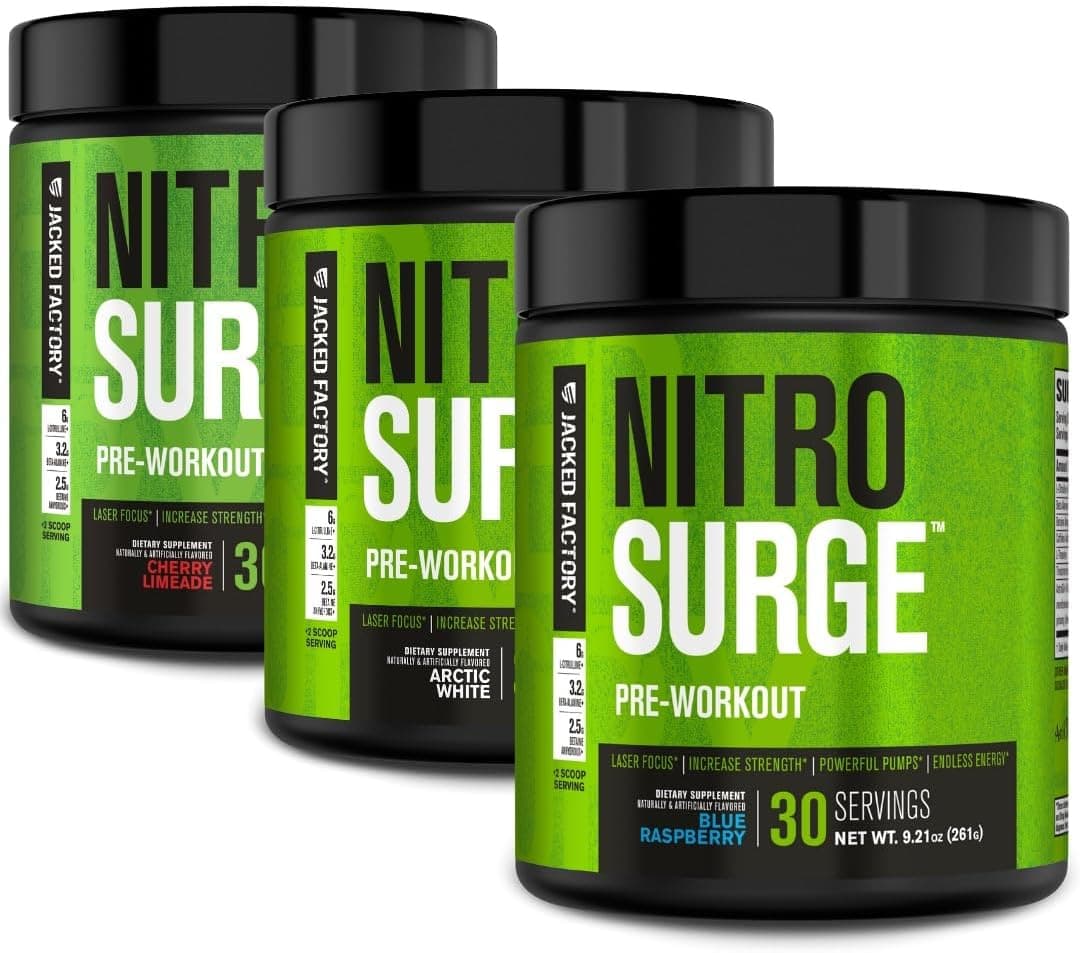
nooLVL.
A patented combo of bonded arginine and inositol designed to boost focus and blood flow to the brain. Increases nitric oxide to boost cerebral blood flow, improving focus, reaction time, and mental accuracy.
Reviewed March 2026
- Category
- Compound
- Also filed under
- Improves reaction time and cognitive flexibilityEnhances blood flow to the brainReduces mental errors under pressure
What nooLVL is, and what it does.
- Does it work
- Two positive human studies (gaming-specific) with clear cognitive improvements. The NO-to-brain pathway is legit. Still young, but promising.
- How much to take
- 1,600 mg, taken 15-30 minutes before you need focus. That's the exact dose used in the studies.
- Time to feel it
- This one works per dose. The gaming trials measured changes about fifteen minutes after a serving, and the effect tails off over the following few hours.
- The first dose
- Take 1,600 mg about 30 minutes before a demanding task. You should notice improved focus and quicker processing.
- With regular use
- Benefits are primarily acute (per-dose). Some evidence that regular use maintains enhanced cerebral blood flow over time.
- How well tolerated
- Well tolerated. Same compound as Nitrosigine, which has multiple safety studies. No significant adverse effects at recommended doses.
- How it feels
- Cleaner, sharper focus without stimulation. Your brain just works a bit faster and more accurately. Great for gaming, work, or studying.
- The overlooked benefit
- The inositol isn't a second active. It's the hydrogen-bonding partner that keeps the silicon dissolved, which is why the complex is sold as one ratio rather than three powders.
1,600mg a day is where nooLVL works.
Source: Tartar et al., 2019; Nutrition21 research
The proof, claim by claim.
These words describe the research, not the molecule's worth. Research strength is how much work stands behind one claim, and it is never a product score.
- Improves reaction time in gamers
- Reduces mental errors under pressure
- Works through increased cerebral blood flow
Questions people ask about nooLVL.
- Is this just arginine with marketing?
- No. The inositol-silicon bonding makes it far more bioavailable than plain arginine. And it has actual cognitive studies, which regular arginine doesn't.
- How is this different from Nitrosigine?
- Same active compound. Nitrosigine is marketed for pumps/exercise. nooLVL is marketed for brain/gaming. The molecule is identical.
- Can I take this with caffeine?
- Yes, and many people do. The non-stimulant focus from nooLVL complements caffeine's alertness nicely.
- Does it work for studying or just gaming?
- The mechanism (brain blood flow) would apply to any cognitively demanding task. Gaming was just what they chose to study.
- Will I feel a physical pump too?
- Potentially. NO boosters affect blood flow everywhere. You might notice vascularity or a slight warmth in addition to the cognitive effect.
- How long does it last?
- Effects typically last 3-6 hours based on the blood flow data from Nitrosigine studies.
Why these belong in the same formula. Each row says what the basis is, from settled biochemistry through to a trial that measured the pair.
nooLVL is inositol-stabilised arginine silicate, the same complex sold as Nitrosigine. Listing both in one formula counts the same ingredient twice.
The complex delivers arginine, so free arginine on top raises the same amino acid load rather than adding a second mechanism.
Citrulline bypasses gut and liver arginase and is converted to arginine in the kidney. It raises the same plasma arginine pool by a different route.
Inositol is part of the arginine silicate inositol complex itself. A separate inositol dose adds to what the ingredient already contains.
nooLVL is normally paired with caffeine in attention and gaming formulas. Caffeine blocks adenosine receptors and tends to narrow vessels while the arginine complex widens them, so they add on alertness and pull apart on blood flow.
Lysine competes with arginine for the y+ transporter in the gut and at the cell membrane. A large simultaneous lysine dose lowers arginine uptake from the complex.
Dietary nitrate produces nitric oxide through the nitrate to nitrite route, which needs neither oxygen nor nitric oxide synthase. It runs independently of the arginine substrate route the complex feeds.
L-theanine raises alpha wave activity and is used in cognitive products for a calm-alert state without sedation. The arginine silicate complex works through nitric oxide and vascular tone instead. The two are stacked because they address different halves of a task-focus formula. No trial of this specific pair has been identified.
L-tyrosine is the direct precursor for dopamine and noradrenaline, which is settled biochemistry. That precursor pathway is independent of arginine and nitric oxide synthesis. In a pre-task formula the two occupy different roles, substrate supply on one side and blood flow on the other.
Alpha-GPC delivers choline for acetylcholine synthesis, a separate transmitter system from the catecholamines and unrelated to nitric oxide. Products combining the two are covering transmitter substrate and vascular delivery in one dose. Neither competes with the other for transport or metabolism.
CDP-choline supplies both choline and cytidine, feeding acetylcholine synthesis and membrane phospholipid turnover. That is a distinct pathway from arginine-driven nitric oxide production. The two are combined for coverage rather than for any interaction between them.
Arginine, ornithine and lysine all cross the intestinal and cellular membranes on the cationic amino acid transporter system y+. Dosing them at the same time means they compete for the same carrier. That competition can reduce arginine uptake relative to arginine given alone. Separating the doses is the straightforward answer.
Nitric oxide synthase requires tetrahydrobiopterin as a cofactor, and ascorbate helps keep that cofactor in its reduced, functional state. When the cofactor oxidises, the enzyme uncouples and produces superoxide instead of nitric oxide. This is a textbook enzymology relationship, not a claim about any measured outcome from the pair.
Dietary nitrate reaches nitric oxide by an entirely separate route, reduced to nitrite by oral bacteria and then to nitric oxide in low oxygen tissue, bypassing the enzyme altogether. Arginine feeds the enzymatic route. Two independent inputs to the same signalling molecule. Antibacterial mouthwash blocks the nitrate route and not the arginine one, which is a practical detail people miss.
Pine bark procyanidins are described as increasing endothelial nitric oxide synthase activity and as scavenging the superoxide that would otherwise consume nitric oxide once formed. Arginine supplies the substrate for the same enzyme. Substrate plus enzyme activity plus protection of the product is a coherent chain. No trial of this specific pairing has been identified.
Ubiquinol works as a lipid-phase antioxidant in membranes and helps limit the superoxide flux that quenches nitric oxide. It also sits in the mitochondrial electron transport chain, a separate role. Its relevance to an arginine complex is protection of the signalling molecule after it forms rather than more of it being made.
Taurine is abundant in excitable tissue and contributes to calcium handling and osmotic regulation in muscle and nerve. It appears in the same energy and focus products as arginine complexes. The described roles do not overlap. No combination study of the pair has been identified.
Creatine and arginine are linked upstream, since arginine is one of the three amino acids the body uses to make creatine, alongside glycine and methionine. Supplemental creatine spares that endogenous synthesis demand. In practice they are combined for different reasons, energy buffering versus blood flow, but the biochemical link is real.
Beta-alanine raises muscle carnosine over weeks of consistent dosing and does nothing acutely except cause tingling. An arginine silicate complex is used for acute sessions. The two are in the same tub for different time horizons. No combination study of the pair has been identified.
Magnesium is required by every ATP-using enzyme and contributes to normal vascular smooth muscle relaxation. That role runs alongside nitric oxide signalling rather than through it. Products combining the two are covering a nutrient requirement next to a performance ingredient.
Bacopa is studied for cognitive measures over weeks of daily use, not for acute effect. An arginine silicate complex is used acutely before a task. Stacking them puts a chronic ingredient and an acute one in the same product, which is a formulation choice rather than an interaction.
Huperzine A inhibits acetylcholinesterase, raising synaptic acetylcholine persistence, which is a different lever from vascular delivery. It is commonly stacked with arginine complexes and choline donors in focus products. The pharmacology is well described. The specific combination has not been trialled. Cholinesterase inhibition is a real drug-class action and deserves prescriber input for anyone on cholinergic medication.
Rhodiola has human literature on perceived fatigue under sustained mental workload. It is formulated with arginine complexes in gaming and study products on that basis. There is no described interaction between rosavins and arginine metabolism. Read the pair as two independent ingredients.
Lion's mane sits in the same cognitive product category and works on a chronic, neurotrophic-signalling rationale rather than an acute vascular one. Nothing links it mechanistically to arginine. This is a category pairing at the bottom confidence band.
Talk to a doctor before taking nooLVL if any of these apply to you: Limited studies (mostly funded by manufacturer), Gaming-specific claims may not generalize. These are flags to check first, not effects nooLVL is known to cause.
Not medical advice. Show the label to your pharmacist.What nooLVL actually does.
Nitric oxide synthase takes L-arginine and turns it into nitric oxide plus citrulline. That's the settled enzyme route by which any arginine-based ingredient can touch blood vessel signalling.
Swallow free L-arginine and an enzyme called arginase breaks down much of it in the gut wall and liver on the first pass. Plasma arginine rises less than the dose you took would imply, which is exactly why formulators work at getting more of it past that bottleneck.
Arginine, lysine and ornithine all ride the same cationic amino acid transporter, system y+. Take them together and they compete for that one doorway, so co-dosed amino acids don't simply add up.
Nitric oxide synthase needs a full kit to run: tetrahydrobiopterin, FAD, FMN, heme and NADPH. If the tetrahydrobiopterin runs low or gets oxidised, the enzyme uncouples and puts out superoxide instead. Substrate supply alone doesn't decide the output.
Where nooLVL comes from.
The arginine is grown by bacteria in a fermentation tank and crystallised out, the same way most amino acid ingredients are made. It is then mixed in water with a silicon salt and inositol, a sugar-like molecule that holds the mixture together so the silicon stays dissolved instead of turning back into sand. The solution is filtered and dried into a powder.
The same molecule is reached more than one way. Which route a given product used is a manufacturing choice, and the finished compound is the same either way.
Pharmaceutical and food-grade L-arginine is produced by fermentation of a sugar feedstock with engineered Corynebacterium glutamicum, then crystallised.
The silicon source, a mineral-derived soluble silicate that supplies orthosilicic acid in solution.
Produced either from phytate hydrolysis of corn steep liquor or by microbial fermentation, depending on producer.
The three components are brought together in solution at a defined ratio so the inositol hydroxyl groups hydrogen bond the arginine silicate and hold the silicon in a soluble, stable arrangement.
The complexed solution is filtered to remove any polymerised silica and insoluble residue before drying.
Dried to a free-flowing powder specified by arginine content and silicon content, then blended into capsules, sticks or drink mixes.
Getting nooLVL from food.
The whole-food sources on file. A supplement closes the gap, it does not replace dinner.
A gram-for-gram figure (how much of each you would eat to match a dose) will appear here once it is sourced and reviewed. This page will not print a number it cannot cite.
The forms it comes in.
The essence, in one line each.
- In 26 experienced gamers, a single 1,600 mg dose of nooLVL shortened mean reaction times on a working memory task before and after an hour of gaming compared with a maltodextrin placebo.Randomised trial. Sowinski et al., 2021 (Nutrients). PMID 34836014 ↗
- In 60 regular video gamers, 7 days of inositol-enhanced arginine silicate raised self-reported energy, lowered self-reported anger and reduced Trail Making Test B errors compared with placebo, with minimal adverse events in either group.Randomised trial. Tartar et al., 2019 (Nutrients). PMID 31581523 ↗
These are the studies our verdict leans on, chosen from the 5 we read for nooLVL. The full linked list is below.
The studies, linked.
1 source behind our nooLVL verdict: peer-reviewed studies and registered clinical trials. Every one links straight to PubMed, the journal, or ClinicalTrials.gov. Read them yourself.
- Clinical trialEffects of nooLVL Ingestion on Reaction Time and Cognitive Function in GamersClinicalTrials.gov ↗24 participants, Completed
Evidence surfaced via Semantic Scholar (Allen Institute for AI) and ClinicalTrials.gov. Ranked by study type and citation weight, not cherry-picked.
FDA Disclaimer: These statements have not been evaluated by the Food and Drug Administration. This information is for educational purposes only and is not intended to diagnose, treat, cure, or prevent any disease. Consult your healthcare provider before starting any supplement regimen.