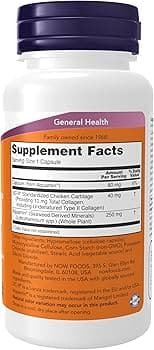
Seaweed Derived Minerals.
A plant-based mineral complex from calcified seaweed that delivers calcium, magnesium, and 70+ trace minerals. Delivers plant-based calcium, magnesium, and 70+ trace minerals in a naturally occurring mineral matrix from calcified seaweed.
Reviewed March 2026
- Category
- Mineral
- Also filed under
- Plant based calcium and magnesium sourceContains 70+ trace mineralsSupports bone density
What Seaweed Derived Minerals is, and what it does.
- Does it work
- Good evidence that seaweed minerals support bone density. The multi-mineral matrix may absorb better than isolated calcium carbonate. Solid option for plant-based mineral supplementation.
- How much to take
- 800 mg of the seaweed mineral complex per day, providing roughly 200-350 mg of elemental calcium plus trace minerals.
- Time to feel it
- There's no sensation to time. Bone mineral changes read on a scan over six to twelve months, while blood calcium stays inside its regulated range the whole time.
- The first dose
- Nothing noticeable. Minerals are absorbed and incorporated into bone and tissue over weeks to months.
- With regular use
- Over months and years, supports bone mineral density maintenance. The trace minerals may offer additional metabolic benefits that isolated calcium doesn't provide.
- How well tolerated
- Well tolerated in most people. May contain iodine from the seaweed, which is worth noting if you have thyroid conditions. Check the iodine content on the label.
- How it feels
- You won't feel seaweed minerals working. Bone health is invisible until it isn't. This is prevention, not a noticeable supplement.
- The overlooked benefit
- Carbonate needs stomach acid to dissolve, so taking it with a meal and splitting it across the day gets more calcium absorbed than one large dose on an empty stomach.
500 to 1,000mg a day is where Seaweed Derived Minerals works.
Source: Aslam et al., 2010; Frestedt et al., 2009
The proof, claim by claim.
These words describe the research, not the molecule's worth. Research strength is how much work stands behind one claim, and it is never a product score.
- Supports bone mineral density
- Better absorbed than calcium carbonate
- Anti-inflammatory joint benefits
Questions people ask about Seaweed Derived Minerals.
- Is this better than regular calcium supplements?
- Potentially. The multi-mineral matrix and porous structure may improve absorption compared to calcium carbonate. Plus you get 70+ trace minerals. The trade-off is higher cost.
- How much actual calcium am I getting?
- From 800 mg of seaweed mineral complex, you typically get 200-350 mg elemental calcium. Check the label for the specific calcium content. It varies by product.
- Should I still take vitamin D with this?
- Yes. Vitamin D is essential for calcium absorption regardless of the source. And add vitamin K2 to direct calcium to your bones instead of your arteries.
- Is the iodine content a problem?
- Only if you have a thyroid condition or are already getting plenty of iodine. Most seaweed mineral products have modest iodine levels, but check the label if this concerns you.
- Can I get these minerals from eating seaweed?
- Not the same thing. Calcified red seaweed is a different organism from the nori or kelp you eat. It's essentially a marine limestone made by algae over years.
- Is this vegan-friendly?
- Yes. It's 100% plant-based, sourced from algae. That's one of its main selling points over bone-derived or coral calcium.
Why these belong in the same formula. Each row says what the basis is, from settled biochemistry through to a trial that measured the pair.
Vitamin D drives calbindin and the active transcellular uptake of calcium in the small intestine. The calcium supplied by calcified algae minerals is absorbed far more completely when vitamin D status is adequate.
K2 is the cofactor that carboxylates osteocalcin and matrix Gla protein, the proteins that bind calcium into bone mineral. Pairing it with an algae calcium source directs the incoming calcium toward normal bone matrix rather than soft tissue.
Magnesium sits in the hydroxyapatite lattice alongside calcium and is required for the hydroxylation steps that activate vitamin D. Calcified algae sources already carry magnesium, and formulators keep the two in balance because a large calcium load alone can lower magnesium uptake.
Boron influences how the body retains calcium and magnesium and affects vitamin D handling. It is a long-standing companion mineral in bone formulas built on marine calcium.
Silicon participates in the collagen scaffold that mineral is laid down on, so it works on the organic side of bone while algae minerals supply the inorganic side.
A calcium load taken in the same dose reduces non-heme iron uptake at the enterocyte. This is an anti-synergy and the usual formulation answer is to separate the two by several hours.
High single doses of calcium lower zinc absorption when the two share a meal, since both use overlapping divalent uptake routes. Splitting the doses keeps zinc status intact.
Strontium and calcium are chemically similar and compete for the same intestinal transport and the same sites in bone mineral. Co-dosing lowers the uptake of both, so they are given apart.
The calcium in calcified algal material is bound as carbonate, and carbonate has to be protonated in the stomach before the calcium ion is free to be absorbed. People with low gastric acid output, including many older adults and anyone on acid suppression, dissolve less of it. Taking it with food raises acid output for the same reason. Where a formula adds betaine hydrochloride, the rationale is that dissolution step.
Algal calcium is chemically a carbonate, so pairing it with a calcium carbonate tablet stacks the same mineral through the same acid-dependent route. Fractional calcium absorption falls as the single dose rises, which means two carbonate sources in one dose absorb less efficiently than the same total split across the day. Adding them is duplication rather than complementarity.
Algae accumulate iodide from seawater, and the amount varies enormously between species and harvest sites, with brown seaweeds far higher than calcified red algae. A seaweed-derived mineral product can therefore carry iodine that a label does not always quantify, which is worth counting before adding a separate iodine dose. Ask the supplier for the batch iodine figure rather than assuming it is negligible.
A substantial calcium load taken in the same dose as non-heme iron reduces the iron absorbed, an interaction consistently seen in absorption studies. Separating the two by a few hours is the standard way round it. This is one of the better characterised mineral interactions in nutrition.
Copper shares transport capacity with other divalent cations, and large calcium or zinc doses in the same dose can reduce its uptake. Multimineral formulas built on an algal mineral base carry enough total divalent load for this to matter over months. Splitting doses is the practical response.
Manganese uptake shares transporters with iron and is reduced by high co-dosed mineral loads. Because algal mineral products already deliver a broad divalent mix, added manganese does not absorb as though it were dosed alone. The direction is established for divalent cations generally.
Bone is mineral deposited on a collagen scaffold, and the enzymes that hydroxylate proline and lysine in that collagen require ascorbate. Mineral supply without adequate ascorbate leaves the organic matrix side of the equation short. The cofactor relationship is textbook biochemistry rather than a bone outcome measured for algal minerals.
Formulas pair a mineral source with collagen peptides because bone is a composite of mineral and collagen, not mineral alone. The mechanistic logic is sound and the pairing is common. Whether adding peptides changes what the mineral does has not been measured together here.
Proline supplies the residue that vitamin C dependent hydroxylases act on in collagen synthesis. Amino acid supply is rarely the limiting factor in a person eating enough protein, which is why confidence stays early. It appears in bone formulas on substrate logic.
Fermentable fibres are metabolised to short-chain fatty acids in the colon, which drops local pH and keeps calcium and magnesium in soluble form for colonic absorption. That gives a second absorption window past the small intestine. The mechanism is well described for prebiotic fibres. The size of the gain with an algal mineral source specifically is not established here.
Short-chain fructans ferment faster and higher in the colon than long-chain inulin, producing the same pH drop that favours mineral solubility. Faster fermentation also means more gas early on. The mechanism is shared with inulin and the tolerance profile is not.
GOS is fermented to short-chain fatty acids like other prebiotic oligosaccharides, with the same downstream effect on divalent mineral solubility in the colon. It is used where a milder tolerance profile than short-chain fructans is wanted. The mineral link is mechanistic rather than measured for this material.
In a plant-based meal, phytate chelates divalent minerals and holds them unabsorbed, and phytase cleaves the phosphate groups that do the binding. That is why the same mineral dose absorbs differently with a wholegrain meal than with a low-phytate one. Added phytase is used in that context, mostly on evidence from food and feed matrices.
Sodium and calcium are reabsorbed together in the renal tubule, so a higher sodium load pulls more calcium into the urine. That works against a calcium intake strategy from the excretion side rather than the absorption side. It is a settled renal handling relationship.
Potassium salts of organic acids buffer acid load, and lower net acid load is associated with less urinary calcium. The relationship is consistent in balance studies, though urinary calcium is a marker of handling rather than a bone outcome. It is the counterpart to the sodium effect.
Caffeine produces a small increase in urinary calcium excretion in short-term studies. The size is modest and matters mainly when calcium intake is already low. Framing it as a caution about total balance is fairer than framing it as a loss.
A viscous fibre gel traps mineral ions and slows their diffusion to the absorptive surface, which is why mineral doses are usually separated from bulk fibre doses. The effect is on a single co-ingested dose, not on overall status when the two are spaced. Spacing by a couple of hours is the usual practice.
Cohort data have linked high preformed retinol intake with bone density measures, an association and not a demonstrated cause, and the finding does not extend to beta-carotene. It is worth noting when a bone-support formula also carries a large preformed vitamin A dose. Nothing here establishes a mechanism or a threshold.
Talk to a doctor before taking Seaweed Derived Minerals if any of these apply to you: Actual mineral amounts vary by product, May contain iodine (thyroid consideration). These are flags to check first, not effects Seaweed Derived Minerals is known to cause.
Not medical advice. Show the label to your pharmacist.What Seaweed Derived Minerals actually does.
The minerals sit inside the algae's own skeleton as carbonates.
Carbonate minerals need stomach acid to break apart, so food helps.
Your body absorbs a smaller share of a big single dose than of a small one.
Blood calcium is tightly controlled, so it does not tell you what bone is doing.
Where Seaweed Derived Minerals comes from.
These minerals come either from the chalky skeleton of calcifying seaweed or from seawater itself. Because a living seaweed soaks up whatever is in the ocean around it, the batch test for iodine and heavy metals is the part that actually matters.
The same molecule is reached more than one way. Which route a given product used is a manufacturing choice, and the finished compound is the same either way.
Two distinct provenances share this ingredient name. One is the calcified skeleton of red algae, harvested as living biomass or as seabed deposits of shed material. The other is seawater or salt-production bittern, which is a mineral brine rather than a plant.
Algal biomass is collected, then washed with fresh water to remove sea salt, sand and epiphytes. That wash is what keeps sodium and chloride out of the finished mineral, and how thoroughly it is done varies by supplier.
Algal material is dried to a stable moisture level. Seawater-derived magnesium instead goes through selective precipitation, where pH is raised to drop magnesium hydroxide out of solution away from the sodium and potassium.
Because a growing organism concentrates whatever is in the water, batch assay is not optional here: elemental calcium and magnesium, iodine, arsenic and cadmium are all part of a meaningful specification. This is the step that separates a documented material from an undocumented one.
The dried material is milled to a target particle size and either sold as powder or compressed and encapsulated to a stated elemental dose.
Species and harvest region are usually named. Batch iodine content, heavy metal figures and whether the material is living biomass or seabed deposit often are not.
Getting Seaweed Derived Minerals from food.
The whole-food sources on file. A supplement closes the gap, it does not replace dinner.
A gram-for-gram figure (how much of each you would eat to match a dose) will appear here once it is sourced and reviewed. This page will not print a number it cannot cite.
The forms it comes in.
The essence, in one line each.
- Tracks ionised calcium, parathyroid hormone and bone turnover markers over time after ingestion of a plant-sourced calcium preparation. The endpoints are circulating markers of mineral handling, not bone density outcomes.Randomised trial. Kozior et al., 2024 (Nutrients). PMID 39339710 ↗
- A randomised intervention with lettuce grown using a seaweed extract biostimulant reported changes in iron homeostasis markers. The seaweed material acts on the crop rather than being consumed as a mineral supplement.Randomised trial. Di Gaudio et al., 2025 (Scientific Reports). PMID 40050333 ↗
- Characterises how much magnesium and calcium become available from marine-derived mineral sources under laboratory digestion conditions. Bioaccessibility is a release measure and not an absorption outcome in people.In vitro study. Dowley et al., 2024 (Methods). PMID 38608850 ↗
- Compares circulating micronutrient concentrations after organically derived versus synthetically derived multivitamin and mineral supplementation. The endpoint is circulating concentration, a status marker.Randomised trial. Churm et al., 2026 (Current Developments in Nutrition). PMID 42005784 ↗
- Reviews clinical studies of algae and algal protein in human nutrition and summarises where reported outcomes are consistent and where they rest on single small studies.Narrative review. Wang et al., 2026 (Nutrients). PMID 41599890 ↗
- Surveys bioactive components used in oral nutritional supplementation from a paediatric standpoint, naming marine-derived mineral material among the ingredient classes discussed.Narrative review. Cecchi et al., 2024 (Nutrients). PMID 38999815 ↗
These are the studies our verdict leans on, chosen from the 6 we read for Seaweed Derived Minerals. The full linked list is below.
FDA Disclaimer: These statements have not been evaluated by the Food and Drug Administration. This information is for educational purposes only and is not intended to diagnose, treat, cure, or prevent any disease. Consult your healthcare provider before starting any supplement regimen.