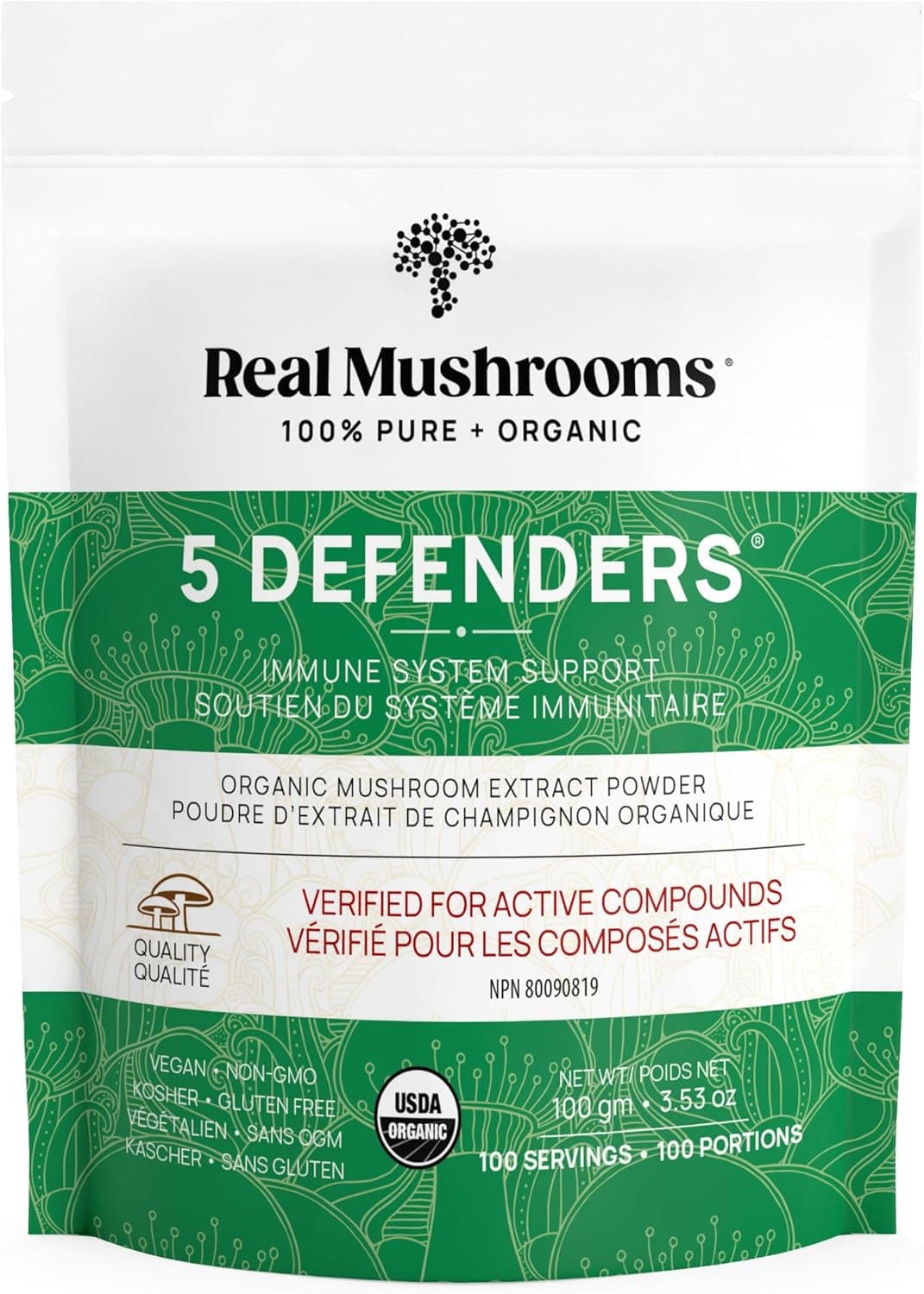
Shiitake.
Shiitake supplementation for targeted health support. Supports immune function via beta-glucans. Provides B vitamins and ergosterol (converts to vitamin D with sun exposure). Anti-inflammatory properties.
Reviewed March 2026
- Category
- General
What Shiitake is, and what it does.
- Does it work
- One of the most versatile functional mushrooms. You can eat it as food or take it as a supplement. Either way, you're getting immune support.
- How much to take
- Whole mushrooms: 3-5 oz several times per week. Extract: 1-3g daily. Look for beta-glucan content.
- Time to feel it
- Weeks. Immune measures in studies move across roughly four to eight weeks of daily use, which is where any change shows up rather than in a daily sensation.
- The first dose
- Nothing noticeable. Mushroom benefits build over time.
- With regular use
- Better immune resilience, possibly fewer colds, improved overall vitality over months.
- How well tolerated
- Well tolerated. Avoid raw shiitake (can cause temporary skin rash in some people). Cooked and supplements are fine.
- How it feels
- Subtle. More about what you don't get (sick as often) than what you feel.
- The overlooked benefit
- Ultraviolet light turns the mushroom's ergosterol into vitamin D2, so UV-exposed shiitake carries far more of it than material grown and dried in the dark.
500 to 2,000mg a day is where Shiitake works.
Source: Dai X et al. J Am Coll Nutr. 2015;34(6):478-487
The proof, claim by claim.
These words describe the research, not the molecule's worth. Research strength is how much work stands behind one claim, and it is never a product score.
- Supports immune functionMultiple human studies
- Contains immunomodulating beta-glucansBiochemical research
- Anti-tumor effects (lentinan)Japanese medical research
- Cardiovascular benefitsSome positive studies, needs more research
Questions people ask about Shiitake.
- Can I just eat shiitake mushrooms?
- Yes. Cooking them counts. You get beta-glucans, B vitamins, and dinner. Win-win.
- Does it have vitamin D?
- Only if exposed to UV light. Some brands sell UV-treated shiitake high in vitamin D2.
- Can I take it daily?
- Yes. No need to cycle. Daily use is fine and probably how traditional use worked.
Why these belong in the same formula. Each row says what the basis is, from settled biochemistry through to a trial that measured the pair.
Shiitake carries ergosterol, which converts to ergocalciferol when the mushroom is exposed to ultraviolet light. That reaction is why UV-treated shiitake is a recognised dietary source of vitamin D2.
Shiitake is among the richest dietary sources of ergothioneine, a sulfur amino acid taken into cells by the OCTN1 transporter. Adding the isolate raises a compound the whole mushroom already supplies at variable levels.
Lentinan is the beta-1,3 glucan with beta-1,6 branches isolated from Lentinula edodes and carries much of the innate signalling attributed to the mushroom. Pairing it with whole extract sets a defined glucan dose.
AHCC is produced by enzymatic fermentation of Lentinula edodes mycelium and is dominated by low molecular weight alpha-glucans. It brings a different glucan class from the same organism as the fruiting body extract.
Both carry beta-1,3/1,6 glucans recognised by dectin-1 on innate immune cells, with different branching patterns and triterpene content. Multi-mushroom blends pair them for that combined profile.
Maitake beta-glucan is more highly branched than lentinan, so the two present different ligand geometries to the same innate receptors.
Turkey tail supplies protein-bound polysaccharides while shiitake supplies lentinan, both engaging beta-glucan recognition on monocytes and neutrophils. Formulas combine them to widen the polysaccharide profile.
The isolated beta-1,3/1,6 glucan is the same structural class as lentinan and engages the same dectin-1 recognition. Its inclusion sets a defined glucan dose alongside a variable whole-mushroom extract.
Mushroom beta-glucan signals through surface pattern-recognition receptors, while vitamin D acts through the nuclear receptor in the same myeloid cells. The two inputs reach innate function by separate routes.
Mushroom beta-glucans and chitin-glucan complexes are poorly digested in the small intestine and reach the colon intact. There they are fermented by resident bacteria, which is the prebiotic side of a shiitake dose.
Shiitake can be cultivated on substrate enriched with zinc so the mineral is taken up into the mushroom biomass. A published characterisation of zinc and selenium-enriched Lentinula edodes extract reports immunomodulatory activity alongside the biochemical profile. Zinc is separately a settled cofactor for normal immune cell function, so the pairing has grounding on both sides.
Selenium taken up during cultivation appears in mushroom biomass as selenomethionine and related organic forms rather than as an inorganic salt. The same published characterisation examined selenium-enriched shiitake extract with its immunomodulatory measures. Selenium is a required cofactor for glutathione peroxidases, which is settled biochemistry independent of the mushroom.
Ergothioneine, which shiitake and other cultivated mushrooms accumulate, is built in fungi from histidine with the sulfur contributed by cysteine. That biosynthetic route is settled biochemistry. It explains why cysteine and histidine availability in the growing substrate shapes the ergothioneine content of the harvested mushroom.
The imidazole ring of ergothioneine comes from histidine, which is trimethylated and then sulfurised in the fungal pathway. This is the accepted biosynthetic origin. In humans the finished compound is taken up by the OCTN1 transporter, so what matters at the shelf is the mushroom's ergothioneine content rather than co-dosing histidine.
Ergothioneine and glutathione are both low-molecular-weight thiol antioxidants, but ergothioneine exists mainly as the stable thione tautomer and does not auto-oxidise the way glutathione does. Cultivated mushrooms including shiitake carry both. They occupy different compartments and different oxidation ranges, which is why they are described as complementary rather than interchangeable.
Ascorbate regenerates oxidised antioxidants and is the water-phase partner in the classical antioxidant network. Shiitake contributes ergothioneine and polyphenols to the same phase. This is redox chemistry, measured in solution and tissue, not a demonstrated clinical benefit of the pair.
Mushroom tyrosinase and laccase are copper-dependent enzymes and drive the browning seen in cut fruiting bodies. Copper availability therefore shapes the phenolic profile of the harvested and dried material. This is processing chemistry, not a reason to co-dose copper with a shiitake supplement.
Shiitake cell walls carry beta-glucans and chitin that reach the colon largely undigested, and inulin is a separate fermentable fructan. Different fibre chemistries feed different microbial groups. A rodent study of whole shiitake in a Western diet reported shifts in gut microbial composition, which is a compositional marker rather than a health outcome and was measured in animals.
Fermentable polysaccharides from mushroom cell wall material are substrates that resident and supplemented bacteria can act on. Pairing a fibre source with a defined strain is standard formulation practice. Whether this particular pairing changes anything measurable in people has not been established.
Resistant starch is fermented mainly to butyrate, while mushroom beta-glucans and chitin ferment more slowly and further along the colon. Combining substrate types spreads fermentation rather than concentrating it. The evidence for the combination is mechanistic.
Cordyceps contributes nucleoside constituents such as cordycepin and adenosine alongside its own glucans, a different constituent class from shiitake's. Blends carry both to widen the constituent profile. No combination trial supports an additive human effect.
Yeast-derived beta-1,3/1,6-glucan and mushroom beta-glucan bind the same innate receptors but differ in branching frequency and solubility. Stacking them raises total glucan intake without adding a new mechanism. That redundancy is worth stating plainly rather than presenting as complementarity.
Astragalus polysaccharides and shiitake glucans are both polysaccharide-based immune-support ingredients with long use together in East Asian preparations. The pairing is traditional and formulation-driven. Controlled data on the combination is thin.
Elderberry contributes anthocyanins, a polyphenol class, while shiitake contributes polysaccharides. Products place them together because the constituent classes do not overlap. There is no combination study establishing an additive effect.
Lactoferrin is an iron-binding glycoprotein that acts partly by sequestering iron from microbes, a mechanism unrelated to glucan receptor engagement. Formulas that carry both are combining two separate innate mechanisms. Human data on the pair is limited.
EGCG is a catechin acting largely through redox and protein-binding effects, while shiitake glucans act on receptors. Their chemistries do not compete for absorption. Any combined effect is unstudied.
Nothing specific on file for Shiitake. Match the label to the daily amount above, and tell your doctor what you take.
Not medical advice. Show the label to your pharmacist.What Shiitake actually does.
Shiitake cell walls hold beta-glucans with both 1,3 and 1,6 links, alongside chitin. Lentinan is the well-characterised high-molecular-weight piece of that glucan fraction.
Fungal beta-glucans are recognised by dectin-1 and complement receptor 3 on innate immune cells such as macrophages, dendritic cells and neutrophils. That receptor fit is the accepted basis for calling them immunomodulating.
Shiitake contains ergosterol, which ultraviolet light converts into vitamin D2. Mushroom material exposed to UV carries markedly more vitamin D2 than material grown and dried in the dark.
Cultivated mushrooms including shiitake build up ergothioneine, and it gets into your cells through the OCTN1 transporter coded by SLC22A4, a transporter unusually selective for this one compound.
Where Shiitake comes from.
Shiitake is grown either on hardwood logs or on bags of sawdust, and the mushroom is then dried. Some products use the whole dried mushroom, some cook it in water to pull the active sugars out and concentrate them, and some grow the fungus on grain and use that instead. Those are genuinely different starting materials, so the beta-glucan number on the label is what to read.
The same molecule is reached more than one way. Which route a given product used is a manufacturing choice, and the finished compound is the same either way.
Shiitake fruits on hardwood, traditionally oak logs inoculated with spawn, or on pasteurised sawdust blocks supplemented with bran. Substrate choice changes the mineral profile and the time to first flush.
In the fruiting-body route the mycelium colonises the substrate over weeks and is then triggered to fruit by temperature and moisture change. In the mycelial route the fungus is grown in liquid or on grain and harvested as biomass without ever forming a mushroom.
Dried material is cooked in water to release the polysaccharide fraction, or extracted with ethanol for the non-polar constituents, or run through both in sequence for a dual extract.
Insoluble cell wall residue is filtered off and the liquor is concentrated, then spray-dried or freeze-dried.
Finished powder is assayed for beta-glucan, usually by an enzymatic method that separates true beta-glucan from alpha-glucan starch carried over from a grain substrate.
The dried concentrate is milled and encapsulated, tableted, or held as a liquid extract.
Labels often do not state whether the material is fruiting body or mycelium-on-grain, nor the substrate used, both of which change what is in the powder.
Getting Shiitake from food.
The whole-food sources on file. A supplement closes the gap, it does not replace dinner.
A gram-for-gram figure (how much of each you would eat to match a dose) will appear here once it is sourced and reviewed. This page will not print a number it cannot cite.
The forms it comes in.
The essence, in one line each.
- Whole shiitake mushroom added to a Western-style diet shifted gut microbial composition and serotonergic system markers in animals. These are compositional and biochemical markers measured in animals, not human outcomes.Animal study. Guan et al., 2025 (The Journal of Nutrition). PMID 40998121 ↗
- Zinc and selenium-enriched Lentinula edodes extract was characterised biochemically and showed immunomodulatory activity in laboratory assays. Laboratory activity does not establish an effect in people.In vitro study. Mughal et al., 2026 (Food Science and Nutrition). PMID 41971609 ↗
These are the studies our verdict leans on, chosen from the 2 we read for Shiitake. The full linked list is below.
The studies, linked.
4 sources behind our Shiitake verdict: peer-reviewed studies and registered clinical trials. Every one links straight to PubMed, the journal, or ClinicalTrials.gov. Read them yourself.
- Clinical trialEffects of Lentinula Edodes Bar on Lipid Profile and Antioxidant Status in Borderline High Cholesterol Individuals: a Double Blind Randomized Clinical TrialClinicalTrials.gov ↗68 participants, Completed
- Clinical trialA Clinical Trial to Evaluate the Effect of a Shiitake Mushroom Extract Supplement on Lipid Profile, Other Cardiovascular Risk Factors and the Microbiota in Subjects With and Moderate HyperlipidemiaClinicalTrials.gov ↗Phase 4, 57 participants, Completed
- Clinical trialEvaluation of the Efficacy and Safety of a Shiitake Mushroom Oil-Soluble Extract (SMosE) on Skin Barrier Function, Sebum Regulation, and Adaptive Responses: Preclinical and Clinical InvestigationClinicalTrials.gov ↗40 participants, Completed
- Clinical trialAcute Effects of White Button and Shiitake Mushroom Powder Supplementation on Postprandial Lipemia and Glycemia Following a High-Fat MealClinicalTrials.gov ↗16 participants, Completed
Evidence surfaced via Semantic Scholar (Allen Institute for AI) and ClinicalTrials.gov. Ranked by study type and citation weight, not cherry-picked.
Problems people have reported.
Read this carefully. These are 76 voluntary, unverified reactions reported to the FDA (openFDA). The number mostly reflects how popular Shiitake is, not how risky it is. A report is not proof Shiitake caused anything. It is a signal of what to watch for, nothing more.
Source: openFDA adverse-event reports. Voluntary reporting, not an incidence rate.
FDA Disclaimer: These statements have not been evaluated by the Food and Drug Administration. This information is for educational purposes only and is not intended to diagnose, treat, cure, or prevent any disease. Consult your healthcare provider before starting any supplement regimen.