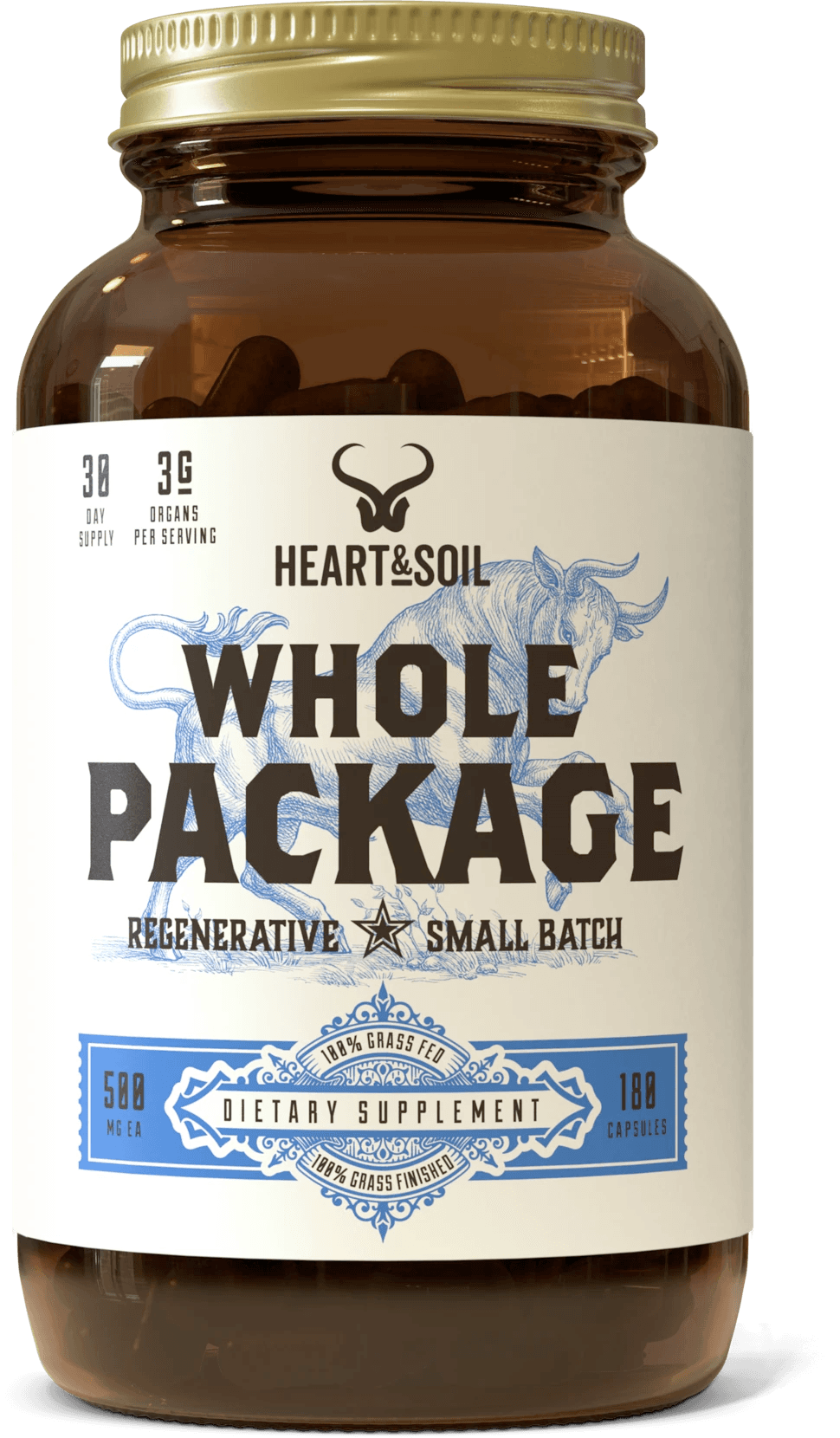
Grass-Fed Beef Blood.
Delivers concentrated heme iron with superior absorption for correcting iron deficiency without the GI side effects of standard iron supplements
Reviewed March 2026
- Category
- General
- Also filed under
- Very high heme iron contentBetter absorbed than non heme iron supplementsLess GI side effects than iron pillsNatural source of B12
What Grass-Fed Beef Blood is, and what it does.
- Does it work
- Suits people topping up iron status, especially women with higher iron needs and anyone who finds iron tablets hard on the gut. Heme iron takes a different absorption route.
- How much to take
- Start with 3g a day, up to 6g, which is the daily maintenance band and supplies a few milligrams of heme iron. Splitting it across two servings sits easier.
- Time to feel it
- Iron stores move slowly. Ferritin on a blood panel usually shifts across four to eight weeks, and any change in how you handle long days follows that rather than leads it.
- The first dose
- No acute effects. Iron repletion takes weeks.
- With regular use
- Week 2-4: Energy starts improving if iron-deficient. Month 2-3: Ferritin levels measurably increasing. Month 3-4: Full benefit as new red blood cells carrying adequate iron replace old depleted ones.
- How well tolerated
- Well tolerated and gentler on the gut than many iron tablets. If you already take iron, or have been told your iron stores run high, check with a clinician before adding it.
- How it feels
- Nothing sharp. Most people describe it as iron without the gut complaints. What changes shows up on a ferritin result and, over weeks, in how stairs and long days feel.
- The overlooked benefit
- Heme iron sits inside a porphyrin ring, so phytate in grains and polyphenols in tea bind it far less. It's an iron source that doesn't mind your morning brew.
3 to 6g a day is where Grass-Fed Beef Blood works.
Source: Heme iron absorption studies, bovine hemoglobin research
The proof, claim by claim.
These words describe the research, not the molecule's worth. Research strength is how much work stands behind one claim, and it is never a product score.
- Superior iron absorption vs. standard supplements
- Better GI tolerance than ferrous sulfate
- Effective for iron deficiency anemia
Questions people ask about Grass-Fed Beef Blood.
- Is this just blood in a pill?
- Yes. Freeze-dried and encapsulated, but yes. If that bothers you, heme iron polypeptide supplements (like Proferrin) deliver the same type of iron in a more processed, less 'blood-like' format. The biology is the same. It's just a matter of comfort level.
- Can't I just eat red meat for iron?
- You can, and that's the most natural way to get heme iron. A 6 oz steak provides 3-4mg of heme iron, comparable to a daily dose of blood capsules. But some people don't eat enough red meat, have higher iron needs (pregnancy, heavy periods), or need a more concentrated source.
- How does this compare to regular iron pills?
- Regular iron pills (ferrous sulfate, ferrous fumarate) provide more total iron per dose (18-65mg) but absorb less efficiently (2-20%) and cause more GI side effects. Beef blood provides less total iron (3-5mg) but absorbs much better (15-35%) and is gentler on your stomach. The net iron delivery may be similar.
- Should I get blood work first?
- Absolutely. Never start any iron supplement without checking your ferritin level. If your ferritin is above 50 ng/mL, you probably don't need extra iron. If it's below 30, you likely do. Your doctor should also rule out causes of iron deficiency (bleeding, absorption issues) before you just start supplementing.
- Is the 'grassfed' part important?
- For blood products, sourcing quality matters for contaminant reasons. Grassfed cattle from clean environments have lower heavy metal and pesticide burdens. Since blood is a fluid that circulates through the entire animal, any systemic contaminants will be present in the blood. Quality sourcing provides peace of mind.
- Is this safe during pregnancy?
- Iron supplementation during pregnancy is often necessary, and heme iron is generally well-tolerated. But the specific product (desiccated beef blood) hasn't been studied in pregnant women. Most OBs would prefer a standardized iron supplement where the dose is precisely known. Discuss with your doctor.
Why these belong in the same formula. Each row says what the basis is, from settled biochemistry through to a trial that measured the pair.
Ascorbate reduces ferric iron to the ferrous form that DMT1 carries and keeps it soluble against inhibitors in the same meal. The effect applies to the non-heme fraction of a blood-derived source rather than to heme iron.
Iron leaving the enterocyte must be oxidised back to the ferric state by the copper-dependent ferroxidases hephaestin and ceruloplasmin before transferrin can carry it. Low copper leaves iron stranded despite adequate intake.
Iron and zinc both move through DMT1 and share export capacity at the basolateral membrane, so a large dose of one in solution lowers uptake of the other. Taking them at separate times removes the competition.
Calcium is the one dietary factor that lowers uptake of both heme and non-heme iron, acting inside the enterocyte on the common export step. A calcium dose alongside an iron-bearing food reduces what is retained.
Manganese is carried by DMT1, the same divalent metal transporter iron uses, so the two compete at the brush border. The competition runs both ways and is strongest when both are given as a bolus.
Iron supplies the heme portion of haemoglobin while B12 is required for the DNA synthesis that lets erythroid precursors divide normally. Both have to be present for red cell production to proceed at a normal rate.
Folate supplies one-carbon units for thymidine synthesis in dividing erythroid precursors, a separate requirement from the iron that fills each haemoglobin molecule. The two limit red cell formation at different steps.
Flavin-dependent reductases participate in releasing iron from ferritin and in reducing it for cellular use. Riboflavin status therefore affects how efficiently absorbed iron is put to work.
Vitamin A status influences the release of iron from liver stores and its incorporation into developing red cells. Intake alone does not settle iron handling when vitamin A is short.
Galloylated catechins and tannins bind non-heme iron in the gut lumen into complexes that are not taken up. Heme iron is largely shielded from this, so the loss falls on the non-heme fraction.
Tannic acid is the classic inhibitor used to demonstrate polyphenol binding of non-heme iron, forming insoluble complexes at gut pH. It has little effect on the heme fraction of the same meal.
Phytate in plant foods chelates non-heme iron and holds it back from uptake, and phytase hydrolyses the phosphate groups that do the binding. Degrading phytate frees iron that would otherwise pass through unabsorbed.
The body builds its own haem from glycine and succinyl-CoA, and that first condensation needs pyridoxal-5-phosphate. Dietary haem iron supplies the iron. B6 supports the pathway that builds new haem rings. The two address different halves of normal red blood cell formation.
Delta-aminolevulinate synthase condenses glycine with succinyl-CoA to start the porphyrin ring. Glycine is therefore a direct structural precursor of haem. Blood-derived material also carries substantial glycine in its globin protein fraction.
Lactoferrin is an iron-binding glycoprotein that holds ferric iron tightly across a wide pH range. Where it binds free iron in the gut lumen, it changes the form iron is presented in. Haem iron travels a different route through the enterocyte than free ionic iron, so the interaction applies mostly to the non-haem fraction of a mixed dose.
Haem iron and ferrous sulfate enter the enterocyte by different routes but converge on the same body iron pool and the same hepcidin-driven regulation. Stacking two iron products means the elemental total is what counts, not either label separately. Unabsorbed ionic iron is also the part that drives gastrointestinal complaints, which does not scale down just because a second source was added.
Psyllium forms a gel that slows mixing and can entrain divalent minerals. The effect is more pronounced for free ionic iron than for iron still held inside the haem ring, which is absorbed as an intact porphyrin complex. Separating a fibre dose from an iron dose by a couple of hours is the standard formulation answer.
The carboxylate groups along a pectin chain coordinate divalent metals in the gut lumen. That binding applies principally to ionic iron rather than to intact haem. Pectin also ferments to short-chain fatty acids that lower colonic pH, a separate effect that runs the other way for mineral solubility.
Activated charcoal has a very large adsorptive surface and does not discriminate between what it binds. Anything taken in the same window, including nutrients from a blood-derived powder, can be adsorbed and carried through unabsorbed. Charcoal is normally separated from all other supplements and medication by several hours.
An acidic stomach environment keeps non-haem iron soluble and starts the proteolysis that releases haem from the globin chains it is bound to. Betaine hydrochloride is used to supply that acidity where gastric acid output is low. The relationship is chemistry and digestion rather than a tested combination.
Haemoglobin is haem bound inside a protein. Gastric pepsin digests the globin chains, which is what frees the haem for uptake. Without that proteolytic step the iron stays inside a large protein the enterocyte cannot take up.
Sulfite oxidase and xanthine oxidase are molybdenum enzymes and both are worked harder by a high intake of animal protein. A blood-derived powder is close to pure protein by composition. This is a background adequacy point rather than an interaction between the two ingredients.
Iron moving out of storage has to be reduced from the ferric to the ferrous state, and flavin-dependent reductases participate in that step. Riboflavin status therefore affects iron handling downstream of absorption. This is a distinct role from the absorption-side effects of ascorbate.
In haemoglobin, the proximal histidine holds the iron atom in place within the porphyrin ring, and the distal histidine shapes oxygen binding. Histidine is therefore structurally central to what blood-derived material is made of. Free histidine also forms soluble complexes with ionic iron in the gut.
The porphyrin ring starts as glycine plus succinyl-CoA. Coenzyme A is assembled from pantothenic acid, so pantothenate adequacy sits upstream of that condensation. It supports the body's own haem production, separate from any dietary haem supplied.
Talk to a doctor before taking Grass-Fed Beef Blood if any of these apply to you: Not for people who don't need extra iron, Iron overload risk if hemochromatosis, Unusual source may bother some people. These are flags to check first, not effects Grass-Fed Beef Blood is known to cause.
Not medical advice. Show the label to your pharmacist.What Grass-Fed Beef Blood actually does.
Haem iron gets absorbed as an intact iron-porphyrin package, by a route separate from the transporter that carries free ionic iron. That's why the two behave differently when dietary inhibitors are around.
Inside the gut lining cell, haem oxygenase cracks the porphyrin ring open and drops the iron into the same internal pool non-haem iron joins. Both converge before ferroportin ships them out.
Phytate and polyphenols bind ionic iron in the gut and cut how much gets taken up. Iron still tucked inside the haem ring is largely shielded from that binding.
Bovine blood is roughly a fifth protein by weight, mostly haemoglobin. So dried whole-blood powder is a concentrated protein and haem iron source rather than a source of fat or carbohydrate.
Where Grass-Fed Beef Blood comes from.
It starts as blood collected from cattle at the abattoir, kept cold and treated to reduce microbes, then dried into a dark powder and tested for iron content, microbial safety and heavy metals. Grass-fed refers to how the animals were raised, which is tracked through paperwork rather than measured in the powder. The powder is strong tasting and oxidises easily, which is why it is nearly always sold in capsules.
Made from an animal material. Species and tissue are the things worth knowing, and both belong on a label.
Blood is collected under controlled hygienic conditions at the abattoir, immediately chilled and anticoagulated, since it is a highly perishable material and microbial load rises quickly at ambient temperature. Grass-fed sourcing describes the animal's diet, which is documented through the abattoir's supply chain rather than measured in the blood itself.
Where a red-cell concentrate is the target, chilled blood is centrifuged to split the haemoglobin-rich cell fraction from plasma. Whole-blood products skip this step.
Heat treatment reduces microbial load. Where a haem iron polypeptide is being made, controlled enzymatic hydrolysis instead cleaves globin into peptides while keeping the haem group intact.
Spray drying passes the liquid through a heated air stream. Freeze drying removes water by sublimation under vacuum. Either way the target is a low-moisture powder that will not support microbial growth.
Finished powder is assayed for total and haem iron, screened for microbial counts including pathogens, and tested for heavy metals before release.
The powder is capsulated or blended, usually in opaque capsules, because the material is dark, strongly flavoured and oxidises on exposure to air and light.
Getting Grass-Fed Beef Blood from food.
The whole-food sources on file. A supplement closes the gap, it does not replace dinner.
A gram-for-gram figure (how much of each you would eat to match a dose) will appear here once it is sourced and reviewed. This page will not print a number it cannot cite.
The forms it comes in.
The essence, in one line each.
- Pooling trials in adults, increasing intake of red meat, a food source of heme iron, was associated with improvement in iron status markers.Meta-analysis. McManus et al., 2025 (Nutrition reviews). PMID 40063701 ↗
- A review of untargeted metabolomics work discusses how forage-based cattle production shows up in animal tissue metabolite profiles. The ingredient is named only in that agricultural context and no human supplementation outcome is measured.Narrative review. Fleming et al., 2025 (Journal of Animal Science). PMID 40831047 ↗
- A cattle supplementation study reports blood parameters in cows and calves as production measures. It characterises bovine blood chemistry rather than testing any human supplement.Animal study. Izquierdo et al., 2024 (Journal of Animal Science). PMID 38647379 ↗
- A grain-finished beef cattle study of protected lysine reports nitrogen balance and growth. Relevant to the composition of the source animal, not to human supplementation.Animal study. Herzog et al., 2026 (Translational Animal Science). PMID 42312198 ↗
- Dietary rapeseed inclusion in beef cattle reduced enteric methane without affecting animal performance measures. A livestock production finding that describes the source animal's husbandry.Animal study. Folliard et al., 2026 (Animal). PMID 41780102 ↗
- Feed additives were assessed against ruminal fermentation, intake and nutrient digestibility in cattle. The endpoints are rumen measures in the animal, not human nutrition.Animal study. Santiago et al., 2026 (Archives Animal Breeding). PMID 42110563 ↗
These are the studies our verdict leans on, chosen from the 1,122 we read for Grass-Fed Beef Blood. The full linked list is below.
FDA Disclaimer: These statements have not been evaluated by the Food and Drug Administration. This information is for educational purposes only and is not intended to diagnose, treat, cure, or prevent any disease. Consult your healthcare provider before starting any supplement regimen.