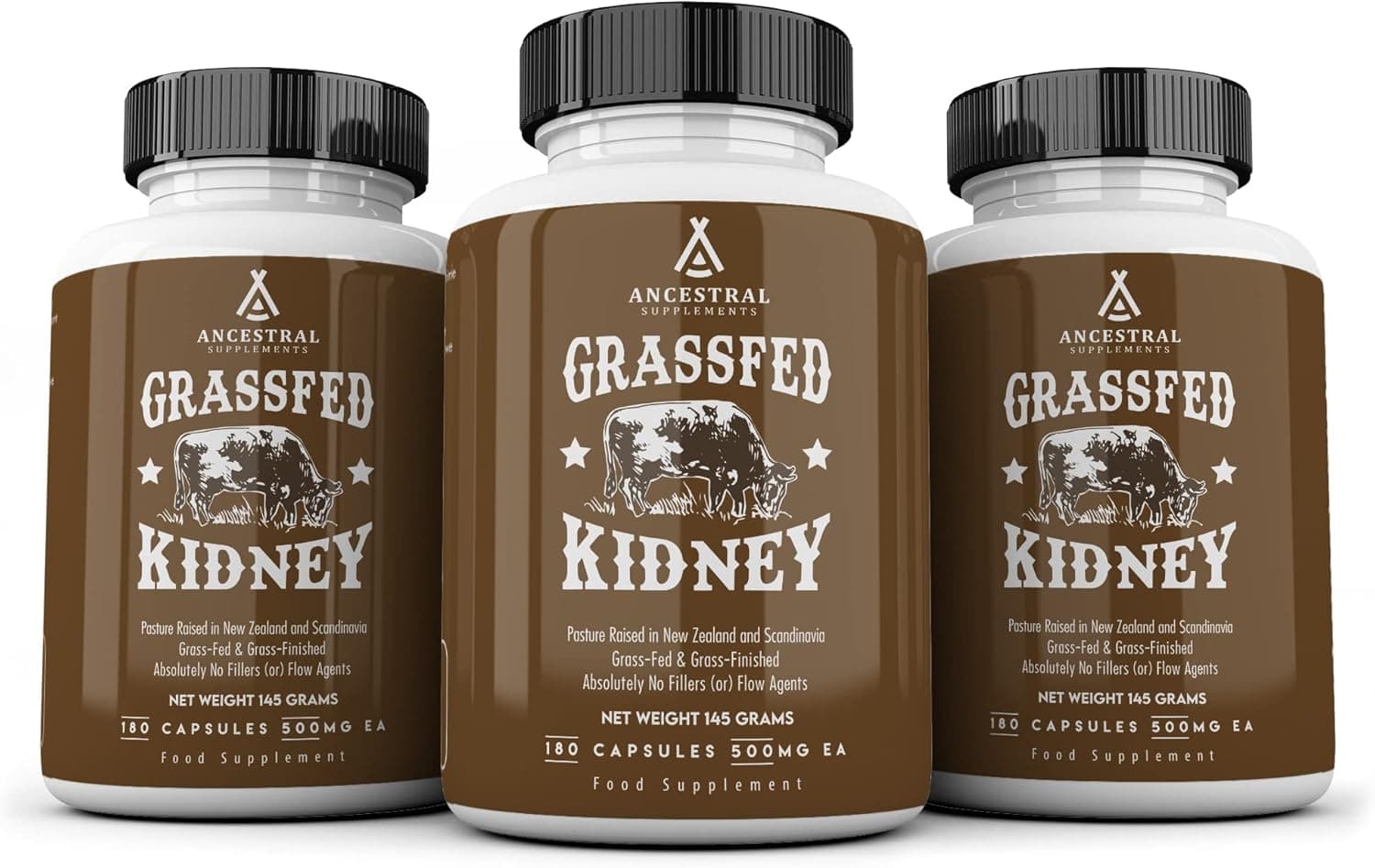
Bovine Pancreas.
Desiccated pancreas providing natural digestive enzymes for people with compromised digestion. Provides natural digestive enzymes for people whose pancreas isn't producing enough on its own
Reviewed March 2026
- Category
- General
- Also filed under
- Natural digestive enzyme sourceMay support fat digestionTraditional use in pancreatic insufficiency
What Bovine Pancreas is, and what it does.
- Does it work
- Suits people who want enzyme help with heavy or fatty meals. Anyone with a medical reason to need enzyme support should have that arranged with their doctor.
- How much to take
- Start with 500mg alongside a meal and settle between 500mg and 1,500mg a day, split across meals. Enzymes act where food is, so timing matters as much as the total.
- Time to feel it
- The same meal. Enzymes act as soon as they meet food, so any change in after meal comfort shows within an hour or two rather than over weeks.
- The first dose
- Meals may sit lighter from the first dose. If your digestion was already handling things smoothly, day one passes quietly and the effect stays in meal comfort.
- With regular use
- Weeks of use with meals keep that after meal comfort going and support steady absorption of the fat soluble nutrients in what you eat.
- How well tolerated
- Generally well tolerated. Mild nausea or looser stools can happen early on. Beef protein allergy is a reason to avoid it, and check with your doctor if you take medication.
- How it feels
- Meals feel lighter. Less gas, less heaviness after a rich plate. It sits in the background, and you mostly notice it on the days you forget it.
- The overlooked benefit
- Lipase is destroyed by stomach acid, so whether the capsule is enteric coated changes the outcome more than the milligram figure on the front of the label.
500 to 1,500mg a day is where Bovine Pancreas works.
Source: Pancreatic enzyme replacement therapy literature (extrapolated)
The proof, claim by claim.
These words describe the research, not the molecule's worth. Research strength is how much work stands behind one claim, and it is never a product score.
- Improves digestion in enzyme-deficient individuals
- Reduces bloating after meals
- Helps nutrient absorption
Questions people ask about Bovine Pancreas.
- Do I need a prescription for this?
- No. OTC desiccated bovine pancreas is a dietary supplement. However, if you have diagnosed pancreatic insufficiency (from cystic fibrosis, pancreatitis, or surgery), prescription enzymes like Creon are much more potent and standardized. OTC versions are better for mild digestive complaints.
- Will my body stop making its own enzymes?
- No. This is a common fear, but there's no evidence that supplemental enzymes cause your pancreas to reduce its own production. Your pancreas doesn't work on a supply-demand feedback loop for enzyme output.
- Can I just eat more pineapple instead?
- Pineapple (bromelain) only digests proteins. Bovine pancreas provides protease, lipase, AND amylase, covering proteins, fats, and carbohydrates. They're not interchangeable. If your issue is fat digestion specifically, pineapple won't help.
- How do I know if I actually need this?
- Classic signs of enzyme deficiency: bloating within 30-60 minutes of eating, oily/floating stools, undigested food in stool, feeling full long after meals, and unexplained weight loss despite eating enough. A fecal elastase test can confirm pancreatic insufficiency.
- Should I take it with every meal?
- With every meal containing significant protein or fat, yes. Snacks like fruit or crackers don't need it. The heaviest meals (dinner for most people) need the most enzyme support.
- Is this the same as 'pancreatin'?
- Basically yes. Pancreatin is the pharmaceutical name for the mixture of enzymes extracted from pancreas. Desiccated bovine pancreas is the whole-food version. Pancreatin is more concentrated and standardized. Think of it as the difference between eating an orange and taking a vitamin C pill.
Why these belong in the same formula. Each row says what the basis is, from settled biochemistry through to a trial that measured the pair.
Pancreas glandular and pancreatin both supply the pancreatic triad of lipase, protease and amylase, so their activities pool on the same substrates in the small intestine. Formulators combine them to reach a stated activity level rather than to add a new mechanism.
Bile salts emulsify dietary fat into small droplets and form mixed micelles, which is the interface pancreatic lipase needs to act on. Without adequate bile salts the lipase fraction of a pancreatic glandular has far less surface to work at.
Added microbial or fungal lipase raises total lipolytic activity alongside the lipase already present in pancreatic tissue. Fungal lipases also stay active at lower pH, so activity begins earlier in the stomach.
Amylase hydrolyses starch to maltose and dextrins, the same reaction the pancreatic amylase fraction carries out. Combining the two lifts total amylolytic activity per serving.
Trypsin is the pancreatic serine protease that also activates the other pancreatic zymogens once it is itself activated. Supplying it alongside pancreatic tissue reinforces the same proteolytic step at alkaline duodenal pH.
Chymotrypsin cleaves next to aromatic residues while trypsin cleaves next to basic residues, so the two cut a protein at different points. Together they break peptides down further than either does alone.
Pepsin works in the acidic stomach and pancreatic proteases work at alkaline pH downstream, so they cover consecutive stages of protein digestion rather than the same one. Long-standing practice pairs them for that staging, not for additive activity in one compartment.
Pancreatic lipase and protease are acid labile and lose activity below about pH 4, which is the environment added hydrochloric acid creates in the stomach. Taken in the same uncoated capsule the two work against each other, so pancreatic enzymes are normally enteric coated or dosed apart from acid.
Pancreatic enzymes have their activity optimum in the mildly alkaline range that bicarbonate normally creates in the duodenum. Raising luminal pH keeps more of the delivered lipase and protease in an active conformation.
Bromelain is a plant cysteine protease that stays active across a broad pH span, including the acidic stomach where pancreatic proteases are not. Blends use it so proteolysis is not confined to the duodenal window.
Papain is another broad-pH plant cysteine protease with cleavage preferences that differ from the pancreatic serine proteases. It extends protein breakdown into stomach conditions where pancreatic enzymes are inactive.
Taurine conjugates bile acids, and taurine-conjugated bile salts stay ionised and soluble across a wider pH range than glycine-conjugated ones. Better micelle formation gives pancreatic lipase a larger lipid interface to act on.
Fat-soluble vitamins are taken up from mixed micelles, and micelle formation depends on fat being hydrolysed by lipase first. Adequate pancreatic lipase activity is part of how tocopherol from a meal or a softgel reaches the enterocyte.
Activated charcoal adsorbs organic molecules including proteins, so enzymes taken at the same time bind to its surface instead of reaching their substrate. Standard practice is to space charcoal several hours away from enzyme products.
Retinyl esters have to be hydrolysed and packaged into mixed micelles before the enterocyte can take them up, and pancreatic lipase and carboxyl ester hydrolase do that work. Where pancreatic enzyme output is low, fat-soluble vitamin uptake falls with it. Supplying pancreatic enzyme material alongside vitamin A addresses the digestion step rather than the vitamin supply.
Cholecalciferol is lipophilic and rides the same micellar route as dietary triglyceride. Lipase activity is what makes that route work. This is a digestion-side pairing and says nothing about how much vitamin D a person needs.
MK-7 is carried in lipoproteins and enters through the same lipid digestion pathway as other fat-soluble vitamins. Poor fat digestion lowers its uptake. Pancreatic enzyme material acts on the digestion step, not on vitamin K metabolism itself.
Ubiquinone is one of the more lipophilic supplement molecules and its absorption tracks the fat content of the meal it is taken with. Lipase-driven micelle formation is the rate-limiting step for that. The pairing is about getting the molecule across the gut wall, nothing more.
Triglyceride-form omega-3 oils must be cleaved to 2-monoacylglycerol and free fatty acids before absorption, and pancreatic lipase with colipase does that cleavage. Ethyl ester forms depend on the same enzyme even more heavily. Enzyme support addresses hydrolysis, not the fatty acid content of the oil.
Medium-chain fatty acids are absorbed largely intact into the portal circulation with far less dependence on pancreatic lipase and bile salt micelles than long-chain fats. That makes MCT a complementary fat source when lipolytic capacity is limited, rather than a partner that enzymes act on. Worth stating in both directions: the enzymes add little to MCT uptake.
Pancreatic carboxypeptidases carry a catalytic zinc ion at the active site and lose activity without it. Zinc status therefore sits underneath one arm of protein digestion. This is a cofactor relationship, not a claim that adding zinc raises enzyme output.
Dietary B12 leaves the stomach bound to haptocorrin, and pancreatic proteases degrade that carrier in the duodenum so intrinsic factor can pick the vitamin up for ileal uptake. Low pancreatic protease output interrupts this handover step. The relationship is about transfer between carriers, not about B12 dose.
Trypsin carries a structural calcium-binding site that stabilises the folded enzyme against autolysis, and calcium at the oil-water interface influences how released long-chain fatty acids behave during lipolysis. Both are bench-level observations about enzyme behaviour, not measured digestive outcomes in people. Large calcium doses taken with fat also form insoluble soaps, so the interaction runs in both directions.
Pancreatic phospholipase A2 hydrolyses phosphatidylcholine to lysophosphatidylcholine, which is itself a strong emulsifier that helps solubilise other lipids. Supplemental phosphatidylcholine feeds directly into that reaction. The pairing describes a substrate and its enzyme, not an added benefit claim.
Lecithin is a phospholipid mixture that emulsifies fat in the gut lumen and gives pancreatic phospholipase A2 something to work on. Finer emulsion droplets give lipase more surface area. This is formulation-level physical chemistry rather than a clinical finding.
Tannins form hydrogen-bonded complexes with proline-rich proteins and with digestive enzymes, and in vitro work consistently shows reduced amylase and protease activity in their presence. Taking a strongly tannin-rich preparation in the same mouthful as a pancreatic enzyme product is a plausible way to lose activity. Separating them by an hour sidesteps the question.
Psyllium forms a viscous gel that slows the diffusion of enzymes and substrates toward each other and toward the mucosa. That is a mixing effect and is not the same as inactivating the enzyme. Spacing the two is the ordinary handling.
Colonic bacteria ferment carbohydrate that escapes small-intestinal digestion, so the amount of substrate reaching them shifts when upstream enzyme activity changes. The direction of that shift depends on the individual and has not been measured for bovine pancreas material specifically. Regard this as a plausible interaction, not a demonstrated one.
Enterocytes oxidise glutamine preferentially, which is why it appears in formulations aimed at the intestinal lining. That supports the absorptive surface rather than the digestive enzymes themselves. The two act at different points of the same sequence.
Both are bovine-derived materials that appear together in gut-support formulas, colostrum for its immunoglobulin and growth-factor content and pancreas material for enzyme activity. No combination trial of the pair is available. The pairing is a formulation convention, and it should be read that way.
Beta-carotene is essentially insoluble in water and reaches the enterocyte only inside mixed micelles built from digested fat and bile salts. Lipase output is upstream of that. The pairing addresses uptake, not conversion to retinol.
Lutein esters in particular need hydrolysis before absorption, and free lutein still needs micellar carriage. Both steps sit downstream of pancreatic lipolysis. Taking lutein with a fat-containing meal is the ordinary way to address this.
Broad digestive blends combine pancreatic enzymes with plant and fungal enzymes that stay active over a wider pH range. Pancreatic proteases and lipase work in the alkaline duodenum, while fungal enzymes retain activity in the acidic stomach. The two cover different segments of the same transit rather than duplicating each other.
Talk to a doctor before taking Bovine Pancreas if any of these apply to you: Not standardized like prescription pancreatin, Variable enzyme activity between brands, Talk to your doctor if you have pancreatic issues. These are flags to check first, not effects Bovine Pancreas is known to cause.
Not medical advice. Show the label to your pharmacist.What Bovine Pancreas actually does.
It supplies the three kinds of enzymes the pancreas normally makes: ones for protein, one for starch and one for fat.
The protein enzymes arrive switched off and are turned on in the small intestine, one activating the next.
These enzymes only work once stomach acid has been neutralised, which is why many products use a coating that opens further down.
Fat digestion happens at the surface of fat droplets, so smaller droplets are digested faster.
Where Bovine Pancreas comes from.
It comes from cattle pancreas glands collected at the abattoir, dried gently so the enzymes survive, then tested batch by batch for how much enzyme activity is actually there.
Made from an animal material. Species and tissue are the things worth knowing, and both belong on a label.
Pancreas glands recovered at abattoir from cattle processed for meat, a by-product stream rather than a purpose-raised input. Chilling speed after collection is the first determinant of surviving enzyme activity.
Connective tissue and fat are trimmed, and the gland is washed. Trypsinogen is still a zymogen at this point, but autolysis begins as soon as any activation occurs, so cold chain is maintained throughout.
Freeze-drying or low-temperature vacuum drying removes water without the heat that would denature lipase. Some processes instead use a solvent defatting step to concentrate the enzyme fraction.
Residual lipid is removed and the dried tissue is milled to a controlled particle size. Powder that is too fine can pick up moisture and lose activity on storage.
Protease, lipase and amylase are assayed separately and the batch is blended or diluted to hit declared activity units. Weight alone does not describe the material.
Filled into capsules, compressed, or coated with a pH-responsive polymer so release occurs past the stomach. Compression heat and moisture during coating both cost activity, which is why post-processing assay is done.
Country of herd origin, the specific drying route and whether a solvent defatting step was used are frequently not stated on a label.
The forms it comes in.
The essence, in one line each.
- An editorial arguing that pancreatic amylase and the acini-islet-acinar reflex deserve attention as a link between exocrine enzyme output and metabolic regulation.Narrative review. Deji-Oloruntoba et al., 2025 (World Journal of Experimental Medicine). PMID 40115752 ↗
- A blend of essential oils was reported to affect digestibility, organ development including the pancreas, and gene expression in the animals studied.Animal study. Campolina et al., 2023 (Scientific Reports). PMID 36854876 ↗
- Processing method of a protein feed ingredient altered production parameters, blood biochemistry and gut function measures in the animals studied.Animal study. Safari et al., 2024 (Journal of Animal Science). PMID 38477705 ↗
These are the studies our verdict leans on, chosen from the 3 we read for Bovine Pancreas. The full linked list is below.
FDA Disclaimer: These statements have not been evaluated by the Food and Drug Administration. This information is for educational purposes only and is not intended to diagnose, treat, cure, or prevent any disease. Consult your healthcare provider before starting any supplement regimen.