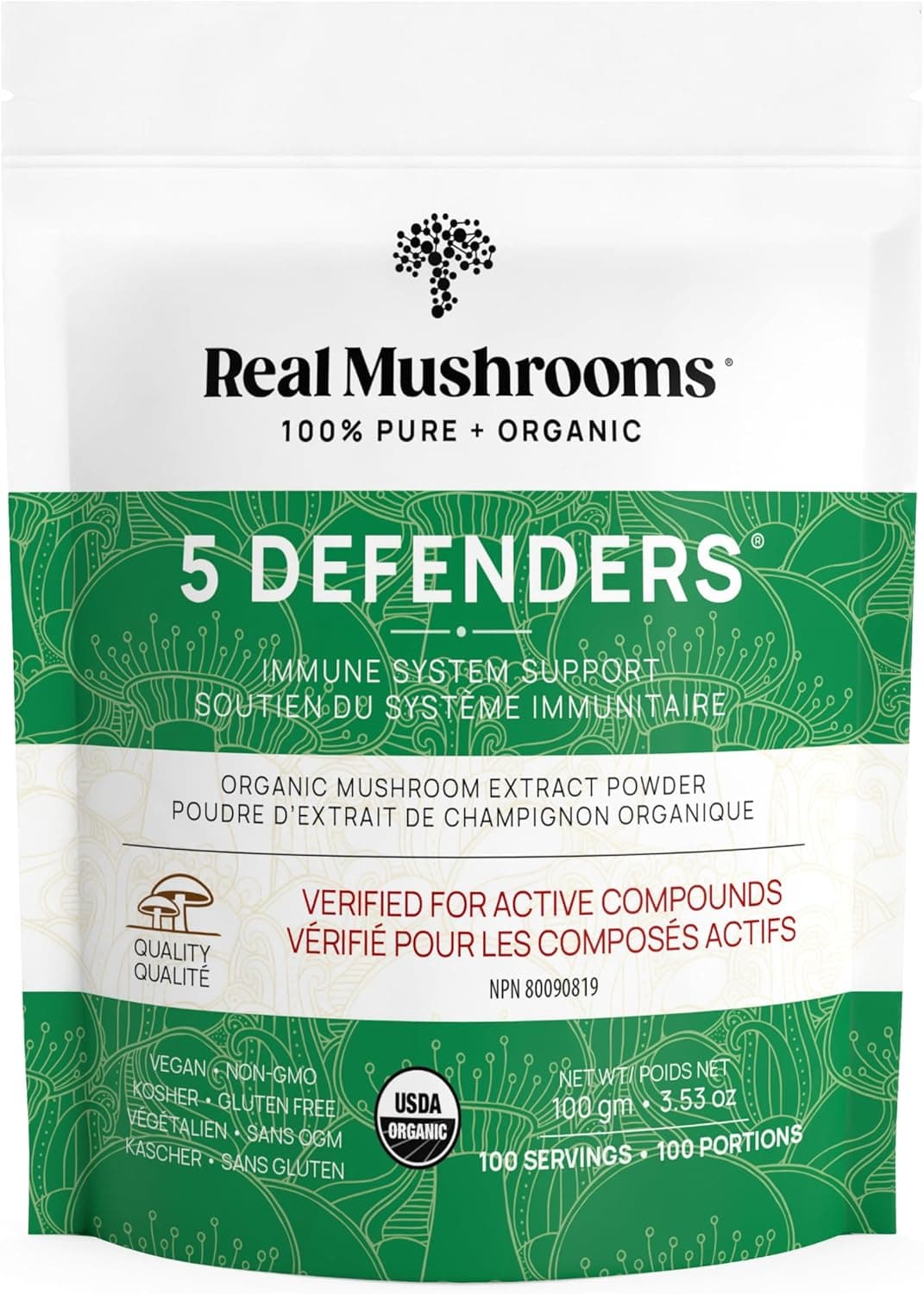
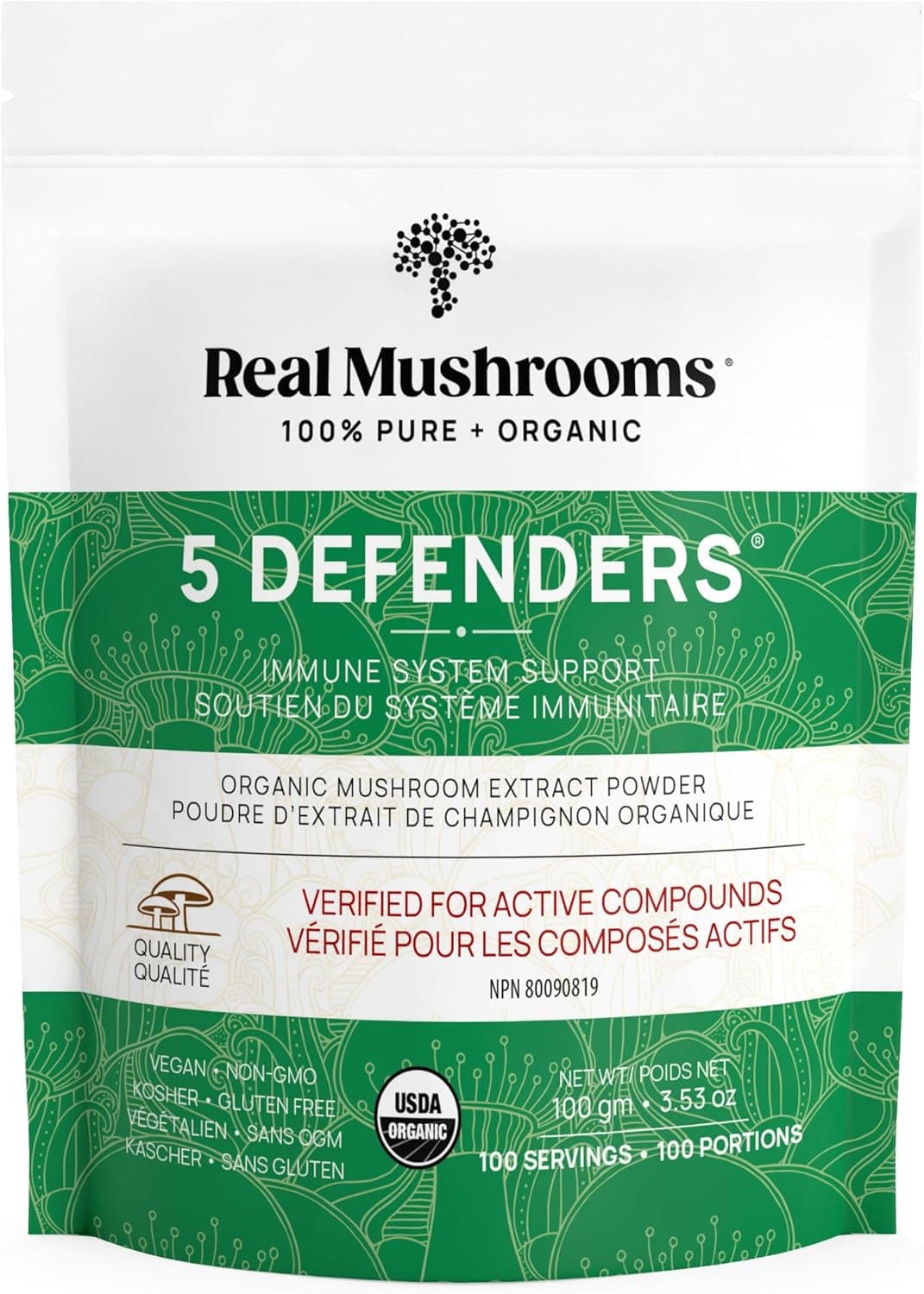
Maitake Mushroom.
Supports immune function and blood sugar balance. Trains your immune system to be smarter, not just stronger. Also helps your body manage blood sugar more effectively.
Reviewed March 2026
- Category
- Herb
- Also filed under
- Immune supportBlood sugar managementAntioxidant properties
What Maitake Mushroom is, and what it does.
- Does it work
- Yes. Good evidence for immune support, promising for blood sugar. A solid choice if those are your goals.
- How much to take
- Look for extracts standardized for beta-glucans. Aim for 500-1000mg of a quality extract daily.
- Time to feel it
- Nothing acute to wait for. Immune and glucose markers in studies are read at four to eight weeks, so daily use across a season is how it is judged.
- The first dose
- Nothing. Zip. This isn't a stimulant. It needs time to work with your body.
- With regular use
- After 4-8 weeks, you might notice you're catching fewer colds. Energy levels can feel more stable throughout the day.
- How well tolerated
- Generally well tolerated. This is not a suggestion.
- How it feels
- Subtle. It's not a jolt of energy. More like your system is running a bit smoother in the background. A quiet upgrade.
- The overlooked benefit
- Maitake carries ergothioneine, a sulfur amino acid your body actively transports into tissues under oxidative load. Mushrooms are one of the few real dietary sources.
500mg a day is where Maitake Mushroom works.
Source: Konno et al., J Nat Med 2013; immune modulation studies
The proof, claim by claim.
These words describe the research, not the molecule's worth. Research strength is how much work stands behind one claim, and it is never a product score.
Research on maitake mushroom is promising but still developing. More robust human trials are needed to confirm its full range of benefits and optimal dosages.
- Beta-glucan recognition by dectin-1 on innate immune cellsIn vitro study
- Immune cell activity markers in peopleRandomised trial
- Glucose metabolism markersAnimal study
- Ergothioneine uptake by the OCTN1 transporterNarrative review
- Vitamin D2 formation from ergosterol on UV exposureNarrative review
Questions people ask about Maitake Mushroom.
- Can I just eat the mushroom instead?
- You can, but it's less potent. Extracts concentrate the active compounds. You'd have to eat a lot of them consistently to match a supplement.
- Is this a 'magic' mushroom?
- No. This is a medicinal mushroom. It won't make you see things, just maybe see fewer sick days.
- What does it taste like?
- The powder has a mild, earthy taste. Capsules have no taste. Mix the powder in coffee or a smoothie and you won't notice it.
- Can I take it with other mushrooms like Reishi?
- Yes. They're often sold in blends and are generally considered safe to combine. They work on different pathways.
- When is the best time to take it?
- Anytime. Morning, noon, night. Consistency is far more important than timing.
- Do I need to cycle it?
- Nope. It's considered well tolerated in daily, long-term use.
Why these belong in the same formula. Each row says what the basis is, from settled biochemistry through to a trial that measured the pair.
Maitake beta-glucans and yeast beta-glucans both engage dectin-1 and complement receptor 3 on innate immune cells, differing in branching pattern rather than in target. Combining sources broadens the range of glucan structures presented on one pathway.
Turkey tail supplies protein-bound polysaccharides that engage the same innate receptors as maitake glucans through a different structural form. The two are the standard pairing in immune mushroom blends.
Mushrooms are the main dietary source of ergothioneine, a thiol taken into cells by the OCTN1 transporter where it buffers oxidative stress. Adding the isolated compound tops up the small amount a maitake extract already carries.
Mushroom ergosterol converts to vitamin D2 under ultraviolet light, and vitamin D signalling shapes how innate immune cells respond to glucan stimulation. Nutrient status sets the response the polysaccharide triggers.
Zinc is required for normal lymphocyte development and cytokine signalling, the cellular capacity a glucan stimulus draws on. The mineral supplies function while the mushroom supplies the signal.
Selenoproteins buffer the oxidative burst that follows innate immune activation, so selenium supports the same cells maitake glucans stimulate. The two act at signal and at capacity.
Chromium supports normal insulin signalling while the maitake SX fraction has been described as influencing glucose handling from a different angle. Formulas aimed at normal blood sugar combine the two.
Berberine activates AMP-activated protein kinase and lowers hepatic glucose output, which adds to any glucose-handling contribution from maitake. Stacking both means the effect on normal blood sugar should be read as combined.
Cinnamon polyphenols influence insulin receptor signalling and post-meal glucose, a separate route from the mushroom polysaccharide. Their effects on normal blood sugar add rather than duplicate.
Ascorbate is the water-phase antioxidant that regenerates oxidised tocopherol, and mushroom antioxidant work is reported against assays where ascorbate is the reference. Maitake contributes ergothioneine and phenolics on the other side of that network. The pairing covers different phases rather than duplicating one.
Cultivated mushrooms concentrate copper from their substrate, and copper is the cofactor for cytochrome c oxidase and for copper-zinc superoxide dismutase. High supplemental zinc competes with copper for the same intestinal transport, so a zinc-heavy formula shifts the balance. This is dietary contribution plus cofactor biochemistry.
Ultraviolet-exposed mushrooms carry vitamin D2, which supports intestinal calcium absorption, and calcium is the mineral substrate for normal bone. A review of mushrooms in the diet and bone density covers this pairing. Bone density is a marker, and no mushroom intake substitutes for adequate calcium.
Menaquinone-7 is required by gamma-glutamyl carboxylase to carboxylate osteocalcin so it can bind mineral into bone matrix. It acts downstream of calcium absorption, where vitamin D2 from mushrooms acts. The steps are sequential rather than interchangeable.
Fungal beta-glucans resist human digestive enzymes and are fermented in the colon, the same fate as inulin. Combining two fermentable fibres raises total short-chain fatty acid substrate. It also raises gas production, which is the practical limit on how fast intake is increased.
Resistant starch ferments further along the colon than most soluble fibres reach, so it complements rather than duplicates fungal glucan fermentation. Butyrate production from starch fermentation is well characterised. Neither substrate is absorbed intact.
Beta-glucans reaching the colon undigested are available to fermentative bacteria, which is the standard rationale for pairing a fungal fibre with live organisms. Which strains use fungal glucan efficiently varies. The relationship is substrate provision, not a tested combination.
Oat beta-glucan is a linear 1,3/1,4-linked viscous fibre. Fungal beta-glucan is 1,3-linked with 1,6 branches and is not viscous. They share a name and behave differently, one through luminal viscosity and one through receptor recognition. Labelling that lumps them together is a real source of confusion.
Ganoderma and Grifola both supply branched beta-glucans with different molecular weights and branching frequencies, and receptor recognition is structure-dependent. Blends widen the structural range presented. Any effect from a blend cannot be attributed to one species.
Hericium contributes a chemically unrelated class of compounds alongside its own cell wall glucans. Mushroom blends combine species for breadth rather than for a demonstrated interaction. A randomised trial of a mushroom blend on stress, fatigue and sleep measures cannot separate the contribution of any one species.
Cordyceps militaris supplies nucleosides and its own glucan fraction, so blends stack different chemistry from the same kingdom. This is compositional breadth. Nothing characterises the specific pair.
Astragalus polysaccharides and fungal glucans appear together in traditional formulas built around normal immune function. The polysaccharide classes are structurally different. Read the pairing as traditional practice rather than as a measured interaction.
Elderberry contributes anthocyanins, a polyphenol class unrelated to fungal polysaccharides, and the two appear together in seasonal formulas. The rationale is compositional. No combination data exists.
Quercetin and mushroom phenolics both feed the same antioxidant response signalling described for mushroom-based food additives. Quercetin is poorly soluble and usually needs a carrier. The mushroom glucan fraction does not. Overlap on one pathway is not the same as an additive effect.
Mushrooms are a notable dietary potassium source relative to their weight, and potassium is the principal intracellular cation setting membrane potential. A dried extract concentrates minerals along with everything else. This is a compositional fact, not an effect of any fungal compound.
Magnesium is the counter-ion for ATP and a cofactor for hundreds of enzymes including those handling potassium gradients. Mushroom material contributes modest amounts alongside potassium. The relationship is nutritional rather than pharmacological.
Psyllium forms a viscous gel that slows gastric emptying and can slow the absorption of co-ingested compounds and medicines. Fungal glucan does not build that viscosity. Separating a viscous fibre from other actives by a couple of hours is ordinary practice.
Konjac glucomannan is highly viscous and can delay the uptake of anything taken with it, including minerals and medicines. Fungal beta-glucan works through receptor recognition rather than viscosity, so the two are not substitutes. Timing separation is the practical consequence.
Talk to a doctor before taking Maitake Mushroom if any of these apply to you: May interact with blood-thinning medications, Potential for allergic reactions in sensitive individuals, Monitor blood sugar levels if diabetic. These are flags to check first, not effects Maitake Mushroom is known to cause.
Not medical advice. Show the label to your pharmacist.What Maitake Mushroom actually does.
Maitake's main cell wall polysaccharide is a branched beta-glucan, the exact shape a receptor on innate immune cells is built to recognise.
Your digestive enzymes can't break the bonds in fungal glucan, so it travels to the colon and gets fermented there rather than absorbed whole.
Mushroom beta-glucan and cereal beta-glucan share a name, not a structure: the cereal kind works by thickening gut contents, the fungal kind works by being recognised by immune receptors.
Mushrooms only make vitamin D2 when exposed to UV light, so the vitamin D content depends on whether the crop saw UV, not on the species itself.
Where Maitake Mushroom comes from.
Maitake is grown on sawdust or grain blocks, then picked, dried and ground. Many products go a step further and simmer that powder in hot water to pull out the cell wall sugars, which is what a beta-glucan number on a label refers to. Check that the label states beta-glucan and not just polysaccharide, because leftover grain starch counts toward the second figure and does nothing fungal.
Made from a plant. What ends up in the capsule tracks the harvest, so batch testing and a stated marker matter more here than with a made molecule.
Grifola frondosa spawn is inoculated onto sterilised hardwood sawdust, supplemented sawdust blocks or grain, since commercial supply is cultivated rather than foraged.
The substrate is colonised in the dark at controlled humidity, then moved to fruiting conditions where clustered fruiting bodies form over several weeks.
Fruiting bodies are harvested, dried at controlled temperature to protect heat-sensitive constituents, and milled to a defined particle size.
Where a vitamin D2 declaration is wanted, material is exposed to ultraviolet light to convert ergosterol before or after drying.
Milled material is extracted in near-boiling water to solubilise cell wall glucans, optionally with a separate ethanol run that is later recombined. Liquor is concentrated under vacuum.
Batches are assayed for beta-glucan specifically, since a total polysaccharide figure also counts starch carried over from a grain substrate.
Concentrate is spray-dried, often onto a small carrier load, then blended and filled into capsules or packed as a bulk powder.
Getting Maitake Mushroom from food.
The whole-food sources on file. A supplement closes the gap, it does not replace dinner.
A gram-for-gram figure (how much of each you would eat to match a dose) will appear here once it is sourced and reviewed. This page will not print a number it cannot cite.
The forms it comes in.
The essence, in one line each.
- A review of antioxidant and anti-inflammatory properties of mushroom-based food additives and fortified foods, covering the phenolic, ergothioneine and polysaccharide fractions.Narrative review. Michalska et al., 2025 (Antioxidants). PMID 40427401 ↗
- A randomised double-blind trial of a multi-species mushroom blend reporting stress, fatigue and sleep measures. Because the product is a blend, no single species can be credited.Randomised trial. Hisamuddin et al., 2026 (Brain and Behavior). PMID 41540766 ↗
- A review of cultivation and biofortification methods in edible mushroom production, relevant to why mineral and vitamin D2 content varies between batches.Narrative review. Al-Juthery et al., 2026 (Food Science and Nutrition). PMID 42145822 ↗
- A review of what is done with spent mushroom substrate after cultivation. It concerns the supply chain rather than any effect of consuming the mushroom.Narrative review. Sunil et al., 2026 (Frontiers in Chemistry). PMID 42058621 ↗
These are the studies our verdict leans on, chosen from the 4 we read for Maitake Mushroom. The full linked list is below.
The studies, linked.
2 sources behind our Maitake Mushroom verdict: peer-reviewed studies and registered clinical trials. Every one links straight to PubMed, the journal, or ClinicalTrials.gov. Read them yourself.
- Clinical trialPhase 1 Study of Clinical Nutrition That Research Safty and Efficacy in Lung Neoplasms And Breast CarcinomaClinicalTrials.gov ↗480 participants, Completed
- Clinical trialDoes Maitake Mushroom Extract Enhance Hematopoiesis in Myelodysplastic Patients? A Phase II TrialClinicalTrials.gov ↗Phase 2, 45 participants, Completed
Evidence surfaced via Semantic Scholar (Allen Institute for AI) and ClinicalTrials.gov. Ranked by study type and citation weight, not cherry-picked.
Problems people have reported.
Read this carefully. These are 43 voluntary, unverified reactions reported to the FDA (openFDA). The number mostly reflects how popular Maitake Mushroom is, not how risky it is. A report is not proof Maitake Mushroom caused anything. It is a signal of what to watch for, nothing more.
Source: openFDA adverse-event reports. Voluntary reporting, not an incidence rate.
FDA Disclaimer: These statements have not been evaluated by the Food and Drug Administration. This information is for educational purposes only and is not intended to diagnose, treat, cure, or prevent any disease. Consult your healthcare provider before starting any supplement regimen.