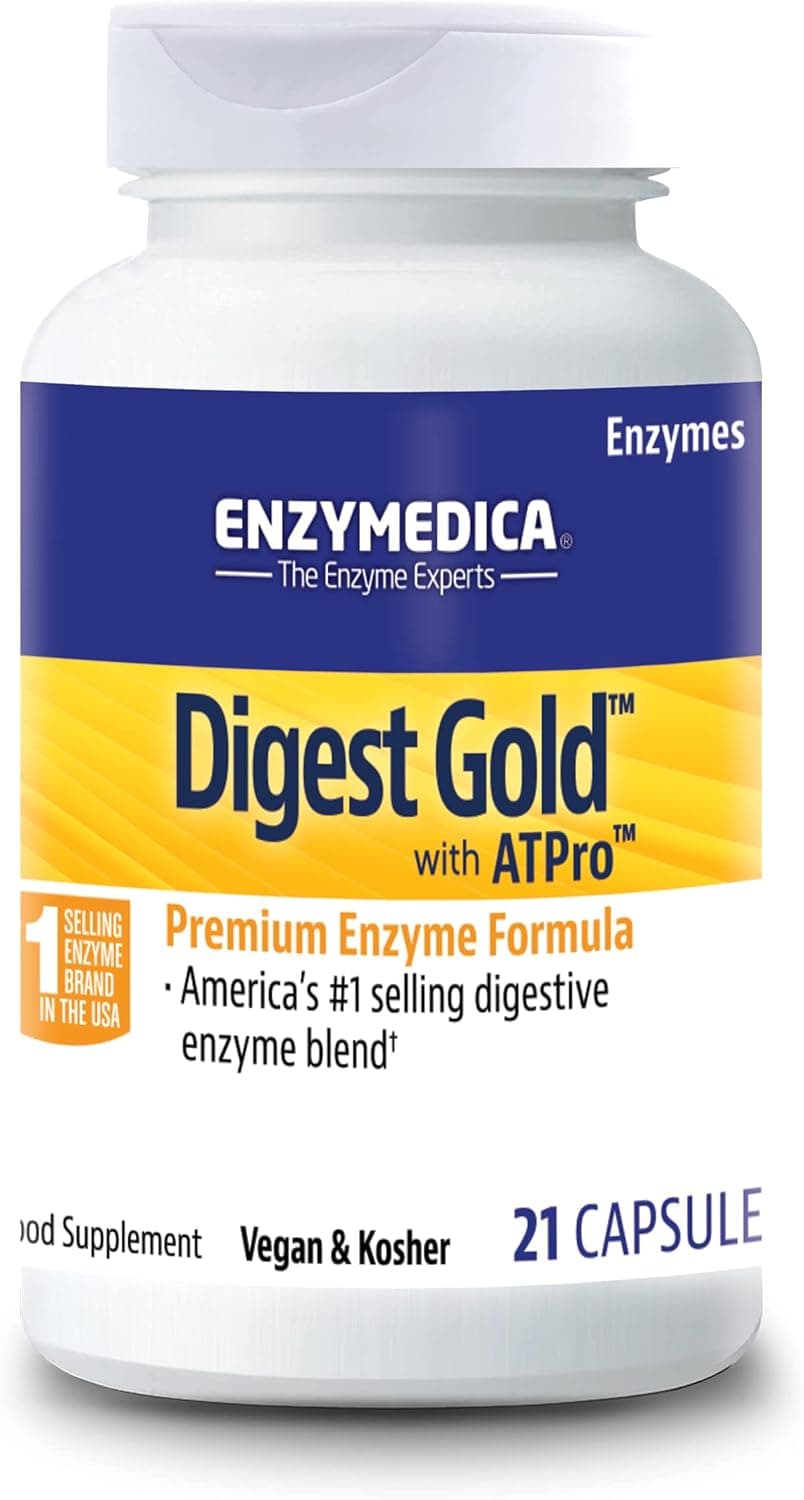
Adaptogen Complex.
Multi-adaptogen formula. Stress resilience. Helps your body handle stress better. Multiple herbs target different aspects of the stress response.
Reviewed March 2026
- Category
- Herb
- Also filed under
- StressEnergyResilience
What Adaptogen Complex is, and what it does.
- Does it work
- The convenience is nice, but doses are often too low. Single adaptogens at proper doses usually work better.
- How much to take
- Start with 500mg to 1,000mg of total blend a day. What each herb is standardised to on the back panel tells you more than the total on the front.
- Time to feel it
- Give it two to four weeks of daily use. Adaptogen trials read their stress and fatigue measures at four to eight weeks, not on day one.
- The first dose
- Minimal effects. Adaptogens work over time, not immediately.
- With regular use
- Stress resilience improves over 4-8 weeks. Energy becomes more stable.
- How well tolerated
- Generally well tolerated. But with multiple herbs, more potential for interactions. Check each ingredient.
- How it feels
- Less frazzled. More composed. Like stress bounces off easier.
- The overlooked benefit
- Several of these herbs move through the same liver enzymes, so a blend acts as one pharmacokinetic system rather than a stack of separate herbs.
500 to 1,000mg a day is where Adaptogen Complex works.
Source: Depends on specific blend composition
The proof, claim by claim.
These words describe the research, not the molecule's worth. Research strength is how much work stands behind one claim, and it is never a product score.
Based on 15 human trials.
- Reduces perceived stressBased on individual adaptogen research
- Improves energySeveral adaptogens show this effect
- Better than single adaptogensNo head-to-head comparisons available
- Balances cortisolMultiple adaptogens affect HPA axis
Questions people ask about Adaptogen Complex.
- When should I take it?
- Timing matters less than consistency. Pick a time that works for you and take it daily.
- Can I take it with other supplements?
- Usually fine. The main thing to watch is not doubling up on the same ingredient from different products. If you're on prescription meds, check with your pharmacist first.
- Any side effects to watch for?
- Most people tolerate it well at recommended doses. GI upset is the most common complaint with any supplement. Start with a lower dose and work up. If something feels off, stop and reassess.
Why these belong in the same formula. Each row says what the basis is, from settled biochemistry through to a trial that measured the pair.
Theanine raises alpha wave activity and moderates glutamatergic excitation on a timescale of under an hour, while adaptogens act over weeks on the stress axis. The pairing covers both the acute and the adaptive side.
Caffeine blocks adenosine receptors and raises catecholamine drive. Adaptogens temper the perceived strain that comes with that drive. Blends pair them so the alertness arrives with less jitter.
Magnesium regulates NMDA receptor tone and is lost more quickly when stress hormone output is high. Replacing it supports the same axis the adaptogens act on.
B6, folate, B12 and pantothenic acid are required to build and clear the catecholamines and steroid hormones that the stress axis runs on. Adaptogens modulate that axis but do not supply its cofactors.
The adrenal cortex holds one of the highest ascorbate concentrations in the body and depletes it during steroidogenesis. Adaptogenic blends are routinely built with ascorbate for that reason.
Phosphatidylserine dampens the pituitary side of the cortisol response after exertion. It reaches the same axis adaptogens act on, from a membrane-signalling angle rather than a receptor one.
Glycyrrhizin blocks 11-beta-hydroxysteroid dehydrogenase type 2, which raises sodium retention and pushes potassium out. In an adaptogenic blend meant for long daily use that is a real limit on the licorice fraction.
Where a blend carries whole licorice, glycyrrhizin drives urinary potassium loss through mineralocorticoid receptor activity. Potassium intake matters more, not less, alongside such a blend.
Rhodiola contributes salidroside and rosavins, which act on stress-response signalling upstream of the hypothalamic-pituitary-adrenal axis rather than through a stimulant receptor. In a blend it supplies the activating end of the adaptogen range, in contrast to the calming end. Human work on rhodiola is mostly small trials of perceived exertion and mental fatigue scores, which are self-reported ratings.
Withanolide-standardised root extract acts on HPA axis signalling and is the component most blends build around. Two narrative reviews in this candidate set describe the mechanistic case and the human trials as small and heterogeneous. Pairing it with an activating adaptogen is the usual way blends aim at both perceived stress and daytime energy scales.
Eleuthero supplies eleutherosides B and E and has the longest documented use in the original adaptogen research programme. Its constituent profile does not overlap with withanolides or rosavins, so it broadens the chemistry of a blend rather than duplicating it. Modern controlled human data are thin relative to the length of its use.
Schisandra lignans inhibit CYP3A4 in cell and animal systems, which means a blend containing it can change the exposure of other constituents metabolised by that enzyme, including some of its own herbal partners. That cuts both ways and is a reason to regard a multi-herb blend as a pharmacokinetic system, not a sum of parts. The interaction is well characterised mechanistically and rarely quantified in people taking a finished blend.
Cordyceps contributes cordycepin, a nucleoside analogue, and polysaccharides, which is a different chemical class from the plant adaptogens. One candidate review maps its network pharmacology and notes the breadth of proposed targets. It is the component blends use to reach exercise-related perceived exertion measures.
Reishi brings triterpenes and beta-glucans and sits at the calming end of the fungal adaptogens. Its pairing with plant adaptogens is traditional and long-standing rather than trial-derived. Beta-glucan effects on immune signalling are measured mostly as marker change in cells and animals.
Bacopa is a nootropic-leaning botanical with bacosides as markers and a slow onset measured over weeks in trials rather than acutely. It is added to adaptogen blends to reach memory and attention test scores rather than stress ratings. Onset differences mean a blend can look inert at two weeks and different at eight.
Catecholamine synthesis draws on tyrosine through tyrosine hydroxylase, and that pathway is what stress signalling spends. Supplying the precursor alongside adaptogens is a substrate-availability play, and controlled work in people shows tyrosine matters mainly under acute demand rather than at rest. Precursor supply is not the same as a change in mood or performance.
Converting L-DOPA to dopamine and 5-HTP to serotonin requires pyridoxal 5-phosphate as the decarboxylase cofactor. Any blend aiming at catecholamine or serotonin turnover depends on that cofactor being adequate. This is settled biochemistry and says nothing about a supplemental dose adding benefit when status is already adequate.
Adrenal steroid synthesis runs through cholesterol side-chain cleavage and depends on coenzyme A, for which pantothenate is the obligate precursor. That is why B5 appears in stress formulas next to adaptogens. Cofactor adequacy supports normal steroid synthesis. It is not evidence that extra pantothenate changes cortisol in a well-nourished person.
Rosemary extract is a common oxidation inhibitor in botanical powders and also carries rosmarinic acid with its own reported activity. In a blend it is often present for stability rather than as an active. Declaring which role it plays keeps a label honest.
Tongkat ali is added to adaptogen blends aimed at hormonal-axis measures and has small human trials reporting change in hormone concentrations, which are markers. Its chemistry is unrelated to withanolides or ginsenosides, so it broadens the blend. Product-to-product variation in quassinoid content is wide.
Valerian constituents act on GABAergic signalling and produce measurable daytime drowsiness in some people. Combined with a calming adaptogen base the sedation adds up, which is wanted at night and unwanted before driving. The additive direction is the point of the flag.
Lemon balm raises GABA availability in cell systems through GABA transaminase inhibition and has small human trials using self-reported calmness scales. Alongside a calming adaptogen it pushes in the same direction. Self-reported scales are the readout in nearly all of that work.
Passionflower flavonoids show GABA-A receptor activity in binding and animal work and appear in evening formulas. Layered onto a calming adaptogen the sedative direction is additive rather than novel. Human data are small trials with subjective endpoints.
Melatonin acts on MT1 and MT2 receptors to shift circadian timing, so pairing it with an activating adaptogen taken in the morning works against the intended timing of both. A blend combining stimulating adaptogens and melatonin in one daily dose is a timing conflict rather than a synergy. Splitting them by time of day is the ordinary resolution.
Generic withanolide-standardised ashwagandha carries the same constituent class as branded extracts but at differing withanolide percentages and from differing plant parts. Two candidate narrative reviews describe the mechanistic case across performance and ageing-related markers. Extract identity, not the species name, determines what a blend actually delivers.
Astragalus appears in traditional tonic formulas alongside ginseng and licorice and carries polysaccharide and saponin fractions. Its place in an adaptogen blend is grounded in that formulation history. Human evidence for the combination is not established.
Hericium is frequently blended with adaptogenic herbs because its hericenone and erinacine fractions target neurotrophic signalling rather than the stress axis, so it broadens what the formula addresses. The two mechanisms are separate rather than reinforcing. Combination evidence is not available.
Honokiol and magnolol act at GABA-A sites, and stacking them with a calming adaptogen such as ashwagandha compounds drowsiness. Flag it as an additive effect to plan dosing around rather than a benefit to advertise. Evening dosing is where formulators put this pairing.
Hyperforin is a potent PXR agonist that induces CYP3A4 and P-glycoprotein, so it accelerates clearance of many co-ingested compounds including constituents of an adaptogen blend. That makes it a formulation conflict rather than a partner. It is one of the most thoroughly characterised botanical interactions in pharmacology.
Nothing specific on file for Adaptogen Complex. Match the label to the daily amount above, and tell your doctor what you take.
Not medical advice. Show the label to your pharmacist.What Adaptogen Complex actually does.
Adaptogens get grouped by what they're thought to do, act on the brain-to-adrenal stress axis and on cellular stress-response machinery like heat shock proteins and stress kinases, rather than by any shared chemistry. That's how one blend can hold completely unrelated plants under a single name.
Each traditional adaptogen has its own marker compounds: withanolides in ashwagandha, salidroside and rosavins in rhodiola, ginsenosides in Panax, eleutherosides in eleuthero, lignans in schisandra. What a blend does depends on how much of each marker is standardised in, not on the species list.
Ginsenosides aren't absorbed whole. Gut bacteria strip the sugars off to make compound K and its relatives, so the same ginseng dose can give two people quite different exposure depending on their microbes.
Cortisol runs on a daily rhythm, high in the morning and low at night. One random cortisol reading can't show whether anything was balanced. Only timed samples or a full-day slope can describe the rhythm.
Where Adaptogen Complex comes from.
Every herb in the blend is processed on its own first, because they do not give up their active compounds under the same conditions. Only after each one is extracted and tested does anyone mix them. That is why two products with the same herb names on the front can be quite different inside, and why the per-herb detail on the back matters more than the list.
The same molecule is reached more than one way. Which route a given product used is a manufacturing choice, and the finished compound is the same either way.
Withania somnifera root, Rhodiola rosea rhizome, Panax ginseng root, Eleutherococcus senticosus root, Schisandra chinensis fruit, plus fungal fruiting body or mycelium for reishi and cordyceps. Each has its own growing region, harvest window and part-of-plant specification.
Material is cleaned, dried to a target moisture and milled. Rhodiola and ginseng are both subject to species substitution, so botanical identity is confirmed by macroscopic, TLC or DNA methods before extraction.
Each herb runs its own solvent programme because the target chemistries differ: hydroalcoholic for withanolides and rosavins, hot water for fungal beta-glucans, ethanol-leaning for schisandra lignans. This is why a blend is assembled after extraction rather than extracted together.
Extracts are concentrated under vacuum, residual solvent is removed to a specification, and the concentrate is spray dried or vacuum dried, often onto a carrier.
Each extract is assayed for its own marker by HPLC, then blended to hit the declared per-herb figures. Cordyceps deserves a specific note: most commercial material is fermented mycelium on grain rather than wild fruiting body, and the two are not the same input.
Final dry blend with flow agents, then encapsulation or sachet filling, with a liquid alternative bottled as a tincture.
Getting Adaptogen Complex from food.
The whole-food sources on file. A supplement closes the gap, it does not replace dinner.
A gram-for-gram figure (how much of each you would eat to match a dose) will appear here once it is sourced and reviewed. This page will not print a number it cannot cite.
The forms it comes in.
The essence, in one line each.
- Across human trials of Withania somnifera, the review found generally favourable shifts in hormonal and biochemical markers including cortisol and testosterone, with study sizes small and extracts differing between trials.Systematic review. Gómez Afonso et al., 2023 (Current nutrition reports). PMID 37428341 ↗
- Healthy adults under everyday stress who took a standardised ashwagandha root extract reported lower perceived stress and tension scores and better self rated quality of life than those on placebo.Randomised trial. Majeed et al., 2023 (Medicine). PMID 37832082 ↗
- The review pooled trials of adaptogenic botanicals on low mood outcomes and concluded the evidence is heterogeneous and mostly from small studies, while setting out a rationale for combining them with physical activity.Systematic review. Sanchez et al., 2023 (International Journal of Environmental Research and Public Health). PMID 37047914 ↗
- Traces the adaptogen concept from its Soviet-era origin to current use and sets out the three classical marker chemistries, describing the category as defined by a stress-response mechanism rather than by a single target.Narrative review. Todorova et al., 2021 (Nutrients). PMID 34445021 ↗
- Maps system-level, molecular and cellular mechanisms attributed to selected plant adaptogens, including stress-response gene expression and neuroendocrine signalling, and notes that most mechanistic work is preclinical.Narrative review. Such et al., 2026 (Nutrients). PMID 41901106 ↗
- Reviews ashwagandha in physical performance contexts and reports that trials are small and varied in extract, dose and endpoint.Narrative review. Nobari et al., 2026 (Nutrition and Metabolism). PMID 41715115 ↗
- Collects the proposed mechanisms by which ashwagandha constituents act on ageing-related cellular pathways, with the human evidence characterised as early.Narrative review. Vittal et al., 2025 (Biogerontology). PMID 40921883 ↗
- Under high stocking density, dietary supplementation altered amino acid composition of broiler tissue across growth. A livestock stress model that can only ground mechanism, not a human effect.Animal study. Bogolyubova et al., 2026 (Animals). PMID 42450754 ↗
- Integrated network pharmacology analysis maps multiple signalling pathways to Cordyceps species and cordycepin, describing pleiotropic rather than single-target activity.Narrative review. Panossian A et al., 2026 (Pharmaceuticals). PMID 41901364 ↗
These are the studies our verdict leans on, chosen from the 178 we read for Adaptogen Complex. The full linked list is below.
FDA Disclaimer: These statements have not been evaluated by the Food and Drug Administration. This information is for educational purposes only and is not intended to diagnose, treat, cure, or prevent any disease. Consult your healthcare provider before starting any supplement regimen.