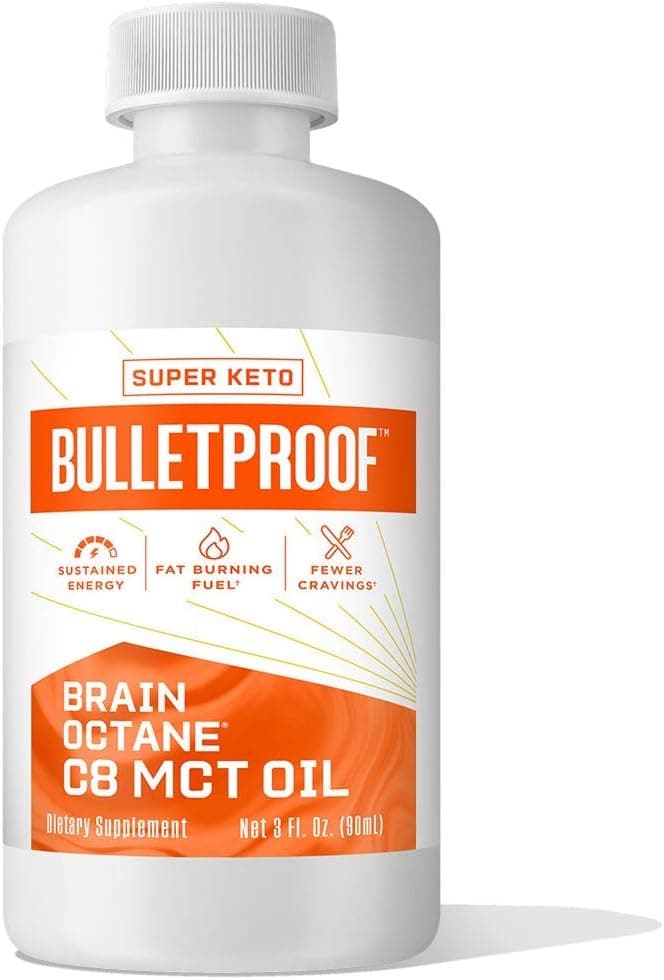
Highly Refined Coconut Oil.
Purified coconut oil used as a carrier in softgels. Stripped of most coconut characteristics, just a clean fat vehicle. Acts as a carrier fat to dissolve and deliver fat-soluble ingredients in softgels.
Reviewed March 2026
- Category
- General
- Also filed under
- Stable carrier for fat soluble nutrientsNeutral taste and odorContains some MCTs
What Highly Refined Coconut Oil is, and what it does.
- Does it work
- Useful as a carrier, but you're not taking it for coconut oil benefits.
- How much to take
- Not applicable. The softgel contains what it contains.
- Time to feel it
- It's a carrier fat rather than an active, so it has no onset of its own. It melts and disperses in the gut within minutes, helping fat-soluble actives beside it get absorbed.
- The first dose
- There's no onset to wait for. Within minutes it melts and disperses in the gut, forming the micelles that carry vitamin D, A or a carotenoid alongside it.
- With regular use
- No effect at softgel amounts. A tablespoon of coconut oil in cooking dwarfs this.
- How well tolerated
- Well tolerated. Refined to remove allergens. Most coconut-allergic people tolerate highly refined coconut oil.
- How it feels
- Neutral. Refining strips the coconut taste and smell, so there's nothing to notice in a softgel, and its contribution shows up in how the active beside it absorbs.
- The overlooked benefit
- Its very low polyunsaturated content makes it slow to go rancid, which is why oxygen-sensitive actives such as vitamin A and carotenoids hold up better sitting in it.
The proof, claim by claim.
These words describe the research, not the molecule's worth. Research strength is how much work stands behind one claim, and it is never a product score.
- Good carrier for fat-soluble nutrients
- Health benefits from MCTs
Questions people ask about Highly Refined Coconut Oil.
- Will the coconut oil in my softgel give me MCT benefits?
- No. You'd need tablespoons, not the 200-500mg in a capsule. It's there to help the active ingredient dissolve.
- I'm allergic to coconut. Is this safe?
- Highly refined coconut oil has proteins removed, so most allergic people tolerate it. But if your allergy is severe, check with your doctor.
- Does it add calories?
- Technically yes, but 200-500mg of fat is 2-5 calories. That's nothing.
- Is refined coconut oil worse than virgin?
- For cooking, there's a debate. For softgels, refined is actually better because it's more stable and less likely to cause reactions.
- Does it affect cholesterol?
- Not at softgel amounts. You'd need tablespoons daily for any measurable impact on cholesterol.
Why these belong in the same formula. Each row says what the basis is, from settled biochemistry through to a trial that measured the pair.
Cholecalciferol needs dietary fat to form mixed micelles before it crosses the intestinal wall. Dosing it in a refined coconut oil base supplies that fat in the same swallow, which is why so many D3 softgels use a coconut oil carrier.
Menaquinone-7 is highly lipophilic and depends on micelle formation for uptake. A refined oil carrier keeps it in solution and gives the bile-driven micelle the lipid it needs.
Tocopherol uptake tracks the fat eaten with it, since it partitions into micelles and then into chylomicrons. An oil base gives it that partition phase and also shields it from oxidising in the capsule.
Retinol and its esters need lipid and bile salts to form absorbable micelles. Refined coconut oil supplies the lipid phase in the dose itself.
Carotenoid absorption rises sharply when fat is eaten in the same meal because these pigments only leave the food matrix into a lipid phase. An oil carrier removes the dependence on what else is on the plate.
Lutein is a xanthophyll that partitions into micelles only when dietary lipid is present. Delivering it in refined oil gives reliable uptake independent of the meal.
Zeaxanthin follows the same lipid-dependent absorption route as lutein. Co-formulating in oil supplies the fat that micelle formation requires.
Lycopene is strongly lipophilic and poorly absorbed from a fat-free dose. An oil vehicle keeps it dissolved and carries it into the micellar phase.
Astaxanthin uptake improves when it is taken with lipid because it must enter mixed micelles. Refined coconut oil is a common carrier for that reason.
Ubiquinol is a large, poorly water-soluble molecule whose absorption depends on being presented already dissolved in lipid. Oil-based softgels exist because dry powder forms are taken up far less well.
Curcuminoids are practically insoluble in water and partition readily into fat. Suspending them in a refined oil gives a lipid phase for micelle formation, one of the standard ways to raise their uptake.
Plant sterols act by displacing cholesterol from intestinal mixed micelles, and they only do so once dissolved in a lipid phase. An oil carrier is what puts them into the micelle where that displacement happens.
Refined coconut oil carries a modest share of C8 and C10 fatty acids, the same chains isolated as caprylic acid. That fraction is absorbed directly into the portal circulation rather than needing chylomicron packaging.
MCT oil is the concentrated C8 and C10 fraction that coconut oil is fractionated from. Blending the two gives a mix of the fast portal-absorbed medium chains and the slower lauric fraction.
Lauric acid is the dominant fatty acid in coconut oil, and monolaurin is its monoglyceride, formed in part by gut lipase acting on coconut triglycerides. The oil is the dietary precursor of the isolated compound.
Lecithin phospholipids lower interfacial tension and help disperse an oil into fine droplets in the gut. Pairing an emulsifier with a refined oil is long-standing practice for keeping lipophilic actives evenly suspended and readily micellised.
Bile phospholipid and dietary phosphatidylcholine both act at the oil and water interface, breaking a fat bolus into droplets small enough for pancreatic lipase to work on. Refined coconut oil is almost pure triglyceride with none of its own polar minor components left after processing. Adding a phospholipid to a coconut oil vehicle is standard emulsion practice.
The lauric and longer chain fatty acids that make up most of coconut oil depend on bile salt micelles to reach the enterocyte. People with reduced bile flow handle a fat vehicle differently from people with normal flow. This is settled digestive physiology and not a claim about any supplement outcome.
No triglyceride is absorbed intact. Lipase, working with colipase at the droplet surface, is the step that releases the fatty acids and monoacylglycerol that go into micelles. Supplemental lipase is included in formulas on that reasoning. The enzymatic step itself is textbook.
Phylloquinone absorption from a meal without fat is poor, and adding triglyceride raises the fraction that enters chylomicrons. A refined coconut oil base in a softgel supplies that fat in the same dose. The interaction is about the vehicle, not about any added biological effect of the oil.
Tocotrienol softgels are routinely filled in a plant oil base for exactly this reason. Refined coconut oil is chemically stable, low in polyunsaturated fatty acids and neutral in taste, which suits a fill oil. Its own fatty acid profile does not compete with the tocotrienol for anything.
Phosphatidylserine powder is hygroscopic and hard to fill dry into a softgel. Suspending it in a low-polyunsaturate oil keeps the fill flowable and slows oxidation of the phospholipid. This is a manufacturing role rather than a biological one.
Boswellic acid absorption is low from a dry powder and improves when a lipid is present to support micellar solubilisation. A refined coconut oil fill supplies that lipid inside the capsule. The size of the effect depends on the extract and the dose and has not been measured for this specific oil.
Piperine slows conjugation of some co-administered plant compounds while the oil addresses solubility, so the two work on different limits. Combining them is standard in curcumin and boswellia products. Because piperine also alters exposure to medications, the pairing is worth naming rather than assuming.
Phytoceramide and dairy-derived ceramide materials are waxy and disperse poorly in water. A saturated plant oil gives them a compatible phase in a softgel fill. This is formulation compatibility and says nothing about the outcome of either ingredient.
Talk to a doctor before taking Highly Refined Coconut Oil if any of these apply to you: High in saturated fat (but negligible at softgel amounts), Not equivalent to virgin coconut oil for health claims. These are flags to check first, not effects Highly Refined Coconut Oil is known to cause.
Not medical advice. Show the label to your pharmacist.What Highly Refined Coconut Oil actually does.
Coconut oil is mostly saturated fat, with a twelve-carbon fatty acid called lauric acid making up the largest single share, alongside smaller amounts of a few others.
Lauric acid is technically a medium-chain fat by size, but the body handles most of it like a long-chain fat, routing it through the lymph system rather than sending it straight to the liver.
The fraction that really does take the more direct liver route is a smaller share of coconut oil, and it's what gets concentrated when the oil is processed into MCT oil.
Dietary fat is what forms the tiny particles that help fat-soluble vitamins and carotenoids get absorbed when eaten in the same meal.
Where Highly Refined Coconut Oil comes from.
Coconut meat is dried and pressed for its oil. That crude oil is then cleaned in stages: gums out, free fatty acids out, colour taken up by a clay filter, and smell steamed off. What is left is a neutral fat with no coconut taste or colour, which is why it works as a carrier.
Made from a plant. What ends up in the capsule tracks the harvest, so batch testing and a stated marker matter more here than with a made molecule.
Refined grades usually start from copra, the sun or kiln dried coconut kernel, which is cheaper to transport and store than fresh meat but arrives with free fatty acids and mould-derived off-notes that the refining is there to remove.
Copra is pressed mechanically, and the residual cake is often extracted with hexane to recover the remaining oil, which is then desolventised. Fresh-kernel routes press without solvent and yield less per nut.
Phosphatides are hydrated and separated, then free fatty acids are removed either with alkali or by physical stripping under vacuum.
The oil is contacted with activated bleaching earth under vacuum to adsorb pigments, oxidation products and trace metals, then filtered.
Steam stripping at high temperature under vacuum removes the volatile compounds that carry coconut aroma and any remaining free fatty acids, giving the neutral taste and higher smoke point.
Batches are checked against fatty acid profile, free fatty acid content, peroxide value, colour and moisture specifications. Some lines add tocopherol as an oxidation control.
The finished oil ships as liquid or solid bulk, is metered into softgel fills, or is emulsified with a carrier and spray dried into powder.
Getting Highly Refined Coconut Oil from food.
The whole-food sources on file. A supplement closes the gap, it does not replace dinner.
A gram-for-gram figure (how much of each you would eat to match a dose) will appear here once it is sourced and reviewed. This page will not print a number it cannot cite.
The forms it comes in.
The essence, in one line each.
- A summary of national dietary guidance in which coconut oil appears among the plant oils grouped by saturated fatty acid content. Guidance documents describe dietary patterns and do not measure an effect of the ingredient.Narrative review. Mis NF et al., 2026 (Foods). PMID 41750847 ↗
- A review of nutritional factors in bone integration that names coconut oil among dietary lipid sources discussed. The ingredient is mentioned within a broader review rather than tested.Narrative review. Wnuk-Scardaccione A et al., 2025 (Nutrients). PMID 40004935 ↗
These are the studies our verdict leans on, chosen from the 2 we read for Highly Refined Coconut Oil. The full linked list is below.
FDA Disclaimer: These statements have not been evaluated by the Food and Drug Administration. This information is for educational purposes only and is not intended to diagnose, treat, cure, or prevent any disease. Consult your healthcare provider before starting any supplement regimen.