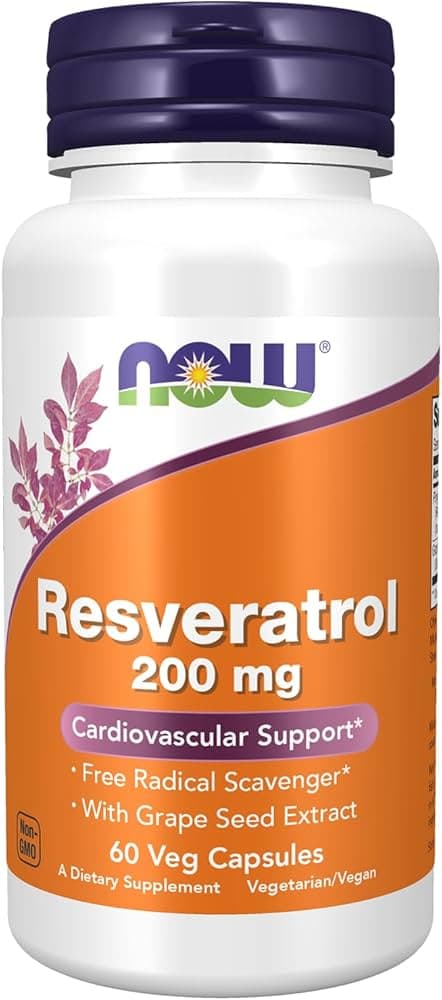
Japanese Knotweed Extract Complex.
The primary commercial source of resveratrol, delivering the same compound found in red wine without the alcohol. Knotweed root is where most supplemental resveratrol comes from. It delivers trans-resveratrol and related stilbenes, studied for antioxidant defence and normal blood vessel function.
Reviewed March 2026
- Category
- Herb
- Also filed under
- Rich source of trans resveratrolAnti inflammatory effectsCardiovascular supportContains emodin with additional benefits
What Japanese Knotweed Extract Complex is, and what it does.
- Does it work
- Resveratrol has real science behind it, but bioavailability is poor and clinical results in humans have been inconsistent. The 'complex' form adds uncertainty about what you're actually getting.
- How much to take
- 100-300 mg of resveratrol content daily. With a 'complex,' check the label for actual resveratrol content (often 50% standardization), not just total extract weight.
- Time to feel it
- Plan on four to eight weeks of daily use. The trials that found something read it off vascular and metabolic measures rather than off how people said they felt.
- The first dose
- Very little to notice. Some people report mild stomach warmth or slight headache at high doses. Most feel nothing.
- With regular use
- After 4-8 weeks, some studies show improved blood flow, reduced inflammatory markers, and better blood sugar control. Effects are modest and vary between people.
- How well tolerated
- Generally well tolerated up to 1,000 mg resveratrol daily. Can interact with blood thinners and blood pressure medications. May have mild estrogenic activity. Avoid during pregnancy.
- How it feels
- Nothing dramatic day to day. The effect registers on measures like vessel dilation and inflammatory markers rather than on mood or energy.
- The overlooked benefit
- Most of the stilbene in the root is polydatin, the sugar-bound form. Gut bacteria cut that sugar off, so your microbiome sits between the capsule and the resveratrol.
200 to 500mg a day is where Japanese Knotweed Extract Complex works.
Source: Timmers et al. 2011, resveratrol meta-analyses
The proof, claim by claim.
These words describe the research, not the molecule's worth. Research strength is how much work stands behind one claim, and it is never a product score.
- Anti-aging properties
- Cardiovascular protection
- Improves blood sugar control
Questions people ask about Japanese Knotweed Extract Complex.
- Is this the same as taking resveratrol?
- Similar but not identical. A 'complex' contains resveratrol plus other compounds from the knotweed root (emodin, polydatin). Pure resveratrol supplements are more standardized.
- Why Japanese knotweed and not grape extract?
- Cost and concentration. Japanese knotweed root contains up to 187x more resveratrol per gram than red grape skin. It's simply a more practical source.
- Does resveratrol really extend lifespan?
- In yeast, worms, and mice on high-fat diets? Yes. In healthy humans? We honestly don't know yet. No human longevity trials have been completed. Promising but unproven.
- Can I just drink red wine instead?
- You'd need 75+ glasses daily to match a supplement dose. The alcohol damage would massively outweigh any resveratrol benefit. Stick with the supplement.
- What about the emodin issue?
- Emodin is a natural laxative compound in Japanese knotweed. Poorly purified extracts may contain significant amounts, causing diarrhea. Look for products tested for emodin content.
- Does it actually work for anti-aging?
- The cellular mechanisms are real (SIRT1 activation, reduced oxidative stress). But translating that to visible anti-aging results in humans remains unproven. Think of it as 'plausible insurance,' not a guaranteed fountain of youth.
Why these belong in the same formula. Each row says what the basis is, from settled biochemistry through to a trial that measured the pair.
Polygonum cuspidatum root is where nearly all supplemental trans-resveratrol comes from, present largely as the glycoside polydatin. The extract and the isolate feed the same circulating pool rather than acting separately.
Pterostilbene carries two methoxy groups in place of resveratrol's hydroxyls, so it resists glucuronidation and stays in circulation longer. Formulators pair the two to cover both a fast and a slower-clearing stilbene.
Resveratrol is cleared mainly by sulfation and glucuronidation at the gut wall, and quercetin occupies the same sulfotransferases. Taken together, quercetin slows that first-pass conjugation and raises resveratrol exposure.
Piperine inhibits intestinal UDP-glucuronosyltransferase, the main route by which resveratrol is conjugated before it reaches circulation. Co-dosing raises the amount of unconjugated stilbene that gets through.
Stilbenes are studied as sirtuin activators, and sirtuin deacetylation consumes NAD as a cosubstrate. An NAD precursor supplies the cofactor that arm of the pathway runs on.
NR is phosphorylated to NMN and on to NAD, the cosubstrate sirtuins require. Pairing it with a stilbene supplies both the activator side and the cofactor side of the axis.
Resveratrol dampens platelet aggregation through cyclooxygenase and thromboxane signalling, and EPA shifts eicosanoid output the same way. Stacking them pushes normal clotting in one direction rather than balancing out.
Ginkgolides block the platelet-activating factor receptor while resveratrol acts on thromboxane-driven aggregation. Two separate steps of normal platelet function are dampened at once.
Nattokinase acts on fibrin while stilbenes act on platelet aggregation, so the two touch different stages of the same normal process. Their effects add when stacked.
Both materials deliver mixed polyphenols that participate in the same redox chemistry, so a formula carrying both raises total polyphenol load rather than adding a separate mechanism. Knotweed root contributes stilbenes, grape seed contributes proanthocyanidins. The overlap is chemical rather than a demonstrated combined outcome.
Trans-resveratrol and its relatives are poorly water-soluble, so a lipid carrier keeps them dispersed and presents them to the gut in a mixed micelle. This is a formulation lever used across lipophilic polyphenols. It changes how much dissolves, not what the molecule does once absorbed.
Phospholipid complexes are a common way to disperse stilbene-rich extracts in water-based drinks and softgels. The lecithin acts as an emulsifier and does not contribute stilbenes of its own. Any absorption benefit belongs to the delivery system.
Resveratrol and curcumin are both heavily glucuronidated and sulfated in the gut wall and liver, and both can occupy those conjugating enzymes. Taken together each may slow the other's clearance, which shifts exposure in either direction depending on dose. This is pharmacokinetics, not an added benefit.
Silymarin flavonolignans compete for the same UDP-glucuronosyltransferase capacity that handles stilbenes. The practical consequence is altered plasma levels of one or both, not a new activity. Worth flagging when both sit in the same formula at high dose.
Much of the stilbene content in knotweed root is polydatin, the glucoside of resveratrol, which needs a beta-glucosidase to release the aglycone. Gut bacteria including lactobacilli carry that enzyme activity, and colonic microbes further convert resveratrol to dihydroresveratrol. Conversion capacity varies a lot between individuals.
Polyphenols bind non-heme iron in the gut lumen and lower its absorption, a well-characterised food-chemistry interaction. A knotweed extract taken in the same sitting as an iron supplement can reduce how much of that iron is taken up. Separating the two by a couple of hours avoids the overlap.
Phenolic hydroxyl groups also complex divalent zinc, which is why polyphenol-rich beverages reduce measured zinc uptake. The effect is smaller and less consistently reported than for iron. Timing them apart is the simple answer.
Activated charcoal adsorbs a wide range of small organic molecules in the gut, polyphenols included. Anything taken alongside it is likely to reach the bloodstream in reduced amounts. This holds for the extract regardless of its standardisation.
Stilbenes and garlic organosulfur compounds each reduce platelet aggregation in laboratory measures. Stacking them is an additive direction worth noting for anyone already told to watch bleeding time. The additive effect is inferred from each material separately, not from a combination trial.
High-dose tocopherol has its own recorded effect on platelet function, which sits in the same direction as stilbene chemistry. The combination is a flag rather than a benefit claim. Ordinary dietary amounts of vitamin E are a different situation from gram-level supplementation.
Willow bark supplies salicin, which is converted to salicylate and acts on platelets. Combined with a stilbene-rich extract the direction of effect stacks. Flagged for awareness, not proposed as a pairing.
Resveratrol has shown inhibition of CYP1A2 in laboratory systems, and caffeine is the classic substrate of that enzyme. The plausible consequence is a longer caffeine half-life in some people. Human confirmation for a knotweed extract specifically is thin, so read this as a hypothesis to watch.
Knotweed root carries anthraquinones including emodin, which stimulate gut motility, while magnesium salts draw water into the bowel osmotically. Used together the effect on stool frequency can stack more than either alone. Anthraquinone content varies widely with extract type, so this depends heavily on the specific material.
Talk to a doctor before taking Japanese Knotweed Extract Complex if any of these apply to you: Resveratrol has poor oral bioavailability, Can interact with blood thinners and medications, High doses may cause GI issues, Emodin can have laxative effects. These are flags to check first, not effects Japanese Knotweed Extract Complex is known to cause.
Not medical advice. Show the label to your pharmacist.What Japanese Knotweed Extract Complex actually does.
Knotweed root is one of the richest plant sources of trans-resveratrol, and most of it sits there as polydatin, the sugar-attached form. Gut or microbial enzymes have to cut that sugar off before the free stilbene is available.
Absorbed resveratrol gets tagged fast in the gut wall and liver, so free stilbene in blood stays low even after a big oral dose while the tagged forms run much higher.
The root also carries anthraquinones, mainly emodin and physcion. They're chemically nothing like the stilbenes and have their own effect on how quickly things move through the gut.
The polyphenols here carry several phenolic hydroxyl groups that grab minerals in the gut, the same chemistry behind tea and coffee lowering uptake of iron from plant foods.
Getting Japanese Knotweed Extract Complex from food.
The whole-food sources on file. A supplement closes the gap, it does not replace dinner.
A gram-for-gram figure (how much of each you would eat to match a dose) will appear here once it is sourced and reviewed. This page will not print a number it cannot cite.
The forms it comes in.
The essence, in one line each.
- Pooling randomised trials of resveratrol, the stilbene that Japanese knotweed extracts are standardised to, the analysis did not detect a clear difference in liver enzyme readings or liver fat in adults with elevated liver fat, which is a failure to find an effect rather than evidence that none exists.Meta-analysis. Jakubczyk et al., 2020 (Nutrients). PMID 32823621 ↗
- A systematic review of Reynoutria japonica, the source plant of Japanese knotweed extract, mapped its stilbenes and anthraquinones to effects on blood lipid handling, vascular tone and gut motility, with most of the supporting work still in laboratory and animal models rather than human trials.Systematic review. Liu et al., 2022 (Frontiers in pharmacology). PMID 35770098 ↗
These are the studies our verdict leans on, chosen from the 85 we read for Japanese Knotweed Extract Complex. The full linked list is below.
FDA Disclaimer: These statements have not been evaluated by the Food and Drug Administration. This information is for educational purposes only and is not intended to diagnose, treat, cure, or prevent any disease. Consult your healthcare provider before starting any supplement regimen.