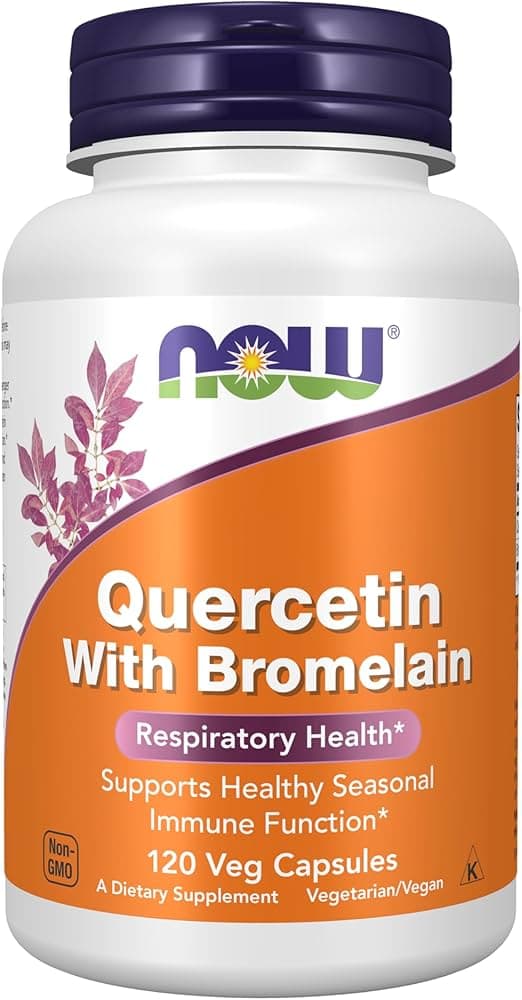
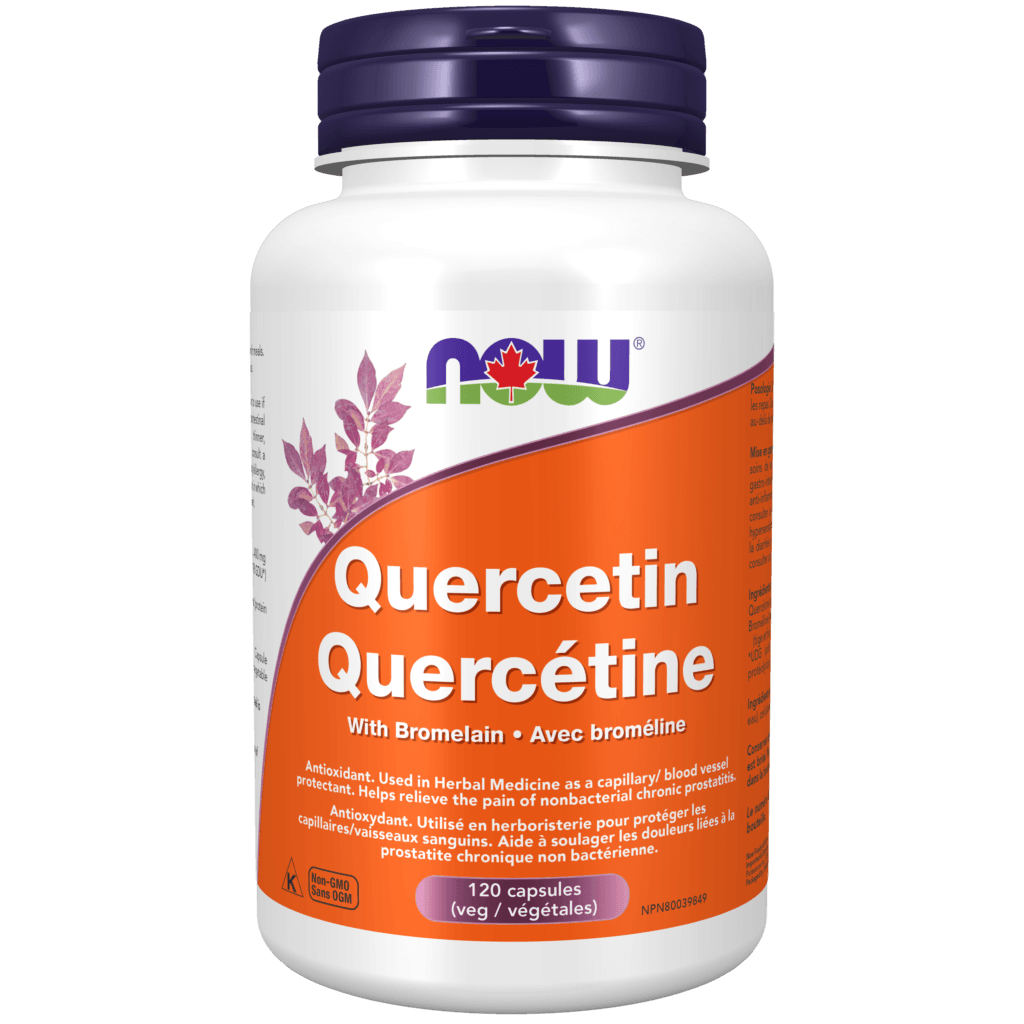
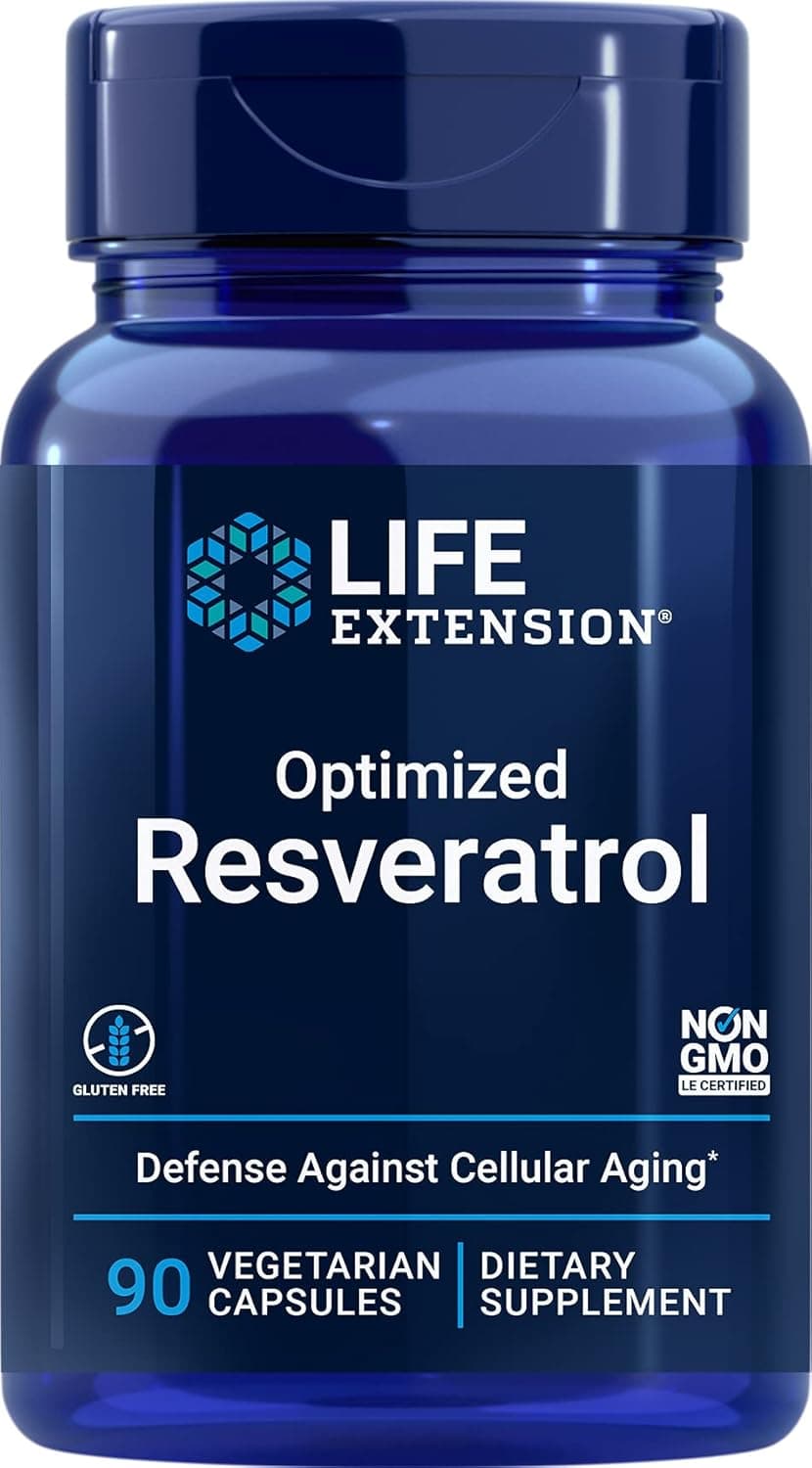
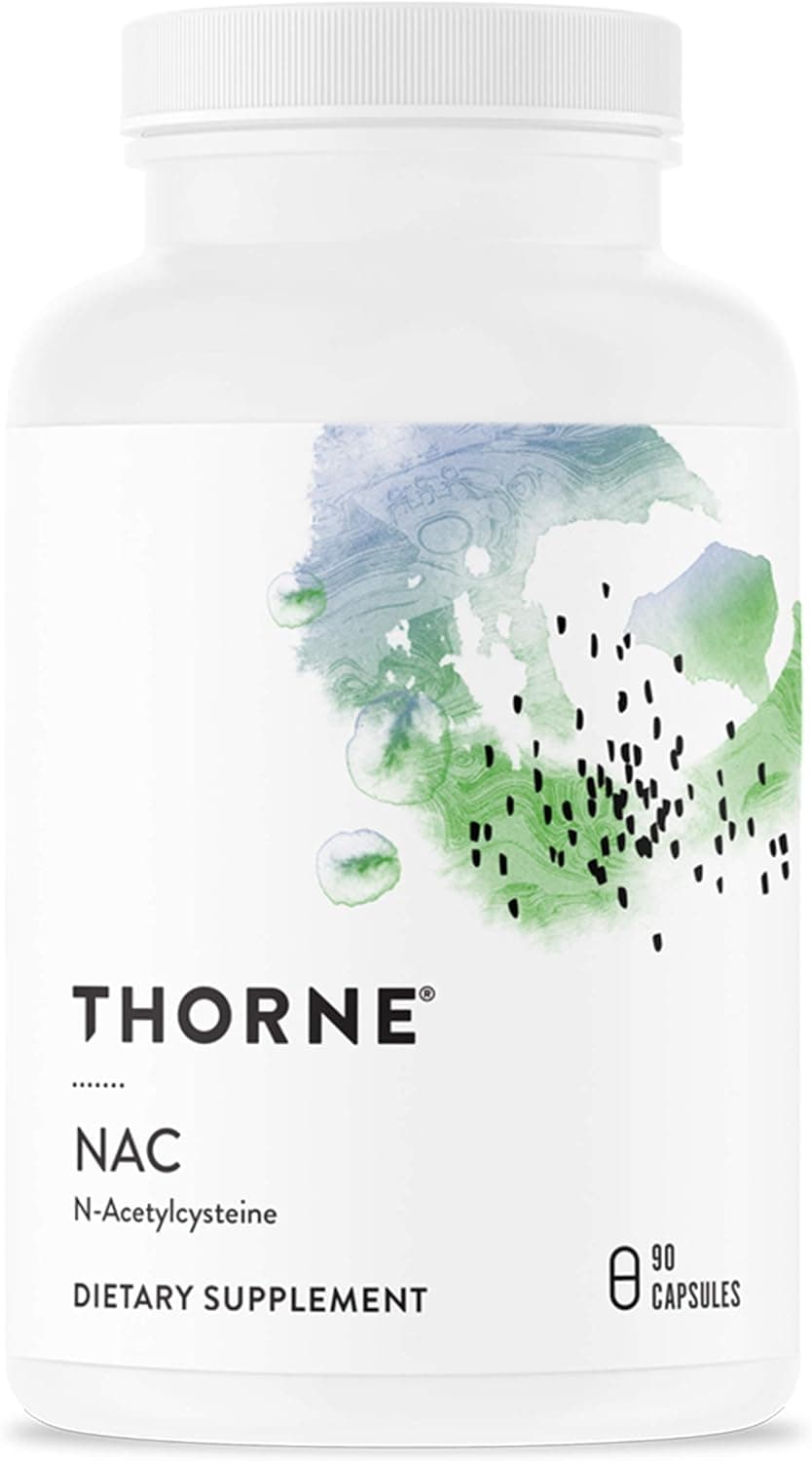
Quercetin Dihydrate.
Research-backed compound with potential health benefits. Acts like a natural antihistamine by calming down the cells that release histamine. It's also a potent antioxidant that helps reduce inflammation.
Reviewed March 2026
- Category
- Compound
- Also called
- Quercetin, Quercetin Dihydrate
What Quercetin Dihydrate is, and what it does.
- Does it work
- Yes, for specific uses. If seasonal allergies ruin your spring, this is a great first-line defense. Promising for exercise recovery too.
- How much to take
- 500-1000 mg daily, usually split into two doses. Taking it with a meal containing some fat can help with absorption.
- Time to feel it
- One to two weeks of daily use. Histamine-related comfort builds rather than switches on, which is why pollen-season use usually starts ahead of the season.
- The first dose
- Nothing. It needs to build up in your system for several days to a week before you'll notice any effects on allergy symptoms.
- With regular use
- After a couple of weeks, you might find you're reaching for tissues less often during pollen season. Some athletes report less muscle soreness after intense workouts.
- How well tolerated
- Well tolerated for most people. The main thing is potential interactions with medications like blood thinners. If you have kidney issues, talk to your doctor first. Standard procedure.
- How it feels
- Subtle. You won't feel a kick. You'll just notice what's missing: the constant sneezing, the itchy eyes, or that deep muscle ache after a hard gym session.
- The overlooked benefit
- It chelates non-haem iron in the same meal, so spacing it away from an iron supplement or an iron-rich plate keeps both of them doing their job.
250 to 500mg a day is where Quercetin Dihydrate works.
Source: Edwards 2007 + Javadi 2017 allergy study
The proof, claim by claim.
These words describe the research, not the molecule's worth. Research strength is how much work stands behind one claim, and it is never a product score.
Quercetin Dihydrate is documented in the library. The clinical read is in the queue. Nothing about the strength of the research prints until the read is done.
- Blood pressure already in the normal rangeMeta-analysis
- Mast cell histamine releaseIn vitro study
- Markers of oxidative stressRandomised trial
- Post-exercise inflammatory markersRandomised trial
- Seasonal nasal and eye comfortRandomised trial
- Non-haem iron absorption in the same mealNarrative review
Questions people ask about Quercetin Dihydrate.
- Is this a good replacement for Zyrtec or Claritin?
- It can help, but it works differently. Best used preventatively before allergy season starts. Don't stop prescription meds without talking to your doctor.
- Can I take it every day?
- Yes, it's considered well tolerated in daily, long-term use at standard doses (around 1000mg).
- When is the best time to take it?
- Split the dose. One 500mg capsule in the morning and one in the evening, preferably with food.
- Will it help if I have a cold?
- Maybe. Lab studies show it has some antiviral properties. Taking it when you feel a sniffle coming on might help, but the evidence in humans isn't rock solid.
- Does it give you energy?
- No, it's not a stimulant. Some studies show it can help reduce fatigue during endurance exercise, but you won't 'feel' it like a cup of coffee.
What the trials show about these together.
Outcomes the engine found studied for these actives as a combination, not one at a time. Each is a finding a named trial measured, cited and dated, never written by the brand.
- EarlyQuercetin Dihydrate + ResveratrolRecovery
In a double-blind crossover trial, 14 athletes took resveratrol with quercetin for a week before exhaustive exercise. The post-exercise rise in F2-isoprostanes, a lipid peroxidation marker, was 68% with the combination versus 137% with placebo, while inflammation markers and antioxidant capacity were unchanged.
McAnulty et al., 2013 (Appl Physiol Nutr Metab)PMID 23980734
Research strength. Research strength says how much work stands behind the combination. It is never a product score.
Fail closed. Where actives were studied on their own rather than together, each shows on its own evidence, never a combined effect no trial measured.
Independent record. Every finding is cited to a named trial, dated, and never written by the brand.
Findings from trials that studied these actives as a combination. Context for how the actives were tested together, not a statement about any individual and not a claim about this product.
Why these belong in the same formula. Each row says what the basis is, from settled biochemistry through to a trial that measured the pair.
When quercetin neutralizes a free radical it becomes an oxidized quercetin radical, and ascorbate donates an electron to regenerate the intact molecule. This recycling lets the two support the body's antioxidant defenses longer than either does alone.
Quercetin's catechol structure binds the non heme iron in food and supplements, forming a complex the body absorbs poorly. Taking the two at the same meal lowers how much of that iron gets taken up, so spacing them apart supports normal iron status.
Both polyphenols are cleared by the same sulfation and glucuronidation enzymes, so quercetin can compete for those pathways and slow how quickly resveratrol is broken down. Their overlapping antioxidant chemistry also makes them a frequent pairing in formulas.
Green tea catechins are rapidly methylated by the enzyme COMT and pumped back out by intestinal efflux transporters, and quercetin competes at both steps. By occupying those routes it can leave more catechin available to be absorbed.
Both compounds act on NF-kB and NRF2 signalling that governs normal inflammatory and antioxidant enzyme output, and each blocks intestinal P-glycoprotein, so co-dosing raises the exposure of the other.
Quercetin and luteolin damp mast cell mediator release through the same calcium and kinase steps, so their effect on normal histamine handling runs through one shared mechanism.
The flavonol can donate an electron that returns oxidised tocopherol to its active form inside cell membranes, placing it in the same redox relay that regenerates vitamin E.
Oxidised quercetin forms a reactive quinone that glutathione conjugates and carries out of the cell, the normal clearance route for the spent flavonol.
The catechol group binds copper ions with high affinity, lowering the free copper available for intestinal uptake and altering the flavonol's own redox behaviour. Dosing the two apart avoids it.
Piperine slows intestinal glucuronidation and inhibits P-glycoprotein, the two limits on quercetin reaching circulation, so it is added specifically to raise that fraction.
Quercetin dihydrate is poorly water soluble, so it is routinely complexed with lecithin phospholipids into a phytosome that disperses in bile and crosses the intestinal membrane more readily.
Citrulline raises plasma arginine and feeds nitric oxide synthase, while quercetin has been studied for its effect on nitric oxide metabolite handling and oxidative markers. Kurtz and colleagues tested the pair in trained cyclists in two separate reports, one on nitric oxide metabolites and antioxidant biomarkers and one on time trial performance. The biomarker work is marker data rather than an outcome, and the performance report should be read on its own stated conclusion.
Rutin is quercetin-3-O-rutinoside, the same aglycone carrying a disaccharide. It must be deglycosylated by gut microbial glycosidases before the quercetin core is absorbed, which shifts uptake later and further down the gut than the free aglycone. The two are not interchangeable on a milligram basis and a formula carrying both delivers the aglycone on two different timelines.
Bromelain is a cysteine protease mixture from pineapple stem and is routinely combined with quercetin in flavonoid formulas, with the stated rationale that proteolytic activity aids uptake of the poorly soluble flavonol. Direct human bioavailability data for that specific claim is thin. The pairing is long-established formulation practice and is presented at that confidence rather than higher.
Quercetin's catechol and 3-hydroxy-4-keto sites bind divalent metal ions, and cell studies show it can move zinc across lipid membranes as a complex. That work is in vitro and describes ion movement, not a clinical outcome. The pairing is worth stating as chemistry a formulator should know about, at that level and no further.
Oxidised quercetin forms an electrophilic ortho-quinone that reacts with thiols, and N-acetylcysteine supplies exactly such a thiol along with cysteine for glutathione synthesis. The adduct chemistry is well described in vitro. Whether it changes anything measurable in people taking both has not been established, so the row stays at mechanism level.
Quercetin glycosides that escape small intestinal hydrolysis are deglycosylated and ring-fissioned by colonic bacteria into phenolic acids, and the composition of that community changes which metabolites appear. This is why absorption of glycoside-rich material varies between people. The relationship is established microbiology rather than a tested probiotic pairing.
Quercetin aglycone is poorly water soluble, and dispersing it in a medium-chain triglyceride vehicle is one of the standard formulation answers to that. Lipid vehicles raise the amount presented in a dissolved state at the absorptive surface. The effect on plasma levels depends on the specific formulation, so it is a formulation strategy rather than a fixed multiplier.
Apigenin and quercetin are both conjugated by the same intestinal and hepatic sulfotransferases and UDP-glucuronosyltransferases. Taken together at meaningful doses they contend for that shared conjugation capacity, which alters the free fraction of each. This is enzyme-level competition described in metabolism studies, and it can raise as well as lower exposure.
Pterostilbene is methylated and conjugated by the same phase II routes quercetin saturates at higher intakes. Co-dosing two polyphenols that load those enzymes changes the metabolite mix of both. Read it as a pharmacokinetic interaction between polyphenols rather than a benefit.
Sulforaphane modifies KEAP1 cysteines and releases Nrf2 to induce phase II enzymes. Quercetin's oxidised quinone form is also electrophilic and engages the same sensor. Both therefore act on the antioxidant response element genes, by chemistry rather than by receptor binding. Stated as converging mechanism, not as a measured combined effect.
Dihydrolipoic acid reduces oxidised forms of other antioxidants, and the quercetin semiquinone and quinone are reducible species. Regenerating the parent flavonol extends its radical-scavenging life in a laboratory system. The interaction is chemistry established in vitro rather than an effect measured in people.
Grape seed proanthocyanidins and quercetin are both polyphenols with catechol groups and overlapping metal-binding and radical-quenching behaviour. Formulas combine them to widen the range of structures present rather than to raise the dose of any one. The rationale is compositional and the human data on the specific combination is limited.
Silymarin flavonolignans and quercetin are both extensively glucuronidated and both inhibit UGT isoforms in vitro. Combining them loads the same conjugation machinery, which can raise circulating unconjugated fractions of either. This matters most when other glucuronidated compounds are taken alongside.
Quercetin and caffeine appear together in endurance formulas, both having been studied around exercise performance by unrelated mechanisms. Quercetin is a weak adenosine receptor ligand in vitro, which has been raised as a point of overlap. The evidence for a specific combined benefit is thin and the row is labelled early for that reason.
Flavonols with a 3-hydroxy-4-keto arrangement form complexes with divalent cations including magnesium, which changes their solubility and colour in solution. In a co-formulated powder this affects appearance and dissolution more than absorption. It is a formulation chemistry note, not a nutritional interaction claim.
Nothing specific on file for Quercetin Dihydrate. Match the label to the daily amount above, and tell your doctor what you take.
Not medical advice. Show the label to your pharmacist.What Quercetin Dihydrate actually does.
Quercetin is a flavonol that can donate hydrogen atoms to unstable radical molecules, forming a more stable but still reactive intermediate.
Quercetin's structure can bind iron and copper, which is likely why it can lower how much non-heme iron your body absorbs from the same meal.
Your gut and liver heavily modify quercetin before it enters your blood, so what actually circulates after a dose is mostly altered metabolites, not the original molecule.
The sugar-attached forms of quercetin need to be broken down first, either at your gut lining or by colon bacteria, before any of it can be absorbed.
Where Quercetin Dihydrate comes from.
It starts as flower buds from the Japanese pagoda tree, which are unusually rich in rutin. The rutin is pulled out with hot water or alcohol, then the sugar attached to it is stripped off, which leaves plain quercetin. That is recrystallised and dried so two water molecules stay locked in the crystal, which is what dihydrate means.
Made from a plant. What ends up in the capsule tracks the harvest, so batch testing and a stated marker matter more here than with a made molecule.
Dried buds of the Japanese pagoda tree are the dominant commercial feedstock because they carry rutin at unusually high concentration. Onion skin and some fruit residues are used at smaller scale.
Milled buds are extracted with hot water or aqueous alcohol, and the rutin is crystallised out of the cooled extract.
Acid or enzymatic hydrolysis removes the rutinose disaccharide from position 3, converting rutin into free quercetin.
The crude aglycone is recrystallised from aqueous alcohol to remove residual glycosides, sugars and plant pigments.
Controlled drying leaves two waters of crystallisation, and the solid is milled to a specified particle size for blending and dissolution.
Assay is set chromatographically against a reference standard, with limits on residual solvents, rutin carryover, pesticides and heavy metals recorded on the certificate of analysis.
Getting Quercetin Dihydrate from food.
The whole-food sources on file. A supplement closes the gap, it does not replace dinner.
A gram-for-gram figure (how much of each you would eat to match a dose) will appear here once it is sourced and reviewed. This page will not print a number it cannot cite.
The forms it comes in.
The essence, in one line each.
- Across 10 trials in 841 adults, quercetin lowered systolic blood pressure by about 2.4 mmHg, and diastolic pressure by about 3.1 mmHg in the subgroup starting with raised readings.Meta-analysis. Popiolek-Kalisz and Fornal, 2022 (Current Problems in Cardiology). PMID 35948195 ↗
- Pooling 11 studies in 254 people at a typical 1,000 mg per day, quercetin improved endurance capacity and VO2max by roughly 2% over placebo, which the authors describe as a trivial to small effect.Meta-analysis. Kressler et al., 2011 (Medicine and Science in Sports and Exercise). PMID 21606866 ↗
- Pooled trials found no detectable overall change in circulating CRP, IL-6 or TNF-alpha with quercetin. Reductions showed up only in subgroups such as women and higher-dose trials.Meta-analysis. Ou et al., 2020 (International Journal of Food Sciences and Nutrition). PMID 31213101 ↗
- Across 5 trials in 442 adults, quercetin left LDL and HDL cholesterol unchanged. In the trials using at least 500 mg per day for four weeks or longer, triglycerides fell by about 24.5 mg/dL while total cholesterol rose slightly, by about 3.6 mg/dL, and the author concludes the overall lipid effect is not clinically relevant.Meta-analysis. Sahebkar, 2017 (Critical Reviews in Food Science and Nutrition). PMID 25897620 ↗
- A review of the human and mechanistic literature on quercetin describes antioxidant and vascular effects across several measured outcomes, with low oral bioavailability the main limit on how much reaches the bloodstream.Systematic review. Frenț et al., 2024 (International journal of molecular sciences). PMID 39596162 ↗
- A quercetin-rich onion skin extract lowered daytime systolic blood pressure by roughly 3 to 4 mmHg on 24 hour monitoring in adults with elevated blood pressure. The trial did not detect a change in endothelial function measures.Randomised trial. Brüll et al., 2015 (The British journal of nutrition). PMID 26328470 ↗
- Quercetin with citrulline altered nitric oxide metabolite and antioxidant biomarker measures in trained cyclists. These are markers, not performance or health outcomes.Randomised trial. Kurtz et al., 2025 (Nutrients). PMID 39861353 ↗
- The trial examined quercetin with citrulline on cycling time trial performance and reports its findings on that endpoint directly.Randomised trial. Kurtz et al., 2024 (Journal of the International Society of Sports Nutrition). PMID 39417670 ↗
- Urinary excretion of quercetin metabolites differed between glycosides eaten as red onion and aglycone taken as a supplement, indicating the two source forms are not handled identically.Open-label trial. Shi et al., 2015 (Food and Function). PMID 25832541 ↗
- Quercetin changed paraoxonase 2 levels in a macrophage cell line and in human monocytes, with the authors attributing part of the effect to quercetin metabolites rather than the parent compound.In vitro study. Boesch-Saadatmandi et al., 2009 (International Journal of Molecular Sciences). PMID 19865538 ↗
- Quercetin dihydrate was associated with lower oxidative stress markers in a chemically induced mouse model.Animal study. Asghar et al., 2025 (Food Science and Nutrition). PMID 40852160 ↗
- Dietary quercetin produced dose-dependent shifts in cecal microbiota composition and haematological measures in the animals studied.Animal study. Rakhmatullin et al., 2026 (Veterinary World). PMID 41822578 ↗
- Dietary quercetin showed dose-dependent effects on growth performance, nutrient digestibility and meat composition.Animal study. Saied et al., 2026 (Journal of Advanced Veterinary and Animal Research). PMID 42226742 ↗
- A review of quercetin as a feed additive covering reported antioxidant and gut effects in poultry and rabbits, with the authors noting dose and form variability across studies.Narrative review, in animals. El-Aziz et al., 2025 (Veterinary and Animal Science). PMID 40740308 ↗
- Vitamin C, rosmarinic acid and quercetin each changed expression of fertilisation-related genes in cultured porcine cumulus-oocyte complexes.In vitro study. Boldura et al., 2026 (International Journal of Molecular Sciences). PMID 42123385 ↗
- A niosomal preparation of L-carnitine with quercetin was associated with improved sperm measures in rats exposed to a reproductive toxicant.Animal study. Azmi et al., 2026 (Scientific Reports). PMID 42332019 ↗
These are the studies our verdict leans on, chosen from the 999 we read for Quercetin Dihydrate. The full linked list is below.
The studies, linked.
1 source behind our Quercetin Dihydrate verdict: peer-reviewed studies and registered clinical trials. Every one links straight to PubMed, the journal, or ClinicalTrials.gov. Read them yourself.
- Clinical trialA Double-Blind, Cross-Over, Placebo-Controlled Study Evaluating the Effect of Quercetin 500 mg Tablets on Blood Uric Acid in Healthy MalesClinicalTrials.gov ↗Early phase 1, 22 participants, Completed
Evidence surfaced via Semantic Scholar (Allen Institute for AI) and ClinicalTrials.gov. Ranked by study type and citation weight, not cherry-picked.
Problems people have reported.
Read this carefully. These are 605 voluntary, unverified reactions reported to the FDA (openFDA). The number mostly reflects how popular Quercetin Dihydrate is, not how risky it is. A report is not proof Quercetin Dihydrate caused anything. It is a signal of what to watch for, nothing more.
Source: openFDA adverse-event reports. Voluntary reporting, not an incidence rate.
FDA Disclaimer: These statements have not been evaluated by the Food and Drug Administration. This information is for educational purposes only and is not intended to diagnose, treat, cure, or prevent any disease. Consult your healthcare provider before starting any supplement regimen.