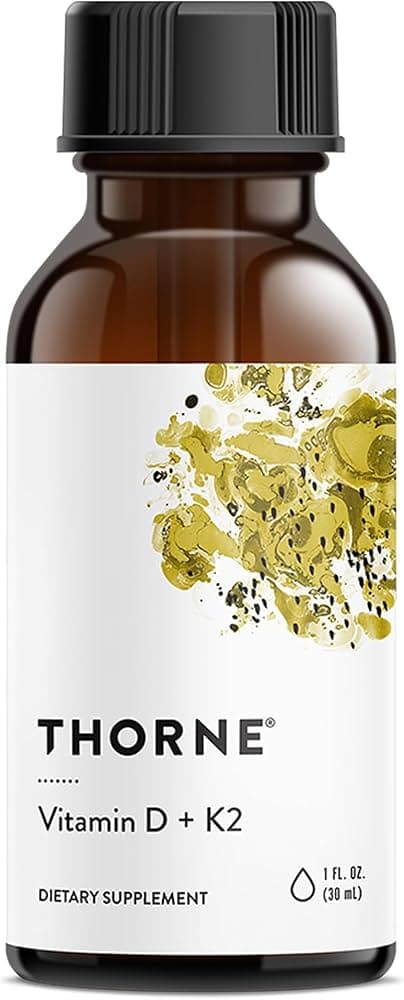
Vitamin K2 (MK-4).
The tissue-specific K2. Bones and brain prefer this form. Shorter half-life, needs higher doses. Some prefer for bone health specifically. Japanese research strong.
Reviewed March 2026
- Category
- Vitamin
- Also filed under
- Bone healthBrain healthCalcium metabolism
What Vitamin K2 (MK-4) is, and what it does.
- Does it work
- Suits people building a bone routine who want the form tissue makes locally and don't mind splitting a dose. It pairs naturally with vitamin D and calcium.
- How much to take
- Start at 15mg a day, up to 45mg, split across the day because MK-4 clears within hours. Take each portion with a meal that contains fat.
- Time to feel it
- Carboxylation markers move over four to twelve weeks, and the bone studies on this form run six to twenty-four months. Nothing arrives on a daily timescale.
- The first dose
- Day one is quiet. It's absorbed with meal fat, appears in circulation within a couple of hours and is largely cleared again by the next dose.
- With regular use
- Months of consistent use keep osteocalcin and matrix Gla protein in their carboxylated, calcium-binding form. Bone measures are read over a year or more.
- How well tolerated
- Same warfarin interaction as MK-7. Needs multiple daily doses due to short half-life.
- How it feels
- No sensation goes with it. What changes is a carboxylation marker on a blood panel and, much later, what a bone scan reads.
- The overlooked benefit
- Your own tissues build MK-4 from the K1 in leafy greens using the enzyme UBIAD1, so this is a form your body already produces on site.
15 to 45mg a day is where Vitamin K2 (MK-4) works.
Source: Knapen 2013 + Geleijnse 2004 Rotterdam study
The proof, claim by claim.
These words describe the research, not the molecule's worth. Research strength is how much work stands behind one claim, and it is never a product score.
Vitamin K2 (MK-4) has solid evidence, with 10 cited human studies on this page.
- osteocalcin carboxylation statusRandomised trial
- bone mineral density maintenanceMeta-analysis
- tissue conversion of phylloquinone to menaquinone-4Animal study
- short circulating half-life relative to MK-7Randomised trial
Questions people ask about Vitamin K2 (MK-4).
- When should I take it?
- With food, ideally a meal containing some fat for better absorption. Morning or evening, pick one and stick with it.
- How long until I notice something?
- If you're deficient, you might notice within 1-2 weeks. For general maintenance, give it 4-8 weeks.
- Can I get enough from food?
- Sometimes. If your diet is solid and varied, you might not need to supplement. But deficiency is more common than most people think. A blood test is the only way to know for sure.
- Can I take too much?
- Water-soluble vitamins (B, C) are harder to overdose on since you pee out the extra. Fat-soluble ones (A, D, E, K) can build up. Stick to recommended doses unless a doctor says otherwise.
- Can I take it with other supplements?
- Usually fine. The main thing to watch is not doubling up on the same ingredient from different products. If you're on prescription meds, check with your pharmacist first.
- Who benefits most from this?
- People with a specific, evidence-backed need. Vitamin K2 Mk4 has strong research. If your situation matches the studied use case, it's one of the more reliable supplements you can take.
Why these belong in the same formula. Each row says what the basis is, from settled biochemistry through to a trial that measured the pair.
Tissues convert phylloquinone into menaquinone-4 through the enzyme UBIAD1, so K1 is a direct upstream source of MK-4. Supplying both covers the pathway at two points.
MK-4 clears from circulation within hours while MK-7 stays for days, and both hand electrons to the same gamma-carboxylase. Pairing them gives a peak plus a steady baseline instead of one or the other.
Vitamin D raises production of osteocalcin and matrix Gla protein, and MK-4 carboxylates them so they can hold calcium. The two act in sequence on one substrate.
Carboxylated Gla proteins are the mechanism that routes calcium to bone matrix rather than soft tissue. MK-4 activity therefore determines where a calcium dose is deposited.
Magnesium runs the hydroxylases that activate vitamin D, which in turn sets how much Gla protein there is to carboxylate. Magnesium is also part of the bone crystal itself.
High alpha-tocopherol intakes interfere with the vitamin K quinone cycle and lower carboxylation. A large vitamin E dose alongside MK-4 works against it rather than with it.
MK-4 is fat soluble and needs dietary lipid to enter micelles for uptake. Its short circulating life makes taking it with fat, and with meals, the practical form of this pairing.
The vitamin D receptor pairs with the retinoid X receptor to drive osteocalcin transcription, so retinoid status sets substrate supply. MK-4 then carboxylates what is made.
Ascorbate is the cofactor for collagen hydroxylases that build the protein scaffold mineral attaches to. MK-4 governs mineral placement onto that scaffold.
An oil base raises micellar uptake of menaquinone-4, which is why many MK-4 products are oil suspensions. The effect is on absorption, not on the carboxylation step.
Menaquinone-4 is a fat-soluble prenylated naphthoquinone and requires bile acid micelles to cross the unstirred water layer. Anyone with reduced bile flow absorbs less of any fat-soluble vitamin from the same dose. This is the standard reason vitamin K is dosed with a fat-containing meal.
Pancreatic lipase liberates the fatty acids and monoglycerides that build the mixed micelle carrying fat-soluble vitamins. Without that hydrolysis the oil vehicle in a softgel does not release its cargo efficiently. The dependence is on fat digestion generally, not on MK-4 specifically.
A broad-spectrum digestive enzyme blend contributes lipase alongside protease and amylase, supporting the fat digestion that fat-soluble vitamin uptake depends on. The relevance is greatest where fat digestion is already limited. It is enabling rather than additive: it does not add vitamin K activity of its own.
Lecithin phospholipids emulsify oil droplets and reduce the particle size the gut has to work with, which is why they appear in fat-soluble vitamin softgels. MK-4 is delivered as an oil suspension in most finished products. The role is formulation, and it does not change the vitamin's activity.
Phosphatidylcholine is the principal phospholipid of bile-derived mixed micelles, the vehicle that fat-soluble vitamins ride into the enterocyte. Supplying it alongside supports the same transport step. The effect is on delivery, not on carboxylase activity.
Krill oil delivers fatty acids in phospholipid form, which emulsifies readily and makes an effective carrier for a fat-soluble vitamin in the same capsule. Any fat source in the same meal does much of this work. The relationship is with the fat, not uniquely with krill oil.
Co-ingested long-chain fat raises the absorbed fraction of fat-soluble vitamins by driving bile release and micelle formation. Omega-3 concentrates also carry their own oxidation considerations, which is why they are formulated with a tocopherol. Both EPA/DHA and vitamin K have relevance to clotting physiology, so their combined use is something a prescriber should know about.
Both MK-4 and ubiquinone are prenylated quinones built on isoprenoid side chains derived from the mevalonate pathway. Geranylgeranyl pyrophosphate from that pathway is the prenyl donor for MK-4 synthesis in tissue. The shared origin is real biochemistry. It is not a claim that one raises the other's status.
Ubiquinol is the reduced form of the same prenylated quinone, and its isoprenoid tail comes from the same pathway that supplies the geranylgeranyl group of MK-4. Both are fat-soluble and share a delivery route in an oil vehicle. The commonality is chemical and metabolic origin.
Boron influences calcium and magnesium handling and steroid hormone metabolism in human balance studies. MK-4 acts on the carboxylation status of osteocalcin, a separate node in bone matrix biology. Combining them addresses different steps and the combination has not been trialled.
Zinc is the metal cofactor of alkaline phosphatase, a bone matrix enzyme, and contributes to collagen matrix formation. Vitamin K works on the carboxylation of matrix proteins rather than on mineral chemistry directly. The two act on different stages of the same tissue process.
Manganese is required by the glycosyltransferases that build proteoglycan ground substance in bone and cartilage matrix. That is a distinct requirement from the gamma-carboxylation vitamin K supplies. Both are matrix-side rather than mineral-side contributions.
Silicon has been associated with collagen matrix formation in observational and animal work, and cohort associations with bone density are associations rather than demonstrated causes. Vitamin K acts on Gla protein carboxylation. Pairing them addresses matrix from two angles with different evidence weights.
Bone mineral is calcium phosphate as hydroxyapatite, so phosphorus is a structural requirement alongside calcium. Osteocalcin, the vitamin K-dependent protein of bone, binds hydroxyapatite once carboxylated. The relationship is structural rather than regulatory.
Strontium sits directly below calcium in the periodic table, substitutes for it in hydroxyapatite and competes with it for intestinal absorption. It also inflates bone density readings on DXA because it is denser than calcium, which makes the measurement hard to interpret. That measurement artefact is the most important thing to know about the pairing.
Type I collagen is the protein scaffold that bone mineral deposits onto, and osteocalcin is the vitamin K-dependent non-collagenous protein embedded in it. Supplying amino acid substrate for collagen and supplying the carboxylation cofactor act at different steps. No combination trial exists.
Lysine residues are the substrate for lysyl oxidase, the enzyme that crosslinks collagen fibrils and gives bone matrix its tensile properties. Vitamin K works on glutamate residues in a different protein set. Both are matrix contributions through unrelated chemistry.
High-dose vitamin E has been shown to lower vitamin K status measures, an interaction attributed to competition in absorption and to induction of the enzymes that metabolise vitamin K. Tocotrienols are vitamin E family members and plausibly share that behaviour. Anyone on a vitamin K antagonist medicine should have this interaction on record with their prescriber.
Alpha-tocopherol at supplemental doses has been reported to reduce carboxylation status markers of vitamin K-dependent proteins, most likely through shared absorption and accelerated vitamin K catabolism. The effect is dose-dependent and small at ordinary intakes. It is a marker-level interaction rather than a demonstrated clinical outcome.
Natto is simultaneously the richest food source of menaquinone-7 and the source of nattokinase, a fibrinolytic enzyme, so the two travel together in fermented soy products. Vitamin K supports the carboxylation of clotting factors while a fibrinolytic enzyme acts in the opposite direction on fibrin. Anyone on anticoagulant medicine needs both of these on the record with the prescriber.
Gut bacteria including Bacteroides species synthesise long-chain menaquinones, and Bacillus subtilis natto produces MK-7 during fermentation. How much colonic menaquinone actually contributes to human vitamin K status remains unsettled because absorption from the colon is limited. Read the pairing as plausible and unresolved.
Fat-soluble compounds compete for space in a limited number of mixed micelles when taken together at high doses. That competition is documented among carotenoids and between carotenoids and fat-soluble vitamins. The effect at ordinary supplement doses in a fat-containing meal is likely to be small.
Talk to a doctor before taking Vitamin K2 (MK-4) if any of these apply to you: a blood thinner. These are flags to check first, not effects Vitamin K2 (MK-4) is known to cause.
Not medical advice. Show the label to your pharmacist.What Vitamin K2 (MK-4) actually does.
Vitamin K is required by an enzyme that chemically modifies a specific set of proteins so they can function.
That modification builds the calcium-grabbing spot that proteins like osteocalcin and several clotting factors need to work.
Vitamin K gets recycled by an enzyme that blood-thinning medicines target directly, so anyone on one of those medicines should keep their vitamin K intake steady and tell their prescriber about it.
MK-4 mostly isn't eaten directly, your own tissues make it by converting other forms of vitamin K using one specific enzyme.
Getting Vitamin K2 (MK-4) from food.
The whole-food sources on file. A supplement closes the gap, it does not replace dinner.
A gram-for-gram figure (how much of each you would eat to match a dose) will appear here once it is sourced and reviewed. This page will not print a number it cannot cite.
The forms it comes in.
The essence, in one line each.
- Twelve months of low-dose MK-4 improved bone metabolism markers and, in the authors' reading, limited forearm bone loss compared with control.Randomised trial. Koitaya et al., 2014 (Journal of Bone and Mineral Metabolism). PMID 23702931 ↗
- Low-dose MK-4 supplementation shifted bio-indices of vitamin K status, including undercarboxylated osteocalcin, in the direction of improved carboxylation.Randomised trial. Koitaya et al., 2009 (Journal of Nutritional Science and Vitaminology). PMID 19352059 ↗
- Pooling trials of vitamin K2 supplementation, the authors report changes in bone turnover biochemical markers in postmenopausal women with reduced bone density.Systematic review. Zhang et al., 2025 (Frontiers in Endocrinology). PMID 41268154 ↗
- A synthesis of vitamin K supplementation trials reports site-dependent effects on bone mineral density and on bone metabolism measures in middle-aged and older adults.Systematic review. Xie et al., 2024 (Bone and Joint Research). PMID 39657786 ↗
- In the TAKEO trial, vitamin K2 supplementation was assessed for recovery measures after muscle-damaging resistance exercise in young and older adults.Randomised trial. Lithgow et al., 2026 (Medicine and Science in Sports and Exercise). PMID 41843412 ↗
- In a randomised clinical trial, the authors reported fewer nocturnal leg cramp episodes in the vitamin K2 group than in the placebo group over the study period.Randomised trial. Tan et al., 2024 (JAMA Internal Medicine). PMID 39466236 ↗
- Vitamin K2 supplementation was associated with reductions in cardiometabolic risk marker values over the trial period.Randomised trial. Olivares-Ochoa et al., 2026 (Biomedicines). PMID 42193338 ↗
- In this double-blind placebo-controlled trial, the authors did not detect a difference in bone mineral density between the vitamin K supplementation and placebo groups.Randomised trial. Levy-Schousboe et al., 2023 (Nephrology Dialysis Transplantation). PMID 36460034 ↗
- The authors review vitamin K across glycaemic measures and describe the reported effects as differing between populations with mildly and markedly elevated blood sugar.Narrative review. Ahmed et al., 2026 (Nutrients). PMID 41599883 ↗
- A systematic review of vitamin K and low mood reports associations in the observational literature and notes the limited interventional evidence.Systematic review. Hashim et al., 2025 (Medicina). PMID 40428819 ↗
- A systematic narrative review of vitamins formed by microorganisms in fermented foods describes menaquinone production during fermentation and its contribution to dietary vitamin K intake.Narrative review. Keyvan et al., 2025 (Frontiers in Nutrition). PMID 41127087 ↗
- A narrative review of vitamin K and muscle health sets out the proposed mechanisms in muscle tissue and describes the clinical evidence as still developing.Narrative review. Ran et al., 2026 (Frontiers in Nutrition). PMID 41835384 ↗
- A randomised controlled trial of vitamins K2 and D3 reported changes in inflammation and gut translocation markers in the supplemented group.Randomised trial. Atieh et al., 2025 (Nutrients). PMID 39861434 ↗
These are the studies our verdict leans on, chosen from the 13 we read for Vitamin K2 (MK-4). The full linked list is below.
FDA Disclaimer: These statements have not been evaluated by the Food and Drug Administration. This information is for educational purposes only and is not intended to diagnose, treat, cure, or prevent any disease. Consult your healthcare provider before starting any supplement regimen.