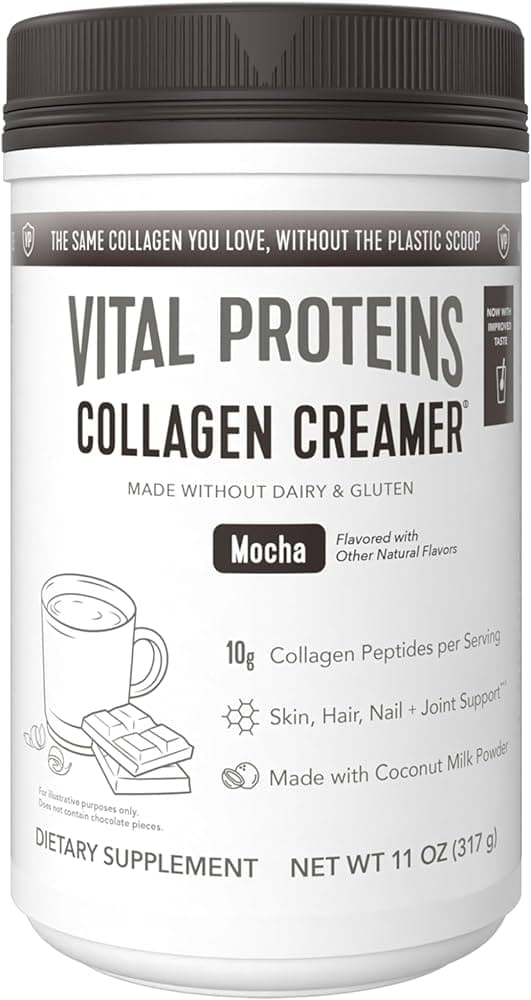
Coconut Milk.
Coconut milk powder used as a creamy base or carrier in powdered supplement formulations. Adds creamy texture and mild coconut flavor to powder supplements. Acts as a carrier for fat-soluble ingredients. It's a formulation ingredient, not a health booster.
Reviewed March 2026
- Category
- General
- Also filed under
- Improves powder supplement taste and textureContains some medium chain fatsDairy free creamer alternative
What Coconut Milk is, and what it does.
- Does it work
- Does its job as a texture ingredient. Contains trace MCTs and lauric acid, but not enough to matter therapeutically.
- How much to take
- Not applicable for health purposes. Supplements use 1-3g per serving for texture and taste.
- Time to feel it
- Texture and flavour arrive the moment it is stirred in, and its carrier work happens during that serving. It is a formulation ingredient, so it has no onset of its own.
- The first dose
- You'll notice a creamier mouthfeel in your powder supplement. Maybe a hint of coconut. Nothing physiological.
- With regular use
- No health effects at supplement doses. If you want coconut health benefits, use actual coconut oil or MCT oil at proper doses.
- How well tolerated
- Well tolerated. It's dried coconut cream. The only concern is tree nut allergy (coconut is technically a drupe, but FDA classifies it as a tree nut for labeling).
- How it feels
- Creamy, smooth texture in your drink. Mild coconut flavor. That's the full sensory experience.
- The overlooked benefit
- Its fat gives fat-soluble actives somewhere to dissolve, so carotenoids or vitamin D3 in the same scoop meet the gut wall in a lipid phase rather than as dry powder.
The proof, claim by claim.
These words describe the research, not the molecule's worth. Research strength is how much work stands behind one claim, and it is never a product score.
- Provides MCTs
- Improves absorption of fat-soluble ingredients
Questions people ask about Coconut Milk.
- Will this give me the benefits of coconut oil?
- No. The amount in supplements is way too small. For MCT or coconut health benefits, use actual coconut oil or MCT oil at proper doses (1-2 tablespoons).
- Is coconut a tree nut allergy risk?
- FDA classifies coconut as a tree nut for labeling. Most people with tree nut allergies can tolerate coconut, but check with your allergist to be safe.
- Does it add much fat to my supplement?
- Maybe 1g of fat per serving. That's less than a single almond. Not worth thinking about.
- Is organic coconut milk powder better?
- For health purposes at these tiny amounts, it doesn't matter. Organic just means the coconut was grown without synthetic pesticides.
- Why add coconut milk to supplements?
- Creamy texture, pleasant taste, and it helps fat-soluble ingredients stay mixed in the powder. It's a formulation tool.
- Can I use this instead of actual coconut milk?
- You could reconstitute it, but supplement amounts are too small. For cooking or drinking, buy actual coconut milk powder meant for food use.
Why these belong in the same formula. Each row says what the basis is, from settled biochemistry through to a trial that measured the pair.
Cholecalciferol is fat soluble and needs dietary fat to trigger bile release and enter mixed micelles. The fat carried in coconut milk supplies that vehicle when the two are taken together.
Retinoids partition into micelles formed from dietary fat and bile salts before uptake by the enterocyte. Taking them with a fat-containing food such as coconut milk raises the fraction absorbed.
Tocopherol uptake tracks the amount of fat eaten in the same meal because it travels in micelles and then in chylomicrons. Coconut milk supplies both the fat and the emulsified surface area.
Menaquinone-7 is a long-chain fat-soluble quinone whose uptake depends on micelle formation. A fat-containing carrier such as coconut milk gives it that route.
Carotenoid absorption rises steeply with the fat content of the same meal, since carotenoids must dissolve into the lipid core of a micelle. Coconut milk is an emulsified fat source that does this well.
Lutein is a xanthophyll that reaches the bloodstream only after partitioning into fat-derived micelles. Co-ingestion with a fatty food raises the amount that gets through.
Lycopene is highly lipophilic and poorly taken up from a fat-free matrix. Coconut milk provides the lipid phase it needs to enter micelles.
Astaxanthin is a fat-soluble carotenoid whose plasma appearance depends on being taken with lipid. An emulsified fat such as coconut milk supports that partitioning.
Curcuminoids are practically insoluble in water and dissolve far better in a lipid phase. Preparing turmeric in coconut milk is a long-standing culinary route to the same effect.
Ubiquinone is a large lipophilic quinone with low water solubility, so its uptake improves when it is taken inside a fat-containing meal. Coconut milk supplies pre-emulsified fat for that purpose.
The fat in coconut milk is rich in lauric acid, and lauric acid is the fatty acid esterified in monolaurin. Gut lipases release lauric acid and monoglycerides from that same triglyceride pool.
MCT oil is fractionated from coconut oil and concentrates the C8 and C10 fatty acids that coconut fat contains in smaller proportion. Coconut milk carries the full spread including lauric acid at C12. Combining them raises total medium-chain fatty acid intake without adding a new class of fat.
Caprylic acid is the eight-carbon fatty acid isolated from coconut and palm kernel fat. Coconut milk supplies it as part of its natural triglyceride mix rather than as a free fatty acid. The two overlap compositionally.
Coconut milk is an oil-in-water emulsion that separates on standing and on temperature change. Phospholipid emulsifiers such as sunflower lecithin sit at the oil-water interface and slow that separation. This is formulation practice rather than a nutritional interaction.
Guar gum raises the viscosity of the water phase, which slows the rise of fat droplets and keeps the emulsion visually uniform. It appears on many coconut milk ingredient lists for exactly that reason. The role is physical, not nutritional.
Dietary triglycerides are not absorbed intact. Lipase cleaves the fatty acids from the glycerol backbone in the small intestine. Coconut milk delivers its fat as triglycerides and depends on that step. Supplemental lipase is used where endogenous output is a limiting factor.
Long-chain fatty acids and fat-soluble vitamins require bile salt micelles to cross the unstirred water layer at the intestinal surface. Coconut milk supplies the fat that triggers bile release and partitions into those micelles. Where bile output is limited, that step becomes the constraint on fat-soluble absorption.
Carotenoids partition into the lipid phase of a meal and are carried into mixed micelles for absorption. A fat-containing food eaten with them raises the fraction that gets absorbed. Coconut milk supplies that fat in an already-emulsified form.
Beta-sitosterol dissolves in the lipid phase of a meal and enters mixed micelles alongside fatty acids. Delivering it in a fat-containing vehicle is the usual way to get it into that phase. Coconut milk is one such vehicle.
Vitamin K1 is poorly absorbed from a fat-free meal because it depends on micellar solubilisation. A fat-containing food taken at the same time supplies the lipid phase it needs. This is established nutrient handling rather than a claim about a specific product.
Phosphatidylcholine has a polar head and two fatty acid tails, which lets it stabilise the interface between coconut fat droplets and water. It also contributes to micelle formation in the gut. Both roles are physical chemistry rather than a nutritional interaction.
Tocotrienols dissolve only in lipid and are absorbed through the micellar route. Taken with a fat-containing food they partition into the meal's lipid phase. Coconut milk provides an already-emulsified fat for that purpose.
Resveratrol has low aqueous solubility, and dissolution rather than membrane transit is generally the limiting step for it. A fat-containing vehicle improves that dissolution. The mechanism is well described. The size of the effect from coconut milk specifically is not established.
At high intakes calcium forms insoluble calcium soaps with free long-chain fatty acids in the intestinal lumen, and that fat is then excreted rather than absorbed. Medium-chain fatty acids are less affected because they are absorbed more directly. Where the fat is being used as a carrier for a fat-soluble compound, a large simultaneous calcium dose works against that role.
Activated charcoal binds fat-soluble organic molecules on its porous surface. Taking it with a fat-based delivery vehicle reduces how much of the carried compound stays available. Space the two apart.
Talk to a doctor before taking Coconut Milk if any of these apply to you: Coconut allergy (tree nut classification varies), Minimal nutritional contribution at supplement amounts. These are flags to check first, not effects Coconut Milk is known to cause.
Not medical advice. Show the label to your pharmacist.What Coconut Milk actually does.
Coconut milk is an emulsion: tiny fat droplets from the coconut kernel suspended in water and held together by proteins and emulsifiers.
Fat-soluble nutrients in a meal dissolve into the fatty part of coconut milk and get carried, along with bile salts, to the gut wall for absorption.
Coconut fat's main fatty acid sits right at the border between medium- and long-chain fats, so the body handles part of it through the faster direct route to the liver and part through the usual fat-packaging route.
The shorter fatty acids in coconut fat go straight into the bloodstream toward the liver without needing to be packaged the way most dietary fat is.
Where Coconut Milk comes from.
Fresh coconut meat is grated and pressed to squeeze out a creamy liquid. That liquid is smoothed out, heated so it keeps, and either canned or dried into a powder that mixes back into water.
Made from a plant. What ends up in the capsule tracks the harvest, so batch testing and a stated marker matter more here than with a made molecule.
White kernel meat is scraped from mature Cocos nucifera nuts, mostly from South and Southeast Asian growing regions.
The grated kernel is pressed, with or without added warm water, to express a fat-rich emulsion. The first press gives the cream and later presses give thinner milk.
Solids are strained out and the emulsion is homogenised so the fat droplets are small enough to resist rapid separation.
The emulsion is pasteurised or retorted for shelf stability, a step that also denatures coconut proteins and changes mouthfeel.
The product is either filled into cans or pouches, or spray-dried onto a carbohydrate carrier to give a reconstitutable powder.
Which press the material came from, the carrier used in a powder, and the stabiliser system are often absent from the label even though they set the fat content per gram.
Getting Coconut Milk from food.
The whole-food sources on file. A supplement closes the gap, it does not replace dinner.
A gram-for-gram figure (how much of each you would eat to match a dose) will appear here once it is sourced and reviewed. This page will not print a number it cannot cite.
The forms it comes in.
The essence, in one line each.
- The review describes how the medium-chain fatty acids in coconut oil act on rumen microbial populations and reduce methane output in cattle.Narrative review. Sun et al., 2026 (Frontiers in Veterinary Science). PMID 42146037 ↗
- A comparison across animal and plant-derived oils, coconut among them, of reported effects on oxidative stress and inflammatory markers.Systematic review. Alzunaidy et al., 2025 (Frontiers in Nutrition). PMID 41601899 ↗
- A laboratory comparison of heavy metal, nutrient and pesticide residue content across cow milk and plant-based milks including coconut.In vitro study. Good et al., 2026 (Scientific Reports). PMID 41957055 ↗
- Rearing substrate composition, including coconut-derived material, changed the fatty acid profile of the resulting larvae.Animal study. Pittarate et al., 2025 (Frontiers in Insect Science). PMID 41625528 ↗
These are the studies our verdict leans on, chosen from the 4 we read for Coconut Milk. The full linked list is below.
The studies, linked.
3 sources behind our Coconut Milk verdict: peer-reviewed studies and registered clinical trials. Every one links straight to PubMed, the journal, or ClinicalTrials.gov. Read them yourself.
- Clinical trialBeneficial Effects of Coconut Milk Supplementation to Improve Nutritional Status in Patients With Liver CirrhosisClinicalTrials.gov ↗55 participants, Completed
- Clinical trialComparison of Salivary pH After Consuming Milk of Origin Vegetable vs Cow's Milk in ChildrenClinicalTrials.gov ↗21 participants, Completed
- Clinical trialA Randomized, Double-blinded, Placebo-controlled, Parallel Study, to Assess the Effect of Traditionally Fermented Organic Coconut Milk Kefir on Gastrointestinal Symptoms in Healthy AdultsClinicalTrials.gov ↗60 participants, Unknown
Evidence surfaced via Semantic Scholar (Allen Institute for AI) and ClinicalTrials.gov. Ranked by study type and citation weight, not cherry-picked.
FDA Disclaimer: These statements have not been evaluated by the Food and Drug Administration. This information is for educational purposes only and is not intended to diagnose, treat, cure, or prevent any disease. Consult your healthcare provider before starting any supplement regimen.