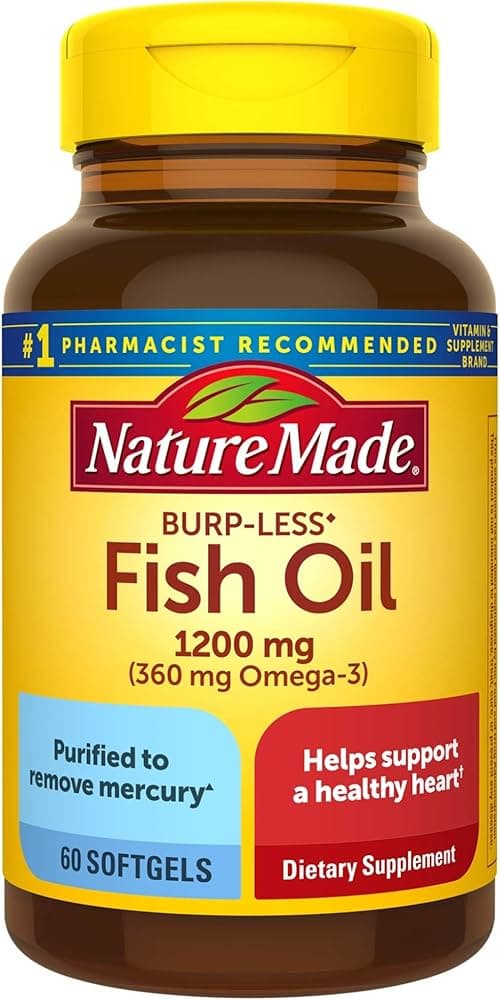
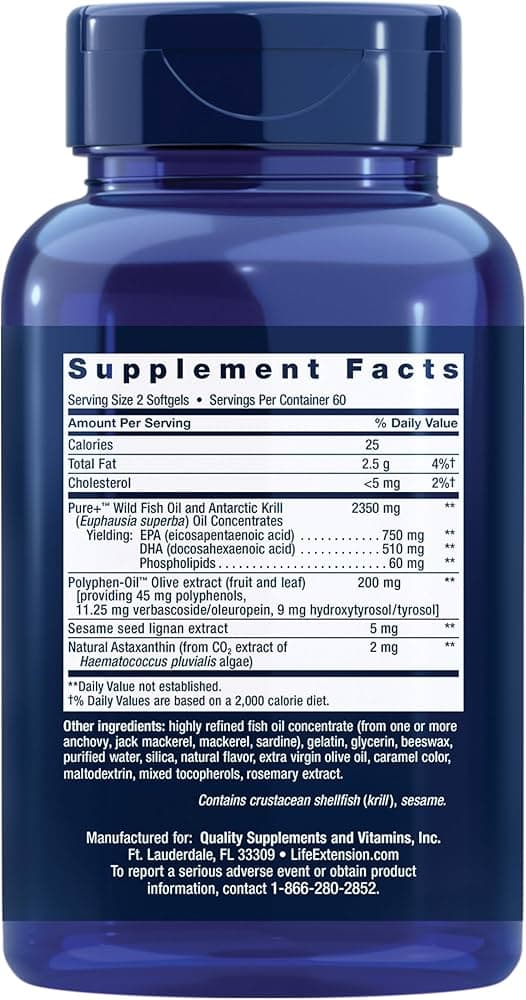
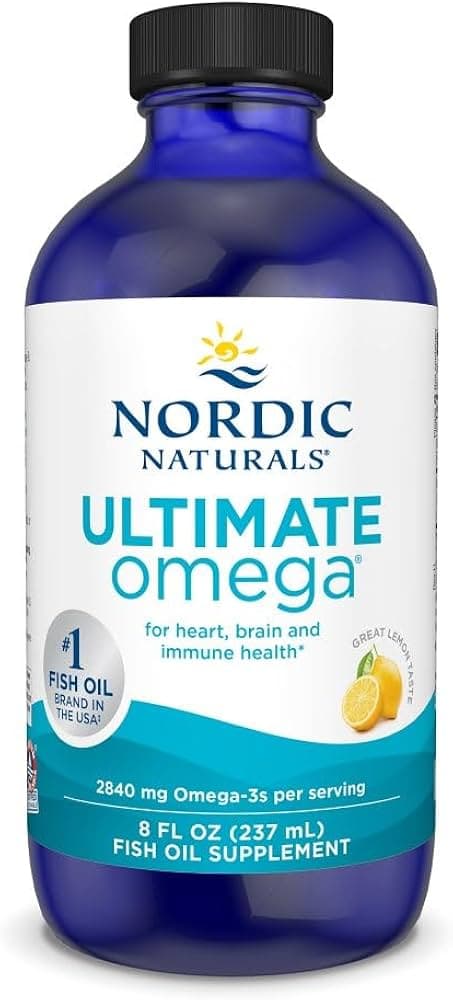
Fish Oil (Triglyceride Form).
Delivers EPA and DHA on a glycerol backbone, the same arrangement fat takes in food. Those two fats support your heart, your circulation and a healthy inflammatory response.
Reviewed March 2026
- Category
- Fatty acid
- Also filed under
- HeartTriglyceridesInflammation
What Fish Oil (Triglyceride Form) is, and what it does.
- Does it work
- If oily fish rarely lands on your plate, this is the direct route to EPA and DHA. Eat salmon or sardines a few times a week and you're already covering much of it.
- How much to take
- Start with 500 to 2,000mg of combined EPA and DHA a day, with a meal that contains fat. Trials have run 4,000mg, which is a research condition rather than a daily target.
- Time to feel it
- About eight weeks of daily use.
- The first dose
- Lipase starts cleaving the first capsule within hours, though there's no day-one sensation. A faint fishy aftertaste is the only common report, and a meal settles it.
- With regular use
- Over eight to twelve weeks EPA and DHA build into your cell membranes, which is when an omega-3 index and a triglyceride reading show the change.
- How well tolerated
- Well tolerated at everyday amounts. Higher intakes lengthen bleeding time, so speak to your doctor if you take an anticoagulant or have surgery booked.
- How it feels
- Not much you'd call a sensation. Over months some people say mornings feel less stiff, and the measurable part turns up on a lipid panel.
- The overlooked benefit
- These fats ride into circulation on chylomicrons, so uptake tracks the fat in your meal. Swallowing it with something fatty rather than water gets more of each capsule across.
500 to 2,000mg a day is where Fish Oil (Triglyceride Form) works.
Source: GISSI-HF 2008 + AHA 2019 Guidelines
In a randomised single-blind trial, 20 participants took either fish oil supplying 1,296 mg EPA and 864 mg DHA daily or flaxseed oil for eight weeks, with erythrocyte membrane and plasma samples drawn at weeks 0, 4, 8, 10, 12, 14, 16 and 24. On fish oil, erythrocyte membrane EPA rose 300 percent and DHA rose 42 percent by week eight. Levels held until about week 12 and then declined across the post-supplementation sampling, faster in plasma phospholipids than in erythrocyte membranes. Membrane fatty acid content was measured, not a symptom, and this is one trial of 20 people.
Kept, not banked. The cited trial measured a return toward baseline after the last dose, so the effect holds while it is taken daily, not stored up. That rests on the trial window above.
The proof, claim by claim.
These words describe the research, not the molecule's worth. Research strength is how much work stands behind one claim, and it is never a product score.
Based on 100 human trials.
- Triglycerides already in the normal rangeMeta-analysis
- Blood EPA and DHA levels and the omega 3 indexRandomised trial
- Absorption compared with other ester forms of omega-3Randomised trial
- Heart and circulatory functionMeta-analysis
- Markers of a healthy inflammatory responseRandomised trial
- Everyday joint comfortMeta-analysis
- Blood pressure already in the normal rangeMeta-analysis
- Memory and cognitive measures with ageRandomised trial
Questions people ask about Fish Oil (Triglyceride Form).
- When should I take it?
- Timing matters less than consistency. Pick a time that works for you and take it daily.
- Fish oil vs. krill oil?
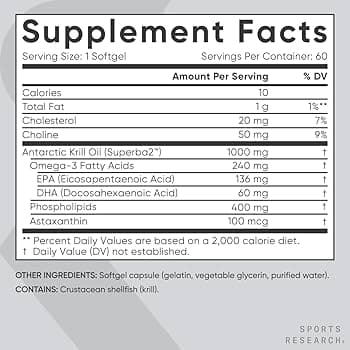
- Both work. Krill is slightly better absorbed (phospholipid form) and has astaxanthin, but costs more. Fish oil at the right dose works just fine for most people.
- How do I avoid fish burps?
- Take it with food. Store in the freezer (seriously, it works). Look for enteric-coated capsules. If it still happens, the oil might be rancid. Give it a sniff.
- Can I take it with other supplements?
- Usually fine. The main thing to watch is not doubling up on the same ingredient from different products. If you're on prescription meds, check with your pharmacist first.
Why these belong in the same formula. Each row says what the basis is, from settled biochemistry through to a trial that measured the pair.
Vitamin E is the body's main fat-phase antioxidant, and the long-chain fatty acids in omega-3 oil are highly prone to oxidation, so tocopherol shields them from peroxidation both inside the softgel and once they sit in cell membranes. The two are routinely formulated together for this reason.
Astaxanthin is a fat-soluble antioxidant that partitions into the same lipid phase as EPA and DHA and slows their oxidation, which is why the two occur together naturally in krill and are commonly paired in oil-based formulas.
Omega-3 fatty acids and GLA are handled by the same desaturase and elongase enzymes that build the body's eicosanoid signaling molecules, so co-supplying omega-3 competes at those enzymes and blunts the rise in arachidonic acid that GLA on its own can drive.
Vitamin D3 is fat-soluble and is taken up more completely when eaten with dietary fat, which drives the bile-salt micelle formation that ferries it across the gut lining. Omega-3 triglyceride supplies that fat, which is why vitamin D is often carried in a fish-oil or other oil base.
CoQ10 is so lipophilic that its uptake depends on a fat vehicle, and a natural triglyceride oil is one of the better ones because it triggers full lipase and bile response. Both then sit in the same membranes where the quinol quenches lipid radicals.
Ascorbate regenerates oxidised vitamin E, and vitamin E is what shields the double bonds in EPA and DHA from peroxidation. The link runs through tocopherol rather than acting on the oil directly.
Glutathione peroxidase is a selenoenzyme whose job is reducing the lipid hydroperoxides that form on polyunsaturated chains. Selenium adequacy therefore sits under the stability of an omega-3 load.
After lipase releases DHA from the triglyceride, the fatty acid is re-esterified largely into phosphatidylcholine for transport and storage. Choline supply governs that packaging step.
Phospholipid emulsifiers cut droplet size and raise the surface area lipase can act on, which lifts uptake of a triglyceride oil taken without much dietary fat.
Flax ALA competes for delta-6 desaturase and the elongase steps that build EPA and DHA, a bottleneck the preformed marine fatty acids bypass. Adding ALA on top loads the enzyme rather than raising long-chain status.
EPA displaces arachidonic acid and lowers thromboxane A2, while ginkgolides act on platelet activating factor signalling. Both move normal platelet aggregation in the same direction.
Garlic organosulfur compounds reduce platelet aggregation through their own route, on top of the thromboxane shift EPA produces.
Salicin becomes salicylate, which dampens cyclooxygenase-derived thromboxane, the same output EPA reduces by substrate competition.
Gingerols reduce thromboxane synthesis in platelets, the same arm of the eicosanoid pathway EPA shifts by displacing arachidonic acid. At culinary amounts this is minor, at extract doses it adds.
Curcumin dampens cyclooxygenase and lipoxygenase output and platelet aggregation in its own right, and both act on the same arachidonic acid cascade EPA competes into. The pair is common in joint formulas, so the additive effect on normal clotting is worth recording.
Vitamin K is the cofactor for carboxylating the clotting factors the liver makes, while omega-3 shifts platelet thromboxane the other way. They act at different points and in opposite directions, which matters when a formula carries both.
Carnosic acid and related rosemary diterpenes are the standard natural stabiliser used to slow peroxide formation in a marine triglyceride oil during shelf life.
Free iron drives Fenton chemistry that initiates peroxidation of polyunsaturated chains, and fish oil is the most peroxidation-prone lipid in a formula. Separate dosage forms are standard practice.
Pancreatic lipase cleaves the sn-1 and sn-3 positions of a triglyceride, leaving a 2-monoacylglycerol and two free fatty acids that enter mixed micelles. Without that hydrolysis the intact triglyceride is not absorbed. Supplemental lipase is used where pancreatic output is low, which is a digestion rationale rather than a demonstrated blood-level effect.
Bile salts drop interfacial tension so lipase can work at the oil surface, then solubilise the products into micelles for uptake. People with reduced bile flow absorb long-chain fatty acids poorly. The pairing is textbook physiology of fat digestion.
Blended pancreatic enzyme products contain lipase alongside protease and amylase. The lipase fraction is the part relevant to a triglyceride-form oil. The relationship is mechanical: no hydrolysis, no absorption.
Pancreatin is a porcine pancreatic extract standardised on lipase, protease and amylase activity. Its lipase content acts on the triglyceride oil in the same way it acts on dietary fat. Relevant mainly where fat digestion is already limited.
Krill oil carries EPA and DHA largely on phospholipids rather than on a glycerol triglyceride backbone, which changes how the fatty acids are packaged for absorption. A randomised comparison of phospholipid-bound against standard omega-3 has been published in adults with elevated blood triglycerides. Both deliver the same two fatty acids by different carriers, so combining them mainly changes the carrier mix rather than adding a new active.
Phosphatidylcholine is a component of the mixed micelle and is also required for the enterocyte to package absorbed fat into chylomicrons. Adding phospholipid to an oil improves its dispersion in the gut lumen. This is a delivery relationship, not an added fatty acid effect.
Lecithin keeps the oil finely dispersed in emulsions and liquid products and contributes phospholipid to micelle formation. It is used in liquid and gummy omega-3 formats where a bare oil would separate. Carrier role rather than an active pairing.
A triglyceride-form fish oil is a delivery vehicle whose payload is EPA and DHA. Adding a separate DHA concentrate raises the DHA share of the total dose, which matters where a formula targets membrane DHA rather than total omega-3. The two are the same molecule in different packaging.
EPA competes with arachidonic acid for the same oxygenase enzymes and shifts the eicosanoid profile produced. A separate EPA concentrate alongside a triglyceride oil raises the EPA to DHA ratio of the delivered dose. Again a composition relationship, not a novel combined effect.
Linoleic acid and alpha-linolenic acid are handled by the same desaturase and elongase enzymes, so a high omega-6 intake reduces conversion along the omega-3 branch. Preformed EPA and DHA bypass most of that bottleneck, which is why a triglyceride fish oil is less affected than a plant oil. The competition also plays out at the level of membrane phospholipid composition.
Medium-chain fatty acids are absorbed largely as free fatty acids into the portal vein with little need for bile or chylomicron packaging, while EPA and DHA go the micelle and lymph route. Blending them does not make the long-chain fraction take the short route. MCT is useful as a carrier oil, and that is the honest description of its role here.
Long-chain acyl groups cannot cross the inner mitochondrial membrane unaided. Carnitine palmitoyltransferase transfers them to carnitine for shuttling. That applies to EPA and DHA when they are oxidised rather than stored or incorporated into membranes. The link is metabolic handling, not an outcome claim.
EPA-derived eicosanoids shift platelet aggregation behaviour, and nattokinase acts on fibrin. Stacking two agents that touch the same cascade is an additive interaction that a person on anticoagulant medication should raise with their prescriber. Flagged for direction, not framed as a benefit.
Bromelain has been characterised as reducing platelet aggregation in laboratory and small human work. Combined with an EPA-rich oil the direction of effect is the same. Worth naming as an additive pairing so it is visible rather than hidden.
Nicotinic acid at gram doses reduces hepatic VLDL triglyceride secretion, while EPA and DHA reduce hepatic triglyceride synthesis by a different route. The two act on the same measurable pool through separate mechanisms. Blood triglyceride is a marker, and marker movement is not the same as an outcome.
Every round of beta-oxidation begins with an FAD-dependent dehydrogenation, and FAD is built from riboflavin. Fatty acid oxidation capacity therefore depends on riboflavin status. Settled biochemistry with no trial required.
Free fatty acids must be converted to acyl-CoA thioesters before they can be transported or oxidised, and that requires coenzyme A. Pantothenic acid is the precursor of coenzyme A. This applies to EPA and DHA as it does to any long-chain fatty acid.
Six double bonds make DHA one of the most peroxidation-prone fatty acids in the body. Glutathione peroxidase reduces the resulting lipid hydroperoxides, and N-acetylcysteine supplies cysteine for glutathione synthesis. This is why omega-3 formulas usually carry an antioxidant component of some kind.
Nothing specific on file for Fish Oil (Triglyceride Form). Match the label to the daily amount above, and tell your doctor what you take.
Not medical advice. Show the label to your pharmacist.What Fish Oil (Triglyceride Form) actually does.
In the triglyceride form, EPA and DHA sit on a glycerol backbone. Pancreatic lipase snips two of them off, and the pieces are absorbed together in mixed micelles.
Ethyl ester concentrates carry the same fats attached to ethanol instead of glycerol. Lipase splits those more slowly, which is the chemical basis for the different absorption reported between the forms.
Once absorbed, EPA and DHA are rebuilt into fats inside the gut cells and packed into chylomicrons. So uptake depends on fat and runs higher with a meal containing fat.
EPA and DHA go into your cell membranes and partly push out arachidonic acid. That changes the mix two enzymes have to work with, and so the signalling fats they produce.
Where Fish Oil (Triglyceride Form) comes from.
Oily fish are cooked and pressed to get crude oil, which is then cleaned up. To make it stronger, producers split the fats off the glycerol backbone, distil the ones they want, and stick them back on. That last step is what makes it a triglyceride form again.
Made from an animal material. Species and tissue are the things worth knowing, and both belong on a label.
Anchovy, sardine, menhaden or mackerel, typically from fisheries that also produce fishmeal. Some products use tuna or salmon trimmings.
Fish are cooked to break the cells, then pressed and centrifuged to separate crude oil from protein solids and stickwater.
Alkali refining removes free fatty acids, clay bleaching removes pigments and oxidation products, and steam deodorisation strips volatiles and reduces persistent organic contaminants.
For concentrated products the oil is converted to ethyl esters, then short-path vacuum distillation raises the EPA and DHA fraction. Urea complexation is used by some producers to remove saturated fatty acids.
Concentrated ethyl esters are enzymatically re-attached to glycerol using a lipase, returning the fatty acids to a triglyceride backbone.
Batches are assayed by gas chromatography for EPA and DHA, checked for peroxide, anisidine, heavy metals, dioxins and PCBs, and blended with mixed tocopherols or rosemary extract.
Filled under nitrogen into gelatin or fish-gelatin softgels, or bottled as a flavoured liquid or emulsion.
Product labels rarely state the fish species or the fishery, and the legacy note here says only concentration then re-esterification, which describes one route and not the unconcentrated natural triglyceride route.
Getting Fish Oil (Triglyceride Form) from food.
The whole-food sources on file. A supplement closes the gap, it does not replace dinner.
A gram-for-gram figure (how much of each you would eat to match a dose) will appear here once it is sourced and reviewed. This page will not print a number it cannot cite.
The forms it comes in.
The essence, in one line each.
- Over two weeks at about 3.3 g of EPA plus DHA daily in 72 volunteers, blood uptake from re-esterified triglyceride capsules was about 24 percent higher than from natural fish oil, while ethyl ester capsules delivered about 27 percent less.Randomised trial. Dyerberg et al., 2010 (Prostaglandins, Leukotrienes and Essential Fatty Acids). PMID 20638827 ↗
- When 66 healthy adults took a matched 1.3 g daily dose for four weeks, plasma EPA plus DHA did not differ significantly between the triglyceride, ethyl ester and krill forms, so this study did not detect a formulation advantage at equal dose.Randomised trial. Yurko-Mauro et al., 2015 (Lipids in Health and Disease). PMID 26328782 ↗
- Pooling 86 randomised trials in 162,796 adults, long-chain omega-3 intake lowered blood triglycerides by roughly 15 percent in a dose-dependent way, with little or no measured change in body fat.Systematic review. Abdelhamid et al., 2020 (Cochrane Database of Systematic Reviews). PMID 32114706 ↗
- Across 70 randomised trials, EPA plus DHA lowered systolic blood pressure by about 1.5 mmHg and diastolic by about 1.0 mmHg on average, with a larger shift of about 4.5 mmHg systolic among untreated adults whose blood pressure was elevated.Meta-analysis. Miller et al., 2014 (American Journal of Hypertension). PMID 24610882 ↗
- Pooling randomised trials, marine omega-3 fatty acids improved the cluster of metabolic markers that includes blood triglycerides, waist measures and blood pressure.Meta-analysis. Basirat et al., 2025 (Nutrients). PMID 41156531 ↗
- Head to head in healthy adults, the triglyceride-form fish oil raised plasma omega-3 levels less than krill oil at a matched dose.Randomised trial. Loukil et al., 2026 (The American journal of clinical nutrition). PMID 42144109 ↗
- Eight weeks of EPA combined with medium-chain triacylglycerol in a structured lipid raised blood EPA levels in the people taking it.Randomised trial. Shimizu et al., 2026 (Journal of the International Society of Sports Nutrition). PMID 41992745 ↗
- Microencapsulated DHA raised the Omega-3 Index measured in red blood cells over the study period.Randomised trial. Anthony et al., 2026 (European journal of nutrition). PMID 42213158 ↗
- Across trials, omega-3 supplementation was associated with small improvements in cognitive test performance, with the benefit levelling off above a moderate daily dose.Meta-analysis. Shahinfar et al., 2025 (Scientific reports). PMID 40836005 ↗
- A randomised comparison of a phospholipid-bound omega-3 preparation against a standard omega-3 preparation in adults with elevated blood triglycerides. Triglyceride concentration is a marker, not a clinical outcome.Randomised trial. Urina-Triana et al., 2026 (BMC Complementary Medicine and Therapies). PMID 41514392 ↗
- A systematic review with pooled analysis of omega-3 supplementation and inflammatory markers in adults receiving haemodialysis. The pooled endpoints are circulating markers rather than clinical events.Meta-analysis. Blair et al., 2026 (Clinical Nutrition ESPEN). PMID 41692069 ↗
- A systematic review of omega-3 supplementation and metabolic and inflammatory marker changes in adults receiving antiretroviral care. The reported endpoints are laboratory markers.Systematic review. Bai et al., 2026 (Frontiers in Nutrition). PMID 41883419 ↗
- Fish oil rich in omega-3 fatty acids was reported to reduce elevated liver fat and kidney marker changes in animals fed a long-term high-fructose diet.Animal study. Liu et al., 2025 (Journal of Food and Drug Analysis). PMID 41525196 ↗
These are the studies our verdict leans on, chosen from the 239 we read for Fish Oil (Triglyceride Form). The full linked list is below.
FDA Disclaimer: These statements have not been evaluated by the Food and Drug Administration. This information is for educational purposes only and is not intended to diagnose, treat, cure, or prevent any disease. Consult your healthcare provider before starting any supplement regimen.