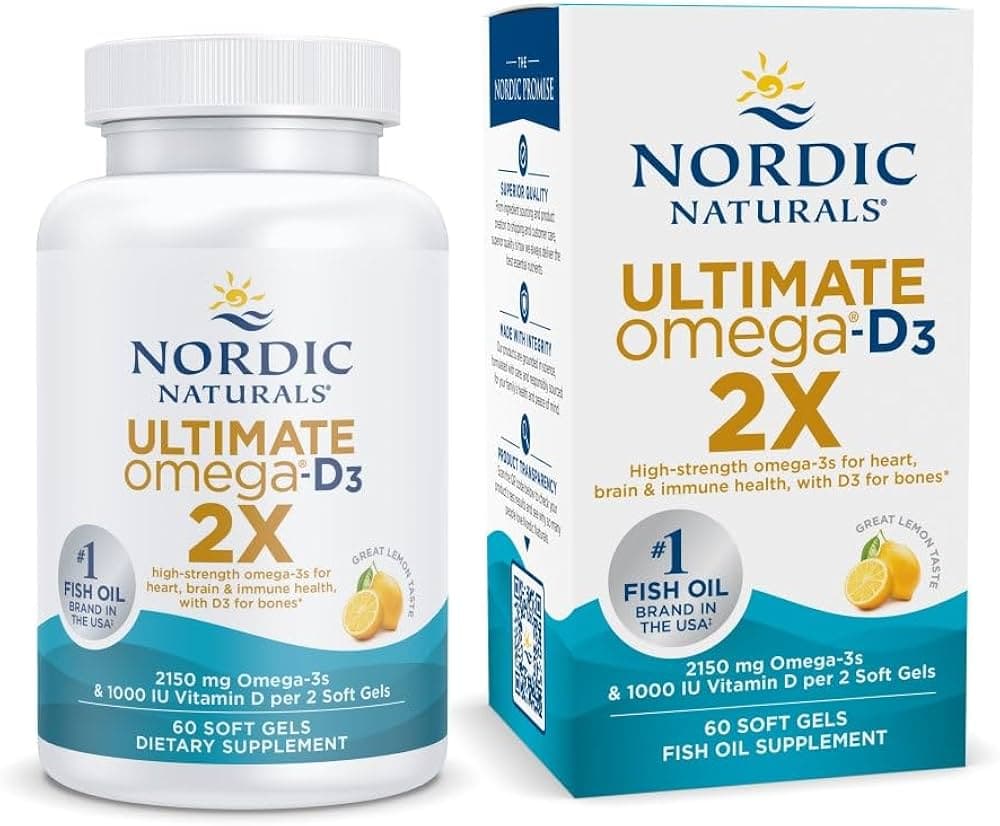
Purified Deep Sea Fish Oil (Anchovy & Sardine).
Clean omega-3s from small, short-lived fish. Low mercury, high EPA and DHA. Delivers EPA and DHA omega-3 fatty acids that reduce inflammation, lower triglycerides, and support brain and heart health.
Reviewed March 2026
- Category
- Compound
- Also filed under
- Rich in EPA and DHALow mercury risk from small fish speciesCardiovascular and brain health supportAnti inflammatory
What Purified Deep Sea Fish Oil (Anchovy & Sardine) is, and what it does.
- Does it work
- One of the most well-researched supplements on the planet. The anchovy/sardine sourcing means cleaner oil with less contaminant risk.
- How much to take
- 1000-3000mg combined EPA+DHA daily. Check the label for actual EPA/DHA content, not just total fish oil.
- Time to feel it
- About eight weeks of daily use.
- The first dose
- Nothing noticeable. Omega-3s need weeks to build up in your cell membranes.
- With regular use
- By 8-12 weeks, measurable drops in triglycerides, reduced inflammatory markers, and many people report better joint comfort and mental clarity.
- How well tolerated
- Well tolerated for most people. Can thin blood slightly at high doses. If you're on blood thinners, talk to your doctor first.
- How it feels
- Subtle and cumulative. You won't feel a rush, but the downstream effects on inflammation, mood, and joint comfort add up over months.
- The overlooked benefit
- Small, short-lived fish sit low in the food chain, so they accumulate less mercury before the oil is even distilled. The species choice does part of the cleaning.
1,000 to 3,000mg a day is where Purified Deep Sea Fish Oil (Anchovy & Sardine) works.
Source: AHA guidelines; GISSI-Prevenzione trial; VITAL study
In a randomised single-blind trial, 20 participants took either fish oil supplying 1,296 mg EPA and 864 mg DHA daily or flaxseed oil for eight weeks, with erythrocyte membrane and plasma samples drawn at weeks 0, 4, 8, 10, 12, 14, 16 and 24. On fish oil, erythrocyte membrane EPA rose 300 percent and DHA rose 42 percent by week eight. Levels held until about week 12 and then declined across the post-supplementation sampling, faster in plasma phospholipids than in erythrocyte membranes. Membrane fatty acid content was measured, not a symptom, and this is one trial of 20 people.
Kept, not banked. The cited trial measured a return toward baseline after the last dose, so the effect holds while it is taken daily, not stored up. That rests on the trial window above.
The proof, claim by claim.
These words describe the research, not the molecule's worth. Research strength is how much work stands behind one claim, and it is never a product score.
- Lowers triglycerides significantly
- Reduces cardiovascular risk
- Supports brain health and mood
Questions people ask about Purified Deep Sea Fish Oil (Anchovy & Sardine).
- Why anchovies and sardines specifically?
- Small fish, short lifespan. They don't accumulate mercury and heavy metals like tuna or swordfish do. Cleaner oil from the start means less purification needed.
- Will I get fishy burps?
- Maybe. Taking with food helps a lot. Enteric-coated softgels and keeping them in the freezer can also reduce this.
- How do I know if the dose is enough?
- Check the back label for EPA+DHA content per serving, not just 'fish oil.' You want at least 500mg combined EPA+DHA.
- Is this better than eating fish?
- Eating fish gives you protein and other nutrients too. But if you don't eat fish 2-3 times a week, supplementing makes sense.
- Triglyceride form vs ethyl ester?
- Triglyceride form absorbs about 70% better. It costs a bit more but it's worth it.
- How long until I notice something?
- Give it 8-12 weeks. Omega-3s work by slowly changing your cell membrane composition. It's not an overnight thing.
Why these belong in the same formula. Each row says what the basis is, from settled biochemistry through to a trial that measured the pair.
The long-chain omega-3 fats in fish oil carry many double bonds that oxidize readily, and vitamin E is the fat-soluble antioxidant that interrupts that peroxidation chain reaction both inside the oil and in the body's membranes. This is why tocopherols are routinely added to fish oil, and why a higher intake of these fats raises the body's requirement for vitamin E.
Vitamin D is fat-soluble and relies on dietary lipids to form the micelles that ferry it across the gut lining, and fish oil supplies that lipid carrier in the same dose. Taken with a fatty meal like this, it supports fat-soluble vitamin uptake, the long-standing rationale behind cod liver oil.
Astaxanthin is a marine carotenoid that embeds within lipids and quenches the peroxyl radicals that would otherwise attack the double bonds in EPA and DHA, so it helps shield those fragile fats from oxidation. The two occur together naturally in krill and are often co-formulated for that reason.
Carnosic acid and carnosol from rosemary are the standard lipid-phase antioxidants used to keep long-chain omega-3 oils from going rancid in the softgel. The extract protects the fatty acids before they are ever swallowed.
EPA restrains the elongation of GLA-derived dihomo-gamma-linolenic acid toward arachidonic acid, which is why GLA oils are conventionally given with marine omega-3 rather than alone. The pairing steers the pathway instead of flooding one branch.
Lutein needs a fat vehicle to be absorbed, and fish oil supplies it in the same capsule. DHA and lutein also accumulate in the same retinal membranes, where the fatty acid forms the matrix the carotenoid sits in.
Zeaxanthin is absorbed with dietary fat and concentrates in the DHA-rich central retina. The oil both carries it across the gut and builds the membrane it occupies.
CoQ10 is strongly lipophilic and its uptake depends on the fat eaten with it, so a triglyceride fish oil in the same capsule raises absorption. Both then end up in the same membrane compartments.
Curcumin dissolves poorly in water and its uptake rises when it is delivered in a lipid matrix. A marine triglyceride oil serves as that matrix.
Phospholipids emulsify the oil into finer droplets, giving lipase more surface to work on and easing micelle formation. This is the same principle behind phospholipid-bound marine oils.
Tocotrienols sit in the lipid phase and interrupt the chain reaction that peroxidises polyunsaturated fatty acids. They are used alongside tocopherol for that job in marine oils.
Long-chain omega-3 fatty acids shift eicosanoid balance toward less platelet aggregation, and ginkgolides act on platelet activating factor signalling. The two effects add together on normal clotting behaviour, so the combination is one to flag.
Garlic organosulfur compounds reduce platelet aggregation by a route separate from the eicosanoid shift marine omega-3 produces. Their effects on normal clotting stack.
Salicin-derived salicylate suppresses platelet thromboxane production, the same output marine omega-3 lowers from the substrate side. Combining them compounds the effect on normal clotting.
Both deliver the same two long-chain omega-3 fatty acids, EPA and DHA. Fish oil carries them mostly as triglycerides, krill oil largely as phospholipids with some free fatty acid. Taken together the EPA and DHA totals simply add, so the combined daily intake is what matters rather than either bottle alone.
An isolated EPA concentrate raises the same fatty acid that makes up part of the fish oil. Intakes are cumulative and both end up in the same membrane phospholipid pool. Formulators use the pairing when they want a higher EPA to DHA ratio than the source oil provides.
Added DHA shifts the ratio of the finished blend without changing the chemistry. DHA is the fatty acid most concentrated in neuronal and retinal membrane phospholipids, so DHA-weighted blends are chosen for those structural roles. Total long-chain omega-3 intake is the number to read across both.
Garlic constituents and long-chain omega-3 fatty acids each reduce platelet aggregation through different routes. Stacking them is additive rather than novel, which is worth flagging on a label rather than hiding. Anyone already on anticoagulant or antiplatelet medication should have the combination reviewed by their clinician.
Gingerols inhibit thromboxane-driven platelet activation, and EPA competes with arachidonic acid at the same cyclooxygenase step. The effects run in the same direction. The pairing is common in joint-comfort formulas and the additive platelet effect belongs in the disclosure, not in the marketing.
Nattokinase acts on fibrin while omega-3 fatty acids act on platelets, so the two touch different parts of normal clotting. Combined, the directional effect stacks. Formulators pairing them should state that plainly for anyone on blood-thinning medication.
Long-chain triglycerides need bile salt emulsification before pancreatic lipase can reach them. Supplemental bile components are used where fat emulsification is limited, for example after gallbladder removal. The pairing changes how much of the oil is absorbed, not what the oil does once absorbed.
Pancreatic lipase hydrolyses the triglyceride at the sn-1 and sn-3 positions, releasing free fatty acids and a monoglyceride for uptake. Supplemental lipase supports that step when endogenous output is low. This is an absorption interaction and says nothing about the amount of EPA or DHA in the capsule.
Pancreatin supplies lipase alongside protease and amylase, so it covers the same hydrolysis step in a mixed meal. Fish oil taken with food and with adequate lipase activity is absorbed more completely than on an empty stomach. The interaction is digestive, not pharmacological.
Taurine conjugates bile acids, and taurine-conjugated bile salts are more water-soluble across the range of intestinal pH than glycine-conjugated ones. Better emulsification helps a fatty meal, including an oil capsule taken with it. The effect is on fat handling generally, not specific to omega-3s.
Carnitine is the shuttle that carries long-chain fatty acids across the inner mitochondrial membrane for beta-oxidation. EPA and DHA that are not incorporated into membranes are oxidised by that route. The pairing is mechanistic housekeeping rather than a demonstrated combined outcome.
DHA is carried and stored largely in phosphatidylcholine, and choline supplies that headgroup. Hepatic export of triglyceride as VLDL also depends on phosphatidylcholine availability. The two nutrients meet in the same phospholipid, which is why they are often formulated together.
DHA is enriched in the phosphatidylserine of neuronal membranes, and DHA availability influences how much phosphatidylserine those membranes hold. Supplying both gives the fatty acid and the headgroup class at once. Read it as mechanistic rather than as a tested combination outcome.
Lecithin is an emulsifier used to disperse oil in emulsions, chewables and liquid formats. It lowers droplet size, which helps lipase reach the substrate. This is formulation practice, and it does not raise the EPA or DHA content of the dose.
Medium-chain triglycerides are absorbed without micelle formation and are often used as a carrier oil in softgels and liquids. They dilute the omega-3 concentration per gram while improving pourability and mouthfeel. The trade-off is a formulation choice, not a quality difference.
Menaquinone-7 is fat-soluble and is absorbed with dietary lipid, so an oil base improves its uptake. Fish oil softgels are a common vehicle for that reason. The direction of the help runs from the oil to the vitamin.
Preformed vitamin A and carotenoids need dietary fat and bile for micellar uptake. A fish oil capsule taken with them supplies that fat. Note that some fish oils from liver sources already contain vitamin A, while body oils from anchovy and sardine generally do not.
Selenium sits in the active site of glutathione peroxidases, the enzymes that reduce lipid hydroperoxides. A diet richer in highly unsaturated fatty acids puts more substrate through that system. The relationship is a cofactor relationship, not a combined clinical result.
Ascorbate regenerates the tocopheroxyl radical back to alpha-tocopherol, which is the antioxidant guarding the double bonds in the oil. That recycling keeps the membrane-phase protection running. It is a redox relationship measured in markers, not an outcome claim.
Dihydrolipoic acid participates in the same recycling network that returns oxidised vitamin C and vitamin E to their reduced forms. Highly unsaturated oils are the most oxidation-prone fraction of the diet. The pairing addresses oxidative markers rather than a clinical endpoint.
Free or poorly liganded iron catalyses Fenton chemistry that propagates lipid peroxidation in polyunsaturated fatty acids. High-dose iron and a highly unsaturated oil in the same capsule or the same meal is a stability concern for the oil. Separating the two, or protecting the oil with an antioxidant system, is standard formulation practice.
Copper ions accelerate peroxidation of unsaturated lipids in vitro and are routinely excluded from oil-phase blends for that reason. This is a stability interaction inside the product, not a claim about what happens in the body. Chelators and tocopherols are the usual mitigation.
Activated charcoal adsorbs organic molecules non-selectively in the gut lumen, including dietary lipid and fat-soluble compounds. Taken in the same window it can reduce how much of the oil is absorbed. Spacing the two by a couple of hours is the usual handling.
Viscous soluble fibre slows gastric emptying and can trap lipid within the gel phase. In practice this mostly delays rather than removes absorption of an oil taken at the same meal. Separate dosing removes the question entirely.
Boswellic acids act on 5-lipoxygenase, and EPA competes with arachidonic acid as substrate for the same enzyme family. The two arrive at leukotriene handling from different directions. The combination is common in joint comfort and mobility formulas and the rationale is mechanistic.
Catechins are chain-breaking antioxidants in the aqueous phase and are used alongside tocopherols and rosemary in oil stability systems. The relevance here is oxidative protection of the fatty acids. It is a formulation and marker-level rationale, not a clinical outcome.
Quercetin is a flavonol with metal-chelating and radical-scavenging behaviour in lipid systems. Pairing it with a highly unsaturated oil is aimed at oxidative markers. Nothing here says the combination changes a health endpoint.
Nicotinic acid at pharmacological intake and long-chain omega-3s both act on hepatic triglyceride handling, niacin by reducing free fatty acid flux and omega-3s by reducing VLDL triglyceride assembly. The routes differ and the direction is the same. Flushing niacin doses are a clinical decision, so this belongs with a practitioner.
Red yeast rice contains monacolin K, which acts on cholesterol synthesis, while omega-3s act mainly on triglyceride handling. The two touch different parts of normal lipid metabolism. Because monacolin is pharmacologically active, the pairing is one for a clinician to oversee.
Ubiquinol is highly lipophilic and its uptake improves markedly when it is dissolved in an oil and taken with a meal. Fish oil softgels are used as that vehicle. Ubiquinol also functions in the lipid phase as a regenerator of alpha-tocopherol, which supports oil stability.
Talk to a doctor before taking Purified Deep Sea Fish Oil (Anchovy & Sardine) if any of these apply to you: Fish allergy, May interact with blood thinners, Possible fishy burps. These are flags to check first, not effects Purified Deep Sea Fish Oil (Anchovy & Sardine) is known to cause.
Not medical advice. Show the label to your pharmacist.What Purified Deep Sea Fish Oil (Anchovy & Sardine) actually does.
EPA and DHA, two omega-3 fats, get built into the fatty membrane surrounding your cells, gradually changing membrane composition over weeks as you keep taking them.
EPA competes with another fat, arachidonic acid, for the same enzymes, shifting the mix of signaling molecules your body produces toward a different family.
Long chain omega-3s reduce how much triglyceride carrying fat the liver packages and releases, and increase fat burning, through a signaling pathway. This is the accepted route behind their effect on blood triglycerides.
DHA is the single most abundant fat in the light sensing part of the retina and in brain grey matter, where it supports normal membrane flexibility and receptor function.
Where Purified Deep Sea Fish Oil (Anchovy & Sardine) comes from.
Small ocean fish are cooked and pressed to release their oil. The raw oil is then cleaned under vacuum to strip out mercury, PCBs and dioxins, tested for how much EPA and DHA it holds, and sealed into capsules with an antioxidant to keep it from going off.
Made from an animal material. Species and tissue are the things worth knowing, and both belong on a label.
Anchovy and sardine landed from open-ocean fisheries, usually as part of a reduction fishery where whole fish are processed for meal and oil.
Whole fish are steam-cooked to coagulate protein and free the oil, then pressed. The liquid fraction separates into oil, stickwater and solids.
Three-phase centrifugation separates crude oil from water and protein solids. The crude oil at this point still carries free fatty acids, oxidation products and lipophilic contaminants.
Alkali refining and bleaching remove free fatty acids and pigments, winterisation drops out saturated fractions, and short-path molecular distillation under high vacuum and low temperature strips methylmercury, PCBs, dioxins and oxidation by-products. Deodorisation finishes the sensory profile.
Where a concentrate is specified, the oil is transesterified and distilled to a target EPA and DHA level, then assayed by gas chromatography. Peroxide value, anisidine value and total oxidation number are specified on the certificate of analysis.
Tocopherols and often rosemary extract are added as the antioxidant system, then the oil is filled into gelatin or fish gelatin softgels, or bottled under nitrogen.
Getting Purified Deep Sea Fish Oil (Anchovy & Sardine) from food.
The whole-food sources on file. A supplement closes the gap, it does not replace dinner.
A gram-for-gram figure (how much of each you would eat to match a dose) will appear here once it is sourced and reviewed. This page will not print a number it cannot cite.
The forms it comes in.
The essence, in one line each.
- Across 90 randomised trials with 72,598 participants, EPA and DHA intake lowered triglycerides and non-HDL cholesterol in a near linear way as the daily dose rose, most evidently above 2 g a day.Meta-analysis. Wang et al., 2023 (Journal of the American Heart Association). PMID 37264945 ↗
- Pooling 71 randomised trials in 4,973 adults, a combined EPA plus DHA intake of 2 to 3 g a day lowered systolic blood pressure by about 2.6 mmHg and diastolic by about 1.6 to 1.8 mmHg.Meta-analysis. Zhang et al., 2022 (Journal of the American Heart Association). PMID 35647665 ↗
- In nine placebo-controlled eccentric exercise trials in healthy adults, long chain omega-3 supplements reduced delayed onset muscle soreness (Hedges' g -0.75), creatine kinase (g -0.40) and muscle swelling (g -0.45) and improved muscle strength, though the authors called the wider literature equivocal.Meta-analysis. Yaghoobi et al., 2026 (Nutrients). PMID 42124047 ↗
These are the studies our verdict leans on, chosen from the 1,737 we read for Purified Deep Sea Fish Oil (Anchovy & Sardine). The full linked list is below.
FDA Disclaimer: These statements have not been evaluated by the Food and Drug Administration. This information is for educational purposes only and is not intended to diagnose, treat, cure, or prevent any disease. Consult your healthcare provider before starting any supplement regimen.